Australia Tech News - Page 57 of 231 - Techbest - Top Tech Reviews In Australia

AustralianSuper Names First Head of AI and Automation


We independently review everything we recommend. When you buy through our links, we may earn a commission which is paid directly to our Australia-based writers, editors, and support staff. Thank you for your support!

Strategic AI Appointment at AustralianSuper

Brief Overview

  • AustralianSuper names Sarah Carney as its pioneering head of AI and automation.
  • Carney’s background spans almost 11 years with Microsoft and time at Telstra.
  • This position marks a significant milestone in AustralianSuper’s technological advancement.
  • AI and automation are central to the strategic framework of AustralianSuper.
  • Microsoft’s Security Copilot AI is employed to strengthen security protocols.
  • AustralianSuper oversees more than $410 billion for upwards of 3.6 million members.

Launching a New Phase in AustralianSuper’s Technology Agenda

AustralianSuper has taken a crucial step in its technological evolution by appointing Sarah Carney as its inaugural head of AI and automation. Carney, who will take up her role in late July, brings a rich tapestry of experience from nearly 11 years at Microsoft, where she occupied various technical and strategic roles. Her substantial expertise also encompasses significant experience at Telstra.

AustralianSuper appoints its first head of AI and automation

Carney’s Key Position

Mike Backeberg, chief technology officer at AustralianSuper, characterized Carney’s addition as a significant leap forward in the fund’s technological journey. AustralianSuper has already laid the groundwork for an AI and automation strategy and intends to further mesh these advancements by synchronizing autonomous agents with human goals.

Diverse Experience from Microsoft and Telstra

Carney’s robust background at Microsoft has granted her valuable perspectives on the global progression of AI and automation. She conveyed her eagerness to implement these technologies to improve AustralianSuper’s operational efficiency.

Fortifying the Future with AI

AustralianSuper’s dedication to AI and automation is reflected in its security initiatives. The previous year, it adopted Microsoft’s Security Copilot AI to strengthen its defenses against increasingly complex cyber threats. This system not only fortifies security but also offers insightful understanding of how malicious actors leverage AI.

Conclusion

The strategic selection of Sarah Carney as head of AI and automation by AustralianSuper emphasizes its dedication to weaving cutting-edge technologies into its operations. With her vast experience, Carney is equipped to guide the fund into a new frontier of innovation and security.

Q: Who is Sarah Carney?

A: Sarah Carney is the newly appointed head of AI and automation at AustralianSuper, with nearly 11 years of experience at Microsoft and a background at Telstra.

Q: What makes Carney’s appointment notable?

A: Her appointment signifies a crucial step in AustralianSuper’s technological growth, emphasizing AI and automation to enhance their services.

Q: How does AustralianSuper utilize AI?

A: AI is applied to align autonomous agents with human objectives and improve security measures using tools such as Microsoft’s Security Copilot.

Q: What is Microsoft’s Security Copilot AI?

A: It is a security solution utilized by AustralianSuper to comprehend and defend against AI-driven cyber threats.

Q: What is the size of AustralianSuper?

A: AustralianSuper manages over $410 billion in assets for more than 3.6 million members.

Q: What is the emphasis of Carney’s new role?

A: Her role centers on employing AI and automation technologies to further AustralianSuper’s strategic goals and enhance its security framework.

Service Stream Employs Computer Vision to Improve Oversight of Field Operations


We independently review everything we recommend. When you buy through our links, we may earn a commission which is paid directly to our Australia-based writers, editors, and support staff. Thank you for your support!

Service Stream Employs Computer Vision to Improve Field Work Oversight

Brief Overview

  • Service Stream leverages computer vision to confirm completion and safety of field work.
  • The technology is designed to boost accuracy and minimize validation time.
  • Computer vision detects common items such as pipes and ladders in photos.
  • Early challenges included excessive false positives and elevated processing expenses.
  • Enhancements consisted of pre-processing photos and coordinating model operations with human reviewers.
  • The application is growing in various sectors, including utilities and transportation.
  • Future developments aim at real-time processing and safety validation.
Service Stream employs technology to verify field work precision

Simon Fisher, head of data and AI at Service Stream.

Understanding Computer Vision in Field Work

In a bid to ensure field work is performed to standards and safely, Service Stream is increasingly incorporating computer vision technology. This shift is focused on enhancing the precision and efficiency of work validation processes, fundamentally altering how field work is supervised and evaluated.

Challenges and Early Solutions

Simon Fisher, head of data and AI at Service Stream, noted at the AWS Summit Sydney that the conventional approach of using expert analysts to validate work via images was becoming unfeasible due to the massive influx of data. The adoption of computer vision was viewed as a crucial measure to handle over a million images each month.

Initial efforts in utilizing computer vision encountered issues with false positives and processing costs. The solution centered on pre-processing images and improving the alignment of model processes with the intuitive approaches adopted by human reviewers.

Attaining High Precision and Efficiency

Through continuous improvements, Service Stream achieved a 94-95% accuracy rate and halved the validation time. These advancements have not only refined the verification process but have also enabled the company to investigate broader uses of the technology across various operational units.

Wider Applications Across Sectors

Service Stream is now broadening the application of computer vision technology beyond its current functions, aiming at sectors such as utilities, transport, and even Defence. Future projects will concentrate on enhancing the verification process to be more real-time and autonomous, providing immediate feedback and support to on-site workers.

Improving Safety and Functionality

Fisher also emphasized the ability of computer vision to bolster safety by lessening the friction in site inspections and safety assessments. Video analysis is under consideration for automating safety compliance, despite ongoing usability challenges, especially for field workers.

Conclusion

The integration of computer vision technology by Service Stream signifies a substantial transformation in field work validation, with an objective to enhance accuracy and efficiency while broadening its use across different industries. With continued advancements, the technology is set to deliver real-time assistance and bolster safety measures for field personnel.

Q&A

Q: Why is computer vision vital for Service Stream?

A: It facilitates more efficient and precise validation of field work, decreasing manual labor and ensuring adherence to specifications and safety regulations.

Q: What challenges were encountered during the implementation of this technology?

A: Initial obstacles included managing large quantities of images, significant processing costs, and false positives in validation outcomes.

Q: What measures did Service Stream take to address these challenges?

A: By pre-processing images, fine-tuning model processes to align with human intuition, and minimizing unnecessary data input into the models.

Q: Which sectors are being targeted for the technology’s expansion?

A: The technology is being extended to utilities, transport, Defence, and other fields where field work validation is essential.

Q: How does computer vision improve safety in the field?

A: By automating safety assessments and alleviating the requirements for workers to manually document compliance, thus enhancing overall safety standards.

Q: What future improvements are anticipated for this technology?

A: Anticipated enhancements include real-time processing, more autonomous models, and better usability for field personnel.

Most Australian Drivers Turning Off Essential Driver-Assist Safety Functions


We independently review everything we recommend. When you buy through our links, we may earn a commission which is paid directly to our Australia-based writers, editors, and support staff. Thank you for your support!

Quick Read

  • 60% of Australian motorists deactivate essential driver-assistance safety features.
  • Advanced Driver Assistance Systems (ADAS) are intended to avert prevalent crash types.
  • Animal-related collisions have surged by 21% since 2024, underscoring the necessity for ADAS.
  • NRMA Insurance is carrying out research to enhance ADAS awareness and application.
  • Interest in electric vehicles (EVs) is on the rise, reflected in a 121% surge in EV quote initiations.

Gap Between Motorists and Safety Technology

The sophisticated safety features integrated into contemporary vehicles are aimed at saving lives, yet numerous Australian motorists are opting to deactivate these critical systems. Data from IAG, which encompasses brands like NRMA Insurance, shows a concerning pattern where 60% of drivers are manually switching off these driver-assist capabilities.

The Price of Overlooking Safety Technology

NRMA Insurance figures from 2026 indicate more than 69,000 motor collision claims, with rear-end accidents and failure to yield being the predominant occurrences. These incidents align perfectly with the types of accidents that ADAS features like Autonomous Emergency Braking (AEB) and cross-traffic alerts aim to avert.

A large number of Aussie drivers are disabling essential safety features

Effective ADAS Could Prevent These Incidents

ADAS technologies serve as an additional set of eyes on the roadway, capable of responding more swiftly than human reflexes. The NRMA Insurance Research Centre is conducting a field study to gain better insights into how motorists utilize ADAS and to advocate for their advantages.

Roadkills and the Wildlife Hazard

Animal collisions represent a notable concern, with a 21% escalation in claims since 2024. Kangaroos, wallabies, wombats, and other wildlife frequently lead to accidents, especially in rural locations. Advanced ADAS featuring low-light animal detection could significantly diminish these events.

The Transition to Electric Vehicles

With a marked rise in the diversity of electric vehicles available, consumer enthusiasm for battery-powered automobiles is increasing. NRMA Insurance indicates a 121% rise in EV quote initiations, fueled by worries about fuel costs and supply chain issues.

Maintaining Safety on the Roads

While awaiting driver behaviors to coincide with vehicle technologies, fundamental road safety practices remain essential. Suggestions include steering clear of driving during peak wildlife activity times and adhering to prudent driving practices to minimize accident risks.

Conclusion

The disconnect between drivers and the advanced safety technologies in today’s vehicles is alarming. With a substantial number of drivers deactivating these systems, the opportunity to prevent accidents is not being fully exploited. As interest in electric vehicles rises, there is optimism for a change in how technology is leveraged to enhance road safety.

Q: Why do drivers turn off ADAS?

A: Drivers may turn off ADAS due to misconceptions, annoyance with alerts, or an overestimated confidence in their own driving abilities.

Q: What are the advantages of keeping ADAS engaged?

A: Active ADAS can mitigate frequent accidents like rear-end collisions, enhance response times, and improve overall road safety.

Q: How does wildlife affect road safety in Australia?

A: Wildlife, particularly in rural regions, represents a significant threat to motorists, with animal-related collisions being a major category of accidents.

Q: What factors are increasing the interest in electric vehicles?

A: Rising fuel prices and environmental awareness are motivating more Australians to see electric vehicles as feasible options.

Q: How can drivers get ready for long journeys safely?

A: Drivers should ensure proper rest before trips, take regular intervals, and reduce speed in designated wildlife zones to ensure safety.

Q: What initiatives is NRMA Insurance pursuing to boost ADAS usage?

A: NRMA Insurance is undertaking research to better comprehend ADAS usage and inform drivers about its advantages to enhance road safety results.

Grafana Resists Ransom Request After GitHub Security Incident


We independently review everything we recommend. When you buy through our links, we may earn a commission which is paid directly to our Australia-based writers, editors, and support staff. Thank you for your support!

Grafana’s Strong Position Against Ransom Requests Following GitHub Incident

Quick Overview

  • Grafana Labs encountered a security incident in its GitHub environment.
  • Malicious actors gained access to and downloaded Grafana’s code repository.
  • Grafana declines to pay ransom despite threats to disclose the code.
  • No customer data or personal information was endangered.
  • Grafana has put in place additional security measures.

Grafana’s Security Obstacle

Grafana resists ransom demand following GitHub incident

Grafana Labs, known for its open-source monitoring and observability tools, recently faced a serious security incident. This incident involved unauthorized access to their GitHub environment, leading to the theft of their code repository. The attackers leveraged compromised GitHub credentials to breach Grafana’s repositories.

Resistance to Ransom Requests

In light of the breach, Grafana Labs has resolutely opted not to concede to ransom requests. The perpetrators attempted to extort the company by threatening to release the purloined codebase unless a ransom was paid. Grafana’s decision stems from their operational experience and compliance with the FBI’s guidance against paying ransoms.

Security Enhancements and Customer Confidence

In the wake of the incident, Grafana promptly invalidated the compromised credentials and strengthened their security measures. The company assured its clientele that no customer data or personal information was compromised during the breach. They found no indications of adverse effects on customer systems or operations.

Conclusion

Grafana Labs has showcased determination and openness in managing a GitHub security incident. By refusing to yield to ransom demands and ensuring the safety of customer data, Grafana exemplifies strong cybersecurity measures. The company is dedicated to sharing further insights from their post-incident evaluation to enhance their security framework.

Q&A: Important Questions Addressed

Q: What type of breach occurred at Grafana Labs?

A:

The breach entailed unauthorized access to Grafana’s GitHub environment, enabling attackers to download their codebase.

Q: How did Grafana Labs react to the ransom request?

A:

Grafana Labs rejected the ransom, citing their operational experiences and the FBI’s recommendations against such actions.

Q: Was any customer information compromised during the breach?

A:

No, Grafana confirmed that no customer data or personal information was accessed or at risk.

Q: What security enhancements has Grafana implemented after the breach?

A:

Grafana has invalidated the compromised credentials and adopted additional unspecified security measures to strengthen their defenses.

Q: What are Grafana Labs’ future plans?

A:

Grafana intends to provide additional information from their post-incident analysis to improve their security practices.

XPENG Launches Its Initial Mass-Produced Level 4 Robotaxi Featuring Remarkable 3,000 TOPS


We independently review everything we recommend. When you buy through our links, we may earn a commission which is paid directly to our Australia-based writers, editors, and support staff. Thank you for your support!

XPENG’s Groundbreaking Milestone in Autonomous Driving

Brief Overview

  • XPENG launches its inaugural mass-produced Level 4 Robotaxi.
  • Powered by 3,000 TOPS computing capacity utilizing Turing AI chips.
  • Employs a vision-only system for self-driving navigation.
  • Plans to initiate pilot operations in the latter half of the year.
  • Targets complete autonomous functionality by 2027.

The Future of Robotaxis

XPENG has introduced its initial mass-produced Robotaxi, becoming the first automotive manufacturer in China to reach this milestone through comprehensive, in-house development. Constructed on the XPENG GX platform, the vehicle is designed for Level 4 autonomy, primed for factory production.

Remarkable Computing Power and Pure Vision Technology

Central to the Robotaxi’s functionality are four proprietary Turing AI chips, delivering 3,000 TOPS of computing power to navigate complex driving conditions. By opting for a pure vision approach rather than LiDAR and pre-existing mapped paths, powered by their VLA 2.0 AI framework, XPENG enables quick, human-like reactions to visual inputs.

XPENG's mass-produced Level 4 Robotaxi with 3,000 TOPS

Luxurious Passenger Amenities Inside the Vehicle

The Robotaxi provides a premium passenger experience, featuring privacy-enhancing glass and comfortable gravity seats. Rear entertainment options and a built-in voice assistant elevate the travel experience, underscoring XPENG’s dedication to smart transportation solutions.

Blueprint for Commercial Launch

XPENG has made significant strides toward commercial rollouts by obtaining road testing permits and establishing a dedicated Robotaxi business unit. Pilot operations will commence later this year, with a goal to validate both the technology and the business approach.

Software Preparedness: Is the AI Truly Ready for Implementation?

With the launch of XPENG’s VLA 2.0 model, there is a notable advancement in autonomous driving, capable of rapidly converting visual data into driving decisions. Although the software demonstrates potential, it is still under validation, with controlled testing and pilot operations designed to enhance its functionality.

Future Vision and Global Ecosystem Growth

XPENG aspires to achieve fully autonomous functioning by 2027, with plans to share its Robotaxi SDK with partners. While there is currently no confirmed launch for Australia, the swift advancements in this technology highlight the global progression of autonomous driving.

XPENG's mass-produced Level 4 Robotaxi with 3,000 TOPS

Global Computing Power Comparison

XPENG’s 3,000 TOPS computing capability positions it ahead of rivals such as Tesla and NVIDIA. While Tesla’s latest hardware reaches 500 TOPS, XPENG’s cutting-edge AI chips take the lead in autonomous vehicle computing technology.

Conclusion

XPENG’s launch of a mass-produced Level 4 Robotaxi signifies a crucial advancement in autonomous vehicle technology, merging robust AI with a high-end passenger experience. As XPENG progresses toward full autonomy by 2027, the ride-hailing and self-driving landscape is poised for remarkable changes.

Q: What distinguishes XPENG’s Robotaxi?

A: It’s the inaugural mass-produced Level 4 Robotaxi, featuring 3,000 TOPS computing power and a vision-based navigation system.

Q: How does XPENG’s computing power measure up against other firms?

A: XPENG’s 3,000 TOPS exceeds Tesla’s HW4 (500 TOPS) and competes with NVIDIA’s Drive Thor platform.

Q: When will XPENG’s Robotaxi be available for commercial operations?

A: Pilot operations are scheduled for the second half of this year, with a goal of reaching full autonomy by 2027.

Q: Is there a timeline for the launch of XPENG’s Robotaxi in Australia?

A: No specific timeline for an Australian launch has been disclosed yet.

Rio Tinto Incorporates Automation and Copilot into Its Financial Processes


We independently review everything we recommend. When you buy through our links, we may earn a commission which is paid directly to our Australia-based writers, editors, and support staff. Thank you for your support!

Rio Tinto Adopts Automation and AI in Financial Operations

Rio Tinto utilizes automation and AI in financial operations

Quick Overview

  • Rio Tinto employs Microsoft’s Power Platform for automating financial tasks.
  • Notable decrease in workload and enhanced efficiency in month-end financial activities.
  • Automation results in quicker financial closures and heightened employee contentment.
  • Future possibilities identified in AI usage throughout global shared services.

Revolutionizing Financial Operations Through Automation

Rio Tinto has intentionally implemented Microsoft’s Power Platform to modernize its month-end financial workflow, representing a major advancement towards automation within its global shared services. By automating certain elements of the month-end closing, the mining corporation aims to simplify processes and boost overall productivity.

Simplifying Intricate Financial Operations

Brandon Hogan, Senior Manager of Digital Strategy, Automation & Analytics, pointed out the complexity of the current financial workflows, which relied on multiple spreadsheets and manual verification. The urgency for a streamlined and contemporary approach was clear, leading Rio Tinto to adopt a digital-centric methodology.

“Our vision in group services aligns with the Rio Tinto goal of being stronger, sharper, simpler,” Hogan stated. This strategy not only aims to improve operational excellence but also strives to foster a safer and more efficient workplace for employees.

The Role of Power Platform in Financial Automation

The application of Microsoft’s Power Platform, including tools such as Power BI and Power Automate, has been crucial in reshaping Rio Tinto’s financial operations. The initial integration involved processing SAP data through Power BI, enabling the calculation and automation of financial entries.

Hogan highlighted major enhancements in the month-end timeline, accomplishing the company’s fastest financial close to date. The automation not only minimized the workload but also cultivated a more pleasant work atmosphere for finance team members.

Improving Employee Experience with AI

Rio Tinto’s implementation of Copilot Studio within the Power Platform has enabled employees to conduct data analysis with greater efficiency. By allowing natural language inquiries, Copilot has significantly shortened the time needed for data preparation and evaluation.

Hogan anticipates broader uses of AI agents throughout Rio Tinto’s global shared services, which could further improve operational efficiency and inspire innovative concepts within the finance sector.

Conclusion

Rio Tinto’s integration of Microsoft’s Power Platform into its financial operations has transformed its month-end workflows. By embracing automation and AI capabilities, the enterprise has not only elevated efficiency and precision but also boosted employee satisfaction. The utilization of these technologies showcases Rio Tinto’s dedication to a digital-centric approach, setting a standard for future developments in automation across its international operations.

Q: What is the primary goal of Rio Tinto employing Microsoft’s Power Platform?

A: The principal aim is to automate and streamline its month-end financial workflows, enhancing efficiency and lessening manual labor.

Q: What effects has automation had on Rio Tinto’s financial tasks?

A: Automation has enabled quicker financial closures, reduced workload, enhanced precision, and elevated employee satisfaction.

Q: Which tools from Microsoft’s Power Platform is Rio Tinto utilizing?

A: Rio Tinto utilizes Power BI, Power Apps, Power Automate, and Copilot Studio from Microsoft’s Power Platform.

Q: How has the employee experience been enhanced with the introduction of AI technologies?

A: Employees can now analyze and summarize data more swiftly through AI technologies, minimizing time and effort spent on manual data preparation.

Q: What future AI applications does Rio Tinto envision?

A: Rio Tinto foresees extending the use of AI agents across its financial operations and wider global shared services, stimulating innovative ideas and improving efficiency.

Steering Through the Content Crisis: The Significance of Composability


We independently review everything we recommend. When you buy through our links, we may earn a commission which is paid directly to our Australia-based writers, editors, and support staff. Thank you for your support!

Composability: The Essential Strategy for Navigating the Content Crisis

Quick Overview

  • AI-created content is influencing organic search visibility.
  • Composability provides a flexible, responsive method for content management.
  • Adopting a composable platform signifies a substantial organizational transformation.
  • Coordinating marketing objectives with technical capabilities is vital.
  • Composability can boost revenue, cut costs, and lower risks.

The Digital Content Transformation: A New Environment

Composability in the Great Content Collapse

The digital content environment has transformed significantly, with AI-generated search results now a major component of Google searches. This shift is causing organic search click-through rates to decrease by approximately 34.5%, resulting in a challenging scenario for marketers facing reduced budgets and the necessity to achieve greater results with fewer resources.

Adopting Composability

To successfully navigate this “Great Content Collapse,” companies are embracing composable digital experience platforms (DXPs) such as Contentful. In contrast to traditional systems, composable platforms provide agility, speed, and governance, enabling brands to integrate new tools, conduct efficient experiments, and maintain strong oversight.

Adjusting to Change

Shifting to a composable platform is not merely a technological upgrade; it entails substantial organizational change, necessitating new workflows, tools, and processes. Businesses must ensure synchronization between marketing goals, technical abilities, and quantifiable business results.

Demonstrating the Value of Composability

To persuade stakeholders, particularly financial leaders, brands need to illustrate the ROI of composability through essential metrics related to revenue, costs, and risks.

Revenue

Improving content effectiveness is essential for revenue enhancement. Composable platforms empower marketers to independently test and customize content, resulting in quicker creation, launches, and market entry.

Key revenue metric example What it indicates Target benchmarks
Conversion rate (CVR)/revenue per session (RPS) Direct revenue effect stemming from improved user experience and more pertinent content. 0.5 to 1.0% increase in CVR, or 3 to 7% boost in RPS across a limited selection of high-traffic pathways.
Experimentation speed The organization’s capability to learn quickly and translate insights into growth. 20 to 40 experiments monthly per top digital asset, with a cycle time of under two weeks.
Personalization impact Real-time relevance leads to measurable revenue effects. 5 to 15% revenue increase at scale.

Cost

Composable DXPs optimize content management, minimizing manual tasks, shortening publication timelines, and empowering independent marketing teams.

Key cost metric example What it demonstrates Target benchmarks
Publication and launch times Cycle-time advantage compared to monolithic development processes. Reduce lead time from weeks to days or even hours for content publication and UX alterations.
Content operational effectiveness Stable operational costs and scalability. 30 to 50% increase in content localization speed and a growth in the percentage of content reused across markets.

Risk

Composability aids in mitigating risks by distributing control, enhancing governance, and ensuring system stability, even during periods of high traffic.

Key risk metric example What it indicates Target benchmarks
Core Web Vitals and experience quality Consistency in UX and reduction of SEO risks during transitions. “Good” status in Core Web Vitals across primary templates and user journeys.
Answer Engine Optimization (AEO) Content and brand visibility to GenAI search engines and their outputs. Content appears in Overview answers for targeted keywords, with a specified percentage of incoming traffic from GenAI engines.
Operational resilience under high load The platform’s capability to manage peak demand without failure. Consistent uptime and performance during spikes in traffic and critical campaigns.

Conclusion

The digital content environment is changing rapidly, but composability presents a viable solution. By aligning marketing aspirations with technical capabilities and demonstrating quantifiable benefits in revenue, costs, and risks, brands can achieve stakeholder support and flourish in this new landscape.

Q: What does the “Great Content Collapse” mean?

A:

The “Great Content Collapse” denotes the transformation in digital content discovery and interaction, largely driven by the influence of AI-generated search results on organic search visibility.

Q: How does composability assist in this context?

A:

Composability provides agility and flexibility, enabling brands to rapidly adjust to changes, effectively incorporate AI, and autonomously manage content operations.

Q: What are the primary advantages of a composable DXP?

A:

Main advantages include quicker content production, lowered costs, better risk management, enhanced personalization, and the capacity to conduct experiments and scale efficiently.

Q: Why is organizational change essential in composability?

A:

Composability necessitates new workflows and tools, requiring teams to adjust, which is critical for maximizing the benefits of a composable platform.

Q: How can a brand prove the ROI of composability?

A:

Brands can employ metrics related to revenue enhancement, cost reduction, and risk management to construct a persuasive argument for composability to stakeholders.

Q: What role does the C-suite play in the adoption of composability?

A:

The C-suite assesses the strategic alignment and financial benefits of composability, ensuring investments are in line with business goals and yield measurable outcomes.

Q: What should be taken into account while shifting to a composable platform?

A:

Factors should include organizational preparedness, potential disruptions, alignment with business objectives, and the capacity to effectively measure results.

Service NSW charts course away from VMware’s container platform


We independently review everything we recommend. When you buy through our links, we may earn a commission which is paid directly to our Australia-based writers, editors, and support staff. Thank you for your support!

Service NSW Paves New Way with Red Hat OpenShift

Brief Overview

  • Service NSW is migrating more than 200 digital offerings from VMware’s Tanzu Application Service to Red Hat OpenShift.
  • This transition is designed to tackle escalating costs and outdated issues tied to Tanzu.
  • After evaluating the market, Red Hat OpenShift on AWS (ROSA) was selected post a proof-of-concept phase.
  • The transition will be completely financed by savings, with an aim to cut the PaaS expenses by 75%.
  • The timeline for migration has been reduced from four years to two.

Reasons Behind Service NSW’s Platform Shift

Service NSW is undertaking a substantial technological overhaul, migrating its wide assortment of digital offerings from VMware’s Tanzu Application Service (TAS) to Red Hat OpenShift. This pivotal choice is prompted by changes in ownership and rising expenses related to TAS, which has seen various acquisitions over recent years, potentially resulting in legacy challenges and negotiation issues.

Service NSW navigates away from VMware's container platform

Service NSW CTO Suneetha Bodduluri.

Evaluating Options: The Selection of Red Hat OpenShift

CTO Suneetha Bodduluri emphasized that the transition is not merely a platform change but also an enhancement of capabilities. Red Hat OpenShift on AWS (ROSA) was chosen following an extensive market analysis. This decision was made after a six-to-eight-week proof-of-concept phase that reviewed 20 alternative solutions.

Financial Efficiency and Budgeting Tactics

The shift to Red Hat OpenShift is wholly financed through cost efficiencies, with Bodduluri forecasting a 75% reduction in the platform-as-a-service (PaaS) expenses. The prior TAS charges were notably high, nearing $13 million over three years. This transition to ROSA is expected to significantly lower these costs.

Speeding Up the Migration Schedule

The migration timeline has been hastened from an initial four years to a completion in just two. This swifter timeline is feasible due to the coordinated efforts of Red Hat, AWS, and Service NSW teams, facilitating a smoother transition.

Migration Approach and Implementation

The migration will involve transferring 10 to 20 digital products each quarter, beginning with the more challenging ones. This strategic method aims to encourage learning and adaptability, making the subsequent migrations simpler.

Conclusion

Service NSW’s transition from VMware’s Tanzu to Red Hat OpenShift represents a strategic initiative to manage costs and improve technological capabilities. With an emphasis on efficiency and teamwork, the agency is ready to notably decrease its PaaS expenditures and accomplish the transition in a contracted timeframe.

Q: Why is Service NSW departing from Tanzu Application Service?

A: The choice is influenced by increasing costs and possible legacy issues linked to the platform, leading the agency to seek out more economical and powerful alternatives.

Q: To which platform is Service NSW migrating?

A: Service NSW is moving to Red Hat OpenShift on AWS, referred to as ROSA.

Q: How is the transition to Red Hat OpenShift financed?

A: The migration is entirely funded through the savings realized by moving away from the pricier Tanzu platform.

Q: What cost savings are anticipated from the transition?

A: The agency expects to cut its PaaS expenses by 75%, significantly reducing operational costs.

Q: What is the duration of the migration?

A: The migration timeline has been cut down from four years to two, aided by effective collaboration between Red Hat, AWS, and Service NSW teams.

Q: How is the migration process being carried out?

A: The migration is taking place in stages, with 10 to 20 digital products being transitioned each quarter, starting with the more complex ones.

Windows 11 Fans Celebrate as Microsoft Brings Back Taskbar Placement Features


We independently review everything we recommend. When you buy through our links, we may earn a commission which is paid directly to our Australia-based writers, editors, and support staff. Thank you for your support!

Brief Overview

  • Microsoft brings back taskbar positioning options in Windows 11.
  • Taskbar now adjustable to the top, left, or right side.
  • New customization features for icon placements and menu alignments.
  • Launch of a compact taskbar for better screen utilization.
  • Taskbar modifications consider the placements of Start and Search flyouts.
  • Start menu redesign minimizes clutter and enhances relevance.
  • Update prompted by user input for a more tailored experience.

Taskbar Positioning is Back

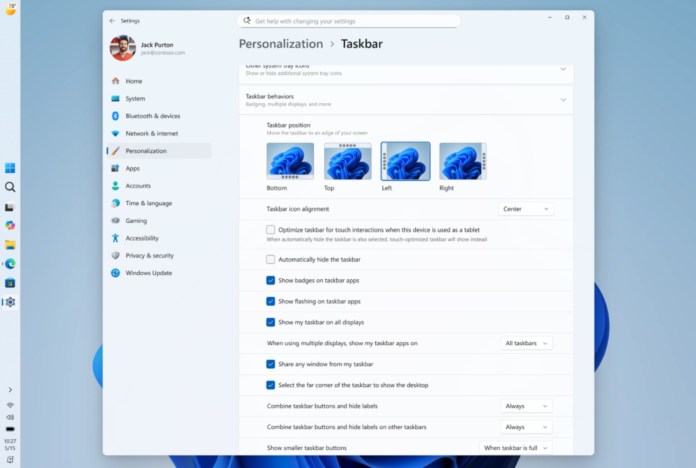
In a development likely to please customization fans, Microsoft has revealed the reinstatement of taskbar positioning options in Windows 11. This enhancement, available to Windows Insider participants, permits users to position the taskbar at the top, bottom, left, or right of their displays.

Microsoft reinstates taskbar positioning options for Windows 11 users.

Customisation Beyond Positioning

Users now not only have the ability to relocate the taskbar but also to select icon alignments for each placement. This promotes a more deliberate and unified user interface. The alignments for Start and Search flyouts now correspond with the taskbar’s position for a fluid experience.

Compact Taskbar for Smaller Displays

Responding to input regarding the taskbar’s dimensions, Microsoft has reintroduced the “small taskbar” option. Users can now select smaller icons and a compact bar, improving usability on devices with less screen space.

Streamlining the Start Menu

The Start menu is also experiencing updates aimed at decluttering. The “Recommended” area has been renamed to “Recent,” centering on frequently used apps and files. Users are able to customize the items displayed in the Start menu, creating a tidier, more tailored experience.

Dedication to User Input

This update epitomizes Microsoft’s commitment to heeding user feedback. By tackling enduring requests, Microsoft is rebuilding trust with its users and demonstrating its dedication to a user-centered operating system.

Technical Constraints and Upcoming Developments

While the taskbar positioning feature has returned, certain functionalities such as auto-hide and drag-and-drop remain in development. Microsoft is actively refining these components as the update advances through Insider channels.

How to Access the Update Immediately

To explore the new taskbar features, users can enroll in the Windows Insider Program. However, the Experimental channel may not be ideal for everyday use. The official update will soon become accessible to all users in Australia, re-establishing Windows as a more personalized experience.

Conclusion

Microsoft’s initiative to restore taskbar positioning options in Windows 11 is a considerable advancement towards a more individualized and user-friendly operating system. With improved customization capabilities and a more streamlined Start menu, this update responds to user feedback and prepares for prospective enhancements.

Q: What taskbar positioning options are currently available in Windows 11?

A: Users can set the taskbar at the top, bottom, left, or right of their displays.

Q: What customization features are part of the update?

A: Users can select icon alignment for the taskbar positions and adjust the Start and Search flyouts to align with the taskbar’s placement.

Q: How does the smaller taskbar benefit users?

A: The smaller taskbar, featuring reduced icon sizes, optimizes screen usage, particularly on devices with restricted display areas.

Q: What changes have been implemented in the Start menu?

A: The Start menu now allows users to customize visible segments, with the “Recommended” section renamed to “Recent” for enhanced relevance.

Q: Is this update accessible to all Windows 11 users?

A: Presently, the update is available via the Windows Insider Program’s Experimental channel, but it will soon be extended to all users in Australia.

Q: Are there any technical constraints associated with the new taskbar features?

A: Some features, such as auto-hide and drag-and-drop, are still in development and not entirely functional with the new taskbar setups.

Government to Enhance Essential Tech Initiatives with Multi-Billion Dollar Injection


We independently review everything we recommend. When you buy through our links, we may earn a commission which is paid directly to our Australia-based writers, editors, and support staff. Thank you for your support!

Quick Read

  • National authorities invest $2.4 billion in technology-based projects.
  • $654 million designated for Digital ID over a four-year span.
  • My Health Record gains nearly $600 million for upgrades.
  • Australia holds the second position worldwide in the OECD’s digital government index.
  • Substantial investments in cyber security and ICT systems across diverse sectors.

Australia’s Tech Investment: A Multi-Billion Dollar Commitment

Gov to sustain key tech programs with new billions

The Australian federal government has revealed a broad initiative to strengthen technology programs, particularly emphasizing Digital ID and My Health Record. This strategic initiative entails a multi-billion dollar funding aimed at improving digital services and systems throughout the country.

Key Allocations and Beneficiaries

A budget allocation of $2.4 billion is designated for technology-related projects as stated in the 2026-27 financial plan. A major recipient is the Digital ID program, which will receive $654.3 million over four years to improve security and functionality.

The Australian Taxation Office, Services Australia, and the Australian Competition and Consumer Commission are prominent beneficiaries, aiding the Digital ID infrastructure and regulatory activities.

Enhancements to My Health Record

My Health Record is projected to obtain $598.3 million over two years, focusing on system upgrades and legislative changes for data sharing. This investment highlights the government’s dedication to advancing healthcare technology.

Australia’s Global Digital Standing

Australia’s digital evolution has established the nation as a worldwide leader, securing the second place in the OECD’s digital government index. This accomplishment emphasizes the effectiveness of national collaboration and digital service provision.

Additional Investments in ICT and Cyber Security

Many other fields will gain from considerable funding, including aged care ICT systems, cyber security, and modernizing business registries. Significant allocations are as follows:

  • $259.9 million for aged care ICT systems.
  • $160.4 million for an uplift program in cyber security at Services Australia.
  • $136.1 million for stabilizing business registers.

Summary

The federal government’s notable funding for technology projects represents a crucial milestone in Australia’s digital progress. By enhancing essential systems like Digital ID and My Health Record, Australia aims to elevate service accessibility and quality for its citizens, while reinforcing its standing in the global digital arena.

Q: What is the main focus of the government’s tech investment?

A: The primary emphasis is on upgrading Digital ID and My Health Record systems.

Q: How much is allocated to Digital ID?

A: Digital ID receives $654.3 million over a four-year term.

Q: What rank does Australia hold in the OECD’s digital government index?

A: Australia is positioned second in the OECD’s digital government index globally.

Q: Which sectors will benefit from the investments?

A: Benefiting sectors include healthcare, aged care, cyber security, and business registries.

Q: What are the implications for My Health Record?

A: My Health Record will secure nearly $600 million for ongoing operations and enhancements.

Q: How will the investments affect cyber security?

A: A significant share of the funding is aimed at boosting cyber security across various sectors.

Q: What is the government’s stance on digital services?

A: The government is dedicated to enhancing digital services to fulfill public expectations and technological advancements.