Australia Tech News - Page 17 of 231 - Techbest - Top Tech Reviews In Australia

Meta to Pay Up to AU$28 Billion in Legal Settlement Payouts


We independently review everything we recommend. When you buy through our links, we may earn a commission which is paid directly to our Australia-based writers, editors, and support staff. Thank you for your support!

Meta Platforms Confronts Huge Settlement Regarding Child Addiction Allegations – TechBest

Meta’s Legal Resolution and Its Effects

Meta consents to AU$28 billion settlement for social media addiction allegations

Brief Overview

  • Meta to disperse up to AU$28 billion over ten years to settle allegations of child addiction.
  • US states allege that Meta’s platforms, Facebook and Instagram, were crafted to addict minors.
  • New usage limitations for teenagers will be instituted by Meta on its platforms.
  • This settlement serves as a framework for other social media entities facing comparable lawsuits.
  • Countries worldwide, including Australia, are instituting measures to restrict harmful online content for minors.

Settlement Specifics and Consequences

Meta Platforms has accepted a notable legal settlement, agreeing to pay up to US$18 billion (AU$28 billion) over the next ten years. This resolution with almost all US states seeks to address accusations that the social media titan’s platforms, Facebook and Instagram, were deliberately designed to captivate children.

The settlement concludes a federal trial that charged Meta with endangering children and misrepresenting the safety of its platforms. Despite the settlement, Meta will not undergo a major transformation. Rather, this action represents a sweeping initiative to reshape Meta’s engagement with its young audience and could establish a precedent for addressing various similar litigations against other social media firms.

International Initiatives to Safeguard Minors Online

Governments across the globe, including Australia, are enacting strategies to limit children’s exposure to harmful online materials. Australia, in particular, has instituted a prohibition on social media usage by individuals under 16. The goal of these initiatives is to protect youth mental health and overall wellbeing.

As part of the settlement, Meta has pledged to restrict teenagers’ usage of Facebook and Instagram to two hours daily and to prevent access between midnight and 6 am without parental approval. Additional restrictions will encompass the disabling of most push notifications during educational hours and the strengthening of measures for age-restricted content.

Monetary Effects and Legal Responsibilities

The settlement comprises guaranteed disbursements of approximately US$12.7 billion, with an added US$5 billion dependent on similar actions being taken by other social media platforms like Snapchat, TikTok, and YouTube. This agreement also incorporates the resolution of privacy disputes stemming from the Cambridge Analytica controversy, costing Meta an extra US$459 million.

This settlement is subject to approval from US District Judge Yvonne Gonzalez Rogers, who has expressed her intent to provide this approval, viewing it as a favorable advancement.

Continuing Legal Issues and Mental Health Issues

Notwithstanding the settlement, social media firms, including Meta, still contend with thousands of lawsuits for purportedly contributing to a mental health crisis among youth. These legal actions assert that platforms have intentionally aimed to captivate users, resulting in challenges such as anxiety, depression, and suicidal thoughts.

Meta has regularly maintained that “social media addiction” lacks recognition as a formal psychiatric condition. Nonetheless, this settlement may signify the onset of more substantial changes industry-wide as companies encounter increasing scrutiny from legal and governmental authorities around the world.

Conclusion

Meta’s commitment to pay up to AU$28 billion in settlements marks a pivotal moment in the continual discussion concerning the influence of social media on minors. With new limitations poised to alter how teenagers interact with these platforms, this settlement could pave the way for future legal actions and motivate global efforts to improve online safety for young individuals.


Q&A

Q: What is the main accusation against Meta?

A: Meta is accused of crafting its platforms, Facebook and Instagram, to entice children, resulting in potential harm.

Q: How will Meta regulate teenagers’ access to its platforms?

A: Meta will limit teenagers’ access to two hours each day and prohibit usage from midnight to 6 am without parental consent.

Q: Will other social media platforms be subjected to analogous restrictions?

A: The settlement includes provisions for additional payments if platforms such as Snapchat, TikTok, and YouTube implement similar restrictions.

Q: What is the financial impact of this settlement on Meta?

A: The settlement is expected to cost Meta up to AU$28 billion over a ten-year period, which represents approximately three to four months of profit and one month of revenue.

Q: Are there ongoing lawsuits targeting Meta and other companies?

A: Yes, a number of lawsuits are still active, accusing social media firms of contributing to a mental health crisis in children.

Q: How have governments responded to this situation?

A: Governments worldwide, including Australia, are taking steps to restrict children’s access to detrimental online content.

Transitioning from Threat Intelligence to Understanding Business Risk


We independently review everything we recommend. When you buy through our links, we may earn a commission which is paid directly to our Australia-based writers, editors, and support staff. Thank you for your support!

Transitioning from Threat Intelligence to Business Risk: Addressing Cyber Threats in Australia

Quick Overview

  • AI-induced threats are on the rise, exerting pressure on current cybersecurity frameworks.
  • Organisations need to focus on genuine threats rather than merely possible vulnerabilities.
  • Successful cybersecurity tactics incorporate threat intelligence within business risk management frameworks.
  • AI technologies assist in optimizing threat detection and response, conserving essential resources.
  • Partnering with knowledgeable associates is vital for navigating the changing cyber environment.

The Role of AI in Amplifying Cyber Threats

The online world is changing swiftly, with AI taking on a complex role in both identifying and creating weaknesses. Organisations are experiencing a five-fold rise in Common Vulnerabilities and Exposures (CVEs) due to sophisticated AI systems. Firms like Mozilla and Palo Alto have initiated significant patch distributions in response.

Transitioning from threat intelligence to comprehending business risk

Allocating Resources Strategically

With constrained budgets and a lack of cybersecurity experts, organisations must grapple with the task of focusing on genuine threats. Dan Elliott from Recorded Future emphasizes the necessity for strategic resource allocation to keep ahead of possible breaches. Emphasis on vulnerabilities that are actively exploited, rather than just CVE metrics, is now essential.

Significance of Integration

Integrating threat intelligence into strategic business risk management is vital. This requires employing AI to improve detection, response, and high-level risk documentation. Recorded Future’s partnership with a financial service organization led to an optimized vulnerability management process, saving both time and resources.

AI Augmenting Human Skills

AI does not replace human skills but enhances them. By sifting through extensive data volumes, AI allows cybersecurity teams to concentrate on actionable insights and deliver valuable guidance to executives. This transition from tactical detection to strategic risk management is critical for adjusting to the swiftly evolving cyber threat environment.

Conclusion

Organisations in Australia are navigating a progressively intricate and daunting cyber environment. By redirecting their focus from simple threat intelligence to a wider understanding of business risk, they can more effectively manage their resources and safeguard their assets. Collaborating with experienced partners like Recorded Future supports this transition, ensuring that threats are promptly and effectively addressed.

Q&A

Q: How are AI models shaping the cybersecurity environment?

A: AI models are raising the quantity of recognized vulnerabilities, requiring a shift towards prioritizing actual threats over possible ones.

Q: What strategies can organisations implement to respond to the rise in cyber threats?

A: Organisations should incorporate threat intelligence into risk management and utilize AI tools for improved detection and response.

Q: In what ways can AI be used in cybersecurity while maintaining human roles?

A: AI enhances human roles by filtering data and guiding teams towards actionable insights, facilitating more strategic decision-making.

Q: Why is working with experienced partners essential in cybersecurity?

A: Experienced partners offer the necessary knowledge and resources to accurately identify and address risks, adapting strategies to the shifting threat landscape.

Q: What is the significance of threat intelligence in business risk management?

A: When integrated with business risk management, threat intelligence aids in prioritizing critical threats and aligning cybersecurity efforts with business objectives.

Predictable Expenses and Established Oversight Drive Data Repatriation Trend


We independently review everything we recommend. When you buy through our links, we may earn a commission which is paid directly to our Australia-based writers, editors, and support staff. Thank you for your support!

Australian Enterprises Repatriate Data Due to AI and Cloud Expense Issues

body {font-family: Arial, sans-serif; line-height: 1.6; margin: 20px; color: #333;}
h2 {color: #0056b3;}
h3 {color: #007bff;}
a {color: #0056b3; text-decoration: none;}
a:hover {text-decoration: underline;}
img {max-width: 100%; height: auto;}

Australian Enterprises Repatriate Data Due to AI and Cloud Expense Issues

Quick Read:

  • AI is increasing operational costs, leading to a reassessment of cloud data storage.
  • Data sovereignty has emerged as a significant topic among Australian executives.
  • Australian enterprises are aiming to repatriate cloud data for better cost management and sovereignty.
  • Comprehending data value and access is vital for efficient data governance.
  • Robust data governance is critical in an AI-influenced business environment.
Predictable expenses, demonstrable control fuels data repatriation trend

Reassessing Cloud Investments

As AI emerges as a major expense factor for enterprises, Australian organisations are reassessing their cloud storage tactics. Neil Shan, managing director of IT Ecosystems, underscored the volatility of cloud subscription costs, urging organisations to contemplate on-premises investments for improved budget oversight.

The Significance of Data Sovereignty

During the “Own your data, own your future” webinar, Jacqueline Graciella of Synology A/NZ stressed the difference between data residency and sovereignty. She urged firms to consider not only where their data is held but who governs it and how they can maintain authority as AI adoption escalates.

Business Leaders Focusing on Sovereignty

A recent study revealed that 63% of Australian business leaders discuss data sovereignty within their board meetings. Although it’s a critical issue, many organisations lack the means to enforce sovereignty, restricting their adaptability in AI provider alliances.

Grasping Your Data

Neil Shan pointed out the Five Knows of Cybersecurity to help firms comprehend their data. Numerous small to mid-sized enterprises struggle to respond to fundamental inquiries about their data’s value and availability, making them susceptible to disjointed data management.

The Concealed Expenses of Cloud Services

Jacqueline Graciella highlighted Korean Air’s success in internalising data management, which led to major cost reductions and productivity enhancements. Likewise, Australian enterprises are looking to repatriate cloud workloads to regain oversight over expenses and sovereignty.

Guaranteeing Data Recoverability

Shan emphasised the necessity of data recoverability in light of AI threats. He recommended the ‘3-2-1-1-0’ backup strategy to safeguard data integrity and ensure prompt recovery from cybersecurity incidents.

Next Steps for Business Leaders

Shan encouraged business leaders to emphasise data control and security rather than pursuing AI trends. Establishing sound data governance and securing critical digital assets are essential initial steps.

Summary

Australian enterprises are increasingly concentrating on data sovereignty and cost management in response to escalating AI-driven expenses. By effectively understanding and managing their data, companies can bolster security and retain flexibility in the shifting technological landscape.

Q&A Section

Q: Why are Australian enterprises rethinking cloud storage?

A: Rising AI expenses and the unpredictable nature of cloud subscription costs are leading organisations to consider the advantages of on-premises storage for better budget control.

Q: What differentiates data residency from data sovereignty?

A: Data residency pertains to where data is physically stored, while data sovereignty involves who controls and governs the data, irrespective of its location.

Q: In what ways are organisations addressing data sovereignty?

A: Numerous organisations are engaging in discussions about data sovereignty at the board level, yet few possess the capability to fully enforce it, which constrains their flexibility with AI providers.

Q: What advantages does repatriating cloud data offer?

A: Repatriating cloud data can result in substantial cost savings, improved oversight over data, and enhanced data sovereignty, as evidenced by companies like Korean Air.

Q: How can organisations ensure the recoverability of their data?

A: Adopting the ‘3-2-1-1-0’ backup principle, which includes maintaining multiple copies of data and ensuring at least one is immutable, is vital for effective data recoverability.

Q: What should be the initial step for business leaders aiming to improve data management?

A: Business leaders should prioritise securing control over their data, recognising its value, and implementing robust data governance before pursuing AI advancements.

NAB’s Chief Security Officer Ready to Move to ANZ Banking Group


We independently review everything we recommend. When you buy through our links, we may earn a commission which is paid directly to our Australia-based writers, editors, and support staff. Thank you for your support!

Brief Overview

  • Sandro Bucchianeri is moving from NAB to ANZ as the Chief Information Security Officer.
  • His new position will commence on November 11, with reporting duties to ANZ Group CIO Donald Patra.
  • Shane Ripley is serving as the interim CISO at ANZ until Bucchianeri steps in.
  • Earlier this year, Dr. Maria Milosavljevic, the previous permanent CISO of ANZ, retired.
NAB's CSO moving to ANZ Banking Group

ANZ Attracts Leading Talent from NAB

Sandro Bucchianeri, who held the position of group chief security officer at NAB for over five years, is set to join ANZ as the Chief Information Security Officer (CISO) on November 11. This strategic decision is part of ANZ’s effort to strengthen its cyber security measures in response to shifting digital challenges.

Leadership Change at ANZ

In its announcement, ANZ emphasized Bucchianeri’s role in directing the bank’s information and cyber security strategy. His responsibilities will include cultivating a risk-informed, threat-led approach throughout ANZ’s operations. Donald Patra, the ANZ Group CIO, commended Bucchianeri as a well-regarded leader in the industry, highlighting his background in improving cyber resilience at major organizations.

Professional Background

Before joining ANZ, Bucchianeri played a crucial role at NAB, managing both information and physical security sectors. His move comes in the wake of Dr. Maria Milosavljevic’s retirement from the CISO position this year, with Shane Ripley covering the role temporarily until Bucchianeri begins.

Conclusion

The appointment of Sandro Bucchianeri as ANZ’s CISO represents a vital advancement in the bank’s approach to combating cyber threats. His knowledge is anticipated to improve ANZ’s security infrastructure, ensuring safe and reliable services for its clients.

Q: What role is Sandro Bucchianeri taking on at ANZ?

A: He will function as the Chief Information Security Officer, overseeing ANZ’s information and cyber security strategy.

Q: When will Bucchianeri start in his new role?

A: He will begin on November 11.

Q: To whom will Bucchianeri report at ANZ?

A: He will report to ANZ Group CIO Donald Patra.

Q: What qualifications does Bucchianeri bring to ANZ?

A: He has a strong history of advancing cyber security maturity within large, intricate organizations.

Q: Who is currently serving as acting CISO at ANZ?

A: Shane Ripley is acting as the CISO until Bucchianeri’s onboarding.

Q: What was Bucchianeri’s position at NAB?

A: He was the Group Chief Security Officer, overseeing both information and physical security aspects.

NASA’s Latest Telescope Set to Investigate Dark Energy, Dark Matter, and Exoplanets


We independently review everything we recommend. When you buy through our links, we may earn a commission which is paid directly to our Australia-based writers, editors, and support staff. Thank you for your support!

Quick Overview

  • NASA plans to launch the Nancy Grace Roman Space Telescope aboard a SpaceX Falcon Heavy rocket.
  • This mission aims to investigate over two billion galaxies to gain insights into dark matter and dark energy.
  • The telescope will assess Einstein’s general relativity theory and perform extensive searches for exoplanets.
  • The launch is taking place nine months earlier than initially scheduled from Kennedy Space Center.
  • With an estimated value of around AU$5.6 billion, the project seeks to unravel cosmic enigmas.
NASA's Upcoming Space Telescope to Explore Dark Energy and Exoplanets

NASA’s Ambitious New Venture

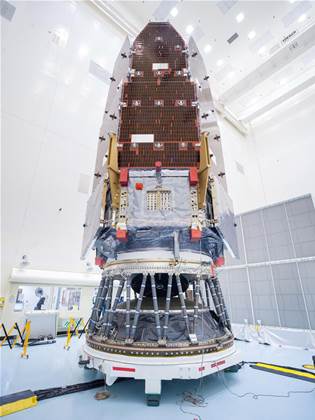
NASA is preparing for the launch of its next significant space observatory, which aims to probe some of the universe’s deepest mysteries, such as dark energy and dark matter. The Nancy Grace Roman Space Telescope, a massive undertaking valued at around AU$5.6 billion, is scheduled to take off this Sunday at NASA’s Kennedy Space Center in Florida. This event will see the observatory rise into space aboard a SpaceX Falcon Heavy rocket, occurring nine months earlier than planned, according to NASA officials.

Continuing Previous Achievements

Inspired by the Hubble Space Telescope and the James Webb Space Telescope, the Roman telescope is designed to build upon the pivotal discoveries made by its forerunners. With its broad view and swift surveying abilities, Roman is set to provide scientists with an unparalleled chance to investigate the cosmos, studying its structure, makeup, and evolution.

Revealing Cosmic Secrets

The primary mission of Roman will extend over a year, intending to survey more than two billion galaxies. This ambitious investigation will empower scientists to explore how the structures of the universe, including stars, galaxies, and galaxy clusters, have developed over time. These findings are essential for unveiling the fundamental characteristics of dark matter and dark energy, which together comprise most of the universe’s mass.

Evaluating Einstein’s Theory

Albert Einstein’s general relativity theory, established in 1915, remains a fundamental aspect of physics. The Roman telescope will be crucial in assessing whether this theory is applicable across billions of light-years. By charting how galaxies cluster and observing the way matter curves light—a process known as gravitational lensing—the telescope will contribute to determining if updates to our comprehension of gravity are warranted.

The Quest for Exoplanets

So far, scientists have identified more than 6,350 exoplanets, which are planets outside our solar system. Roman will undertake one of the most exhaustive searches for these celestial entities to date. It is expected to uncover thousands of new exoplanets, yielding the first statistical overview of planetary systems akin to our own. Furthermore, the mission will showcase new technology to directly image some nearby exoplanets.

Mission and Heritage

Post-launch, the telescope will make its way to Lagrange Point 2, situated about 1.6 million km from Earth. The mission is planned for five years, with the potential for an additional five-year extension due to fuel availability. In spite of previous efforts by President Donald Trump’s administration to reduce funding, Congress secured the project’s continuation. Named in honor of NASA’s first chief astronomer, Nancy Grace Roman, who passed in 2018, this mission upholds her legacy in the field of astronomical exploration.

Conclusion

NASA’s Nancy Grace Roman Space Telescope is ready to begin a revolutionary mission, investigating dark matter, dark energy, and exoplanets. This ambitious endeavor will challenge Einstein’s theories and enhance our grasp of the universe, heralding a new chapter in space exploration.

Q: What is the main objective of the Nancy Grace Roman Space Telescope?

A: The main objective is to investigate dark matter, dark energy, and engage in comprehensive searches for exoplanets.

Q: How does the Roman telescope enhance past missions?

A: It draws from the Hubble and Webb telescopes, providing a broad perspective and efficient survey capabilities to advance previous findings.

Q: Why is it vital to test Einstein’s general relativity theory?

A: Testing the theory is essential to ascertain whether our knowledge of gravity is accurate over vast distances or if adjustments are required.

Q: How many exoplanets is Roman anticipated to find?

A: Roman is projected to identify thousands of new exoplanets, offering a statistical overview of planetary systems.

Q: What ensured the funding for the Roman project remained intact?

A: Despite attempts to reduce funding, Congress upheld it, recognizing the project’s importance in research related to astronomy.

Q: Who was Nancy Grace Roman?

A: Nancy Grace Roman was NASA’s inaugural chief astronomer, pivotal in advancing space exploration efforts.

FlyBuys Introduces New Virtual Assistant “Nex” for Analysts


We independently review everything we recommend. When you buy through our links, we may earn a commission which is paid directly to our Australia-based writers, editors, and support staff. Thank you for your support!

Brief Overview

  • Flybuys launches Nex, a virtual assistant utilizing Snowflake’s CoWork to enhance the productivity of marketing analysts.
  • The Snowflake-oriented data “pantry” in AWS Sydney initially facilitated data access but underscored the necessity for AI-driven analytics.
  • Incorporating metadata and business context addressed initial challenges, but Flybuys remains careful about expanding Nex’s deployment.
FlyBuys reveals analysts' virtual assistant 'Nex'

Transforming Data Analysis with “Nex”

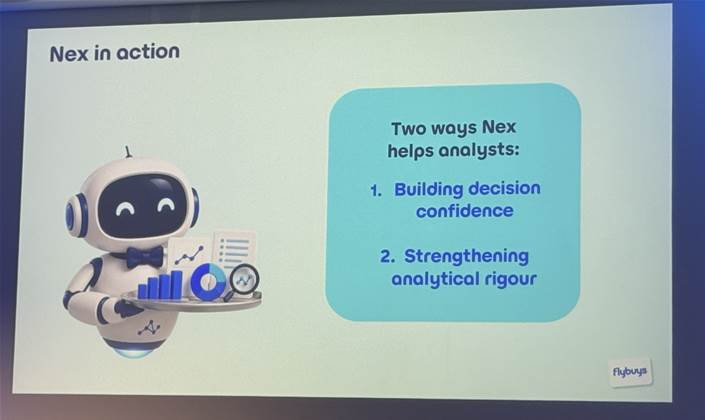
FlyBuys has introduced “Nex,” a virtual assistant aimed at streamlining the tasks of marketing analysts. This move follows attempts to enhance access to the extensive data generated by the loyalty program’s 10 million members.

The Data “Pantry” Approach

During a Snowflake event in Sydney, Jane McCarthy, FlyBuys’ data and insights lead, described the creation of a data infrastructure known as a “pantry.” This initiative was intended to speed up data access for analysts leveraging Snowflake’s technology on AWS Sydney.

Revamping Analyst Activities

Historically, analysts faced challenges with data retrieval. The “pantry” enabled them to more seamlessly access and utilize data, yet it also created a demand for sophisticated AI analytics for deeper insights.

Nex: The AI-Enhanced Assistant

“Nex,” driven by Snowflake’s CoWork, was crafted to enable analysts to make more informed choices. Initially, Nex generated plausible results but sometimes lacked accuracy due to a limited understanding of business context.

Boosting Contextual Awareness

The advancement occurred when Nex was connected to FlyBuys’ metadata and business context, resulting in a notable improvement in the precision and appropriateness of its outcomes.

Prospective Plans and Caution

FlyBuys is presently cautious about rolling out Nex’s functionality beyond analysts because of possible risks. Analysts possess the ability to validate Nex’s results, a skill that may not be common among other business users.

Conclusion

FlyBuys’ launch of Nex signifies a pivotal advancement in data analytics via AI. The thoughtful incorporation of business context has enhanced Nex’s effectiveness, although its extensive application is still under review.

Q: What is Nex?

A:

Nex is a virtual assistant created by FlyBuys to assist marketing analysts in formulating commercial recommendations by harnessing enhanced AI analytics.

Q: What advantage does the data “pantry” provide to analysts?

A:

The data “pantry” ensures prompt access to substantial datasets, allowing analysts to dedicate their efforts to more valuable tasks instead of data retrieval.

Q: What issue arose during Nex’s initial launch?

A:

At first, Nex offered responses that appeared plausible but were imprecise due to inadequate comprehension of FlyBuys’ business context.

Q: How was Nex enhanced?

A:

By merging metadata and business context, Nex’s capacity to deliver accurate and relevant outputs was substantially improved.

Q: Why does FlyBuys exercise caution regarding widespread Nex deployment?

A:

FlyBuys is wary due to risks that may arise from users lacking the expertise to authenticate Nex’s results, unlike trained analysts.

Q: On what technology is Nex based?

A:

Nex is constructed on Snowflake’s CoWork platform, utilizing its AI functionality to support analysts.

Q: What is the anticipated future for Nex?

A:

FlyBuys plans to advance cautiously with Nex’s introduction, focusing on enhancing its features while contemplating broader business usage.

ASD Notifications: Australian TeamCity Servers Undergoing Cyber Incursions


We independently review everything we recommend. When you buy through our links, we may earn a commission which is paid directly to our Australia-based writers, editors, and support staff. Thank you for your support!

Brief Overview

  • Major vulnerability CVE-2026-63077 in JetBrains’ TeamCity server is currently under attack in Australia.
  • This security weakness enables attackers to run arbitrary OS commands and jeopardize CI/CD pipelines.
  • CISA has included the TeamCity vulnerability in its Known Exploited Vulnerabilities listing.
  • JetBrains has released updates for serious vulnerabilities in YouTrack and IntelliJ IDEA.
Major vulnerability in JetBrains TeamCity targeted in Australia

TeamCity Servers in Australia Under Cyber Assault

The Australian Cyber Security Centre (ACSC) has issued an alert concerning a severe authentication bypass vulnerability in JetBrains’ TeamCity CI/CD solution. The flaw, known as CVE-2026-63077, is being actively exploited within the region.

Details on CVE-2026-63077

This vulnerability allows unauthorized attackers with HTTP/HTTPS access to execute arbitrary operating system commands on TeamCity On-Premises servers. With a severity rating of 9.8 out of 10, it presents considerable risks to CI/CD workflows by potentially undermining data integrity and revealing sensitive information.

JetBrains’ Action and Security Steps

JetBrains acknowledged the vulnerability in late July and urged users to promptly update their TeamCity versions. The company underscored the associated risks, which include exposure of TeamCity data, alteration of server states, and threats to build artifacts.

Analysis from Rapid7

Security firm Rapid7 attributed the issue to a permissive allow-list within TeamCity’s server, which deserializes Java classes from unauthorized requests. The deserialization issue stemmed from the XStream library permissions not being retracted, resulting in a vulnerability.

Implications for Global Security

The United States Cyber Security and Infrastructure Agency (CISA) has added the TeamCity vulnerability to its Known Exploited Vulnerabilities catalogue, underscoring the global importance and urgency of resolving this security issue.

JetBrains Addresses Other Vulnerabilities

Besides TeamCity, JetBrains has released fixes for critical vulnerabilities in its YouTrack and IntelliJ IDEA products. These include an issue permitting database backup downloads in YouTrack and serious vulnerabilities in IntelliJ IDEA impacting remote sessions.

Conclusion

Australian TeamCity servers are confronting serious cyber threats due to a critical vulnerability. With the issue now actively exploited, immediate action is essential to secure the affected systems. Users are encouraged to update their installations and stay alert against possible attacks.

Q&A Section

Q: What is CVE-2026-63077?

A:

CVE-2026-63077 is a major authentication bypass vulnerability in JetBrains’ TeamCity CI/CD solution, enabling unauthorized attackers to execute arbitrary OS commands.

Q: How serious is the vulnerability?

A:

This vulnerability is rated 9.8 out of 10 in severity, signifying a critical level of risk.

Q: How can users safeguard themselves?

A:

Users should promptly update their TeamCity installations and keep an eye out for any unusual activities on their servers.

Q: Has the vulnerability been exploited on a global scale?

A:

Yes, the vulnerability has been listed in CISA’s Known Exploited Vulnerabilities catalogue, indicating its global exploitation potential.

Q: Are there any other affected products?

A:

Indeed, JetBrains has also released patches for critical vulnerabilities in YouTrack and IntelliJ IDEA.

NSW Implements Facial Recognition in New Gaming Reform Program


We independently review everything we recommend. When you buy through our links, we may earn a commission which is paid directly to our Australia-based writers, editors, and support staff. Thank you for your support!

NSW Gaming Reform Strategy: Required Facial Recognition Technology

Brief Overview

  • NSW enacts compulsory facial recognition technology (FRT) for gaming establishments by 2028.
  • The system is connected to an exclusion list for individuals with gambling issues.
  • FRT providers function under a voluntary code of conduct.
  • Data is mandated to stay within Australia and be encrypted.
  • Usage of FRT is confined to exclusion matters, disallowing commercial applications.
  • Debates arise around issues of privacy and potential discrimination.

NSW’s Compulsory Facial Recognition Technology

New South Wales (NSW) is poised to implement mandatory facial recognition technology (FRT) in hotels and clubs featuring gaming machines by 2028. This program seeks to establish a comprehensive exclusion register for problem gamblers, superseding the existing venue-specific self-exclusion arrangements.

Execution and Practice Guidelines

Starting in March 2026, establishments employing FRT for self-exclusion will adhere to a non-binding code of practice from Liquor & Gaming NSW. This document serves as the inaugural formal guidance on FRT within the state, though it does not mandate government sanction for the setup of the system.

FRT systems are required to align with the benchmarks set by the US National Institute of Standards and Technology (NIST) for identification precision. The code limits the integration of FRT with other personal data systems and forbids its commercial exploitation, including loyalty schemes.

Data Protection and Privacy Protocols

All data obtained via FRT must remain in Australia and be safeguarded using a minimum of 256-bit AES encryption, with TLS version 1.3 utilized during transmission. Installers of FRT must possess a Class 2 security license and guarantee 99.9% operational availability during business hours.

Privacy protocols stipulate that biometric data and images not resulting in matches with excluded individuals must be immediately erased. The employment of FRT for anti-money laundering is postponed for forthcoming reforms.

Comparative Analysis with Other States

The NSW strategy for FRT contrasts with that of South Australia, which has implemented a government-regulated model since 2020. Queensland permits FRT in venues without maintaining a certified vendor roster. Meanwhile, Victoria has delayed its trial on pre-commitment gaming cards, channeling attention instead on self-exclusion initiatives.

NSW enforces facial recognition within gaming reform measures

Conclusion

NSW’s decisive action to make facial recognition technology mandatory in gaming venues represents a notable advancement in managing gambling-related harm. Although the initiative is commended for its potential efficacy, it simultaneously sparks privacy and ethical debates. The state’s methodology stands apart from those adopted by other Australian territories, showcasing varied approaches to address gambling challenges.

Common Inquiries

Q: What is the primary objective behind implementing mandatory FRT in NSW gaming venues?

A: The primary goal is to establish a state-level exclusion register to tackle problem gambling more effectively.

Q: Are there any privacy issues linked to this initiative?

A: Certainly, experts have expressed apprehensions regarding possible privacy infringements, accuracy, and biases inherent in facial recognition technology.

Q: How does the NSW initiative stack up against other states in Australia?

A: NSW’s strategy contrasts with South Australia’s government-operated model and Queensland’s allowance of FRT without a certified vendor list. Victoria prioritizes self-exclusion programs.

Q: What are the technical specifications for FRT systems as per the current guidelines?

A: FRT systems must comply with NIST standards, confine data to Australia, and utilize encryption and security measures such as 256-bit AES and TLS 1.3.

RØDE Introduces DS3 Desktop Studio Arm Featuring Improved 1.5kg Load Capacity for Modern Creators


We independently review everything we recommend. When you buy through our links, we may earn a commission which is paid directly to our Australia-based writers, editors, and support staff. Thank you for your support!

Presenting RØDE’s DS3: A New Chapter in Desktop Studio Arms

Quick Overview

  • The DS3 from RØDE supports weights up to 1.5kg, perfect for heavier equipment.
  • No clamp is necessary; it features a weighted base for enhanced stability.
  • Comes with built-in cable management to keep the area organized.
  • Currently available in Classic Black, with Crisp White on the horizon.
  • Designed and produced in Sydney for local Australian creators.
  • Retails for around A$152, with global shipping available.

Enhanced Capacity Without a Clamp

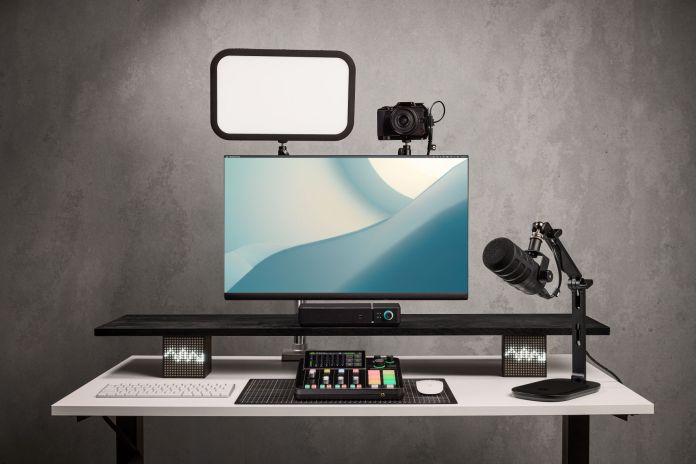
The RØDE DS3 can hold up to 1.5kg, making it suitable for various professional equipment including dynamic broadcast microphones, larger condenser types, and cameras. Its all-metal design and newly engineered base offer stability while maintaining a slim profile.

The base is equipped with an acoustic isolation pad, made from silicone for the Classic Black version and cork for the Crisp White option. Both variants aim to reduce vibration transfer, improving audio fidelity.

Cable management clips are built in to ensure a tidy setup, essential for desks cluttered with multiple devices.

Silent and Accurate Positioning

An expertly crafted ball head allows for effortless and noise-free adjustments, crucial during recordings or live events. A central lock keeps the selected position in place securely, enabling quick adjustments on the go without causing interruptions.

The DS3 is provided with three threaded adaptors—3/8″, 1/4″, and 5/8″—suitable for most microphones, camera mounts, and lighting tools, ensuring immediate usability right out of the box.

RØDE's DS3 Desktop Studio Arm with Increased Capacity

Crafted and Manufactured in Sydney

RØDE continues to craft and produce its products in Sydney, sustaining a robust local team focused on engineering, manufacturing, and quality assurance. This local production benefits Australian consumers with offerings tailored to the needs of the domestic market.

The DS3 is now available in black for around A$152, with the white variant expected to follow. Australian inventory is anticipated soon after the global release.

Functional Fit for Australian Creators

For many creators working on shared or temporary surfaces, a stand requiring a clamp can be an obstacle. The weighted-base design of the DS3 provides increased flexibility, enabling users to position their equipment as needed without the constraints of desk space.

The enhanced weight capacity allows users to choose between a dynamic or a lightweight condenser microphone without being restricted by stand limitations. This is particularly advantageous for multi-mic podcast setups or configurations with additional cameras or lighting.

What Remains Unchanged, and What Advances

The DS3 keeps the essential characteristics of its predecessor: a clamp-free heavy base coupled with a compact arm. Enhancements include greater capacity, quieter repositioning, improved base stability, and optimized isolation pads. Enhanced cable routing and included thread adaptors increase compatibility at no extra cost.

RØDE has designed the DS3 with contemporary creator setups in mind, recognizing that a stand managing only a single lightweight USB microphone is now inadequate.

Conclusion

The RØDE DS3 signifies a major leap forward for creators in need of a secure, adaptable studio arm. With no clamp necessary and engineered to handle heavier equipment, it provides improved functionality for modern content creation setups. The DS3 is an excellent option for those seeking elevated stability and adaptability without compromising desk space.

FAQs

Q: What is the maximum load capacity of the RØDE DS3?

A: The DS3 can support up to 1.5kg, accommodating heavier equipment such as broadcast microphones and cameras.

Q: How does the DS3 manage cables?

A: The DS3 features built-in cable clips to keep XLR and USB cables organized and out of sight.

Q: Is the DS3 offered in multiple colors?

A: Absolutely, it is currently sold in Classic Black, with a Crisp White option to be released soon.

Q: Where is the DS3 designed and produced?

A: The DS3 is designed and manufactured at RØDE’s facilities in Sydney, Australia.

Q: What is the price of the DS3 in Australia?

A: The DS3 retails for around A$152, with prices varying by local retailers.

Q: How does the DS3 compare with RØDE’s PSA1 series?

A: While the PSA1 provides greater reach for permanent setups, the DS3 offers portability and independence from desk edges, making it well-suited for hybrid desks.

Uncontrolled AI: An Expensive Risk


We independently review everything we recommend. When you buy through our links, we may earn a commission which is paid directly to our Australia-based writers, editors, and support staff. Thank you for your support!

AI Without Governance: Navigating Risks and Opportunities

Quick Read

  • AI utilization is prevalent but requires strong governance.
  • Cybersecurity threats and regulatory risks are growing because of AI.
  • Successful AI implementation relies on strategies that are aware of risks.
  • Responsible AI application necessitates attention to security and compliance.

AI Adoption: A Double-Edged Sword

As companies worldwide, including Australia, accelerate the incorporation of AI technologies, the emphasis on efficiency and competitive advantage often eclipses the imperative for cybersecurity governance and adherence to regulations. Ignoring this necessity could result in significant consequences, as the backbone of effective AI implementation is deeply entrenched in robust governance practices.

AI Without Governance Is Just Expensive Risk

The Current AI Landscape

Companies are implementing AI across different scales, from operational systems to strategic decision-making. While many attribute downsizing to AI-driven productivity enhancements, the actual scenario suggests that such actions are more about equipping for forthcoming upheavals.

Understanding Risks and Challenges

The revolutionary capabilities of AI come with heightened cybersecurity threats and regulatory hurdles. The swift advancement of the technology permits cybercriminals to exploit AI for complex attacks, while employees inadvertently increase risks by utilizing unauthorized AI applications.

Developing a Governance Strategy

For AI to become a genuine advantage, the dialogue must evolve from simply technological capabilities to governance and oversight. The pivotal inquiry becomes, “How can we govern AI before it begins to govern us?” Successful enterprises will harmonize innovation with regulatory oversight, ensuring that AI implementation remains secure and responsible.

Virtual IT Group’s Approach

Virtual IT Group, in partnership with The Instillery and Security Centric, aids business executives in addressing AI challenges through a security-first perspective. We customize our approaches to fit each organization’s specific demands, concentrating on developing strong cybersecurity, governance, risk, and compliance structures.

Summary

In the rapidly evolving AI landscape, companies must not only aim for swift implementation but also confirm they possess the governance structures needed to manage the inherent risks. The real benchmark of success lies in retaining control and leveraging AI in a responsible manner.

Questions and Answers

Q: What is the primary risk of unregulated AI?

A: The primary risk is the likelihood of heightened cyber threats and regulatory vulnerabilities stemming from inadequate governance.

Q: How can organizations ready themselves for AI integration?

A: Organizations should concentrate on establishing governance, risk management, and compliance frameworks prior to the deployment of AI technologies.

Q: Why is speed alone not an adequate AI strategy?

A: Accelerated implementation without governance may result in uncontrolled risks and weaknesses, undermining potential productivity improvements.

Q: Which entities benefit most from AI adoption?

A: Entities that manage to balance innovation with risk management and governance will realize the most value from AI.

Q: What part do employees play in AI risk?

A: Employees frequently unwittingly introduce risks by utilizing AI tools without comprehending the governance and security ramifications.

Q: How does Virtual IT Group assist businesses in AI adoption?

A: Virtual IT Group offers customized strategies focusing on cybersecurity, governance, risk, and compliance to guarantee the safe and responsible use of AI.