
NASA’s Latest Telescope Set to Investigate Dark Energy, Dark Matter, and Exoplanets

We independently review everything we recommend. When you buy through our links, we may earn a commission which is paid directly to our Australia-based writers, editors, and support staff. Thank you for your support!
Quick Overview
- NASA plans to launch the Nancy Grace Roman Space Telescope aboard a SpaceX Falcon Heavy rocket.
- This mission aims to investigate over two billion galaxies to gain insights into dark matter and dark energy.
- The telescope will assess Einstein’s general relativity theory and perform extensive searches for exoplanets.
- The launch is taking place nine months earlier than initially scheduled from Kennedy Space Center.
- With an estimated value of around AU$5.6 billion, the project seeks to unravel cosmic enigmas.
NASA’s Ambitious New Venture
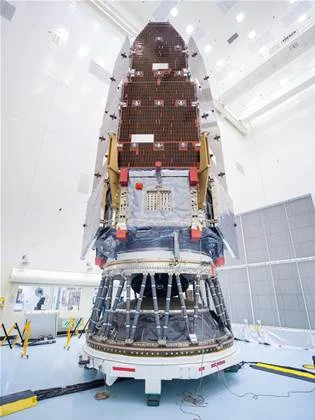
NASA is preparing for the launch of its next significant space observatory, which aims to probe some of the universe’s deepest mysteries, such as dark energy and dark matter. The Nancy Grace Roman Space Telescope, a massive undertaking valued at around AU$5.6 billion, is scheduled to take off this Sunday at NASA’s Kennedy Space Center in Florida. This event will see the observatory rise into space aboard a SpaceX Falcon Heavy rocket, occurring nine months earlier than planned, according to NASA officials.
Continuing Previous Achievements
Inspired by the Hubble Space Telescope and the James Webb Space Telescope, the Roman telescope is designed to build upon the pivotal discoveries made by its forerunners. With its broad view and swift surveying abilities, Roman is set to provide scientists with an unparalleled chance to investigate the cosmos, studying its structure, makeup, and evolution.
Revealing Cosmic Secrets
The primary mission of Roman will extend over a year, intending to survey more than two billion galaxies. This ambitious investigation will empower scientists to explore how the structures of the universe, including stars, galaxies, and galaxy clusters, have developed over time. These findings are essential for unveiling the fundamental characteristics of dark matter and dark energy, which together comprise most of the universe’s mass.
Evaluating Einstein’s Theory
Albert Einstein’s general relativity theory, established in 1915, remains a fundamental aspect of physics. The Roman telescope will be crucial in assessing whether this theory is applicable across billions of light-years. By charting how galaxies cluster and observing the way matter curves light—a process known as gravitational lensing—the telescope will contribute to determining if updates to our comprehension of gravity are warranted.
The Quest for Exoplanets
So far, scientists have identified more than 6,350 exoplanets, which are planets outside our solar system. Roman will undertake one of the most exhaustive searches for these celestial entities to date. It is expected to uncover thousands of new exoplanets, yielding the first statistical overview of planetary systems akin to our own. Furthermore, the mission will showcase new technology to directly image some nearby exoplanets.
Mission and Heritage
Post-launch, the telescope will make its way to Lagrange Point 2, situated about 1.6 million km from Earth. The mission is planned for five years, with the potential for an additional five-year extension due to fuel availability. In spite of previous efforts by President Donald Trump’s administration to reduce funding, Congress secured the project’s continuation. Named in honor of NASA’s first chief astronomer, Nancy Grace Roman, who passed in 2018, this mission upholds her legacy in the field of astronomical exploration.
Conclusion
NASA’s Nancy Grace Roman Space Telescope is ready to begin a revolutionary mission, investigating dark matter, dark energy, and exoplanets. This ambitious endeavor will challenge Einstein’s theories and enhance our grasp of the universe, heralding a new chapter in space exploration.
Reader questions
Frequently asked questions
Fast answers to the questions readers ask most about NASA's Latest Telescope Set to Investigate Dark Energy, Dark Matter, and Exoplanets.
What is the main objective of the Nancy Grace Roman Space Telescope?
The main objective is to investigate dark matter, dark energy, and engage in comprehensive searches for exoplanets.
How does the Roman telescope enhance past missions?
It draws from the Hubble and Webb telescopes, providing a broad perspective and efficient survey capabilities to advance previous findings.
Why is it vital to test Einstein's general relativity theory?
Testing the theory is essential to ascertain whether our knowledge of gravity is accurate over vast distances or if adjustments are required.
How many exoplanets is Roman anticipated to find?
Roman is projected to identify thousands of new exoplanets, offering a statistical overview of planetary systems.
What ensured the funding for the Roman project remained intact?
Despite attempts to reduce funding, Congress upheld it, recognizing the project’s importance in research related to astronomy.
Who was Nancy Grace Roman?
Nancy Grace Roman was NASA’s inaugural chief astronomer, pivotal in advancing space exploration efforts.
