
Predictable Expenses and Established Oversight Drive Data Repatriation Trend

We independently review everything we recommend. When you buy through our links, we may earn a commission which is paid directly to our Australia-based writers, editors, and support staff. Thank you for your support!
Australian Enterprises Repatriate Data Due to AI and Cloud Expense Issues
Quick Read:
- AI is increasing operational costs, leading to a reassessment of cloud data storage.
- Data sovereignty has emerged as a significant topic among Australian executives.
- Australian enterprises are aiming to repatriate cloud data for better cost management and sovereignty.
- Comprehending data value and access is vital for efficient data governance.
- Robust data governance is critical in an AI-influenced business environment.
Reassessing Cloud Investments
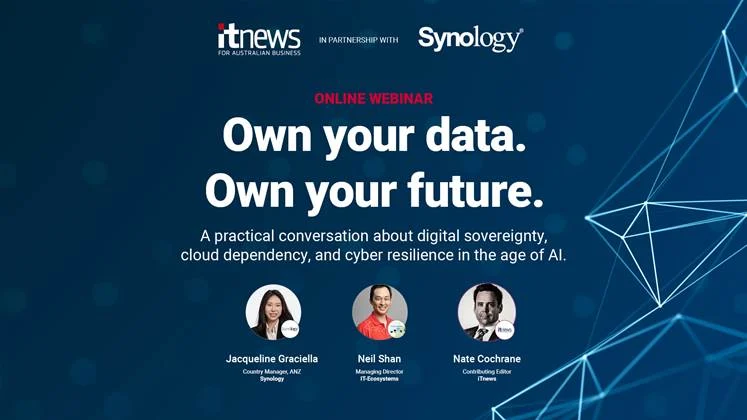
As AI emerges as a major expense factor for enterprises, Australian organisations are reassessing their cloud storage tactics. Neil Shan, managing director of IT Ecosystems, underscored the volatility of cloud subscription costs, urging organisations to contemplate on-premises investments for improved budget oversight.
The Significance of Data Sovereignty
During the “Own your data, own your future” webinar, Jacqueline Graciella of Synology A/NZ stressed the difference between data residency and sovereignty. She urged firms to consider not only where their data is held but who governs it and how they can maintain authority as AI adoption escalates.
Business Leaders Focusing on Sovereignty
A recent study revealed that 63% of Australian business leaders discuss data sovereignty within their board meetings. Although it’s a critical issue, many organisations lack the means to enforce sovereignty, restricting their adaptability in AI provider alliances.
Grasping Your Data
Neil Shan pointed out the Five Knows of Cybersecurity to help firms comprehend their data. Numerous small to mid-sized enterprises struggle to respond to fundamental inquiries about their data’s value and availability, making them susceptible to disjointed data management.
The Concealed Expenses of Cloud Services
Jacqueline Graciella highlighted Korean Air’s success in internalising data management, which led to major cost reductions and productivity enhancements. Likewise, Australian enterprises are looking to repatriate cloud workloads to regain oversight over expenses and sovereignty.
Guaranteeing Data Recoverability
Shan emphasised the necessity of data recoverability in light of AI threats. He recommended the ‘3-2-1-1-0’ backup strategy to safeguard data integrity and ensure prompt recovery from cybersecurity incidents.
Next Steps for Business Leaders
Shan encouraged business leaders to emphasise data control and security rather than pursuing AI trends. Establishing sound data governance and securing critical digital assets are essential initial steps.
Summary
Australian enterprises are increasingly concentrating on data sovereignty and cost management in response to escalating AI-driven expenses. By effectively understanding and managing their data, companies can bolster security and retain flexibility in the shifting technological landscape.
Q&A Section
Reader questions
Frequently asked questions
Fast answers to the questions readers ask most about Predictable Expenses and Established Oversight Drive Data Repatriation Trend.
Why are Australian enterprises rethinking cloud storage?
Rising AI expenses and the unpredictable nature of cloud subscription costs are leading organisations to consider the advantages of on-premises storage for better budget control.
What differentiates data residency from data sovereignty?
Data residency pertains to where data is physically stored, while data sovereignty involves who controls and governs the data, irrespective of its location.
In what ways are organisations addressing data sovereignty?
Numerous organisations are engaging in discussions about data sovereignty at the board level, yet few possess the capability to fully enforce it, which constrains their flexibility with AI providers.
What advantages does repatriating cloud data offer?
Repatriating cloud data can result in substantial cost savings, improved oversight over data, and enhanced data sovereignty, as evidenced by companies like Korean Air.
How can organisations ensure the recoverability of their data?
Adopting the ‘3-2-1-1-0’ backup principle, which includes maintaining multiple copies of data and ensuring at least one is immutable, is vital for effective data recoverability.
What should be the initial step for business leaders aiming to improve data management?
Business leaders should prioritise securing control over their data, recognising its value, and implementing robust data governance before pursuing AI advancements.
