
Tesla Reveals Cybercab That Operates Without Pedals or Wheels on Public Streets

We independently review everything we recommend. When you buy through our links, we may earn a commission which is paid directly to our Australia-based writers, editors, and support staff. Thank you for your support!
Quick Read
- Tesla’s Cybercab is devoid of a steering wheel, accelerator, or brake pedal.
- Cybercabs are currently in pre-launch phases with growing production at Gigatexas.
- Authorized for ride-sharing by the California Department of Transportation.
- Cybercab employs cameras and AI instead of lidar and radar technologies.
- Anticipated to transform affordable, efficient transport for 1-2 riders.
Unveiling the Tesla Cybercab
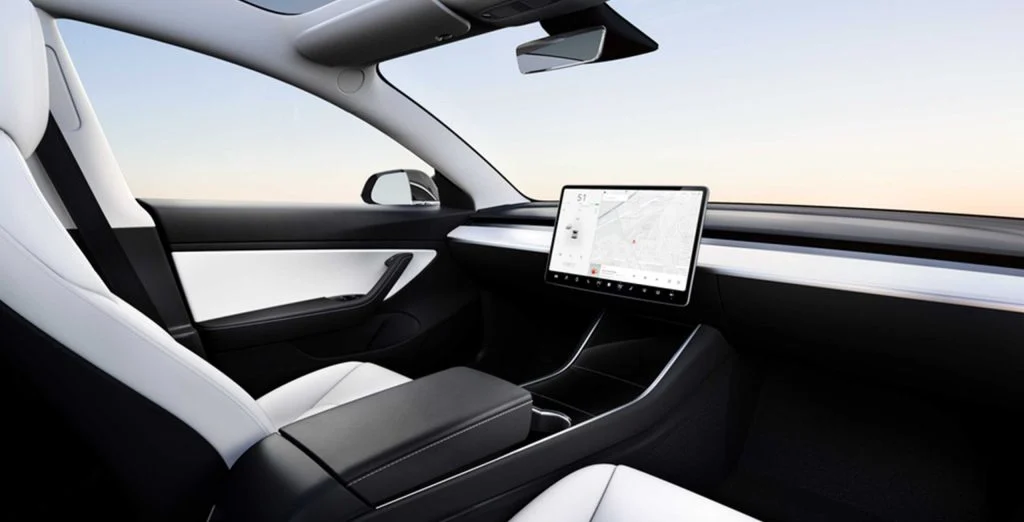
Tesla has launched its wheel-less, pedal-free Cybercab, a dual-seater vehicle set to revolutionize autonomous transportation. The Cybercab’s uniform dashboard and expansive central display deliver a clean yet futuristic vibe, standing in stark contrast to conventional vehicles that depend on manual driving controls.
Production and Pre-Launch Procedures
The first batch of Cybercabs commenced production earlier this year, primarily serving as engineering tests owing to the lack of operational software. Recent aerial footage from Gigatexas shows a rise in production, with additional units prepared for launch. Furthermore, the vehicle’s approval by the California Department of Transportation for ride-sharing represents a key achievement towards its official introduction.
Regulatory Adjustments and Market Readiness
The National Highway Traffic Safety Administration (NHTSA) has suggested removing the mandate for manual brake pedals in autonomous vehicles, a change that corresponds with the current path of automotive advancement. This regulatory development is essential for the wider acceptance of Tesla’s Cybercab and comparable self-driving vehicles.
Technological Innovations
Distinct from its rivals, Tesla’s Cybercab adopts a simplified hardware model, depending on cameras and artificial intelligence instead of expensive lidar and radar technologies. This approach not only lowers manufacturing costs but also enhances efficiency and return on investment.
Passenger Experience and Future Enhancements
The Cybercab is designed to provide a premium, direct travel experience, accommodating 1-2 passengers—the most typical passenger number. Initial impressions may influence future versions to improve seating comfort, considering the lateral forces felt during rides.
Conclusion
Tesla’s Cybercab stands as a daring advance toward a future of self-driving transport, focusing on efficiency and affordability. As Tesla gears up for a comprehensive rollout, the Cybercab’s minimalist design and cutting-edge technology are set to revolutionize urban transit.
Reader questions
Frequently asked questions
Fast answers to the questions readers ask most about Tesla Reveals Cybercab That Operates Without Pedals or Wheels on Public Streets.
What distinguishes the Cybercab?
The Cybercab’s absence of manual controls, reliance on AI, and emphasis on cost-efficient, effective transport make it unique.
When will the Cybercab be accessible for public use?
While exact launch dates remain unverified, increasing production and regulatory approvals indicate an upcoming release.
How does the Cybercab guarantee passenger safety?
The Cybercab features emergency stop buttons and utilizes advanced AI for navigation, upholding rigorous safety standards.
What is the anticipated effect of regulatory changes on Cybercab deployment?
Proposed regulatory modifications, like eliminating the requirement for manual brake pedals, ease the deployment of autonomous vehicles such as the Cybercab.
In what way does Tesla's approach differ from other manufacturers in developing autonomous vehicles?
Tesla’s methodology emphasizes using cameras and AI, steering clear of the costly lidar and radar systems employed by several competitors.
