
Nvidia and Microsoft Hint at ARM-Driven PC Transformation with Enigmatic Coordinates at GTC Taipei 2026

We independently review everything we recommend. When you buy through our links, we may earn a commission which is paid directly to our Australia-based writers, editors, and support staff. Thank you for your support!
Quick Read
- Nvidia and Microsoft suggest a new era for PCs with devices powered by ARM.
- Coordinates point to Taipei, Taiwan, the venue for GTC Taipei 2026.
- Nvidia might unveil its own consumer chip solution.
- This transition challenges the supremacy of Intel and AMD in the chip market.
- Microsoft’s enhanced Windows on ARM enhances compatibility prospects.
- Gamers could encounter issues with anti-cheat software compatibility.
- Localized AI operations promise better performance and privacy enhancements.
- Intel and AMD are anticipated to react with competitive advancements.
Nvidia and Microsoft Suggest a Revolutionary Shift for PCs
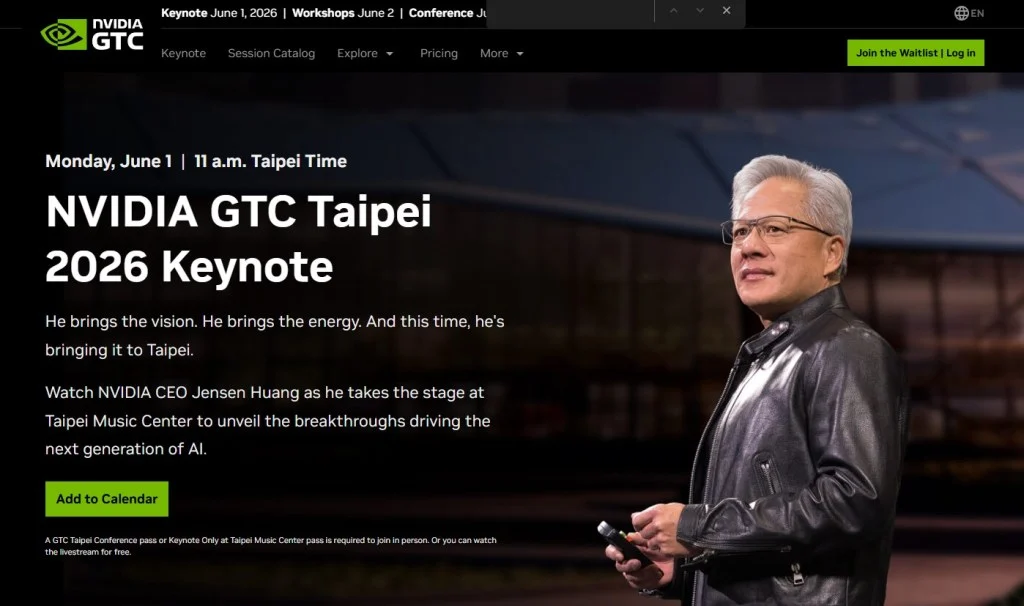
This week, Nvidia and Microsoft generated excitement in the tech sphere through identical posts on social media indicating a transformative shift in the PC realm. The enigmatic messages, combined with coordinates pointing to Taipei, imply an announcement of ARM-based PCs at the GTC Taipei 2026 event.
A New Era of PC Technology
The teaser phrase “A new era of PC” alludes to a transition towards ARM architecture, with Nvidia potentially launching its own consumer chip solution. This strategy may lead Nvidia to contest the x86 dominance of Intel and AMD, providing improved performance and efficiency.
Bringing Excitement to Taipei
The GTC Taipei 2026 keynote is expected to be a momentous occasion in consumer hardware. With Nvidia’s CEO Jensen Huang leading the event, high hopes are set for a display of innovative AI and computing technologies.
Microsoft’s Journey to ARM Consistency
Microsoft’s path with ARM has had its ups and downs, with earlier versions like Windows RT not meeting expectations. Nevertheless, enhancements in Windows 11 and the broader software ecosystem have laid the groundwork for a stronger ARM support framework.
Challenging the x86 Duopoly
Nvidia’s venture into the processor sector presents a notable threat to Intel and AMD. Nvidia’s proficiency in GPUs and AI might yield exceptional performance per watt, exerting pressure on established chip manufacturers to innovate.
Understanding the Application Ecosystem
The success of the new ARM-powered PCs depends on software compatibility. Windows on ARM now features enhanced emulation technology that allows most applications to operate smoothly, though native ARM applications deliver the best capabilities.
Software Compatibility Challenges
Despite improved emulation, certain software that depends on kernel-level drivers, such as antivirus programs and virtualization tools, may encounter difficulties. Compatibility with specialized peripheral software remains a key concern.
The Gaming Challenge and Anti-Cheat Issues
Gaming on ARM-powered systems could face hurdles, especially with anti-cheat software that needs deep system access. Native ARM game versions are vital for optimal performance and security.
Local AI Processing
Nvidia’s ARM processors could change the landscape of local AI processing, enhancing privacy and reducing latency by allowing tasks like image creation and live translation to be completed directly on devices.
Anticipated Competitive Reactions
Intel and AMD are likely to respond vigorously to Nvidia’s entrance into the processor space. Both firms will focus on embedding advanced neural processing units and boosting power efficiency to remain competitive.
Concluding Thoughts Ahead of the Keynote
The partnership between Nvidia and Microsoft could transform personal computing, integrating cutting-edge visual computing technology with a widely adopted operating system. The tech community eagerly anticipates more insights during the GTC Taipei 2026 keynote.
Summary
The collaboration between Nvidia and Microsoft indicates a potential game-changing shift in the PC landscape with the introduction of ARM-powered devices. This evolution challenges the long-standing x86 dominance of Intel and AMD, promising improved performance, efficiency, and fresh opportunities for AI integration.
Reader questions
Frequently asked questions
Fast answers to the questions readers ask most about Nvidia and Microsoft Hint at ARM-Driven PC Transformation with Enigmatic Coordinates at GTC Taipei 2026.
What is the key focus of Nvidia and Microsoft's teaser?
The teaser alludes to the launch of ARM-powered PCs, marking a transition from conventional x86 architecture.
What is the significance of the coordinates?
The coordinates direct to Taipei, Taiwan, the site of GTC Taipei 2026, suggesting an announcement at the event.
How does this impact the processor industry?
Nvidia’s introduction of ARM-based chips challenges the dominance of Intel and AMD, driving innovation in performance and efficiency.
What challenges may arise for gaming on ARM?
Gaming on ARM could experience compatibility challenges with anti-cheat software and necessitate native ARM versions for best results.
How will local AI processing be enhanced with ARM chips?
Local AI processing will improve performance and privacy by executing tasks like image generation right on devices.
What competitive actions can be anticipated from Intel and AMD?
Both companies are expected to accelerate their innovation initiatives, concentrating on neural processing and energy efficiency to compete with Nvidia’s ARM offerings.
