
Tesla’s FSD Challenge: Maneuvering Huon Hill and Avoiding Cows

We independently review everything we recommend. When you buy through our links, we may earn a commission which is paid directly to our Australia-based writers, editors, and support staff. Thank you for your support!
Quick Read
- Tesla’s Full Self-Driving (FSD) system is undergoing trials in regional Australia.
- The route to Huon Hill features a range of challenges including dirt roads and wildlife.
- FSD navigated narrow trails and steep gradients, demonstrating the software’s performance.
- The testing identifies opportunities for enhancement in future FSD releases.
Assessing Tesla’s FSD Functions in Rural Australia
In an exhilarating evaluation of Tesla’s Full Self-Driving (FSD) system, a critical test was conducted on the paths leading to Huon Hill, Albury Wodonga. This evaluation aimed to extend the software’s capabilities beyond conventional city settings, confronting the challenging landscapes and unpredictable conditions of rural Australia.
The Trials of Huon Hill
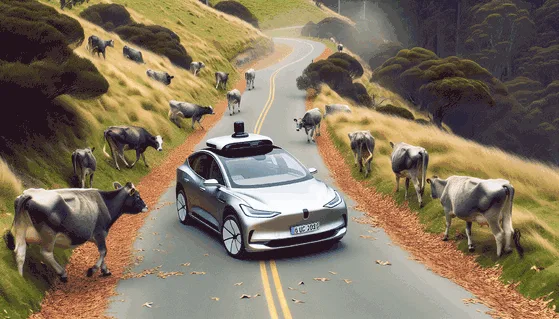
Huon Hill is famous for its stunning vistas, but reaching the peak is quite a challenge. The roadway consists of various surfaces including dirt, gravel, and asphalt, necessitating the FSD system to quickly adjust to transitions in terrain. Additionally, the presence of cattle, kangaroos, and other fauna introduced unforeseen challenges throughout the journey.
Managing Tight Trails and Oncoming Vehicles
The limited width of the road posed additional difficulties, requiring precise maneuvering from the Tesla Model 3. Encounters with vehicles in the opposite direction tested the software’s capacity to handle constrained areas while ensuring safety. Although the FSD operated in these situations with varying degrees of effectiveness, it highlighted the necessity for continuous enhancements.
Confronting Steep Grades and Blind Turns
The climb to the hill’s 273-meter peak involved sharp inclines and obstructed views. These factors tested the FSD’s ability to manage abrupt changes in altitude and sight lines, compelling its algorithms to adjust and react in real-time.
Conclusion
Tesla’s FSD assessment on Huon Hill underscored the software’s existing strengths and potential areas for growth. As FSD technology progresses, such practical evaluations are crucial in honing its abilities and ensuring safe and efficient navigation across varied environments.
Reader questions
Frequently asked questions
Fast answers to the questions readers ask most about Tesla’s FSD Challenge: Maneuvering Huon Hill and Avoiding Cows.
Why is it important to test Tesla’s FSD in rural locations?
Testing in areas like Huon Hill allows the FSD software to confront diverse driving conditions and wildlife, which are rarer in urban locales, ensuring it is capable of managing a wide array of driving situations.
How did Tesla’s FSD respond to wildlife on the route?
The presence of animals such as cows and kangaroos presented challenges. The FSD software exhibited some skill in detecting and responding to wildlife, although ongoing enhancements are vital for optimal functionality.
What were the primary challenges encountered by Tesla’s FSD during the evaluation?
Major challenges included navigating mixed road surfaces, managing tight paths with oncoming traffic, and negotiating steep inclines and blind turns.
What strategies does Tesla have for improving its FSD software?
Tesla is expected to utilize insights from these evaluations to refine its algorithms, aiming for better management of diverse road conditions, improved wildlife detection, and enhanced navigation in difficult terrains.