
Microsoft’s MDASH AI Tool Reveals Four Essential Windows Remote Code Execution Vulnerabilities

We independently review everything we recommend. When you buy through our links, we may earn a commission which is paid directly to our Australia-based writers, editors, and support staff. Thank you for your support!
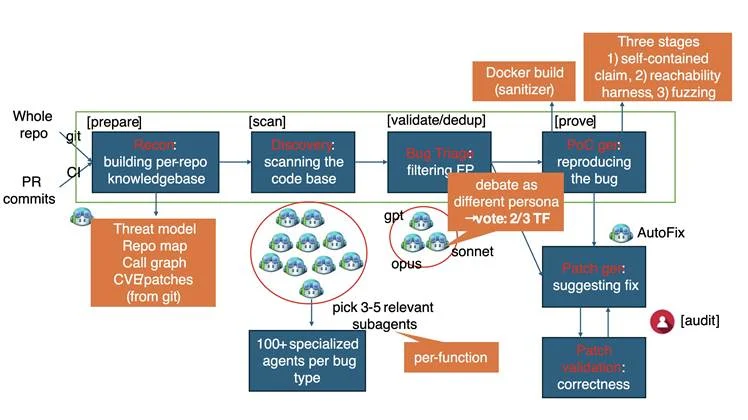
Microsoft’s AI Tool Reveals Significant Security Vulnerabilities in Windows
Quick Overview
- Microsoft’s MDASH AI scanner has detected four major RCE vulnerabilities in Windows.
- The tool also uncovered 12 additional vulnerabilities in essential Windows stacks.
- MDASH is created by Microsoft’s Autonomous Code Security Team.
- The tool is presently in private preview with chosen customers.
- MDASH achieved a score of 88.45% in the CyberGym AI agents evaluation.
AI-Driven Vulnerability Discovery
Microsoft has utilized artificial intelligence to enhance its security protocols, introducing its MDASH scanner, which effectively pinpointed four critical remote code execution (RCE) flaws within Windows. This effort represents a notable advancement in using AI for cybersecurity, aiming at vulnerabilities in substantial codebases.
Key Vulnerabilities Discovered
The vulnerabilities were found within the TCP/IP networking stack of the Windows kernel, the Internet Key Exchange (IKE) version 2, Netlogon services, and the DNS API library. In addition to these major issues, the MDASH tool detected 12 more vulnerabilities across these elements, demonstrating the tool’s efficiency and thorough scanning abilities.
The Team Behind MDASH
MDASH was crafted by Microsoft’s Autonomous Code Security Team, which includes members from Team Atlanta, who won a US$20 million award in DARPA’s AI Cyber Challenge. Guided by Taesoo Kim, the team has made significant contributions to the evolution of AI-based security solutions.
Performance Milestones
MDASH performed exceptionally in the CyberGym AI agents benchmark, obtaining a leading score of 88.45% among 1507 real-world vulnerability assessments. Moreover, in an internal evaluation utilizing Microsoft’s StorageDrive driver, MDASH successfully detected all 21 intentionally injected vulnerabilities without any false positives.
Future Access
At this stage, MDASH is in private preview with a select group of clients and Microsoft’s security engineering teams. Other security teams may express interest in joining the preview, suggesting a wider release in the future.
Conclusion
Microsoft’s MDASH AI tool has showcased its capability in pinpointing significant security vulnerabilities within Windows, providing insight into the future of AI-assisted cybersecurity. With its remarkable performance in evaluations and ongoing previews, MDASH is set to play a crucial role in improving software security.
Q&A Section
Reader questions
Frequently asked questions
Fast answers to the questions readers ask most about Microsoft's MDASH AI Tool Reveals Four Essential Windows Remote Code Execution Vulnerabilities.
What specific vulnerabilities did MDASH identify?
MDASH identified four critical RCE vulnerabilities in the Windows kernel’s TCP/IP stack, IKE version 2, Netlogon services, and the DNS API library.
Who created the MDASH tool?
MDASH was created by Microsoft’s Autonomous Code Security Team, including members from Team Atlanta.
What does MDASH's benchmark score signify?
MDASH scored 88.45% in the CyberGym AI agents benchmark, reflecting its effectiveness in detecting real-world vulnerabilities.
Is MDASH accessible to all security teams?
Currently, MDASH is in private preview with selected customers and Microsoft’s teams. Other security teams can apply to join the preview.
What technology enables MDASH's scanning capabilities?
MDASH utilizes over 100 specialized AI agents across frontier and distilled models to detect and validate vulnerabilities.
