We independently review everything we recommend. When you buy through our links, we may earn a commission which is paid directly to our Australia-based writers, editors, and support staff. Thank you for your support!
GAC plans to launch a budget-friendly EV in Australia, priced at less than A$30,000.
The EV will be equipped with a 44kWh Magazine Battery 2.0, offering a range of 320km.
This vehicle is aimed at city drivers and those new to EVs.
GAC intends to rival conventional petrol cars in terms of price.
Charging at home is easy with a smaller battery designed for urban usage.
Overview of GAC’s Latest EV Introduction
The electric vehicle market in Australia has transformed rapidly, moving away from premium-priced options towards a competitive space prioritizing affordability. Chinese manufacturers have played a pivotal role in this shift, with GAC spearheading the most recent efforts.
Specifications for Battery and Performance
Battery Technology: This new EV features a 44kWh Magazine Battery 2.0, recognized for its safety standards.
Range: Provides a WLTP estimated driving distance of 320km.
Urban Optimization: Built for everyday urban transportation needs.
Insights on the 44kWh Battery
The 44kWh Magazine Battery 2.0 balances performance with cost-effectiveness. With a driving range of 320km, it is ideal for daily travels in Australian urban centers where the average distance covered is below 50km daily, offering a practical cushion for drivers.
Pricing Perspectives for the Australian Market
While the exact price remains unconfirmed, this new version is anticipated to be below A$30,000, positioning it as one of the more economical EVs in Australia, rivaling traditional petrol vehicles on cost.
Target Market: New EV Enthusiasts
GAC is targeting this model towards novice EV buyers and city-based families, providing an approachable entry into electric driving. The design and roomy interior appeal to younger drivers and students.
Benefits of Home Charging
Home charging is straightforward, with the 44kWh battery capable of charging overnight efficiently. This fast charging advantage is beneficial for city residents with garage or driveway access, and rapid chargers can quickly replenish the battery as needed.
Concluding Observations on GAC’s Growth
GAC’s new model represents the growing availability of EVs in Australia. If it maintains competitive pricing, it could play an essential role in the nation’s electric vehicle industry, offering affordable solutions tailored to consumer preferences.
Recap
GAC is ready to change the Australian EV landscape with an economical model aimed at city driving. With an emphasis on cost-efficient battery technology and practical range, this upcoming EV presents an attractive option for price-sensitive consumers compared to petrol vehicles.
Q: What will the new GAC EV’s price be in Australia?
A: The anticipated price for the new GAC EV is below A$30,000.
Q: What kind of driving range does the GAC AION EV provide?
A: The GAC AION EV is estimated to offer a driving range of 320km.
Q: Who is the intended audience for the new GAC EV?
A: The intended audience includes novice EV buyers, younger individuals, students, and urban commuters.
Q: What charging methods are available for the GAC AION EV?
A: The EV can be charged at home using a typical wall outlet or AC wallbox and also supports fast charging at DC charging stations.
Q: How does the GAC AION EV stack up against conventional petrol vehicles?
A: The GAC AION EV offers competitive pricing with petrol vehicles and provides the distinct advantages of electric driving.
Q: What are the key features of the 44kWh Magazine Battery 2.0?
A: It is distinguished by its safety features and cost-effective performance tailored for city driving.
We independently review everything we recommend. When you buy through our links, we may earn a commission which is paid directly to our Australia-based writers, editors, and support staff. Thank you for your support!
NBN Co’s IT Expenses Escalate with SaaS Implementation
Quick Summary
NBN Co’s IT and software expenditures rose by six percent in FY26 due to the adoption of SaaS.
The utilization of AI has not substantially influenced NBN Co’s technology budget.
NBN Co’s revenue for FY26 reached $5.92 billion, reflecting a three percent year-over-year increase.
The shift from copper to fibre is propelling the introduction of faster, costlier plans.
NBN Co intends to transition customer groups to full fibre beginning in 2028.
Escalating IT and Software Expenses
During the 2026 financial year, NBN Co noted a six percent increase in “other” operating expenses, mainly due to heightened investments in IT and software. This rise corresponds with the company’s move towards cloud services, although cost mitigation strategies and lowered discretionary spending have lessened the overall effect.
Software Licensing Issues
The overall rise in software licensing expenses has particularly impacted government organizations, with NBN Co being among them. The firm, recognized for its use of VMware products, has encountered possible price increases, though specific details regarding contracts remain private.
AI’s Contribution to NBN Co’s Functioning
Even though artificial intelligence is being increasingly implemented within NBN Co, CEO Ellie Sweeney affirmed that AI has not substantially affected the IT budget. Currently, AI is employed to create post-incident reports and prepare teams for infrastructure repairs, thereby enhancing operational productivity without significantly raising costs.
Financial Results and Strategic Changes
For FY26, NBN Co reported revenues of $5.92 billion, indicating a three percent growth compared to the preceding year. This increase was fueled by the transition of customers from copper-based services to full fibre, which led to the uptake of faster and more expensive plans.
The organization is determined to decrease Australia’s reliance on outdated copper infrastructure. Beginning in 2028, NBN Co intends to actively transition customer groups to full fibre, with the goal of improving customer satisfaction and achieving resilience and reliability objectives.
Conclusion
The shift to software as a service by NBN Co has resulted in increased IT and software costs, while AI has not greatly influenced the budget. The company continues to progress in moving customers from copper to fibre, aiding revenue growth and enhancing service offerings.
Questions & Answers
Q: What factors have led to the growth in NBN Co’s IT and software expenses?
A: The increase primarily results from the adoption of cloud-based services, leading to elevated IT and software expenditures.
Q: Has AI implementation had a significant effect on NBN Co’s technology budget?
A: No, the use of AI has not materially influenced the company’s technology budget.
Q: What was NBN Co’s revenue for the FY26 financial year?
A: NBN Co recorded a revenue of $5.92 billion for FY26, a three percent increase compared to the previous year.
Q: How is NBN Co addressing its dependence on copper infrastructure?
A: NBN Co is gradually moving customers to full fibre, with plans to start proactively transitioning customer groups from 2028.
Q: What function does AI serve in NBN Co’s operations?
A: AI is utilized to draft post-incident reports and prepare teams for infrastructure repairs, contributing to more efficient network operations.
We independently review everything we recommend. When you buy through our links, we may earn a commission which is paid directly to our Australia-based writers, editors, and support staff. Thank you for your support!
Commonwealth Bank’s AI Assistant “Companion” Faces New Challenges
Quick Overview
The AI assistant “Companion” by Commonwealth Bank is crafted to respond to inquiries regarding spending and saving.
Companion employs dedicated safeguards for delicate matters such as gambling and financial exploitation.
Due to regulatory restrictions, the AI is unable to dispense financial advice.
Companion operates on a multi-agent framework involving various CBA teams alongside AWS collaboration.
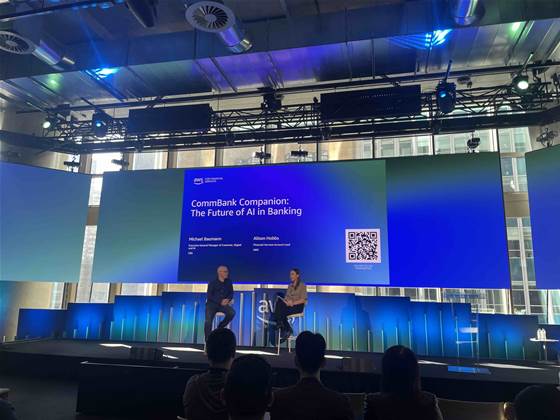
(L-R) Michael Baumann (CBA) and Alison Hobbs (AWS).
Overview of Companion
Commonwealth Bank has launched its AI assistant “Companion” to manage inquiries that clients generally do not pursue through traditional means. This initiative signifies a wider commitment to incorporating AI into banking services, offering a tailored experience in financial management.
Customer Engagement and Duties
Companion emphasizes inquiries related to spending and saving, with half of current questions concentrated in these domains. Created as a personal finance tool, it allows clients to examine their financial situations in ways that conventional bank personnel may not accommodate. This evolution highlights the AI’s ability to enhance rather than replace human interaction.
Handling Sensitive Issues and Safeguards
The AI is equipped with safeguards to recognize sensitive topics such as gambling concerns and financial exploitation. These systems steer users toward specialized human teams, guaranteeing that intricate issues receive the necessary support.
Limitations on Financial Guidance
Even with its potential, Companion is prohibited from providing financial advice due to regulatory policies. The ability of AI to offer such recommendations is still a matter of debate, necessitating changes in legislation to permit this capability.
Architectural Framework and Partnerships
Companion’s structural design is multi-agent, incorporating collaboration among various CBA teams and partners like AWS. This distributed model ensures that every element conforms to the overarching design and quality benchmarks, reflecting the bank’s dedication to innovation.
Conclusion
The AI assistant “Companion” from Commonwealth Bank showcases the fusion of technology in contemporary banking, addressing customer inquiries and improving financial management. While it currently contends with regulatory limitations, its development signifies a notable progression towards more engaging and personalized banking services.
Q&A
Q: What is the main role of CBA’s AI assistant “Companion”?
A: Companion primarily focuses on spending and saving inquiries, offering a personal financial management resource for clients.
Q: How does Companion handle delicate matters?
A: It utilizes safeguards to identify sensitive topics and directs clients to specialized human teams for proper assistance.
Q: Is Companion able to give financial advice?
A: No, Companion is not permitted to provide financial advice due to regulatory constraints.
Q: What type of architecture does Companion utilize?
A: Companion employs a multi-agent architecture with contributions from various CBA teams and collaborations with AWS.
We independently review everything we recommend. When you buy through our links, we may earn a commission which is paid directly to our Australia-based writers, editors, and support staff. Thank you for your support!
Mark Zuckerberg Reveals Innovative AI Vision
Quick Insights
Mark Zuckerberg champions personal superintelligence instead of centralized authority.
Meta concentrates on personal AI agents and intelligent eyewear for everyday application.
Superintelligence to enhance creativity and entrepreneurship, beyond mere automation.
AI to deliver customized education and expedite medical innovations.
Zuckerberg advocates for power equilibrium through universal access to AI resources.
Meta intends to provide complimentary AI tools to billions, with economical access to advanced functionalities.
Potential advantages for Australian users encompass affordable enterprise-level tools.
Countering the AI Catastrophe Rhetoric
Mark Zuckerberg has recently taken a stand against the prevailing fear-driven discourse surrounding artificial intelligence. Contrary to the assumption that AI could result in job displacement or human obsolescence, Zuckerberg endorses the democratization of AI. He asserts that genuine advancement derives from equipping individuals as opposed to centralized powers.
Personal AI Assistants and Smart Eyewear
Meta envisions personal AI assistants incorporated within smart eyewear to support users in their daily activities. These assistants will function continuously, helping users with tasks like organizing schedules, managing finances, and even pursuing hobbies. Privacy is a top concern, backed by robust security measures similar to WhatsApp’s encryption.
Creation Over Automation
Meta frames AI as a catalyst for human creativity rather than merely a tool for automation. Zuckerberg envisions a future where individuals can independently develop software, media, and businesses, which in turn diminishes the necessity for large teams. This transformation aims to elevate entrepreneurship and economic prospects.
Customized Educators and Medical Innovations
In the realm of education, Meta seeks to offer accessible personalized educators, promoting individualized learning experiences for students. In healthcare, AI is set to hasten discoveries, with projects like the Chan Zuckerberg Biohub leading to swift progress in treating uncommon ailments.
Power Equilibrium, Not Mythical Harmony
Zuckerberg critiques the idea of a singular, perfectly harmonized superintelligent system. Rather, he promotes the widespread distribution of AI tools, allowing various systems to establish checks and balances. This strategy aspires to democratize power and avoid central authority.
Complimentary Access and Practical Economics
Meta plans to provide fundamental AI tools at no cost to billions, with affordable alternatives for supplementary computing capacity. This open approach contrasts with closed ecosystems that limit advanced functionalities, aiming to guarantee broad access to AI technologies.
Potential Ramifications in Australia
For Australians, Meta’s vision holds substantial promise. With forthcoming software updates and innovations like Ray-Ban Meta smart glasses, local entrepreneurs could utilize powerful resources without significant financial commitments. Nonetheless, privacy and data sovereignty are critical factors for both users and policymakers.
Conclusion
Mark Zuckerberg’s AI vision underscores individual empowerment, advocating for the extensive distribution of superintelligence resources. By centering on personal AI agents and promoting a balanced distribution of power, Meta aims to improve creativity, education, and healthcare. The open-access approach could favor Australians by delivering affordable, enterprise-grade technology to small enterprises and individuals.
Questions & Answers
Q: What is Mark Zuckerberg’s primary stance concerning AI?
A: Zuckerberg contends that personal superintelligence should be available to all, rather than being monopolized by a select few elite organizations.
Q: How does Meta propose to weave AI into everyday life?
A: Meta intends to employ personal AI assistants and smart eyewear to support users with daily tasks, while ensuring stringent privacy measures.
Q: What influence could this vision have on employment opportunities?
A: By promoting creativity and entrepreneurship, Meta’s vision could generate new business ventures, lessening the dependence on large teams and encouraging economic development.
Q: How does Meta plan to tackle AI safety issues?
A: Meta advocates for a power balance through widespread AI access, enabling different systems to offer checks and safeguards.
Q: Are these tools going to be complimentary?
A: Basic versions of AI tools will be available for free, with cost-effective options for users requiring additional computational resources.
Q: What are the repercussions for Australian users?
A: Australians might gain from low-cost, advanced technology, empowering small enterprises and individuals to embark on ambitious projects.
We independently review everything we recommend. When you buy through our links, we may earn a commission which is paid directly to our Australia-based writers, editors, and support staff. Thank you for your support!
Komatsu Australia Adopts Zero Trust Cloud Security
Quick Read
Komatsu Australia is integrating a zero trust network framework to tackle advancing cybersecurity challenges.
A pilot initiative utilizing Zscaler’s cloud-based security will commence with 100 users, with plans to scale up to over 4000 users.
This initiative addresses worries about AI-fueled cyber threats and internal security vulnerabilities.
Zero trust exchange will take the place of conventional network security infrastructure, shifting from a capex to an opex approach.
Why Choose Zero Trust?
In a time when cyber threats are rapidly changing, Komatsu Australia has acknowledged the necessity to enhance its cybersecurity strategies. By embracing a zero trust network architecture, the organization seeks to safeguard its corporate network against potential incursions, especially those driven by sophisticated AI systems.
Transition to Zero Trust Cloud Security
Komatsu Australia plans to initiate a pilot of Zscaler’s cloud-based zero trust exchange by the end of this month. Starting with 100 users, the pilot intends to grow to over 4000 users across Australia, New Zealand, New Caledonia, and Papua New Guinea. The zero trust model examines every device accessing the network with equal scrutiny, irrespective of whether it is used by a remote worker or an on-site employee.
Tackling AI-Fueled Threats
Henry Wright, cybersecurity manager at Komatsu Australia, underscored the main concern: the emergence of AI-powered cyber threats. New AI agents could independently initiate cyber-attacks, presenting a considerable danger. Wright pointed out particular worry regarding AI systems like Claude Mythos, which can rapidly analyze environments for weaknesses.
How Zscaler’s Zero Trust Functions
Zscaler’s zero trust network access (ZTNA) framework utilizes a switchboard concept linking end users, applications, and the internet. It incorporates client connectors on devices and lightweight virtual machines within data centers to enforce security controls through Zscaler’s global Zero Trust Exchange platform. This configuration guarantees stringent management of application and internet access.
Transition from Capex to Opex Model
The implementation of zero trust security signifies a transition for Komatsu from a capital expenditure (capex) model to an operational expenditure (opex) model. This change reflects trends in other sectors, where businesses favor more adaptable and cost-efficient security solutions.
Summary
Komatsu Australia’s shift to a zero trust cloud security model signifies a proactive measure in strengthening its cybersecurity framework. By utilizing Zscaler’s cutting-edge solutions, the company seeks to reduce risks related to AI-driven cyber threats and enhance its security operations.
Q&A Section
Q: What is zero trust network architecture?
A: Zero trust network architecture is a security paradigm that necessitates rigorous verification for any device attempting to access a network, no matter its location.
Q: Why is Komatsu Australia implementing this framework?
A: The organization aims to defend against evolving cybersecurity threats, particularly those prompted by advanced AI systems, and enhance its internal security measures.
Q: How does Zscaler’s Zero Trust Exchange function?
A: It employs client connectors and virtual machines to govern and secure access among end users, applications, and the internet via a cloud infrastructure.
Q: What are the advantages of transitioning from capex to opex in security?
A: This change enables businesses to minimize upfront expenditures, enhance adaptability, and concentrate on operational efficiencies within their security approaches.
Q: How does this transition aid in combating AI-driven threats?
A: By limiting the attack surface and enforcing strict access controls, Komatsu can improve its defenses against autonomous AI cyber assaults.
We independently review everything we recommend. When you buy through our links, we may earn a commission which is paid directly to our Australia-based writers, editors, and support staff. Thank you for your support!
North Korea’s Digital Weaponry: AI Tools for Cyber Conflict
By TechBest | Date: [Current Date]
Brief Overview
The Kimsuky group from North Korea is enhancing AI-powered cyber tools.
These AI tools are designed to boost cyberattacks and phishing operations.
Tools feature local AI systems such as Ollama and GPT4All.
Kimsuky has been sanctioned by the US Treasury due to cyber espionage activities.
AI Tools for Cyber Attacks
Genians, a cybersecurity company based in South Korea, has discovered that the hacking group Kimsuky, linked to North Korea, is creating advanced AI tools. These innovations might automate cyberattacks, scrutinize stolen information, and develop highly persuasive phishing tactics.
Local AI Systems and Data Protection
The group is said to utilize AI models including Ollama, GPT4All, and Msty, in addition to retrieval augmented generation (RAG) technology. This configuration allows for local document processing, which reduces the chance of exposing sensitive data to outside AI platforms.
AI Beyond Phishing: In Malware and Automation
Kimsuky is broadening its scope, shifting from phishing to incorporating AI in malware creation and automating attacks. This encompasses the use of AI agent development frameworks, speech recognition software, and the AI-supported programming tool Cursor.
AI-Created Decoys and Financial Espionage
The firm also uncovered AI-generated documents related to finance and cryptocurrency that imitate authentic reports. These deceptive documents are part of Kimsuky’s tactics for financial espionage and theft.
Global Sanctions and Cyber Espionage
North Korea, recognized for its state-affiliated cyber units, has engaged in espionage and financial theft for numerous years. In 2023, the US Treasury imposed sanctions on Kimsuky as a cyber-espionage group under the control of the government, aligned with Pyongyang’s strategic objectives.
Conclusion
Kimsuky from North Korea is progressing in its cyber capabilities with AI tools aimed at improving cyberattacks and automating harmful activities. The utilization of local AI models guarantees data security while expanding their cyber warfare tactics.
Q: What is Kimsuky?
A: Kimsuky is a hacking group connected to North Korea, recognized for cyber espionage and financial theft.
Q: What AI tools does Kimsuky utilize?
A: They employ AI systems such as Ollama, GPT4All, and Msty, along with RAG technology.
Q: Why is the use of local AI systems important?
A: Local systems enable processing without risking the exposure of sensitive data to external AI platforms.
Q: How has the US responded to Kimsuky’s actions?
A: The US Treasury imposed sanctions on Kimsuky in 2023 as a North Korean cyber-espionage group.
We independently review everything we recommend. When you buy through our links, we may earn a commission which is paid directly to our Australia-based writers, editors, and support staff. Thank you for your support!
Brief Overview
Mitsubishi has unveiled the ASX VR-e electric vehicle for the Australian market, scheduled to debut in late 2026.
The ASX VR-e features the Foxtron Bria platform from Foxconn, offering a contemporary EV experience.
It will be offered in LS, XLS, Exceed, and high-performance GSR variants.
Equipped with a 57.7 kWh lithium iron phosphate battery, it boasts a range of up to 516 km (NEDC).
Fast charging capability allows for an 80% charge in less than 30 minutes.
Designed with a drag coefficient of Cd 0.26 for enhanced aerodynamics.
The interior includes a 15.6-inch touchscreen and a 9.2-inch digital instrument cluster.
Expected pricing will start at A$40,000 for the base model.
Mitsubishi’s Electric Comeback
Mitsubishi Motors is making a renewed entry into the Australian electric vehicle sector with the ASX VR-e, set to launch in late 2026. Although it’s not the anticipated EVO electric variant, this new offering reflects Mitsubishi’s dedication to electrification, marking its return to all-electric vehicles since the i-MiEV.
Collaboration with Foxconn and Platform
The ASX VR-e is built on the Foxtron Bria platform by Foxconn, highlighting a strategic alliance that enables Mitsubishi to introduce an advanced EV swiftly. This innovative electric crossover benefits from Foxconn’s extensive electronics know-how, featuring a software-defined architecture with ongoing updates.
Trims and Performance Metrics
The ASX VR-e will come in four trim levels: LS, XLS, Exceed, and the performance-oriented GSR. The GSR variant features a dual-motor configuration, enabling it to accelerate from 0-100 km/h in a mere 3.9 seconds.
Battery Capacity and Range
With a 57.7 kWh lithium iron phosphate battery, the ASX VR-e can achieve a range of up to 516 km on the NEDC cycle. Under real-world Australian driving conditions, the WLTP range is anticipated to be between 380-410 km.
Charging Features
Fast charging features allow the ASX VR-e to charge from 10% to 80% in under 30 minutes with a 134 kW DC charger. Additionally, a standard 7 kW AC charger is offered for home charging overnight.
Aesthetic and Aerodynamic Design
The ASX VR-e presents a stylish, aerodynamic profile with a drag coefficient of Cd 0.26. Its futuristic design is complemented by a full-width lightbar and sculpted shapes to improve efficiency.
Advanced Interior Features
The cabin is equipped with a 15.6-inch touchscreen interface and a 9.2-inch digital instrument panel. The minimalist aesthetic offers a spacious environment, enhanced by advanced digital features for over-the-air updates.
Measurements and Usability
With a length of 4,315 mm, width of 1,885 mm, and height of 1,535 mm, the ASX VR-e is a compact crossover that boasts a tight turning radius of 5.59 metres. It provides 320 litres of cargo capacity, which expands to 1,043 litres when the rear seats are down.
Estimated Pricing and Market Strategy
Pricing information is forthcoming, but it’s anticipated that the base LS will begin around A$40,000. The GSR model may surpass A$60,000, allowing Mitsubishi to position itself competitively within the electric vehicle market.
Conclusion
Mitsubishi is poised to re-establish itself in the Australian electric vehicle sector with the ASX VR-e, capitalizing on its partnership with Foxconn. The vehicle’s modern tech, performance capabilities, and appealing design are expected to meet a variety of consumer requirements. With an anticipated launch in late 2026, excitement is mounting for this groundbreaking electric crossover.
FAQs
Q: When will the Mitsubishi ASX VR-e be available in Australia?
A: The ASX VR-e is projected to arrive in Australian dealerships in the fourth quarter of 2026.
Q: On what platform is the ASX VR-e built?
A: The ASX VR-e utilizes Foxconn’s Foxtron Bria platform, engineered for an innovative electric crossover experience.
Q: What are the anticipated range and charging capabilities?
A: The ASX VR-e provides a range of up to 516 km (NEDC) and features fast charging, reaching 80% in under 30 minutes.
Q: What trim levels can be expected for the ASX VR-e?
A: The vehicle will be offered in LS, XLS, Exceed, and high-performance GSR trims.
Q: How does the ASX VR-e perform?
A: The GSR variant features a dual-motor configuration that accelerates from 0-100 km/h in 3.9 seconds, placing it in the performance vehicle category.
Q: What is the expected starting price for the ASX VR-e?
A: The base LS model is anticipated to start around A$40,000, with upper trims potentially exceeding A$60,000.
We independently review everything we recommend. When you buy through our links, we may earn a commission which is paid directly to our Australia-based writers, editors, and support staff. Thank you for your support!
Brief Overview
South Australia has established a groundbreaking AI partnership with OpenAI, making it the first Australian state to do so.
This collaboration emphasizes the adoption of AI, enhancing workforce skills, and improving public services.
South Australia seeks to attract global technology talent and investment to Adelaide.
The state intends to incorporate cutting-edge AI into its public administration while strengthening cybersecurity measures.
South Australia is positioning itself as a frontrunner in technology infrastructure and innovation.
Analyzing the Agreement
Fundamentally, this Memorandum of Understanding outlines a tangible strategy for embedding sophisticated machine learning functionalities into South Australia’s tech sector and public service apparatus. The agreement revolves around key areas, encompassing targeted education programs to enhance local AI understanding within universities and businesses, alongside collaborative research initiatives aimed at addressing intricate state-level challenges.
This partnership is also presented as an economic catalyst designed to attract private investment and international technology talent into Adelaide’s thriving innovation landscape. Rather than relying on overarching federal frameworks from Canberra, South Australia is proactively pursuing direct engagement with OpenAI’s engineering expertise, technical resources, and platform functionalities.
In addition to fostering private sector growth, the state administration aims to trial generative AI tools within its departments to streamline bureaucratic processes, automate backlogs, and enhance state cybersecurity resilience.
South Australia is Quickly Evolving into Australia’s Technology Hub
If you’ve been monitoring the technology sector in recent years, South Australia’s rapid alliance with OpenAI should not be entirely unexpected. The region has been discreetly positioning itself as a top destination for significant tech infrastructure, supported by substantial investments in renewable energy and designated technology precincts such as Lot Fourteen in Adelaide.
A few months back, energy infrastructure developer IREN revealed a remarkable A$10 billion AI data center campus project at Bundey in regional South Australia. This initiative is intended to provide up to 800 megawatts of computing power, highlighting that global AI workloads necessitate considerable resources that South Australia is enthusiastic to offer.
By coupling extensive physical infrastructure like hyperscale data centers with high-level software collaborations like the OpenAI agreement, the state aims to establish a complete tech ecosystem from energy generation to large language model implementation.
The Reality of Generative AI in Governance
Governments globally are notorious for their slow pace, constrained by endless documentation, manual processes, and antiquated IT systems that seem to belong in history. The implementation of large language models in public administration could radically transform how citizens engage with state agencies.
Envision automated permit applications, AI-supported public health navigation, instantaneous code evaluations for planning submissions, or swift document processing that reduces approval times from months to mere hours. OpenAI’s technical resources could also be utilized to oversee state-wide network systems, identifying cyber threats before human analysts detect any irregularities.
However, substituting conventional administrative roles with generative algorithms entails a clear set of operational risks, which Premier Malinauskas promptly highlighted during the agreement’s signing.
Safeguards, Ethics, and Concerns on Algorithmic Governance
Entrusting artificial intelligence with the management of public service functions brings forth legitimate concerns regarding data privacy, inherent biases in automation, and potential algorithmic errors. No one desires an automated system misinterpreting policy details or mishandling sensitive health information across government databases.
To mitigate these concerns, the Premier stressed that any deployment will adhere to stringent legal, privacy, and procurement standards. The state government has committed to ensuring that all automated processes remain strictly human-controlled, guaranteeing that ultimate decisions lie with human operators rather than automated systems.
We aim to advance with ambition and caution. Any initiatives undertaken will be led by humans and subject to the legal, privacy, security, and procurement regulations that South Australians expect.Peter Malinauskas, Premier, Government of South Australia.
From Social Media Restrictions to ChatGPT Collaborations
This partnership with OpenAI is merely a single element of a broader, significant US trade mission undertaken by the Premier across Washington DC, New York, Virginia, and California. Notably, Premier Malinauskas has garnered a reputation on the world stage as a technology regulator, having led Australia’s pioneering initiative to limit social media use by children under sixteen.
During the same American trip, the Premier engaged with Apple CEO Tim Cook in California to discuss age-verification technologies and child safety features in iOS. He also conversed with notable social psychologist Professor Jon Haidt regarding digital wellness, alongside high-ranking US defense officials about technology sharing under AUKUS Pillar II.
This dual strategy highlights an intriguing balance where the state government is keen to mitigate harmful social media algorithms while vigorously pursuing generative AI advancements.
Supporting Local Developers, Startups, and Academic Institutions
For startups, academic researchers, and software developers in South Australia, this Memorandum of Understanding could unlock avenues that were previously behind significant corporate barriers. Achieving structured access to OpenAI’s personnel, specialized developer tools, and early incubation support provides local entrepreneurs a competitive advantage over rivals in Sydney or Melbourne.
Adelaide’s universities are already heavily invested in machine learning initiatives through establishments like the Australian Machine Learning Institute. Connecting local academic talent directly with OpenAI’s product development teams enables researchers to tackle real-world deployment challenges instead of remaining restricted to theoretical environments.
If executed effectively, local software engineers won’t need to relocate to Silicon Valley to collaborate on world-class AI models, as Silicon Valley is coming directly to Adelaide.
While South Australia has taken the lead in establishing a state-level agreement with OpenAI, the federal government and other states are closely observing. Prime Minister Anthony Albanese recently indicated plans for unified national standards regarding AI data centers, computational resources, and environmental ramifications across state lines.
Queensland and the Northern Territory have shown reluctance to adopt uniform federal standards, but South Australia’s proactive actions to secure partnerships with major tech players could compel other states to expedite their digital initiatives. The competition among states for technology investment, high-skilled employment, and renewable energy infrastructure is intensifying across the nation.
Securing agreements with global leaders like OpenAI provides South Australia a significant advantage in shaping how regional tech hubs can harness the momentum of global AI.
We will observe with interest to see if other Australian states follow suit or try to forge similar partnerships with competitors like Anthropic, which develops Claude, or SpaceXAI, which creates Grok.
Synopsis
South Australia has set a new benchmark by finalizing a significant AI agreement with OpenAI, aiming to excel in technology adoption and innovation. This collaboration focuses on enhancing workforce skills, improving public services, and attracting international tech talent to Adelaide. By integrating advanced AI, South Australia is positioned to revolutionize its public service operations and establish itself as a technology hub in Australia.
Q: What is the importance of South Australia’s partnership with OpenAI?
A: This marks the first occasion an Australian state has engaged in a Memorandum of Understanding with OpenAI, with the goal of accelerating AI integration and enhancing public services.
Q: How does South Australia intend to implement AI in public services?
A: The state plans to employ generative AI to optimize bureaucratic processes, automate administrative functions, and reinforce cybersecurity measures.
Q: What are the potential hazards of utilizing AI in government?
A: Potential hazards include issues of data privacy, biases in automation, and algorithmic inaccuracies. The state has committed to ensure all AI systems are human-directed with rigorous safeguards.
Q: How does this agreement benefit local tech companies and academic institutions?
A: The agreement grants local startups and academic researchers access to OpenAI’s resources, providing a competitive advantage and opportunities to address practical AI deployment challenges.
Q: What implications could this have for other Australian regions?
A: South Australia’s initiative may encourage other regions to hasten their digital strategies and pursue similar collaborations with international AI firms.
We independently review everything we recommend. When you buy through our links, we may earn a commission which is paid directly to our Australia-based writers, editors, and support staff. Thank you for your support!
Eightcap Employs AI to Enhance Compliance Across Global Markets
Quick Overview
Eightcap, a prominent Australian fintech, is advancing compliance through AI technologies.
Role-specific access controls are established to fulfill varying regulatory requirements globally.
AI streamlines compliance tasks, including call transcript creation and analysis of customer sentiment.
The company leverages Salesforce to optimize operations and maintain data privacy.
Eightcap is researching AI to bolster internal security and anticipate regulatory demands.
Eightcap’s Cutting-Edge Compliance Strategy
Rapidly expanding Australian fintech Eightcap is harnessing artificial intelligence (AI) to handle its growing compliance responsibilities. The firm ensures that customer data aligns with privacy, access, and data sovereignty standards across diverse jurisdictions, underscoring its focus on innovation and security.
Role-Specific Access Controls
Eightcap has incorporated role-specific access controls within its customer relationship management platform. This enables globally dispersed teams, such as sales, onboarding, support, and compliance, to access customer data while limiting access to sensitive information based on their designated roles. This approach guarantees that all teams operate with uniform information, enhancing customer interactions and compliance oversight.
Using Salesforce for Data Protection
Salesforce forms the backbone of Eightcap’s operations. The platform’s built-in security features bolster the company’s objective of safeguarding customer information. By utilizing Salesforce, Eightcap ensures that its data access is protected and fulfills the stringent requirements of various regulatory frameworks.
AI’s Role in Compliance Operations
Eightcap employs AI to automate repetitive compliance processes, such as generating call transcripts, summarizing discussions, and flagging duplicate entries. AI also identifies key phrases and analyzes customer sentiment for further examination. This automation allows human agents to concentrate on more intricate matters, significantly lessening the manual effort once necessary in compliance duties.
Improving Security and Forecasting Compliance Needs
While the initial emphasis on AI was for compliance, Eightcap is now investigating how AI can reinforce internal security. By detecting atypical permissions and insider threats, AI aids in forecasting and addressing potential security vulnerabilities. Furthermore, as Eightcap ventures into new markets, AI is anticipated to shift compliance from a reactive to a proactive stance, predicting regulatory inquiries and efficiently compiling needed evidence.
Conclusion
Eightcap stands at the forefront of integrating AI to streamline compliance and data governance throughout its worldwide operations. By adopting role-specific access controls, utilizing Salesforce, and automating compliance tasks, the firm ensures strong data privacy and security. As Eightcap continues to advance, AI will be pivotal in enhancing security and forecasting compliance requirements.
Q: What is Eightcap’s main objective in integrating AI?
A: The main objective is to efficiently manage compliance tasks while ensuring customer data privacy and security across different jurisdictions.
Q: How do role-specific access controls support Eightcap?
A: They enable various teams to access essential customer records while limiting access to sensitive data, thus ensuring consistent information dissemination and improved compliance administration.
Q: What importance does Salesforce hold in Eightcap’s operations?
A: Salesforce acts as the foundational platform, offering embedded data security features that uphold Eightcap’s data privacy and compliance obligations.
Q: In what way does AI enhance compliance operations at Eightcap?
A: AI automates duties like call transcript creation and conversation summarization, allowing human agents to focus on more complex challenges and minimizing manual workloads.
Q: What are Eightcap’s future intentions regarding AI in compliance?
A: Eightcap aims to leverage AI for anticipating regulatory demands and enhancing internal security by detecting potential insider threats and suspicious permissions.
Q: How does Eightcap maintain customer data privacy?
A: Eightcap fulfills privacy commitments by giving customers the option to have their personal information deleted or provided upon request, in line with applicable privacy regulations.
We independently review everything we recommend. When you buy through our links, we may earn a commission which is paid directly to our Australia-based writers, editors, and support staff. Thank you for your support!
Brief Overview
University of Southern Queensland shifts to Nutanix AHV from its current hypervisor, relocating 800 VMs.
Implementation of Nutanix database-as-a-service and micro-segmentation scheduled for later this year.
Strategic review set to begin in 2024 in anticipation of the 2025 renewal deadline.
University takes advantage of group pricing discounts via CAUDIT.
Nutanix Move supports the transition with cross-hypervisor migration functions.
Micro-segmentation aimed at boosting cybersecurity is currently being rolled out.
Investigation into Azure IaaS for enhanced resilience and application availability.
Strategic Shift to Nutanix AHV
The University of Southern Queensland (UniSQ) has effectively transitioned its hypervisor system, migrating around 800 virtual machines (VMs) to operate on Nutanix’s AHV, powered by Lenovo hardware. This decision is in line with the university’s strategic assessment of their virtualisation setup, which commenced in late 2024, well before the April 2025 renewal for their former hypervisor solution.
Image credit: University of Southern Queensland.
Reasons for Choosing Nutanix
Following an extensive six-month evaluation of alternatives such as Red Hat OpenShift and Microsoft Hyper-V, UniSQ opted for Nutanix because of its strong features and the opportunity for a group pricing discount through CAUDIT. The choice to replace the existing hypervisor was prompted by a change in the ownership of the previous product, necessitating the exploration of other feasible options.
Streamlined Migration and Strategy
The migration was carefully organized to minimize disruptions. UniSQ employed Nutanix Move, a tool for cross-hypervisor migration, to assist with the transition. This tool allowed for point-and-click migration, significantly simplifying the process and permitting out-of-hours reboots to prevent interruptions.
Cost-Effectiveness and Infrastructure Improvement
A key benefit of Nutanix Move was its capability to offer recommendations for rightsizing workloads, assisting UniSQ in minimizing server infrastructure requirements. This strategy is in accordance with the university’s aim to optimize existing resources rather than procure new hardware, particularly in light of the current hardware cost constraints.
Enhancing Cybersecurity with Micro-Segmentation
With intentions to adopt micro-segmentation using Nutanix, UniSQ seeks to strengthen its cybersecurity framework. This strategy will aid in managing and restricting network access within their data centre, thereby enhancing security without needing to replace existing firewalls.
UniSQ is currently in the initial phases of evaluating infrastructure-as-a-service (IaaS) through Azure. Although not all workloads will transition to the cloud, the university is looking at Azure to improve the resilience and availability of essential applications, ensuring smooth operations during peak times such as the release of student results.
Conclusion
The University of Southern Queensland’s migration to Nutanix AHV represents a critical advancement in modernizing its IT framework. By utilizing Nutanix’s sophisticated tools and investigating Azure IaaS, the university is set to boost operational efficiency and cybersecurity, addressing the changing needs of its students and staff.
Q: What led UniSQ to select Nutanix over other options?
A: UniSQ chose Nutanix for its robust capabilities and attractive group pricing discount via CAUDIT, after reviewing several alternatives.
Q: What was the process like for the transition?
A: The transition was enabled by Nutanix Move, which optimized the migration process with limited disruption via cross-hypervisor functionalities.
Q: What challenges were remedied through the new system?
A: The new system addresses the challenges of optimizing server infrastructure and improving cybersecurity through Nutanix’s insights and micro-segmentation.
Q: What is micro-segmentation, and what is its significance?
A: Micro-segmentation is a security strategy to manage and restrict network access, essential for enhancing the cybersecurity standards of data centres.
Q: Is UniSQ considering a complete switch to cloud solutions?
A: Not fully; while looking into Azure IaaS for resilience and essential applications, full cloud adoption for all workloads isn’t planned.
Q: How does the new system enhance the student experience?
A: The updated system guarantees improved availability and decreased latency during busy periods, thereby enriching the overall experience for students.











.jpg&h=420&w=748&c=0&s=0)