
South Australia Finalizes Revolutionary AI Partnership with OpenAI

We independently review everything we recommend. When you buy through our links, we may earn a commission which is paid directly to our Australia-based writers, editors, and support staff. Thank you for your support!
Brief Overview
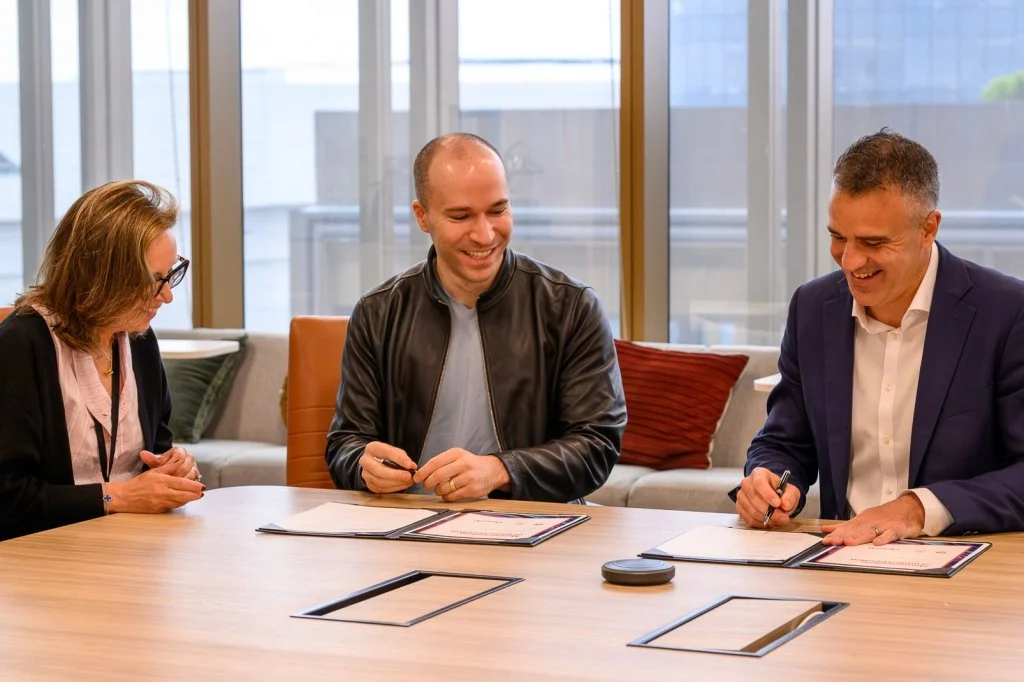
- South Australia has established a groundbreaking AI partnership with OpenAI, making it the first Australian state to do so.
- This collaboration emphasizes the adoption of AI, enhancing workforce skills, and improving public services.
- South Australia seeks to attract global technology talent and investment to Adelaide.
- The state intends to incorporate cutting-edge AI into its public administration while strengthening cybersecurity measures.
- South Australia is positioning itself as a frontrunner in technology infrastructure and innovation.
Analyzing the Agreement
Fundamentally, this Memorandum of Understanding outlines a tangible strategy for embedding sophisticated machine learning functionalities into South Australia’s tech sector and public service apparatus. The agreement revolves around key areas, encompassing targeted education programs to enhance local AI understanding within universities and businesses, alongside collaborative research initiatives aimed at addressing intricate state-level challenges.
This partnership is also presented as an economic catalyst designed to attract private investment and international technology talent into Adelaide’s thriving innovation landscape. Rather than relying on overarching federal frameworks from Canberra, South Australia is proactively pursuing direct engagement with OpenAI’s engineering expertise, technical resources, and platform functionalities.
In addition to fostering private sector growth, the state administration aims to trial generative AI tools within its departments to streamline bureaucratic processes, automate backlogs, and enhance state cybersecurity resilience.
South Australia is Quickly Evolving into Australia’s Technology Hub
If you’ve been monitoring the technology sector in recent years, South Australia’s rapid alliance with OpenAI should not be entirely unexpected. The region has been discreetly positioning itself as a top destination for significant tech infrastructure, supported by substantial investments in renewable energy and designated technology precincts such as Lot Fourteen in Adelaide.
A few months back, energy infrastructure developer IREN revealed a remarkable A$10 billion AI data center campus project at Bundey in regional South Australia. This initiative is intended to provide up to 800 megawatts of computing power, highlighting that global AI workloads necessitate considerable resources that South Australia is enthusiastic to offer.
By coupling extensive physical infrastructure like hyperscale data centers with high-level software collaborations like the OpenAI agreement, the state aims to establish a complete tech ecosystem from energy generation to large language model implementation.
The Reality of Generative AI in Governance
Governments globally are notorious for their slow pace, constrained by endless documentation, manual processes, and antiquated IT systems that seem to belong in history. The implementation of large language models in public administration could radically transform how citizens engage with state agencies.
Envision automated permit applications, AI-supported public health navigation, instantaneous code evaluations for planning submissions, or swift document processing that reduces approval times from months to mere hours. OpenAI’s technical resources could also be utilized to oversee state-wide network systems, identifying cyber threats before human analysts detect any irregularities.
However, substituting conventional administrative roles with generative algorithms entails a clear set of operational risks, which Premier Malinauskas promptly highlighted during the agreement’s signing.
Safeguards, Ethics, and Concerns on Algorithmic Governance
Entrusting artificial intelligence with the management of public service functions brings forth legitimate concerns regarding data privacy, inherent biases in automation, and potential algorithmic errors. No one desires an automated system misinterpreting policy details or mishandling sensitive health information across government databases.
To mitigate these concerns, the Premier stressed that any deployment will adhere to stringent legal, privacy, and procurement standards. The state government has committed to ensuring that all automated processes remain strictly human-controlled, guaranteeing that ultimate decisions lie with human operators rather than automated systems.
We aim to advance with ambition and caution. Any initiatives undertaken will be led by humans and subject to the legal, privacy, security, and procurement regulations that South Australians expect.Peter Malinauskas, Premier, Government of South Australia.
From Social Media Restrictions to ChatGPT Collaborations
This partnership with OpenAI is merely a single element of a broader, significant US trade mission undertaken by the Premier across Washington DC, New York, Virginia, and California. Notably, Premier Malinauskas has garnered a reputation on the world stage as a technology regulator, having led Australia’s pioneering initiative to limit social media use by children under sixteen.
During the same American trip, the Premier engaged with Apple CEO Tim Cook in California to discuss age-verification technologies and child safety features in iOS. He also conversed with notable social psychologist Professor Jon Haidt regarding digital wellness, alongside high-ranking US defense officials about technology sharing under AUKUS Pillar II.
This dual strategy highlights an intriguing balance where the state government is keen to mitigate harmful social media algorithms while vigorously pursuing generative AI advancements.
Supporting Local Developers, Startups, and Academic Institutions
For startups, academic researchers, and software developers in South Australia, this Memorandum of Understanding could unlock avenues that were previously behind significant corporate barriers. Achieving structured access to OpenAI’s personnel, specialized developer tools, and early incubation support provides local entrepreneurs a competitive advantage over rivals in Sydney or Melbourne.
Adelaide’s universities are already heavily invested in machine learning initiatives through establishments like the Australian Machine Learning Institute. Connecting local academic talent directly with OpenAI’s product development teams enables researchers to tackle real-world deployment challenges instead of remaining restricted to theoretical environments.
If executed effectively, local software engineers won’t need to relocate to Silicon Valley to collaborate on world-class AI models, as Silicon Valley is coming directly to Adelaide.
While South Australia has taken the lead in establishing a state-level agreement with OpenAI, the federal government and other states are closely observing. Prime Minister Anthony Albanese recently indicated plans for unified national standards regarding AI data centers, computational resources, and environmental ramifications across state lines.
Queensland and the Northern Territory have shown reluctance to adopt uniform federal standards, but South Australia’s proactive actions to secure partnerships with major tech players could compel other states to expedite their digital initiatives. The competition among states for technology investment, high-skilled employment, and renewable energy infrastructure is intensifying across the nation.
Securing agreements with global leaders like OpenAI provides South Australia a significant advantage in shaping how regional tech hubs can harness the momentum of global AI.
We will observe with interest to see if other Australian states follow suit or try to forge similar partnerships with competitors like Anthropic, which develops Claude, or SpaceXAI, which creates Grok.
Synopsis
South Australia has set a new benchmark by finalizing a significant AI agreement with OpenAI, aiming to excel in technology adoption and innovation. This collaboration focuses on enhancing workforce skills, improving public services, and attracting international tech talent to Adelaide. By integrating advanced AI, South Australia is positioned to revolutionize its public service operations and establish itself as a technology hub in Australia.
Reader questions
Frequently asked questions
Fast answers to the questions readers ask most about South Australia Finalizes Revolutionary AI Partnership with OpenAI.
What is the importance of South Australia's partnership with OpenAI?
This marks the first occasion an Australian state has engaged in a Memorandum of Understanding with OpenAI, with the goal of accelerating AI integration and enhancing public services.
How does South Australia intend to implement AI in public services?
The state plans to employ generative AI to optimize bureaucratic processes, automate administrative functions, and reinforce cybersecurity measures.
What are the potential hazards of utilizing AI in government?
Potential hazards include issues of data privacy, biases in automation, and algorithmic inaccuracies. The state has committed to ensure all AI systems are human-directed with rigorous safeguards.
How does this agreement benefit local tech companies and academic institutions?
The agreement grants local startups and academic researchers access to OpenAI’s resources, providing a competitive advantage and opportunities to address practical AI deployment challenges.
What implications could this have for other Australian regions?
South Australia’s initiative may encourage other regions to hasten their digital strategies and pursue similar collaborations with international AI firms.
