Australia Tech News - Page 153 of 231 - Techbest - Top Tech Reviews In Australia

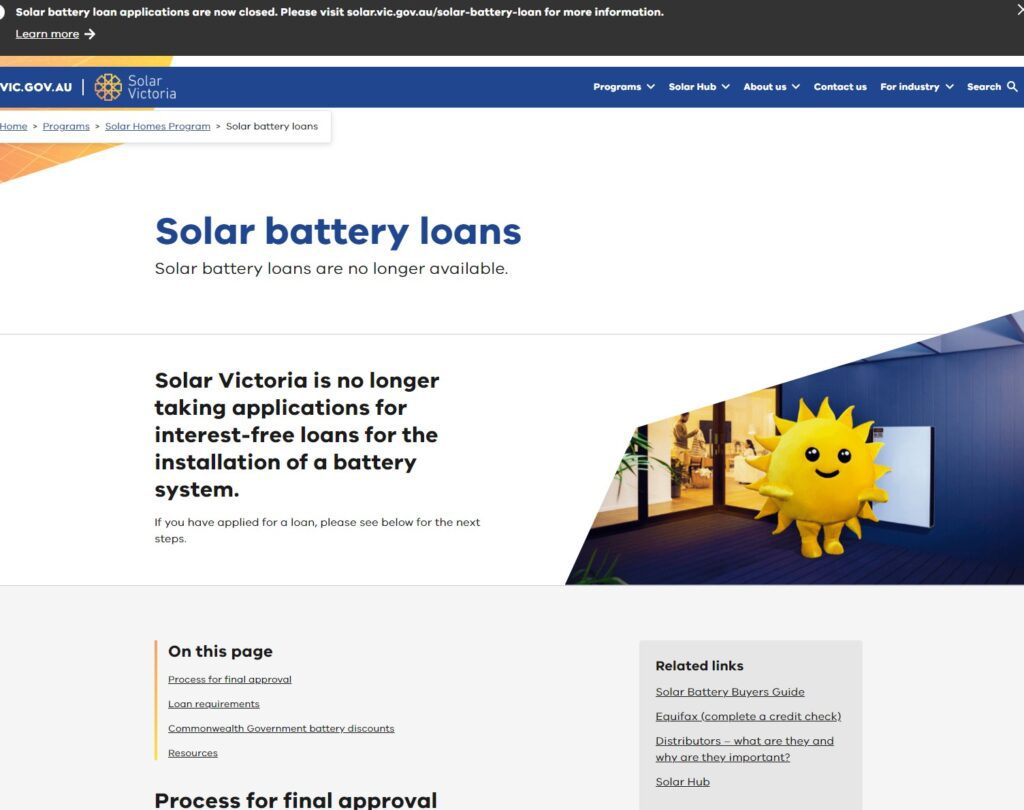
Victoria Wraps Up Home Battery Loan Initiative as Federal Rebates Approach in July


We independently review everything we recommend. When you buy through our links, we may earn a commission which is paid directly to our Australia-based writers, editors, and support staff. Thank you for your support!

Victoria Concludes Home Battery Loans as Federal Rebates Near

Brief Overview

  • Victoria concludes its home battery loan initiative prior to new federal rebates.
  • Interest-free financing available up to A$8,800, greatly decreasing battery expenses.
  • Federal rebates commence on July 1, potentially further lowering costs.
  • Victoria’s Solar Homes Initiative has aided over 360,000 residences.
  • Net-zero emissions goal by 2045, with interim objectives by 2035.
  • Commonwealth Government’s Affordable Homes Batteries Initiative starts July 1.

Closure of Victoria’s Solar Battery Loan Initiative

Solar Victoria has recently revealed the closure of its home battery loan initiative, a move that many homeowners find disappointing just as a new federal rebate program is about to launch. This initiative previously offered interest-free loans up to A$8,800 over a four-year period, greatly alleviating the initial expenses of home battery systems.

Effects on Homeowners

Homeowners aiming to upgrade their solar installations with battery storage could have profited from combining both state and federal incentives. For example, the usual installation cost of a Tesla Powerwall 3, around A$15,000, could have been substantially decreased with these incentives. However, the end of the state initiative means this option is now unavailable.

Upcoming Federal Rebates

The Commonwealth Government’s Affordable Homes Batteries Initiative is expected to launch on July 1. This program intends to make battery storage more accessible, supporting Australia’s dedication to renewable energy and diminished emissions.

Victoria’s Dedication to Renewable Energy

Since August 2018, the Victorian Solar Homes Initiative has played a crucial role in assisting over 360,000 households with solar installations. This aligns with Victoria’s ambitious strategy to attain net-zero emissions by 2045, with renewable energy targets established at 65% by 2030 and 95% by 2035.

Initiatives in the Sector

  • Sector Commitments: Promises made across different sectors, aided by programs such as the $100 million Community Climate Change and Energy Action initiative.
  • Energy Shift: Strategies to eliminate coal-fired power and enhance renewable energy capabilities.

Conclusion

The termination of Victoria’s home battery loan initiative represents a major transformation in the framework of solar energy incentives in Australia. While the forthcoming federal rebates set to begin in July present fresh prospects, the sudden cessation of the state initiative leaves numerous homeowners uncertain. This action highlights the continuous evolution of Australia’s energy policies and the commitment to a sustainable future.

FAQ

Q: What was the primary advantage of the Victorian home battery loan initiative?

A: The initiative provided interest-free loans up to A$8,800, lowering the initial costs for homeowners intending to install battery storage systems.

Q: When do the federal rebates commence?

A: The federal rebates from the Affordable Homes Batteries Initiative are scheduled to begin on July 1.

Q: How will this affect the cost of a Tesla Powerwall 3?

A: Without the ability to combine state and federal incentives, the initial expense of a Tesla Powerwall 3 will remain elevated, approximately A$10,545 after federal rebates.

Q: What are Victoria’s renewable energy aspirations?

A: Victoria targets 65% renewable energy by 2030 and 95% by 2035, contributing to its aspiration of net-zero emissions by 2045.

Sydney Enhances HR Capabilities for Improved Career Management


We independently review everything we recommend. When you buy through our links, we may earn a commission which is paid directly to our Australia-based writers, editors, and support staff. Thank you for your support!

Concise Overview

  • Sydney City Council improves HR functionalities with SAP SuccessFactors.
  • Chris Youness, the Chief of People and Culture, leads the revitalization initiative.
  • The original system setup was inadequate; enhancements were essential.
  • Collaborated with Discovery Consulting for an extensive system evaluation.
  • Improvements in HR processes have decreased administrative tasks by as much as 35%.
  • Emphasis on key HR functions and streamlined payroll systems.
  • Improved career development and customization for staff training.

Revamping SAP SuccessFactors

The City of Sydney has initiated an important project to strengthen its human resources capabilities by utilizing the SAP SuccessFactors platform. This effort seeks to foster a more tailored approach to career management for its employees, correcting earlier identified deficiencies in system setup.

Sydney upgrades HR systems for career development

Recognizing System Issues

On his arrival in mid-2022, Chris Youness, the chief of people and culture for the council, realized that the current SuccessFactors system was not ideally configured. This led to a comprehensive review and a partnership with Discovery Consulting, which uncovered 32 recommendations for enhancements.

Optimizing HR Operations

The adoption of these recommendations has led to noteworthy improvements in HR processes. Chris Youness noted that the administrative load on personnel has been reduced by as much as 35%, enabling HR teams to redirect their focus towards fundamental responsibilities rather than system oversight.

Automation and Productivity

Automation initiatives, especially in payroll, have revolutionized operational efficiencies. Outdated paper-based systems have been succeeded by self-service kiosks and automated attendance systems, resulting in less stressed teams and smoother payroll functions.

Improving Career Pathways

The council is focusing on fostering internal career pathways, using SuccessFactors to accommodate staff at various stages of their career journeys. The emphasis is on customization, automation, and empowering employees to identify training opportunities that align with their current roles and ambitions.

Conclusion

The HR revitalization initiative at the City of Sydney highlights the significance of utilizing technology to enhance staff career management. By addressing system inadequacies and prioritizing customization and automation, the council strives to create a nurturing environment for employee growth and advancement.

Q: What is the primary aim of Sydney’s HR system enhancement?

A: The main goal is to improve career management through a personalized approach, rectifying system inefficiencies, and emphasizing essential HR functions.

Q: How did the Sydney City Council tackle the initial system challenges?

A: The council worked together with Discovery Consulting to perform a health evaluation of the SAP SuccessFactors system, resulting in 32 improvement recommendations.

Q: What effects has the project had on HR operations?

A: HR operations have been simplified, decreasing the administrative load by as much as 35%, which has allowed teams to concentrate on critical tasks.

Q: In what ways has automation enhanced payroll processes?

A: Automation has replaced manual, paper-based procedures with self-service kiosks and automated systems, resulting in more efficient and less stressful payroll processes.

Q: What are the future objectives for employee career development?

A: The council intends to establish improved career pathways tailored to current staff stages, allowing them to select appropriate development opportunities.

Mobileye’s Eyes-Off L3 Technology Selected for 2028 Worldwide Launch, Car Manufacturer Stays Anonymous


We independently review everything we recommend. When you buy through our links, we may earn a commission which is paid directly to our Australia-based writers, editors, and support staff. Thank you for your support!

Brief Overview

  • Mobileye’s Imaging Radar selected by a prominent car manufacturer for a 2028 launch.
  • This technology will enable SAE Level 3 autonomous driving at freeway speeds.
  • Mobileye’s 4D imaging radar provides enhanced perception in difficult situations.
  • Imaging radars enhance environmental awareness by incorporating height information.
  • Mobileye’s radar tech utilizes digital signal processing for improved precision.
  • The cost of the technology is not publicly revealed but is vital for broad acceptance.

Mobileye’s Radar Innovation: The Next Frontier in Autonomous Driving

The push to advance Advanced Driver Assistance Systems (ADAS) towards fully autonomous solutions is intensifying, with Mobileye at the forefront. The firm has declared that a leading global automaker has opted for Mobileye Imaging Radar as a crucial element of its forthcoming system that allows for eyes-off, hands-off driving in personal vehicles, following a detailed assessment of Mobileye’s offerings against competitors.

Mobileye Imaging Radar for 2028 Global Release

Groundbreaking Technology for SAE Level 3 Automation

Set for a 2028 introduction, the chosen automaker intends to utilize Mobileye’s Imaging Radar for SAE Level 3 automated driving at motorway speeds. This tech aims to deliver outstanding detection abilities in challenging weather like fog and rain, and at long ranges, surpassing current sensor technologies.

Benefits of 4D Imaging Radar

By 2028, it will have been a decade since the inception of Mobileye’s 4D imaging radar development. This innovation provides sensor redundancy, yielding superior perception in tough lighting, environmental, and traffic situations, complementing camera-based perception affordably.

Technical Characteristics and Features

Current automotive radars deliver approximations of distance, direction, and relative speed. In contrast, imaging radars add an extra dimension – height. Mobileye’s cutting-edge Imaging Radar processes signals digitally from start to finish via a specially designed radar processor, ensuring unparalleled accuracy and reliability in environmental awareness.

Key Components and Performance Metrics

At the heart of Mobileye’s Imaging Radar are radar radio-frequency integrated circuits (RFIC) that offer adaptability in signal transmission, high-confidence detection of objects, and minimal noise levels. The radar processor features computing power of 11 TOPS, managing over 1,500 virtual channels at a rate of 20 frames per second, with remarkable angular resolution and dynamic range.

Safety and Detection Capabilities

Mobileye’s Imaging Radar is proficient in identifying small, distant objects and specific threats in intricate conditions, making it essential for safe highway navigation at speeds exceeding 130 kph. It can recognize road users up to 315 meters away and potential dangers up to 230 meters, functioning effectively in tunnels, construction zones, and congested surroundings.

Cost Factors

The pricing of Mobileye’s hardware and software is not publicly disclosed but will play a crucial role in its uptake. Reduced costs may enable this technology to be incorporated into more budget-friendly vehicles, likely contributing to more lives saved by promoting the availability of autonomous driving.

Conclusion

Mobileye’s Imaging Radar has been adopted by an undisclosed automaker for a 2028 release, with the goal of achieving SAE Level 3 autonomous driving. This state-of-the-art technology is expected to offer superior detection capabilities and reliability, though pricing remains a key consideration for mass adoption.

Q: What is Mobileye’s Imaging Radar?

A: Mobileye’s Imaging Radar is a next-generation radar technology that enhances environmental perception by incorporating height information into traditional radar functionalities, processed digitally for better accuracy.

Q: What level of autonomous driving will the technology support?

A: The technology is designed to enable SAE Level 3 autonomous driving, facilitating eyes-off, hands-off operation at highway speeds.

Q: When is the technology projected to be released?

A: The anticipated release for the technology is in 2028, marking ten years since the beginning of Mobileye’s 4D imaging radar development.

Q: Which automaker is collaborating with Mobileye?

A: The automaker has not been named, but is referred to as a leading global entity.

Q: What are the advantages of Mobileye’s Imaging Radar?

A: The radar provides superior perception in adverse conditions, advanced object detection abilities, and improved safety for autonomous driving.

Q: How does cost influence the adoption of this technology?

A: Even though the cost is yet to be revealed, lower pricing could lead to wider adoption, making the technology accessible in less expensive vehicles.

Salesforce Poised to Purchase Informatica in Huge AU$12 Billion Agreement


We independently review everything we recommend. When you buy through our links, we may earn a commission which is paid directly to our Australia-based writers, editors, and support staff. Thank you for your support!

Salesforce Purchases Informatica: A Strategic AU$12 Billion Move

Quick Overview

  • Salesforce is set to purchase Informatica for AU$12.4 billion, boosting its AI capabilities.
  • This acquisition is Salesforce’s largest since it acquired Slack in 2021.
  • The transaction aims to enhance Salesforce’s data management functions.
  • Salesforce intends to weave AI more intricately into its product offerings.
  • The acquisition is anticipated to improve operating margins in the second year following the closing.

The Strategic Move by Salesforce

In a calculated effort to strengthen its foothold in the competitive AI landscape, Salesforce is poised to acquire Informatica for around AU$12.4 billion. This acquisition signals Salesforce’s return to substantial mergers and acquisitions, spurred by shareholder demands for enhanced profitability.

Salesforce's AU$12 billion acquisition of Informatica

Boosting Data Management with AI

This acquisition is Salesforce’s largest transaction since its US$28 billion acquisition of Slack in 2021. By onboarding Informatica, Salesforce strives to augment its data management offerings and embed AI functionalities more significantly into its product suite. This initiative is vital as the firm looks to fortify its position in the US$150 billion-plus data enterprise industry.

Emphasis on AI-Driven Solutions

Salesforce has been consistently enhancing its AI-driven offerings, providing AI agents for various business operations including hiring and customer support. The company has successfully secured more than 1,000 paid agreements for “Agentforce”, its AI-enhanced virtual representative solution.

Financial Aspects and Projections

Salesforce will offer US$25 per share for Informatica, representing a 30% premium over Informatica’s closing price as of May 22. The deal is expected to finalize in the early part of the next fiscal year, funded through a mix of cash and new debt. Analysts believe that the transaction will enhance Salesforce’s operating margin starting from the second year post-acquisition.

Conclusion

Salesforce’s acquisition of Informatica for AU$12.4 billion highlights its dedication to improving its data management and AI capabilities. With this strategic initiative, Salesforce aims to reinforce its competitive position in the fast-changing AI landscape while enhancing its financial outcomes through increased operating margins.

Questions & Answers

Q: What is the purpose behind Salesforce acquiring Informatica?

A: Salesforce is acquiring Informatica to enhance its data management tools and more thoroughly integrate AI into its product offerings, thus elevating its competitive stance in the AI industry.

Q: What implications does this acquisition have for Salesforce’s financial health?

A: The acquisition is projected to improve Salesforce’s operating margin from the second year after the closure of the transaction, aiding in increased profitability.

Q: What was Salesforce’s most recent significant acquisition before Informatica?

A: Salesforce’s previous notable acquisition was Slack Technologies in 2021, valued at nearly US$28 billion.

Q: What exactly are AI agents, and how does Salesforce implement them?

A: AI agents are software that perform tasks without human oversight. Salesforce provides these agents for various business operations, such as recruitment and customer service, through its “Agentforce” platform.

Melbourne EV Show Makes a Comeback: More than 100 Electric Vehicles Ready to Energize June


We independently review everything we recommend. When you buy through our links, we may earn a commission which is paid directly to our Australia-based writers, editors, and support staff. Thank you for your support!

Melbourne EV Show: More Than 100 Electric Vehicles Set to Energize June

Quick Overview

  • Melbourne International EV AutoShow returns from June 27th to 29th.
  • More than 100 electric vehicles, including BEVs, PHEVs, and hybrids.
  • New models from Xpeng, Polestar, Leapmotor, and others unveiling.
  • Complimentary onsite test drives for prospective buyers.
  • Discover various finance and charging options.
  • Government incentives encouraging EV adoption.
  • Main stage discussions featuring EV experts and leaders.

Melbourne Prepares for the EV AutoShow

Prepare yourselves, Melbourne! The Melbourne International EV AutoShow (MIEVS) is set for its third thrilling year, showcasing a vast array of the most recent innovations in electric mobility. Following an astonishing event in Sydney, Future Drive AutoShows is bringing the excitement back to the Melbourne Convention & Exhibition Centre from June 27th to 29th.

Exciting Line-Up

This is your opportunity to get an up-close look at over 100 electric vehicles all in one location, comprising battery electric vehicles (BEVs), plug-in hybrids (PHEVs), and classic hybrids. Anticipate seeing state-of-the-art models from manufacturers like Xpeng, Polestar, Leapmotor, Farizon, and SMART, along with showstoppers like the Ferrari 296 GTB, Ferrari SF90, and the previously unseen-in-Australia Rolls-Royce Spectre.

Newly Unveiled Models

Numerous new models are confirmed for their premiere in Melbourne, offering attendees a first glance at some eagerly awaited vehicles. Watch for the Xpeng G6, Audi Q4 e-tron, Audi Q6 e-tron, the commercial Farizon SV van and F1E small truck, Leapmotor C10, Smart #1, Smart #3, KIA EV3, and the stylish Polestar 4. Sustainable Vehicle Solutions will also present the remarkable Ford F-150 electric.

Complimentary Test Drives

The event will also be an excellent chance for prospective buyers to take the wheel of several EVs, with free test drives offered onsite.

Melbourne EV Show showcases over 100 electric vehicles.

Finance and Charging Options

Investigate a variety of financing options that encompass leasing, funding, and an array of charging solutions, from affordable home units to new ultra-fast chargers.

“Future Drive takes pride in returning the show to Melbourne. With increasing government backing and new incentives driving EV adoption, now is the perfect time for both individuals and businesses to discover the advantages of switching to cleaner, more intelligent transport.”

Ray Evans, CEO of Future Drive AutoShows

With the constant challenge of living expenses, transitioning to an electric vehicle is increasingly appearing to be a savvy financial decision. Many popular EV models are currently priced between A$29,990 and A$58,900, making them a more reachable option for Australian households and enterprises.

“For numerous electric vehicle owners, it is now feasible to fully charge your vehicle for under $5 and conveniently at home. With your EV purchase, you now have the option to acquire a charger together with the vehicle, or other charging solutions can now be installed at home for as low as A$500, saving you time and costs.”

Riz Akhtar, founder of EV data company carloop

Innovative Technology and Government Support

There’s also increasing enthusiasm around Vehicle-to-Grid (V2G) and Vehicle-to-Home (V2H) technology, especially with over 4 million Australians now benefiting from rooftop solar. The recent statement by Minister for Climate Change and Energy Chris Bowen regarding new standards for V2H and V2G charging indicates that EV owners will soon be able to power their homes and potentially sell excess energy back to the grid.

Government programs are making the EV offer even more appealing, with Victoria targeting half of all light vehicles to be zero-emission by 2030. On a national level, a A$2.3 billion investment for home batteries and fringe benefit tax deductions for leased vehicles are enhancing the green transition’s attractiveness.

Engaging Conversations and Interactive Enjoyment

The event will also host a main stage with daily presentations and panel discussions featuring EV experts, industry leaders, and influencers. Anticipate insights from notable personalities such as Andy Larmour of KPMG, Jason Clarke of TrueEV, Scott Maynard of Polestar Australia, and Emma Sutcliffe of EV FireSafe, addressing everything from tax implications to charging infrastructure and battery safety.

Beyond the vehicles and tech discussions, there will be interactive product exhibits, live EV demonstrations, and even an electric go-kart track for family enjoyment.

For additional details, visit futuredriveauto.au.

Recap

The Melbourne International EV AutoShow is returning, featuring over 100 electric vehicles, including newly unveiled models and complimentary test drives, with an emphasis on financing, charging solutions, and government incentives. Attendees can look forward to engaging discussions and interactive displays.

Q: What is the Melbourne International EV AutoShow?

A: It’s a yearly event showcasing the latest electric vehicles, technology, and innovations in the EV sector, held at the Melbourne Convention & Exhibition Centre.

Q: What types of vehicles will be showcased?

A: The show will present over 100 vehicles, comprising battery electric vehicles (BEVs), plug-in hybrids (PHEVs), and traditional hybrids from leading manufacturers.

Q: Can attendees experience test drives of the electric vehicles?

A: Yes, the event offers free onsite test drives for potential buyers to get hands-on experience with the electric vehicles.

Q: What advantages come with switching to an electric vehicle?

A: Advantages include reduced operating costs, government incentives, environmental benefits, and access to new V2G and V2H technologies.

Q: Are there any government incentives for EV purchasers?

A: Yes, initiatives encompass tax deductions, home battery support, and objectives for zero-emission vehicles, enhancing the appeal of EVs for buyers.

Q: Will there be expert presentations or panels?

A: The event includes daily presentations and panel discussions from industry specialists covering subjects like tax implications, charging infrastructure, and battery safety.

Q: What other activities will be available at the show?

A: Attendees can partake in interactive product displays, live demonstrations, and an electric go-kart track for enjoyable family activities.

Cricket Australia Prepared to Transform Connectivity with SD-WAN and Teams Calling Implementation


We independently review everything we recommend. When you buy through our links, we may earn a commission which is paid directly to our Australia-based writers, editors, and support staff. Thank you for your support!

Cricket Australia Adopts Enhanced Connectivity with SD-WAN and Teams Calling

Overview

  • Cricket Australia collaborates with Aussie Broadband for innovative telecommunications solutions.
  • The implementation of SD-WAN and Microsoft Teams Calling improves nationwide connectivity.
  • The three-year contract seeks to enhance secure and dependable broadband services.
  • Fortinet SD-WAN will optimize communication for the workforce and external collaborators.

Strategic Alliance with Aussie Broadband

Cricket Australia has collaborated with Aussie Broadband to transform its connectivity framework. This initiative designates Aussie Broadband as the official telecommunications collaborator, guaranteeing uninterrupted communication across Cricket Australia’s locations throughout the country.

Cricket Australia to implement SD-WAN, Teams Calling

Technological Innovations with SD-WAN and Teams Calling

The collaboration includes the implementation of fibre-optic services and Fortinet SD-WAN technology, which is set to improve connectivity. In addition, Microsoft Teams Calling will be integrated to promote effective communication among the workforce and with external partners.

Assuring a Secure and Trustworthy Network

As stated by Brian Maher, the group chief executive of Aussie Broadband, the technological solutions offered will guarantee secure and dependable broadband services. This is vital for the efficient communication needed by Cricket Australia’s diverse and expansive operations.

Conclusion

Cricket Australia’s recent collaboration with Aussie Broadband signifies a major advance in enhancing their telecommunications framework. With the deployment of SD-WAN and Teams Calling, the organization pledges improved connectivity and communication throughout all its operations.

Q&A

Q: What is the length of the partnership between Cricket Australia and Aussie Broadband?

A: The partnership is established for three years.

Q: What technologies will be utilized in this partnership?

A: The technologies encompass fibre-based services, Fortinet SD-WAN, and Microsoft Teams Calling.

Q: What advantages will this partnership offer to Cricket Australia?

A: It will ensure secure and dependable broadband services, optimizing communication for its workforce and external partners.

Q: Who serves as the official telecommunications partner for Cricket Australia?

A: Aussie Broadband has been appointed as the official telecommunications partner.

Hisense Launches C2 Ultra Laser Mini Projector Featuring Huge 300-Inch Display Potential


We independently review everything we recommend. When you buy through our links, we may earn a commission which is paid directly to our Australia-based writers, editors, and support staff. Thank you for your support!

Quick Overview

  • Hisense announces its latest range of Laser TVs and projectors for 2026, featuring the C2 Ultra Laser Mini Projector.
  • The C2 Ultra can display images up to a staggering 300 inches and incorporates advanced TriChroma technology.
  • Notable features include a distinctive gimbal design, built-in subwoofer, and ‘Designed for Xbox’ endorsement.
  • The C2 Ultra is available for $4,499.00 AUD for fans in Australia.
  • The L9Q Laser TV presents a 120-inch screen with ultra-short throw capabilities.

Hisense’s Newest Home Theater Developments

Hisense has introduced its 2026 home theater collection, showcasing an array of Laser TVs and Laser Projection systems designed to enhance home entertainment experiences. A highlight of this lineup is the C2 Ultra 4K TriChroma Laser Mini Projector, which features an impressive array of specifications despite its compact design.

Power in Compact Form: C2 and C2 Ultra Laser Mini Projectors

Hisense promotes its new C2 and C2 Ultra 4K TriChroma Laser Mini Projectors as compact yet powerful solutions for home cinema. These devices leverage Hisense’s LPU Digital Laser Engine and AI to adapt picture and sound to your specific environment.

Versatile Gimbal System

The C2 and C2 Ultra come equipped with a flexible gimbal mechanism, allowing for 360° horizontal and 135° vertical movements, ensuring flawless projection on unconventional surfaces.

TriChroma Color and Brightness

Thanks to TriChroma technology, these projectors deliver cinema-quality visuals, with support for IMAX Enhanced and Dolby Vision. The C2 Ultra achieves 3,000 ANSI lumens, covering 110% of the BT.2020 color spectrum.

C2 Ultra: The Premium Upgrade

The C2 Ultra features improvements such as a built-in subwoofer and optical zoom ability, adding flexibility in projector placement and exceptional sound for gaming and movies.

The Heavyweight: L9Q Laser TV

For those wanting a powerful home cinema setup, the L9Q TriChroma Laser TV offers a 120-inch ALR display that adapts to various spatial needs.

Brightest Laser Yet

The L9Q delivers an impressive 4,000 ANSI lumens of brightness, ranking it as Hisense’s brightest laser model to date, producing vibrant images even in well-lit environments.

Ultra-Short Throw Technology

With a groundbreaking 0.18 ultra-short throw lens, the L9Q requires minimal distance from the wall, making it perfect for contemporary Australian homes.

Advanced Chip and Image Quality

Utilizing a .47SST architecture chip, the L9Q guarantees 1,000 nits of brightness with accurate color correction for realistic visuals.

Immersive Audio and Gaming

Featuring Harman Kardon speakers and a ‘Designed for Xbox’ credential, the L9Q provides an engaging audiovisual gaming experience.

Conclusion

Hisense’s 2026 lineup is set to enhance home entertainment with state-of-the-art Laser TVs and projectors. With offerings like the C2 Ultra and L9Q, Hisense caters to enthusiasts seeking high-quality, immersive cinematic experiences in their homes.

Questions & Answers

Q: What is the primary feature of the C2 Ultra Laser Mini Projector?

A:

The C2 Ultra’s key feature is its ability to project images up to 300 inches utilizing advanced TriChroma color technology.

Q: How does the C2 Ultra accommodate gamers?

A:

The C2 Ultra is ‘Designed for Xbox’, guaranteeing a seamless plug-and-play setup for gamers.

Q: What distinguishes the L9Q Laser TV?

A:

The L9Q is equipped with an ultra-short throw lens, allowing for large image projection from a very short distance, perfect for limited-space settings.

Q: What is the price range for these new Hisense offerings?

A:

In Australia, the C2 Ultra is priced at $4,499.00 AUD, appealing to users seeking premium home cinema products.

Telstra Transitions from ‘Best Effort’ Connectivity, Enables Users to Personalize Settings


We independently review everything we recommend. When you buy through our links, we may earn a commission which is paid directly to our Australia-based writers, editors, and support staff. Thank you for your support!

  • By 2030, Telstra intends to transition from ‘best effort’ connectivity to personalised services.
  • The new initiative, ‘Connected Future 30’, seeks to customise services according to each customer’s requirements.
  • Customers will have the ability to prioritise network characteristics like speed and security as per their preferences.
  • This strategy involves revamping Telstra’s network into a virtualised, software-defined framework.
  • Customisation of plans will influence pricing, necessitating new financial models.

An Overview of Telstra’s ‘Connected Future 30’ Strategy

Telstra to transition from standard connectivity services

Telstra is poised to reshape its connectivity offerings in the next five years through its ‘Connected Future 30’ strategy. Shifting away from conventional ‘best effort’ services, Telstra plans to provide personalised connectivity solutions tailored to distinct customer needs. This new methodology aims to deliver more advanced and adaptable connectivity options, reflecting the shifting demands of users.

Network as a Service

Central to Telstra’s new approach is the ‘Network as a Service’ concept. This initiative focuses on transforming how value is derived from Telstra’s network by permitting users to prioritise certain network features such as security, speed, and latency. Vicki Brady, Telstra’s CEO, underscored that customer requirements are continuously evolving, which calls for a more customised connectivity strategy.

Tailored Connectivity Services

With the new strategy, customers will have the capability to tailor their connectivity plans by selecting the network features that are most vital to them. This might involve prioritising download speeds for streaming, ensuring reliable upload speeds for video conferencing, or enhancing security for critical business activities. By providing these tailored options, Telstra seeks to offer a more compelling value proposition for its premium plans.

Investment in Virtual and Software-Defined Networks

A crucial aspect of Telstra’s strategy is the investment in virtual and software-defined network capabilities. This evolution will allow Telstra to provide differentiated services and challenge traditional business models. The adaptability afforded by software-defined networks will enable Telstra to design offerings that are better aligned with customer desires and improve return-on-investment.

Effect on Pricing Strategies

Telstra’s shift towards personalised connectivity services will require modifications to its pricing strategies. Chief Financial Officer Michael Ackland pointed out the necessity for new financial models to accurately price the diverse array of network attributes that customers might request. As the network’s complexity increases, comprehending the financial implications of delivering specific services will be essential for Telstra’s financial approach.

Conclusion

Telstra’s ‘Connected Future 30’ strategy represents a major transition in how the telecom provider delivers connectivity services. By concentrating on customised options and investing in state-of-the-art network technologies, Telstra aims to cater to the diverse demands of its customers while ensuring sustainable business returns. This transformation will entail the development of new financial models and a deeper understanding of the costs and values related to network attributes.

Q: What constitutes Telstra’s ‘Connected Future 30’ strategy?

A: The ‘Connected Future 30’ strategy is Telstra’s initiative to depart from ‘best effort’ connectivity services and provide customised options that enable customers to prioritise specific network features based on their individual needs, with a focus on sophisticated and adaptable solutions by 2030.

Q: In what way will Telstra’s new strategy influence pricing?

A: The strategy will modify pricing by implementing new economic models to address the costs and values of various network features that customers may prioritise in their connectivity arrangements.

Q: What significance do virtualised and software-defined networks have in the strategy?

A: Virtualised and software-defined networking are crucial elements of the strategy, allowing Telstra to offer more flexible and unique services that meet customer needs and improve return-on-investment.

Q: How will the strategy benefit consumers and enterprises?

A: Consumers and businesses will gain from personalised connectivity choices that enable them to prioritise network features such as speed, security, and latency, guaranteeing they receive value-driven services tailored to their specific needs.

ANZ Explores Pioneering Agentic AI to Enhance Innovation


We independently review everything we recommend. When you buy through our links, we may earn a commission which is paid directly to our Australia-based writers, editors, and support staff. Thank you for your support!

How ANZ Utilizes Agentic AI to Foster Banking Innovation

Quick Overview

  • ANZ is investigating agentic AI to enhance banker efficiency and operational productivity.
  • The bank has realized a fivefold boost in feature delivery speed via its ANZ Plus platform.
  • Cost for acquisition and service has diminished by more than 30% following the adoption of digital strategies.
  • ANZ initiated trials with generative AI in early 2023 to improve code testing among other applications.
  • The AI Immersion Centre initiative has trained upwards of 2000 employees in Australia, New Zealand, and India.
  • ANZ collaborates with Microsoft to promote AI adoption while overseeing related risks.
  • The bank is concentrating on comprehensive AI integration rather than standalone experiments.
ANZ investigates innovative agentic AI for growth

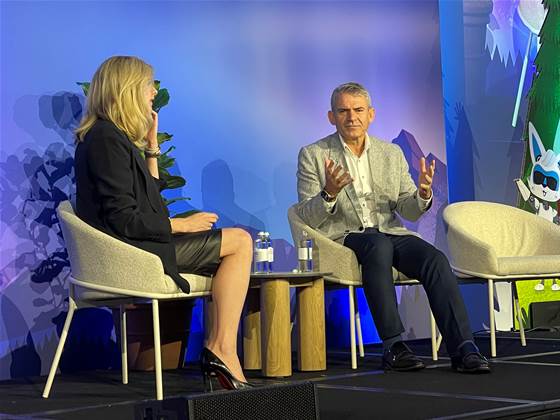
(L-R) Eran Agrios, Salesforce GM and SVP, Financial Services, and Gerard Florian, ANZ group executive for technology

Agentic AI: The Upcoming Advancement in Banker Efficiency

ANZ Banking Group is adopting a progressive stance towards artificial intelligence (AI) by exploring agentic AI—AI systems with the ability to make autonomous decisions and execute tasks—to reshape bankers’ workflows. At a recent Agentforce Financial Services Summit, Gerard Florian, Group Executive for Technology at ANZ, emphasized the objective of eradicating inefficiencies and freeing up time for both bankers and engineers.

“There’s an abundance of wasted time, whether it’s an engineer or a relationship manager. Everyone encounters these inefficiencies in their current roles,” Florian stated. Agentic AI has the potential to transform functions such as meeting preparations, follow-ups, and customer engagements—critical areas where human employees often experience productivity challenges.

ANZ Plus: A Platform-Centric Approach Catalyzing Progress

ANZ’s digital initiative, ANZ Plus, has yielded significant improvements. According to Florian, the platform has facilitated a quintuple increase in the speed of feature delivery to clients. Additionally, the costs related to customer acquisition and service have fallen by more than 30%—a clear reflection of the effectiveness of the platform-oriented methodology.

These advancements arise from the “platform mindset” of ANZ Plus, which allows for modular, scalable, and agile development methodologies. This framework is now being further developed with intelligent automation through agentic AI, aiming to streamline operations and elevate customer satisfaction.

Understanding the Comprehensive Strategy: ANZ’s AI Vision

ANZ’s venture into AI commenced in early 2023 with the sanctioned use of generative AI for software code testing. However, the bank swiftly acknowledged the broader capabilities of AI beyond mere automation.

“We aim to sidestep numerous small AI experiments that fail to scale,” Florian clarified. Instead, ANZ concentrates on grasping entirety of business processes—encompassing loan approvals, customer onboarding, and hiring. This comprehensive perspective aids in pinpointing where AI, whether traditional machine learning, generative AI, or agentic AI, can deliver optimal value.

AI Immersion Centre: Cultivating a Culture of Creativity

The rapid rise of ChatGPT in late 2022 spurred ANZ to intensify its AI adoption efforts. Rather than opposing the transition, ANZ welcomed it by establishing an AI Immersion Centre in partnership with Microsoft. The aim of this program is to enhance the AI skills of leaders and teams throughout the bank.

Now, over a year into this initiative, ANZ has equipped more than 2000 employees across its facilities in Melbourne, New Zealand, and India. These trained leaders are now disseminating their knowledge among their teams, generating a “flywheel effect” that is expediting AI integration throughout the organization.

“We’re fostering a balanced dialogue—recognizing the opportunities while remaining aware of the risks,” Florian remarked. This cultural transition is vital for what he envisions as “potentially the most significant transformation program we will all undergo in the coming years.”

Conclusion

ANZ is positioning itself as a leader in AI innovation within the Australian banking landscape by investigating agentic AI to boost productivity, lower costs, and provide quicker outcomes for customers. Through strategic efforts such as ANZ Plus, AI immersion training, and a comprehensive approach to process enhancement, the bank is setting the stage for a future driven by intelligent automation. By nurturing a culture of education and responsible innovation, ANZ is not only riding the AI wave—it’s actively contributing to its evolution.

Q: What is agentic AI and how is ANZ utilizing it?

A:

Agentic AI refers to AI systems capable of independently undertaking complex tasks and making decisions. ANZ is implementing this technology to enhance banker productivity by automating routine processes such as meeting preparation and follow-ups, enabling employees to concentrate on higher-value tasks.

Q: What advantages has ANZ Plus provided thus far?

A:

ANZ Plus has facilitated a fivefold rise in feature delivery speed and has decreased costs related to customer acquisition and service by over 30%. This has been accomplished through a modular, scalable digital platform strategy.

Q: How is ANZ ensuring its AI projects are scalable?

A:

Rather than pursuing standalone projects, ANZ concentrates on comprehensively understanding business processes to identify where AI can be most impactful. This strategy helps guarantee that AI solutions are scalable and aligned with overall business objectives.

Q: What is the AI Immersion Centre and who is involved?

A:

The AI Immersion Centre is an educational initiative created in collaboration with Microsoft to promote AI integration across ANZ. It has trained over 2000 individuals throughout Australia, New Zealand, and India, including leadership teams who are imparting their expertise to wider teams.

Q: How is ANZ addressing the risks associated with AI?

A:

ANZ is cultivating an informed discussion surrounding AI by training teams on both opportunities and risks. By incorporating responsible AI practices and emphasizing defined processes, the bank aims to mitigate unintended consequences.

Q: What is Microsoft’s role in ANZ’s AI approach?

A:

Microsoft plays an essential role in ANZ’s AI trajectory, having assisted in the establishment of the AI Immersion Centre. The partnership offers technological support and training resources to facilitate responsible AI scaling throughout the organization.

Q: What are the forthcoming plans for ANZ’s AI roadmap?

A:

ANZ intends to further broaden its application of agentic and generative AI across diverse banking functionalities. The focus will continue to be on strategic implementation, staff training, and using AI to enhance customer experience and operational effectiveness.

AEMC Proposes New Power Regulations for Data Centres in Light of AI Increase


We independently review everything we recommend. When you buy through our links, we may earn a commission which is paid directly to our Australia-based writers, editors, and support staff. Thank you for your support!

AEMC Introduces New Electricity Standards for Data Centres Amid Rising AI Demand

Brief Overview

  • The Australian Energy Market Commission (AEMC) is setting forth new electricity regulations for data centres due to the increasing demand stimulated by AI.
  • Concerns have arisen following a 2023 incident in the US when 60 data centres disconnected from the grid, causing instability in electricity supply.
  • Growth in AI is boosting the power requirements for data centres, with some demanding up to 600MW—similar to the needs of small cities.
  • The proposed standards are designed to avert large-scale disconnections during disturbances in Australia’s grid.
  • Data centres are required to enhance transparency regarding their protective measures to grid operators.
  • This initiative is part of a wider effort to modernize Australia’s energy infrastructure to bolster the digital economy.
Electricity regulation revisions for data centres amid Australia's AI growth

AI Surge Sparks Energy Challenges for Data Centres

The Australian Energy Market Commission (AEMC) is preparing new electricity regulations to tackle the rising power requirements of data centres that are expanding due to advancements in artificial intelligence (AI). Chair Anna Collyer of the AEMC notes that new facilities may consume power equivalent to that of a small city, leading to challenges for national grid stability.

Learning from the US: Australia’s Precautionary Measures

The AEMC’s regulatory initiative is in direct response to an incident in the United States where, during a grid disturbance in 2023, 60 data centres collectively using 1,500 megawatts disconnected from the grid at once. This disconnection heightened grid instability, requiring manual reconnections and revealing weaknesses in the integration of data centres with national energy systems.

Following investigations, a prevalent design flaw was identified: a protection system that caused automatic disconnections after a set number of faults occurred in a brief timeframe. Importantly, the system operator was unaware of this feature, highlighting the need for improved communication and transparency between data centres and grid operators.

Australia’s Future: Large Data Centres on the Horizon

Projections for late 2023 indicate Australia may witness the establishment of data centres with capacities between 100MW and 600MW. These centres are crucial for powering AI applications, cloud services, and digital operations, yet their size also constitutes a substantial risk during power system disruptions.

The AEMC cautions that even a single major data centre disconnecting unexpectedly during a frequency event could jeopardize the national grid, exacerbating outages and threatening widespread disturbances in the electricity network. Consequently, the commission is seeking input on proposed regulations that will ensure data centres are grid-compatible and resilient during such incidents.

Proposed Regulations: What Is Being Considered?

The draft regulations by the AEMC seek to mandate that data centres:

  • Reveal their operational practices and protection systems to electricity system operators.
  • Adopt standards that avert automatic disconnections during minor frequency fluctuations.
  • Collaborate with energy providers to align protective settings with national grid stability objectives.

These initiatives aim to ascertain that data centres facilitate, rather than obstruct, Australia’s transition toward a more digital and decentralized energy landscape.

Harmonizing Infrastructure Expansion with Energy Initiatives

Australia is experiencing a surge in digital infrastructure, fueled by AI, cloud services, and big data analytics, all necessitating robust computing facilities. However, absent proactive updates to energy policy, this expansion might exceed the resilience capacity of the national grid.

The AEMC’s efforts signify a broader dedication to harmonizing innovation with reliability. As AI continues to transform sectors from healthcare to finance, ensuring that the foundation of this digital transformation—our data centres—can operate alongside a stable power supply is imperative.

Conclusion

As Australia moves towards a future energized by artificial intelligence and digital services, the AEMC is taking measures to guarantee the country’s power grid is equipped to manage the surge in energy needs from extensive data centres. With insights gained from the US, new regulations are being formulated to avoid simultaneous disconnections in times of grid disturbances, encourage transparency, and sustain energy stability. These initiatives are essential for protecting both the digital economy and the electric system supporting it.

Q: Why is the AEMC proposing new regulations for data centres?

A:

The AEMC aims to ensure that the rising number of high-capacity data centres—spurred by AI demand—does not compromise the stability of the power grid during disturbances. The regulations seek to avert widespread automatic disconnections that could exacerbate outages.

Q: What incident in the US catalyzed this initiative?

A:

In 2023, 60 data centres in Virginia were disconnected from the grid during a disturbance, consuming 1,500MW and worsening grid instability. This incident highlighted a coordination gap between data centres and electricity system operators.

Q: What is the expected power consumption of future Australian data centres?

A:

Several Australian data centres in planning are expected to use between 100MW and 600MW, comparable to the power needs of a small city.

Q: What risks do these facilities present to the grid?

A:

Large data centres could destabilize the grid if they disconnect suddenly during high-frequency events, potentially leading to cascading outages and endangering the national electricity supply.

Q: What specific standards are being suggested?

A:

The AEMC is likely to mandate data centres to disclose their protective systems, eliminate auto-disconnect features that trigger on minor faults, and collaborate with energy operators to maintain grid-friendly conditions.

Q: What will be the impact on the tech industry?

A:

These regulations may raise compliance costs but could yield long-term benefits by guaranteeing reliable electricity for digital operations, thus fostering sustainable growth in the AI and data sectors.

Q: Will currently operational data centres be impacted?

A:

While the emphasis is on newly built facilities, existing data centres may need to assess and potentially revise their systems if their operations endanger grid stability under the updated framework.

Q: How can stakeholders give their feedback?

A:

Stakeholders are invited to take part in the AEMC consultation available on the official website or through industry associations. This feedback will be instrumental in shaping the final regulations.