Matthew Miller, Author at Techbest - Top Tech Reviews In Australia - Page 154 of 187

hipages Group explores AI agents for forthcoming advancements


We independently review everything we recommend. When you buy through our links, we may earn a commission which is paid directly to our Australia-based writers, editors, and support staff. Thank you for your support!

hipages Group Investigates AI Agents for Enhancement and Innovation

Brief Overview

  • hipages Group is trialing AI agents to optimize contract evaluations and tradie license processing.
  • AI is utilized to condense contracts and create preliminary clauses for legal examination.
  • A pilot initiative is in progress to automate trade license processing, shortening onboarding durations.
  • hipages has incorporated DocuSign CLM for managing contract lifecycles and automation.
  • This effort seeks to liberate staff for more impactful tasks while enhancing operational effectiveness.

hipages Group Utilizes AI for Operational Improvement

hipages Group AI automation for contracts

AI for Contract Evaluations and Legal Automation

hipages Group, an Australian digital marketplace linking tradies and homeowners, is adopting artificial intelligence (AI) to improve its operational efficiency. Lucy Thompson, legal counsel and assistant company secretary at hipages, shared the company’s AI strategies at a recent Salesforce event in Sydney.

The legal team is employing AI for contract evaluations, which assists in identifying aggressive clauses, pinpointing missing components, and condensing contracts. Furthermore, AI-generated initial contractual clauses serve as a foundation, allowing attorneys to further refine them.

Streamlining the Tradie Onboarding Process

One of the most compelling facets of hipages’ AI implementation lies in the automation of trade license processing. The company is piloting a program to evaluate whether AI can enhance the verification and approval procedures for tradies joining the platform.

Through automating this process, hipages aims to accelerate onboarding, allowing tradespeople to commence quickly while staff concentrate on higher-value assignments. As noted by Thompson, the pilot is yielding encouraging outcomes, indicating potential time reductions and greater accuracy.

Contract Lifecycle Management via DocuSign CLM

In addition to AI, hipages has integrated DocuSign CLM for managing contract lifecycles. Prior to implementing this system, hipages faced difficulties in centralized contract storage and maintaining renewal dates for vendor contracts.

Initially serving as a contract repository, the platform has evolved to incorporate workflow automation and reporting features. The effortless process of taking documents off-platform and re-uploading them into DocuSign has facilitated smooth legal workflows, especially for external vendor discussions.

Standardizing Documents for Better Efficiency

hipages has also embraced template-driven approaches for routine legal documents, such as non-disclosure agreements (NDAs), master services agreements (MSAs), and sales contracts. This standardization enables teams to create and dispatch contracts with minimal effort, decreasing administrative burdens and enhancing turnaround times.

Conclusion

hipages Group is strategically leveraging AI and automation to bolster efficiency in contract management and tradie onboarding. By utilizing AI tools for contract evaluations and approvals, paired with integrating DocuSign CLM for legal workflows, the company is streamlining operations while allowing staff to focus on more significant tasks. The ongoing pilot for AI-enhanced trade license processing could signify a notable transformation in how tradies access the platform, further solidifying hipages’ dedication to innovation.

Q&A: Frequently Asked Questions About hipages’ AI Efforts

Q: How is hipages incorporating AI into its operations?

A:

hipages is utilizing AI mainly for contract evaluations, summarization, and tradie license processing. The AI aids legal teams in identifying crucial contract clauses and generating initial drafts, while a pilot program is testing AI’s effectiveness in automating trade license verification.

Q: What advantages does AI provide for contract management at hipages?

A:

AI enhances contract evaluations by detecting missing or aggressive clauses, condensing content, and creating draft contractual clauses. This minimizes manual work and accelerates contract processing.

Q: In what way does AI enhance the tradie onboarding experience?

A:

The AI-driven pilot seeks to automate trade license processing, lessening onboarding durations for tradies. This allows tradespeople to join the platform more swiftly while enabling staff to focus on other essential tasks.

Q: What function does DocuSign CLM have in hipages’ legal procedures?

A:

DocuSign CLM acts as a contract repository and workflow automation instrument, assisting hipages in managing legal documents more effectively. It also streamlines contract negotiations and assists with tracking renewal dates.

Q: Might hipages widen AI implementation beyond legal and onboarding functions?

A:

Indeed, as AI technology advances, hipages may investigate further applications such as automation for customer support, predictive analytics for tradie demand, and AI-enhanced job matching between homeowners and tradies.

Q: How does AI integration align with hipages’ long-term vision?

A:

By utilizing AI and automation, hipages aims to boost efficiency, lessen manual tasks, and improve user experiences for both tradies and homeowners. These efforts are consistent with the company’s mission to streamline the tradie marketplace.


**AI Enhanced: The Impact of Search Technology on Tomorrow**


We independently review everything we recommend. When you buy through our links, we may earn a commission which is paid directly to our Australia-based writers, editors, and support staff. Thank you for your support!

AI Enhanced: The Impact of Search Technology on the Future | TechBest

Brief Overview

  • Generative AI (Gen AI) is radically changing Australian businesses by improving decision-making, customisation, and operational efficiency.
  • 99% of Australian IT executives acknowledge Gen AI’s influence, with 74% intending to increase their investments in the upcoming two to three years.
  • Key technologies driving AI-based search innovations include Retrieval Augmented Generation (RAG) and vector search.
  • Organizations such as Consensus and LG CNS are already experiencing notable enhancements in search precision and effectiveness thanks to AI-driven search.
  • ElasticON Sydney, scheduled for March 6, 2026, will feature advancements in AI-powered search, offering crucial insights for IT professionals.
AI-Enhanced Search Transforming Business Innovation

How AI-Driven Search is Revolutionising Australian Enterprises

Artificial Intelligence (AI) is reshaping the operational landscape of businesses, with one of the most significant advancements arising from AI-driven search technologies. By harnessing Generative AI (Gen AI), Australian companies are enhancing efficiency, customisation, and decision-making like never before.

Gen AI: A Revolutionary Force for Australian Firms

Generative AI is transforming sectors by automating content production, elevating customer experiences, and refining workflows. Businesses in Australia are increasingly embracing Gen AI to maintain competitiveness, with 99% of IT professionals recognising its transformative potential.

As reported in the Elastic Generative AI Report, 74% of Australian businesses expect to enhance their investments in AI-enabled solutions within the next two to three years. Additionally, 53% of IT executives believe that search-powered Gen AI can save employees up to two days weekly, thus significantly increasing productivity.

The Importance of Advanced Search in AI Development

What is Retrieval Augmented Generation (RAG)?

One of the primary hurdles for AI models is ensuring that their responses are accurate and relevant. Retrieval Augmented Generation (RAG) improves AI systems by permitting real-time access to external knowledge databases. This capability guarantees that AI-generated responses are more factual, contextually accurate, and tailored to the user.

Vector Search: Unlocking Semantic Insight

Conventional keyword-based search often fails to grasp the genuine intent behind inquiries. In contrast, vector search addresses this gap by utilising learned vector representations, allowing AI to interpret natural language more effectively. This semantic search capability enhances the accuracy and efficiency of AI-powered search engines.

Success Stories in the Real World with AI-Driven Search

Consensus: Elevating Search Precision and Speed

Consensus, a prominent AI research platform, utilised RAG to enhance search accuracy by 30% while reducing latency by 75%. This significant transformation has improved the academic research experience for over a million users, showcasing the effectiveness of AI-driven search.

LG CNS: Advancing AI Search with Hybrid Solutions

LG CNS adopted Elastic’s hybrid search technology—integrating full-text, vector, and semantic search—to elevate its KeyLook AI search accuracy from 75% to 95%. This improvement enables employees to locate vital documents more swiftly, thereby boosting workplace efficiency.

ElasticON Sydney: An Essential AI Event

For Australian businesses and IT leaders keen to delve into the future of AI-driven search, ElasticON Sydney on March 6, 2026, is a crucial gathering. The conference will provide hands-on insights from AI specialists, live demonstrations, and opportunities for networking with industry pioneers.

What to Anticipate at ElasticON Sydney:

  • Expert discussions on AI-enabled transformations and search technologies.
  • Live demonstrations highlighting AI-driven search applications.
  • Networking with leading AI experts and technology innovators.
  • Strategies for capitalising on AI-guided search to foster business success.

For companies striving to remain competitive in the evolving AI environment, ElasticON Sydney presents an ideal opportunity to explore the future of AI-driven search.

Conclusion

AI-driven search is swiftly reshaping the workings of Australian businesses. Generative AI, RAG, and vector search are emerging as vital tools for enhancing decision-making, efficiency, and customer experiences. With leading organisations already achieving success, the outlook for AI-powered search is exceptionally bright. For IT leaders seeking to stay ahead, events like ElasticON Sydney offer invaluable insights into the next stage of AI-driven business evolution.

Q&A: Key Takeaways on AI-Powered Search

Q: What makes Generative AI essential for businesses?

A:

Generative AI allows enterprises to automate processes, enhance customer interactions, and refine decision-making. It also facilitates highly customised experiences, resulting in greater efficiency and innovation.

Q: In what way does Retrieval Augmented Generation (RAG) enhance AI accuracy?

A:

RAG improves AI-generated outputs by enabling language models to consult external knowledge resources in real-time. This ensures that the responses are more factual, relevant, and up-to-date.

Q: What advantages does vector search provide for AI applications?

A:

Vector search enhances AI’s understanding of natural language queries by interpreting their semantic context instead of relying solely on keyword matching. This results in more precise and contextually relevant search outcomes.

Q: How are companies currently leveraging AI-driven search?

A:

Firms such as Consensus and LG CNS are employing AI-powered search to elevate accuracy, decrease search response times, and boost productivity. These technologies assist businesses in efficiently and quickly locating pertinent information.

Q: Which industries benefit the most from AI-powered search technologies?

A:

Sectors like finance, healthcare, retail, and e-commerce see substantial advantages from AI-driven search. These technologies aid organisations in managing large volumes of unstructured data effectively, thus enhancing customer experiences and operational efficiency.

Q: What makes ElasticON Sydney a significant event for IT leaders?

A:

ElasticON Sydney serves as a venue for IT leaders, developers, and AI professionals to explore the latest developments in AI-driven search. The event provides expert insights, live demonstrations, and networking opportunities to help businesses advance in AI adoption.

Q: How can companies initiate their journey with AI-driven search?

A:

Businesses can begin by investigating AI search solutions from leading providers like Elastic. Participating in industry events like ElasticON Sydney and collaborating with AI specialists can also assist organisations in implementing effective AI-driven search strategies.

Microsoft suspends AI data center initiatives due to sector difficulties


We independently review everything we recommend. When you buy through our links, we may earn a commission which is paid directly to our Australia-based writers, editors, and support staff. Thank you for your support!

Microsoft Revises AI Data Centre Strategy Amid Industry Hurdles – TechBest

Microsoft Revises AI Data Centre Strategy Amid Industry Hurdles

Microsoft reconsiders AI data centre growth

Quick Read

  • Microsoft has annulled leases for substantial data centre capacity in the US.
  • There is increasing scepticism among investors regarding the significant costs of AI infrastructure.
  • The Chinese startup DeepSeek poses a challenge to Western AI leadership with economically feasible solutions.
  • This decision follows similar cost-cutting actions taken by Meta Platforms.
  • Microsoft is still on track to allocate more than US$80 billion ($126 billion) to AI and cloud infrastructure this fiscal year.
  • The company might have overextended itself regarding data centre and GPU capacity in previous years.
  • Microsoft’s shares dropped around 1% after the news broke.

Microsoft Terminates US Data Centre Leases

Microsoft has allegedly terminated leases for extensive data centre capacity in the United States, indicating a possible oversupply issue as it expands its artificial intelligence (AI) infrastructure. Analysts from TD Cowen, headed by Michael Elias, report that the company has nullified agreements totaling “a couple of hundred megawatts” with no fewer than two private data centre firms.

Investor Reservations About AI Infrastructure Investment

This news arrives as concerns grow among investors regarding the substantial capital funding being directed toward AI infrastructures by major tech companies in the US. The slow rate of return on investment has prompted doubts, especially as the Chinese startup DeepSeek has achieved significant advancements in AI at much lower costs compared to its Western rivals.

Microsoft and Meta Platforms Reduce AI Expenditure

Microsoft is not the only player reevaluating its investments in AI and cloud infrastructure. Meta Platforms has also initiated steps to decrease its capital expenditures, mirroring a wider trend among significant tech firms looking to streamline costs while facing unpredictable demand for AI services.

Microsoft’s Commitment to AI and Cloud Expansion Endures

Notwithstanding these lease cancellations, Microsoft is steadfast in its AI and cloud expansion ambitions. A company representative affirmed that its intended investment exceeding US$80 billion ($126 billion) in AI and cloud infrastructure for the fiscal year remains firmly on schedule. However, the company is strategically calibrating its investments in infrastructure according to variations in demand.

Market Response and Industry Consequences

Microsoft’s stock experienced a decline of about 1% in the wake of the announcement, underperforming relative to other leading tech stocks. Analysts believe this action may signal a deceleration in demand for AI-driven cloud solutions, especially in light of disappointing quarterly performances from major cloud service providers.

Did Microsoft Misjudge AI Infrastructure Needs?

Experts within the industry speculate that Microsoft may have overestimated the demand for cloud computing bolstered by AI. The company encountered substantial difficulties in securing sufficient data centre and GPU capacity in preceding years, resulting in aggressive lease agreements, often at elevated costs. These recent cancellations might represent an attempt to realign its investments with actual market demand.

Summary

Microsoft has made a calculated decision to annul specific data centre leases in the US in light of changing requirements for AI infrastructure and investor apprehensions regarding heavy capital expenditures. While the company is proceeding with its long-term AI and cloud expansion strategies, it is modifying its approach for efficiency. This action aligns with wider trends in the industry, as other tech behemoths such as Meta Platforms also reassess their spending strategies.

Q&A

Q: Why is Microsoft terminating AI data centre leases?

A: Microsoft seems to be revising its AI infrastructure approach due to potential oversupply and shifting demand trends. The company may have overcommitted to data centre capacity in earlier years and is currently re-evaluating its necessities.

Q: How does this affect Microsoft’s AI and cloud investment strategies?

A: Despite the lease cancellations, Microsoft remains dedicated to investing over US$80 billion ($126 billion) in AI and cloud capacity this fiscal year. The company is strategically pacing its infrastructure growth rather than halting it completely.

Q: What significance does Chinese startup DeepSeek hold in this context?

A: DeepSeek has risen as a notable contender in AI, providing technological solutions at significantly lower costs compared to its Western competitors. This has heightened investor worries regarding the profitability of extensive AI infrastructure investments by US tech organizations.

Q: How have investors reacted to Microsoft’s decision?

A: Microsoft’s stock saw a decrease of around 1% following the announcement. Investors are cautious regarding the long-term profitability of AI infrastructure investments, especially as other cloud providers have disclosed uninspiring financial outcomes.

Q: Is Microsoft the only entity revisiting AI infrastructure investments?

A: No, Meta Platforms has also implemented similar measures to reduce capital expenditure on AI and cloud infrastructure. This reflects a broader industry trend of reassessing substantial AI investments.

Q: What does this imply for the future of AI in cloud computing?

A: Although AI continues to be a key priority for major tech firms, companies are increasingly selective in resource allocation. Investments are anticipated to become more targeted, focusing on areas with clear and immediate returns instead of speculative long-term investments.

**Formula 1’s 2026 Season: The Technology Driving the Future of Motorsports**


We independently review everything we recommend. When you buy through our links, we may earn a commission which is paid directly to our Australia-based writers, editors, and support staff. Thank you for your support!

The 2026 Formula 1 Season: Technology Shaping the Future of Racing

Brief Overview

  • The 2026 F1 season celebrates its 75th anniversary with a spectacular event launch.
  • All 10 teams revealed their liveries, though not their final vehicle designs.
  • Tech sponsors are pivotal to advancements in aerodynamics, data analysis, and fan interaction.
  • Leading tech companies like HP, Oracle, IBM, and Qualcomm are at the helm of innovation.
  • The season starts with the Australian Grand Prix on March 16, 2026, in Melbourne.

F1 2026: A Season Defined by Technological Progress

Formula 1 has consistently represented the zenith of motorsport and technological progress. The upcoming 2026 season, which commemorates F1’s 75th milestone, is anticipated to be no different. Teams are harnessing state-of-the-art advancements in aerodynamics, artificial intelligence, and live data analysis, paving the way for significant progress in the sport.

Scuderia Ferrari HP: Tradition Meets Cutting-Edge Technology

The 2026 launch for Ferrari blended heritage and innovation, featuring an eye-catching red livery complemented by bold HP branding. With Charles Leclerc and Lewis Hamilton vying for the championship, the team is committed to leveraging advanced technology.

Major Technology Partners:

  • Hewlett Packard (HP): Delivering high-performance computing and 3D printing for quick prototyping.
  • HCL Software: Improving data management and cybersecurity for integrated racing strategies.
  • IBM: Enhancing fan interaction with AI-supported content and analytics.

Oracle Red Bull Racing: Dominance Through Data

Following a powerful 2026 season, Red Bull Racing continues to enhance its technology using Oracle’s cloud computing solutions. Max Verstappen and Liam Lawson are expected to utilize over 150 billion race simulations.

Major Technology Partners:

  • Oracle: Providing real-time cloud data handling to refine race strategies.
  • IBM: Offering AI-powered analytics for vehicle setup and performance predictions.
  • Zoom: Facilitating efficient communication among engineers and strategists worldwide.

Mercedes-AMG PETRONAS: Building Towards Tomorrow

After facing a tough 2026, Mercedes aims to rebound with a sleek black livery and a renewed technical strategy. With an emphasis on data protection and operational effectiveness, the team is capitalizing on new and established partnerships.

Major Technology Partners:

  • Petronas: Offering advanced fuels and lubricants for optimizing engine performance.
  • Qualcomm (Snapdragon): Improving trackside connectivity and augmented reality experiences.
  • AMD: Providing high-performance computing for simulations.
  • SAP: Delivering AI-enhanced forecasting and expenditure management solutions.
  • CrowdStrike: Ensuring the security of race data with real-time cybersecurity measures.

McLaren: A Technology-Driven Climb

McLaren’s approach for the 2026 season focuses on harnessing technology to reduce the gap with leading teams. Without a title sponsor, the team is depending on robust tech collaborations to support data-driven decision-making.

Major Technology Partners:

  • Dell Technologies: Offering reliable data storage and computational resources.
  • Google Chrome: Improving digital workflows and enhancing fan engagement.

Technology Propels the Future of F1

The F1 75 Live event was not merely a car unveiling—it was a reflection of how technology is influencing the sport. From AI-driven simulations to cloud processing in real-time, Formula 1 is redefining the edge of innovation.

The season commences with the Australian Grand Prix on March 16, 2026, at Albert Park Circuit in Melbourne. With 24 races scheduled, technology will undoubtedly remain at the heart of each competition on the track.

Recap

The 2026 Formula 1 season is poised to be a transformative year, with technology playing a crucial role in vehicle development, racing strategies, and fan engagement. With significant sponsors like Oracle, HP, and Qualcomm spearheading innovation, teams are testing the boundaries of performance. The inaugural race in Melbourne will serve as the first authentic test of these new advancements.

Q&A: Addressing Your Essential Questions

Q: In what ways is AI utilized in Formula 1 for 2026?

A:

Teams are employing AI for predictive insights, vehicle setups, and race strategies. AI facilitates the processing of vast data volumes in real-time, empowering teams to make instantaneous decisions.

Q: What is the importance of cloud computing in F1?

A:

Cloud computing allows teams to rapidly access and analyze race data, enhancing decision-making on and off the circuit. Organizations like Oracle and SAP are providing cloud solutions to optimize performance.

Q: How are cybersecurity companies aiding F1 teams?

A:

As teams handle terabytes of data per race, cybersecurity companies like CrowdStrike and Arctic Wolf ensure data integrity through real-time threat identification and cloud security mechanisms.

Q: What is the influence of 3D printing on car development?

A:

3D printing enables teams to quickly prototype and evaluate aerodynamic components, shortening development cycles and enhancing performance.

Q: Why is the Australian Grand Prix significant in 2026?

A:

The Australian GP serves as the season opener, establishing the competitive atmosphere for the championship. It is crucial for assessing the application of new technologies under actual race conditions.

Q: How are sponsors like HP and Qualcomm impacting F1?

A:

HP supplies high-performance computing solutions for Ferrari, while Qualcomm’s Snapdragon technology amplifies trackside connectivity and augmented reality experiences for fans.

Q: What new alliances were launched for the 2026 season?

A:

Numerous new partnerships were unveiled, including Williams’ collaboration with Atlassian, Aston Martin’s alliance with Coinbase, and Red Bull’s ongoing dependence on Oracle’s cloud technology.

**Australian Government to Require Mobile Carriers to Offer Direct-to-Device Services**


We independently review everything we recommend. When you buy through our links, we may earn a commission which is paid directly to our Australia-based writers, editors, and support staff. Thank you for your support!

Australia to Require Nationwide Direct-to-Device Mobile Coverage

Australia to require mobile telcos to offer LEOsat direct-to-device services

Quick Summary

  • The Australian government is set to implement legislation to mandate outdoor mobile voice and SMS coverage nationally via LEOsat (low Earth orbit satellite) technology.
  • A Universal Outdoor Mobile Obligation (UOMO) is scheduled for 2026 to guarantee mobile connectivity in every location, especially during emergencies and disasters.
  • The rollout is projected to conclude by late 2027, with some services potentially accessible sooner.
  • The government is also contemplating broadening the initiative to encompass basic mobile data services moving forward.
  • Consultations with the industry will influence the final language of the legislation, though the rollout may be postponed until after the 2026 federal election.
  • Telstra and Optus are already investigating LEOsat technology, but commercial implementation presents challenges.
  • This initiative builds upon existing efforts aimed at addressing mobile coverage gaps in underserved regions.

Government Strategy for Comprehensive Mobile Coverage

The Australian government has revealed intentions to establish a legislative obligation for mobile network operators to deliver outdoor voice and SMS services throughout the country utilizing LEOsat direct-to-device technology. This initiative, referred to as the Universal Outdoor Mobile Obligation (UOMO), seeks to enhance mobile access, particularly in remote regions and during critical situations.

What Does the Universal Outdoor Mobile Obligation (UOMO) Entail?

The UOMO is a proposed regulatory requirement that will mandate all mobile network carriers in Australia to provide direct-to-device coverage via low Earth orbit satellite (LEOsat) technology. This ensures that mobile users, irrespective of their location, can access outdoor voice and SMS functionalities.

Communications Minister Michelle Rowland has stated that the main goals of this policy include improving access to emergency Triple Zero services and ensuring mobile connectivity amidst disasters and power failures.

When Will the Mandate Be Implemented?

The legislation is anticipated to be introduced in 2026, with full implementation expected by the end of 2027. Nevertheless, the government has indicated that some services might be made available earlier, contingent on the readiness of the industry. The schedule for the legislation could also be affected by the forthcoming federal election, which is likely to occur in early 2026.

Potential Expansion to Mobile Data Services

Although the initial emphasis is on voice and SMS services, the government is also looking into extending the mandate to include basic mobile data services in the future. This will rely on advancements in technology and network capacity.

Response from the Industry and Associated Challenges

Telstra and Optus have initiated examinations of LEOsat technology, though their advancements have been inconsistent. For example, Optus has recently postponed its plans for a mobile-to-satellite service. The government has committed to collaborating with industry participants and the University of Technology Sydney to assess device compatibility and ensure a uniform user experience.

Current Mobile Coverage Initiatives

It’s crucial to understand that the UOMO will not replace ongoing governmental programs designed to enhance mobile coverage in isolated areas. This initiative will support existing efforts, such as the Mobile Black Spot Program, which provides funding for the establishment of new towers and antennas to improve connectivity.

Overview

The Australian government’s move to mandate direct-to-device mobile coverage through LEOsat technology marks a pivotal advance toward achieving universal mobile access. With legislation slated for 2026 and complete implementation by 2027, the initiative aims to bolster emergency response capabilities and enhance connectivity in remote locales. Despite existing challenges, including industry adaptation and the need for infrastructure development, this plan signifies a noteworthy technological transformation in Australia’s mobile network framework.

Q&A: Clarifying the UOMO Initiative

Q: What does direct-to-device mobile coverage mean?

A:

Direct-to-device mobile coverage allows mobile phones to connect directly to satellite networks without the need for ground infrastructure like cell towers. This guarantees connectivity in remote regions where traditional mobile networks may not extend.

Q: How will this initiative enhance emergency services?

A:

The mandate will ensure that Australians can reach Triple Zero emergency services from any location in the country, even in areas prone to disasters or those that are remote. This is vital for public safety during crises such as bushfires, floods, and other emergency situations.

Q: Will this initiative replace current mobile networks?

A:

No, the UOMO initiative is intended to supplement existing mobile networks rather than supplant them. Traditional mobile towers will continue to function, while LEOsat technology will bridge coverage deficiencies.

Q: When will Australians begin to access these services?

A:

The government anticipates that national coverage will be fully realized by late 2027, although some services might be introduced earlier as network operators start implementing the technology.

Q: Will mobile internet access be part of this service?

A:

Initially, the mandate will concentrate on voice and SMS services. However, there are considerations for expanding it to include basic mobile data as technology advances and network capacity progresses.

Q: What hurdles do Telstra and Optus encounter with LEOsat technology?

A:

Despite both companies exploring LEOsat technology, the path to commercial implementation has been challenging. For instance, Optus has postponed its plans to launch a mobile-to-satellite service, highlighting potential technical and logistical obstacles.

Q: How will consumers determine if their phones are compatible?

A:

The government will work alongside the University of Technology Sydney and industry specialists to evaluate and confirm handset compatibility. Consumers will receive guidance regarding which devices can utilize direct-to-device services.

**Race Towards Triumph in *Magic: The Gathering – Aetherdrift*!**


We independently review everything we recommend. When you buy through our links, we may earn a commission which is paid directly to our Australia-based writers, editors, and support staff. Thank you for your support!

Brief Overview

  • MTG’s newest expansion, *Aetherdrift*, incorporates speedy racing into the multiverse with an array of mounts and vehicles.
  • New gameplay mechanics feature *Mount* and *Vehicle* cards, enabling inventive combinations for tactical gameplay.
  • *Max Speed* introduces an innovative mechanic that enhances card abilities as players achieve higher speed levels.
  • With ten distinct racing teams, players can explore varied deck-building possibilities.
  • Collector’s items include a limited Chandra card, with only 500 copies produced.
  • Japanese-themed cards bring artistic flair to the set.
  • A variety of purchase options, including Play Boosters, Collector Boosters, and Commander Decks, are available.

Full Throttle – Racing in the Multiverse

Magic: The Gathering’s (*MTG*) latest expansion, *Aetherdrift*, is centered on speed and excitement. Drawing inspiration from fast-paced racing, the set showcases everything from modern motorcycles to classic chariots, rollerblades, and galloping steeds. Players will dive into an exhilarating race for triumph throughout the multiverse.

This set unveils ten distinct racing teams, each contributing their own style and strategic elements. Whether your preference is for precision maneuvering, raw power tactics, or cunning tricks, a team awaits to complement your playing style.

Mounts and Vehicles – New Mechanics Revealed

*Aetherdrift* transforms MTG gameplay with two engaging mechanics: Mount and Vehicle. These mechanics motivate players to merge varied cards to forge powerful combinations:

  • Mounts: Creature cards that can be *saddled* with another creature to amplify their abilities.
  • Vehicles: Artifact cards necessitating a *crew* before they can enter combat.

Strategic deck architecture will be crucial, as players must weigh focusing on mounts, vehicles, or a blend of both to outsmart their competitors.

Reaching Maximum Speed

The new Max Speed feature adds another level of thrill to *Aetherdrift*. Certain cards have a “Start Your Engines” ability, enabling players to monitor their speed throughout the match. Each turn where an opponent loses life contributes to the player’s speed level, capping at four levels.

As players accelerate their speed, their cards receive added effects, progressively boosting their decks’ strength. Some cards even gain special powers once a player achieves maximum speed, encouraging both aggressive and strategic gameplay.

Exclusive Collectibles – Seeking Rare Cards

MTG has always embraced the collecting aspect, and *Aetherdrift* certainly matches expectations. Enthusiasts will be driven to seek out racing-themed cards, while aficionados of Japanese and manga art can anticipate exquisite illustrated borderless cards that display a distinctive style.

Chandra’s Special Racing Version

Among the most coveted cards in *Aetherdrift* is the limited edition Chandra, Spark Hunter. This iconic Planeswalker is depicted in a sleek, red racing outfit, riding a futuristic red motorcycle. With only 500 copies produced, this card is a prized collectible. Fans of Chandra will want to explore Collector Boosters for a chance to secure this rare card for their collection.

Wide Range of Purchasing Options

Whether you’re an experienced player or a newcomer, *Aetherdrift* provides a diverse array of products to satisfy all collectors:

  • Play Boosters – A perfect introduction for casual participants.
  • Collector Boosters – Filled with rare and exclusive cards.
  • Prerelease Packs – Ideal for early exploration of the set.
  • Bundles & Finish Line Bundles – Excellent for expanding your collection.
  • Commander Decks – Two distinctive decks designed for multiplayer gameplay.

Conclusion

Magic: The Gathering’s *Aetherdrift* propels the game into a fast-paced, thrilling realm with its racing-themed mechanics. The addition of mounts and vehicles introduces new strategic dimensions, while the Max Speed feature incentivizes bold gameplay. Collectors will find an abundance of treasures, from distinct Japanese-inspired cards to the ultra-rare Chandra, Spark Hunter. No matter if you’re aiming to enhance your deck or begin a fresh collection, *Aetherdrift* presents an experience for every MTG enthusiast.

FAQs

Q: What sets *Aetherdrift* apart from earlier MTG expansions?

A:

*Aetherdrift* introduces a racing concept to MTG, featuring high-speed mechanics such as mounts, vehicles, and Max Speed. The strategic depth of this set arises from the capacity to blend these elements for distinct gameplay scenarios.

Q: How do the Mount and Vehicle mechanics function?

A:

Mounts are creature cards that offer enhanced abilities when paired with another creature. In contrast, Vehicles are artifacts that need a crew to be put into play. Players can explore various combinations for optimal performance.

Q: What is the Max Speed mechanic?

A:

Max Speed is a new gameplay element where selected cards increase in power as players elevate their speed levels. Speed rises each time an opponent loses life, reaching a maximum of four levels. Certain cards will activate special abilities upon reaching Max Speed.

Q: Are there any exclusive or rare cards in *Aetherdrift*?

A:

Absolutely! The standout collectible is the ultra-rare Chandra, Spark Hunter, with only 500 copies in circulation. Additionally, Japanese-themed borderless cards offer unique artwork, making them highly coveted by collectors.

Q: Where can I purchase *Aetherdrift* cards?

A:

MTG *Aetherdrift* products are available through authorized retailers, local gaming shops, and online platforms such as the MTG website. Various packs and bundles cater to different preferences and budgets.

Q: What are effective deck-building strategies for *Aetherdrift*?

A:

Players can create decks focused on mounts for aggressive, creature-oriented strategies or opt for vehicles to maximize artifact synergies. A balanced approach incorporating both mechanics can provide versatility in gameplay.

Q: Is *Aetherdrift* accessible for beginners?

A:

Definitely! Although the new mechanics enhance depth, *Aetherdrift* remains approachable for newcomers as well as seasoned players. Play Boosters and Prerelease Packs make excellent starting points for those unfamiliar with the set.

Q: How does *Aetherdrift* integrate into MTG’s broader multiverse?

A:

*Aetherdrift* introduces a vibrant, high-speed racing aspect to the MTG narrative, expanding the multiverse with its blend of futuristic and historical racing elements.

Nothing Smartphones Enters the World of Humanoid Robots


We independently review everything we recommend. When you buy through our links, we may earn a commission which is paid directly to our Australia-based writers, editors, and support staff. Thank you for your support!

Nothing Joins the Humanoid Robot Competition – TechBest

Brief Overview

  • Nothing, recognized for its sleek smartphones, is stepping into the humanoid robotics domain.
  • A teaser video showcases a stylish, faceless robot clad in a transparent lab coat.
  • The complete reveal is anticipated on February 24, 2026, featuring information on AI capabilities and possible uses.
  • Nothing will rival Tesla’s Optimus, Figure AI, 1X’s NEO Beta, and Agility Robotics’ Digit.
  • The worldwide humanoid robotics market is projected to hit $13 billion by 2029.

Nothing Teases Its Foray into Humanoid Robotics

Consumer electronics brand Nothing, celebrated for its minimalist smartphones and wireless earbuds, has officially hinted at its entry into humanoid robotics. A recent teaser shared on X (previously Twitter) showcases a faceless humanoid robot dressed in a transparent lab coat, reflecting Nothing’s hallmark design style.

The post was captioned, “A different kind of unboxing is on the horizon. Tomorrow,” indicating that a full reveal is planned for February 24, 2026. While the teaser highlights the robot’s visual appeal, its functionalities and intended uses are still unclear.

Nothing's humanoid robot teaser image

Anticipated Features of Nothing’s Humanoid Robot Reveal

The unveiling event for Nothing is scheduled for February 24, 2026 (Australian time), although the exact timing and venue have yet to be disclosed. The event will likely showcase:

  • The robot’s agility and movement capabilities.
  • AI-powered features like speech recognition and object handling.
  • Possible applications in domestic, industrial, or logistics settings.

Though numerous humanoid robot announcements remain enigmatic, supporters are eagerly anticipating an in-depth look at Nothing’s new innovation.

Competitive Landscape in Humanoid Robotics

Nothing is entering a competitive landscape where established innovators have already made notable advancements. Here’s a glimpse of some of its primary rivals:

Tesla Optimus

Tesla first unveiled its Optimus humanoid robot at AI Day in 2021. By 2026, Tesla demonstrated Optimus with sophisticated mobility features, such as walking, climbing stairs, and object manipulation. Tesla aims for mass manufacturing with a price range of $20,000–$30,000, positioning Optimus as a general-purpose worker.

1X NEO Beta

1X, a robotics corporation based in Norway and the US, launched NEO Beta in 2026. Created for household chores like cleaning and object retrieval, NEO Beta prioritizes safety and human interaction, featuring a lightweight 60 kg design. Initial industrial models have a price tag of $200,000, with plans to expand for consumer adoption.

Figure AI

Figure AI, supported by investors such as Jeff Bezos and Microsoft, has crafted humanoid robots intended for industrial and service applications. Its Figure 01 robot reaches a height of 1.65 meters and boasts advanced dexterity. In early 2026, Figure 02 began deployment in industrial settings, showcasing improvements in factory automation efficiency.

Agility Robotics’ Digit

Agility Robotics designed Digit specifically for logistics and delivery purposes. Standing at 1.73 meters and weighing 70 kg, Digit excels in warehouse tasks, capable of transporting loads up to 18 kg. Organizations like Amazon have shown interest in incorporating Digit into their supply chain processes.

The Horizon of Humanoid Robotics

The humanoid robotics market is projected to grow from $2.03 billion in 2026 to over $13 billion by 2029, fueled by AI innovations and a rising demand for automation. Nothing enters this arena with a fresh design perspective, but it remains to be seen how its robot will fare in terms of functionality and market appeal.

What’s Next for Nothing?

Nothing’s minimalist design could distinguish its humanoid robot; however, the true challenge lies in AI development, safety compliance, and pricing. Competing against Tesla, Figure AI, and 1X will demand strong technical prowess and a defined use case.

The event on February 24, 2026, will disclose information regarding:

  • The robot’s energy source and battery longevity.
  • Its AI infrastructure (machine learning, natural language processing).
  • Targeted uses (home assistance, industrial automation).

Stay tuned to TechBest for a comprehensive analysis following the official unveiling of Nothing’s robot.

Conclusion

Nothing’s entry into humanoid robotics represents an exhilarating transition for the company, which is known for its elegant consumer electronics. With a teaser indicating a futuristic AI-powered assistant, the tech community is keenly anticipating further insights. Nevertheless, the brand faces fierce competition from Tesla, 1X, Figure AI, and Agility Robotics. As the humanoid robotics market progresses, Nothing’s strategy regarding design and AI integration will be pivotal in determining its success in this swiftly evolving field.

Q&A

Q: What is Nothing’s humanoid robot?

A:

Nothing has hinted at a faceless humanoid robot featuring a transparent lab coat, consistent with its signature design ethos. Specifics about its capabilities and features will be disclosed on February 24, 2026.

Q: How does Nothing’s robot stack up against Tesla Optimus?

A:

While both entities are developing humanoid robots, Tesla Optimus is crafted for industrial and repetitive tasks, with an expected price of $20,000–$30,000. Nothing’s focus may lean more towards design appeal and user-friendly AI incorporation.

Q: What sectors will benefit from humanoid robots?

A:

Humanoid robots can be utilized in manufacturing, logistics, healthcare, home assistance, and industrial automation. Businesses like Amazon and BMW are already adopting robotic technologies to enhance efficiency.

Q: When and where will Nothing’s robot be showcased?

A:

The complete reveal is set for February 24, 2026. Although the exact venue remains unclear, Nothing’s official X account (@nothing) will share updates about the event.

Q: What challenges does Nothing encounter in the humanoid robotics market?

A:

Nothing must validate its robot’s AI capabilities, guarantee safety within human environments, and maintain competitive pricing. Established companies like Tesla and 1X already possess advanced prototypes and industry alliances.

Q: What is the size of the humanoid robotics market?

A:

The global humanoid robotics market is expected to escalate from $2.03 billion in 2026 to over $13 billion by 2029, propelled by advances in AI and automation.

Q: Will Nothing’s robot be aimed at consumers?

A:

It remains uncertain whether Nothing’s robot will target consumers or be designed for enterprise applications. The event on February 24 should clarify its intended market focus.

You Won’t Imagine This: A PC Case That Accommodates an RTX 5080!


We independently review everything we recommend. When you buy through our links, we may earn a commission which is paid directly to our Australia-based writers, editors, and support staff. Thank you for your support!

Quick Overview

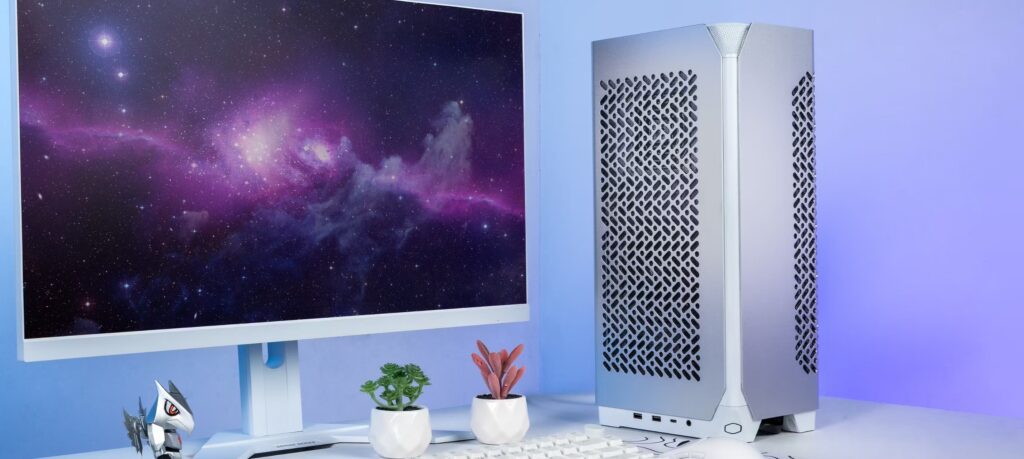
  • The Cooler Master NCore Air 100 Chassis is a highly compact PC case tailored for high-performance systems.
  • Despite its petite 14.7L size, it accommodates a triple-slot GPU, including the Nvidia RTX 5080.
  • Offered in two dimensions: Standard (155mm x 212mm x 449mm) and Expanded (172mm x 212mm x 449mm).
  • Equipped with extensive mesh air vents and a proficient thermal design for superior cooling.
  • Supports both AMD and Intel CPUs, with RAM compatibility up to 32GB.
  • Storage expandability includes up to 8TB SSD and an extra 4TB SATA drive.
  • Power supply choices consist of 850W and 1,000W Gold-rated PSUs.
  • Available pre-assembled from Aftershock or as a standalone chassis from Cooler Master.

A Small-PC Option with Significant Capability

For Australian PC builders and tech enthusiasts in search of a compact case that does not sacrifice power, the Cooler Master NCore Air 100 presents a thrilling new alternative. This remarkably compact enclosure can house high-end components, such as the substantial Nvidia RTX 5080, making it a premium selection for those needing performance in a streamlined design.

Advanced Airflow and Cooling Strategy

A primary challenge with smaller PC cases is managing heat effectively. The NCore Air 100 addresses this concern with a cleverly designed cooling system. Large mesh air vents facilitate significant airflow, guaranteeing that high-performance parts receive the necessary cooling. The design optimises thermal efficiency, rendering it a great choice for premium builds.

Dimensions: Standard vs Expanded

The Cooler Master NCore Air 100 is available in two versions:

  • Standard: 155mm x 212mm x 449mm
  • Expanded: 172mm x 212mm x 449mm

Both sizes retain a compact profile, making them suitable for tight desk environments while still providing sufficient room for powerful hardware.

Compatibility with High-End GPUs

One of the most impressive features of this case is its capability to accommodate a triple-slot GPU, including the massive Nvidia RTX 5080. This is revolutionary for gamers and content creators seeking top-notch graphics performance while constrained by limited desk space.

Configuration and Build Flexibility

Users have the option to custom-build the NCore Air 100 with various components. It is compatible with both AMD and Intel CPUs, and the selected processor will dictate the motherboard that can be used. RAM options reach up to 32GB, sufficient for average users, while power users might opt for 64GB or more.

Storage and Power Supply Options

In spite of its small size, the case provides considerable storage expandability:

  • Supports up to 8TB SSD storage.
  • Allows for an additional 4TB SATA drive installation.

For power supply, options include an 850W or 1,000W Gold-rated PSU, guaranteeing sufficient power for high-performance GPUs and other demanding components.

Cost and Accessibility

The total price for a fully equipped system can be as high as $4,957 for premium components, although most configurations will be more budget-friendly. The case is accessible for purchase in two formats:

  • As a pre-configured system from Aftershock.
  • As a standalone casing available for DIY enthusiasts from Cooler Master.

Conclusion

The Cooler Master NCore Air 100 represents a groundbreaking compact PC case that exceeds expectations by accommodating high-performance components like the Nvidia RTX 5080. With excellent airflow capabilities, customizable configurations, and extensive storage and power supply choices, this case stands out as an outstanding option for anyone intending to build a powerful yet space-saving system.

Questions & Answers

Q: Can the Cooler Master NCore Air 100 really accommodate an RTX 5080?

A:

Absolutely! Despite its compact dimensions, the case is engineered to support a triple-slot GPU, including the Nvidia RTX 5080, making it one of the smallest cases that can house such advanced graphics cards.

Q: Is cooling a significant issue with such a compact case?

A:

Cooling can definitely be a challenge in small form-factor builds, but the NCore Air 100 features large mesh air vents and an effective thermal arrangement to enhance airflow and heat management.

Q: What CPU compatibilities does this case offer?

A:

The case is compatible with both AMD and Intel processors, and the selected CPU influences the motherboard utilized in the build.

Q: What is the maximum storage capacity for the NCore Air 100?

A:

You can add up to 8TB of SSD storage, and there’s the option for an extra 4TB SATA drive, providing ample capacity for games, creative work, and other large files.

Q: What power supply choices are available?

A:

This case accommodates 850W and 1,000W Gold-rated PSUs, ensuring sufficient power for high-performance components.

Q: Where can I purchase this case?

A:

You can acquire the case as part of a pre-configured build from Aftershock or purchase it individually from Cooler Master for a custom DIY assembly.

Amazon to Discontinue Support for Chime in 2026


We independently review everything we recommend. When you buy through our links, we may earn a commission which is paid directly to our Australia-based writers, editors, and support staff. Thank you for your support!

Amazon to Phase Out Chime by 2026: Implications for Businesses

Amazon plans to sunset Chime by 2026

Quick Overview

  • Support for Amazon’s unified communications service, Chime, will officially end by February 20, 2026.
  • Starting this week, no new clients will be onboarded.
  • Chime was a popular platform for video conferencing, messaging, and business communication at Amazon.
  • This decision comes on the heels of Amazon discontinuing Inspire, its short video and photo sharing service.
  • Amazon is pivoting towards AI-centric innovations, including an upcoming Alexa Generative AI feature.
  • AWS recorded revenues of US$28.79 billion ($45 billion) for Q1 2026, which was slightly below the forecast.
  • This strategy is consistent with trends observed in the cloud marketplace among major providers like Microsoft and Google, who are also reporting weaker cloud performance.

Amazon Chime Set to Be Discontinued

Amazon Web Services (AWS) has revealed that support for Amazon Chime, its unified communications tool, will end by February 20, 2026. Additionally, the acceptance of new users has ceased as of this week.

Chime, which enabled users to engage in chat, conduct video conferences, and make business calls, was extensively utilized by Amazon’s workforce. Nevertheless, AWS has opted to retire the platform, indicating a shift in strategic direction.

Reasons Behind Amazon’s Decision to Retire Chime

While Amazon has not provided a thorough explanation for this move, analysts believe that Chime faced challenges competing against established platforms like Zoom, Microsoft Teams, and Google Meet.

Moreover, AWS appears to be concentrating more on artificial intelligence and cloud solutions, as demonstrated by the upcoming release of its Alexa Generative AI service.

Consequences for Businesses Using Chime

For businesses relying on Chime, this transition means they must seek alternative communication solutions ahead of the February 2026 deadline. As of now, AWS has not offered any migration directives.

Companies currently utilizing Chime should begin assessing other options such as:

  • Microsoft Teams: An extensive collaboration platform integrated with Office 365.
  • Zoom: A highly popular video conferencing service with various enterprise communication capabilities.
  • Google Meet: A dependable and scalable solution for video meetings.

Amazon’s Larger Strategic Direction

The choice to discontinue Chime is part of a broader trend. Amazon has been consolidating its services, including the recent closure of Inspire, its short-form video and photo sharing platform.

Additionally, the preparation for a new AI-driven Alexa voice service indicates a commitment to artificial intelligence as a primary focus for the business moving forward.

AWS’s Financial Performance and Cloud Industry Dynamics

AWS has reported a 19% year-over-year increase in revenue for Q1 2026, totaling US$28.79 billion ($45 billion). However, this figure fell marginally short of analysts’ expectations.

Amazon’s experience mirrors those of other cloud leaders like Microsoft and Google, who are also witnessing subdued growth in their cloud sectors, hinting at a wider trend within the industry.

Conclusion

The decision to retire Chime by 2026 signifies a pivotal shift in Amazon’s business approach, likely motivated by increased competition and a heightened emphasis on AI. Organizations currently using Chime should proactively strategize their move to alternative communication channels.

Q&A: Essential Information

Q: When will Amazon Chime be completely phased out?

A:

Support for Amazon Chime will cease after February 20, 2026.

Q: Are new customers still able to register for Amazon Chime?

A:

No, Amazon has halted the onboarding of new customers for Chime.

Q: What alternatives exist for Amazon Chime?

A:

Businesses might consider options like Microsoft Teams, Zoom, or Google Meet.

Q: Why is Amazon ending Chime?

A:

Although Amazon has not specified a reason, it’s likely that competitive pressures and a focus on AI advancements influenced this decision.

Q: What other services has Amazon recently discontinued?

A:

Amazon has recently retired Inspire, its TikTok-like short-form video platform.

Q: How is AWS’s financial standing?

A:

AWS announced revenues of US$28.79 billion ($45 billion) for Q1 2026, which is just under market expectations.

Q: Will Amazon assist Chime users with migration?

A:

As of now, Amazon has not indicated any migration assistance, so organizations should begin looking for alternatives independently.

Q: How does this affect Amazon’s long-term vision?

A:

This strategy suggests that Amazon is emphasizing AI-driven solutions and cloud infrastructure over standalone communication services.