Matthew Miller, Author at Techbest - Top Tech Reviews In Australia - Page 150 of 187

MG unveils two new high-end electric vehicles in Australia: the IM5 and IM6 make their debut at the Melbourne Motor Show.


We independently review everything we recommend. When you buy through our links, we may earn a commission which is paid directly to our Australia-based writers, editors, and support staff. Thank you for your support!

Concise Overview

  • MG Motor Australia is set to debut a new luxury electric vehicle brand, IM Presented by MG Motor, at the Melbourne Motor Show in April 2026.
  • The initial models, the IM5 sedan and IM6 SUV, will signify MG’s entrance into the high-end EV sector.
  • IM Motors is a partnership between SAIC Motor and Alibaba Group, integrating advanced technology into the luxury EV market.
  • Prices for the IM5 and IM6 are anticipated to fall between A$70,000 and A$90,000.
  • MG continues to enhance its electric vehicle selection, which includes the MG4, ZS EV, and Cyberster roadster.
  • The IM5 and IM6 are expected to deliver upscale finishes, exceptional performance, innovative technology, and significant range.
  • These models will be available by late 2026, with further information revealed as the Melbourne Motor Show approaches.

MG Moves into the Premium EV Arena with IM Motors

MG Motor Australia is making an impactful entry into the luxury electric vehicle sector with the launch of IM Presented by MG Motor. The IM5 sedan and IM6 SUV will premiere in Australia at the Melbourne Motor Show in April 2026, reflecting a crucial addition to MG’s electric vehicle offerings.

Understanding IM Motors

IM Motors, which stands for “Intelligence in Motion,” is the result of a collaboration between SAIC Motor and Alibaba Group. This brand aims to merge elegant design with cutting-edge technology, promising an elevated experience within the EV market. Having gained traction in China and just launched in Thailand, IM Motors is ready to venture into Australia under the MG brand.

MG’s Expanding Electric Vehicle Footprint in Australia

Since the ZS EV debuted in November 2020, MG has been progressively establishing its presence within the Australian EV landscape. By 2026, MG emerged as the second-leading EV brand in the nation, bolstered by popular models such as the MG4 and Cyberster roadster. Now, with the rollout of the IM5 and IM6, MG is extending its influence into the luxury sector.

Attributes of the IM5 and IM6

High-End Finishes

The IM5 sedan and IM6 SUV are crafted to provide a premium experience, showcasing elegant exteriors and luxurious interiors that compete with top European brands.

Strong Performance

While precise performance metrics for the Australian market are still under wraps, early indications highlight robust drivetrains and superior handling dynamics.

Innovative Technology

With support from Alibaba, IM Motors is set to introduce advanced connectivity features, autonomous driving systems, and AI-enhanced driver assistance technologies.

Notable Range

Both models are predicted to deliver extended driving ranges, alleviating concerns about range and ensuring suitability for Australian roads.

Projected Pricing and Launch Timeline

Although official pricing details are yet to be disclosed, industry analysts predict that the IM5 and IM6 will retail for between A$70,000 and A$90,000. This positions them as strong competitors to upper-tier European electric vehicles. The models are anticipated to be available in MG dealerships by the end of 2026.

Conclusion

The launch of IM Motors by MG Motor Australia marks a transformative moment for the local electric vehicle landscape. With upscale design, advanced technology, and attractive pricing, the IM5 and IM6 are set to rival established luxury EV brands. As MG broadens its electric vehicle assortment, Australian consumers can expect a wider selection tailored to various preferences and price points.

Common Inquiries

Q: What is IM Motors?

A:

IM Motors is a luxury electric vehicle brand formed through the collaboration between SAIC Motor and Alibaba Group, focusing on high-performance EVs with sophisticated technology and design.

Q: When will the IM5 and IM6 launch in Australia?

A:

The IM5 and IM6 are projected to reach MG dealerships in Australia before the close of 2026.

Q: What is the projected cost of the IM5 and IM6?

A:

While exact pricing is still under consideration, estimates range from A$70,000 to A$90,000.

Q: How do the IM5 and IM6 fit into MG’s current offerings?

A:

Unlike MG’s more affordable EVs such as the MG4 and ZS EV, the IM5 and IM6 are aimed at the high-end market, featuring luxury elements and advanced technology.

Q: What technological innovations can we expect in the IM series?

A:

The IM5 and IM6 are anticipated to feature AI-driven driver assistance, superior connectivity, autonomous driving functions, and high-quality infotainment systems.

Q: Will MG continue to provide affordable EVs alongside these premium models?

A:

Absolutely, MG is committed to offering a diverse range of EVs, from economical choices to luxury models, ensuring there is an electric vehicle option for every consumer.

Q: Where can I view the IM5 and IM6 in person?

A:

The IM5 and IM6 will be showcased at the Melbourne Motor Show in April 2026, allowing attendees a first glimpse at these luxury electric vehicles.

Q: How does the launch of IM Motors influence the Australian EV market?

A:

This initiative underscores MG’s strategy to compete in the luxury EV arena, offering Australian consumers increased options and potentially altering the premium EV landscape.

AI Transforms Gaming with Razer WYVRN


We independently review everything we recommend. When you buy through our links, we may earn a commission which is paid directly to our Australia-based writers, editors, and support staff. Thank you for your support!

Brief Overview

  • Razer launches WYVRN, a collection of gaming tools powered by AI.
  • Razer AI Game Copilot aids developers by facilitating game integration and ensuring quality.
  • Players gain from AI-enhanced insights, guidance, and live performance metrics.
  • WYVRN works with Unreal Engine 5.5 for effortless game creation.
  • THX Spatial Audio+ and Razer Sensa HD Haptics provide enriched immersive gaming.
  • Razer Chroma RGB lighting now offers 3D interactive effects.
  • Online sign-ups and SDK availability for developers and gamers are open.

Razer WYVRN: AI-Driven Gaming Advancement

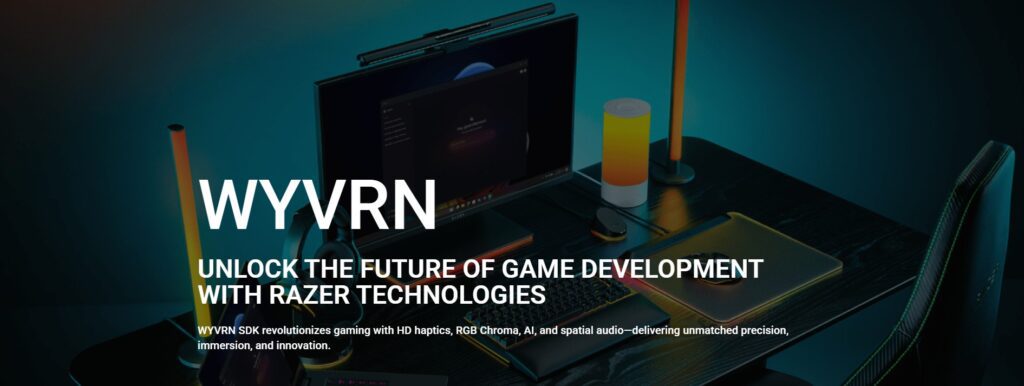
Artificial intelligence is revolutionizing technology at every level, including gaming. Razer, a frontrunner in gaming accessories and software, has launched WYVRN, an innovative AI-based gaming platform. This collection of tools, featuring Razer AI Game Copilot, Razer Sensa HD Haptics, and THX Spatial Audio+, aims to transform the way games are crafted and experienced.

What is Razer WYVRN?

WYVRN aims to empower game developers and elevate player engagement through AI-fueled automation and customization. The suite encompasses several essential features:

  • Razer AI Game Copilot: Assists developers in optimizing game integration and yields real-time insights for players.
  • Razer Sensa HD Haptics: Provides superior tactile responses for an immersive gaming experience.
  • Razer Chroma RGB: Enhanced lighting effects for a more vibrant visual presentation.
  • THX Spatial Audio+: Sophisticated 3D audio technology for richer game engagement.

Razer AI Game Copilot: A Breakthrough for Developers

For game creators, Razer AI Game Copilot introduces robust automation capabilities that streamline the development workflow. It connects directly to Unreal Engine 5.5, enabling developers to achieve:

  • Effortless Integration: Automates compatibility with Razer Sensa HD Haptics, THX Spatial Audio+, and Chroma RGB.
  • Accelerated Time-to-Market: AI-driven testing shortens development timelines and enhances bug identification.
  • Improved Quality Assurance: AI-fueled testing processes detect performance flaws and crashes at an early stage.

By alleviating manual tasks, developers can concentrate more on creativity and innovation than on fixing issues.

How AI Enhances Player Experience

WYVRN is not solely for developers; it also offers significant advantages for players. The Razer AI Game Copilot serves as a real-time assistant, delivering:

  • Gameplay Evaluation: Insights drawn from data analytics of leading esports teams.
  • Performance Enhancement: Recommendations for hardware and settings adjustments to maximize gaming performance.
  • Customized Coaching: AI-generated suggestions assist players in refining their tactics.
  • Multi-Language Options: Provides diverse voice selections to engage players.

With AI-empowered coaching, players can sharpen their abilities without the expense of personal training.

Immersive Gaming with Razer Sensa HD Haptics & THX Spatial Audio+

Razer’s newest advancements in haptic technology and audio improve the gaming experience even further:

  • Razer Sensa HD Haptics: Used in devices such as the Razer Freyja and Kraken V4 Pro, this technology produces accurate vibrations that correspond with in-game actions.
  • THX Spatial Audio+: Delivers a 7.1.4 surround sound experience, creating more realistic game environments.

These features provide deeper immersion, endowing players with a heightened sense of presence in their virtual realms.

Next-Generation RGB Lighting with Razer Chroma

Razer Chroma RGB has received an upgrade to include 3D reactive lighting effects, further enhancing the immersive quality of gaming. This new functionality syncs with in-game scenarios, creating visually striking moments.

How to Access Razer WYVRN

WYVRN is currently accessible to game developers and players:

Conclusion

Razer WYVRN aims to transform the gaming landscape with AI-driven automation, tailored coaching, and immersive sensory advancements. Whether developers are looking for efficient processes or gamers desire performance insights, WYVRN represents a new era of innovation. With its integration into Unreal Engine 5.5, this technology is well-positioned to influence the future of gaming.

Common Questions

Q: What is Razer WYVRN?

A:

Razer WYVRN is an AI-driven suite of gaming tools aimed at improving both game development and player experiences. It features AI automation, immersive haptics, advanced 3D audio, and reactive RGB lighting.

Q: How does Razer AI Game Copilot assist game developers?

A:

Razer AI Game Copilot automates the integration of game mechanics with Razer technologies, speeds up development, and enhances quality assurance by identifying bugs and performance glitches early.

Q: In what ways can gamers benefit from Razer AI Game Copilot?

A:

The Copilot offers real-time gameplay insights, personalized coaching, hardware optimization suggestions, and multi-language support to help gamers improve their skills.

Q: What is Razer Sensa HD Haptics?

A:

Razer Sensa HD Haptics is cutting-edge vibration technology incorporated into gaming devices to provide tactile feedback that intensifies immersion.

Q: What is THX Spatial Audio+?

A:

THX Spatial Audio+ is a state-of-the-art 3D audio technology that provides a 7.1.4 surround sound experience, creating more lifelike audio landscapes in games.

Q: How does Razer Chroma RGB enhance the gaming experience?

A:

The latest upgrade to Razer Chroma RGB includes 3D reactive lighting effects that synchronize with in-game events, enhancing the visual appeal of gameplay.

Q: How can developers gain access to WYVRN?

A:

The WYVRN SDK is included within Unreal Engine 5.5 and can be downloaded from the WYVRN website.

Q: Where can gamers register for the Razer AI Game Copilot beta?

A:

Gamers can register for the beta on the Razer website.

**ElasticON Sydney 2026: Unleashing Data Worth through Search AI**


We independently review everything we recommend. When you buy through our links, we may earn a commission which is paid directly to our Australia-based writers, editors, and support staff. Thank you for your support!

Brief Overview

  • ElasticON Sydney 2026 demonstrated how organizations can utilise Search AI to handle data expansion and take advantage of AI.
  • Elastic unveiled AI Playground, a no-code platform for exploring AI models.
  • The Search AI Lake framework provides scalable and cost-effective data storage and retrieval solutions.
  • Companies like Macquarie Bank and Spark New Zealand showcased tangible AI-enhanced advancements.
  • Innovations in security from Elastic, including Attack Discovery, aid in mitigating threats through AI assistance.
  • Elastic Partner Awards recognized significant technology partnerships throughout the ANZ area.

Utilizing Search AI for Innovation Driven by Data

ElasticON Sydney 2026 was another highlight in Elastic’s worldwide journey, centering on how enterprises can harness Search AI to navigate data expansion and fully realise the potential of artificial intelligence. The occasion emphasized practical AI implementations, illustrating that generative AI adoption doesn’t necessitate substantial investments.

Making AI More Accessible

In his keynote address, Elastic’s Chief Product Officer, Ken Exner, assured participants that AI has never been more within reach. He elaborated that technologies such as vector search, retrieval-augmented generation (RAG), and prompt engineering—together termed Search AI—are now feasible with minimal computing infrastructure and small AI teams.

AI Playground: Engaging Experience

A highlight of the event was AI Playground, a no-code, user-friendly interface that enables users to experiment with various AI models. This resource empowers businesses to explore AI-based applications without requiring extensive technical knowledge, facilitating quicker AI adoption across various sectors.

Transforming Data Storage with Search AI Lake

Elastic introduced the Search AI Lake architecture, which tackles the increasing difficulty of storing and analyzing vast datasets. This innovative method decouples compute and storage, promoting scalability, cost-effectiveness, and superior search functionality.

This system is particularly advantageous for applications utilizing Kubernetes, which produce approximately 50GB of data daily. With insights powered by AI, businesses can derive greater value from their data while adhering to regulatory obligations.

AI in Practical Applications

Macquarie Bank: Customizing Customer Transactions

Richard Heeley, Head of Technology for Macquarie’s Banking and Financial Services division, discussed how the bank incorporates Elastic’s AI-enhanced search to customize transaction data. By integrating geo-location and categorization features, they have turned standard bank statements into engaging and informative experiences for their clients.

Spark New Zealand: Improving Search Functionality

David Tsai, Senior SEO Lead at Spark New Zealand, described how Elastic’s search solutions substantially upgraded their internal search system. The company decreased instances of “no search results” from 30% to 1.3% and boosted click-through rates from 10.3% to 30%, providing a markedly enhanced user experience.

Enhancing Cybersecurity with AI

Cybersecurity was a significant theme at ElasticON Sydney, highlighting new tools like Attack Discovery. This AI-enabled feature aids security teams in recognizing false positives, tracing attack pathways, and alleviating analyst workloads. Additionally, Elastic’s AI Assistant enhances security measures by automatically scouring logs, metrics, and external data sources for pertinent information.

Collaborations and Acknowledgements in the Industry

The event wrapped up with the annual Elastic Partner Awards, celebrating notable technology collaborations within the ANZ region. Among the acknowledged winners were:

  • Partner of the Year: Recon Technologies
  • Innovation Award: NQRY
  • Cloud Partner of the Year: AWS Australia
  • Managed Services Partner: ctrl:cyber
  • Reseller of the Year: Atturra
  • Services Partner: Skillfield
  • Systems Integrator of the Year: Deloitte

Conclusion

ElasticON Sydney 2026 reinforced the transformative effect of Search AI on data management, security, and business intelligence. By providing accessible AI tools, scalable architectures, and real-life success stories, Elastic is simplifying AI integration for companies of all scales. As AI adoption increases, firms embracing Search AI will achieve a competitive advantage in innovation and operational productivity.

Q&A: Key Information

Q: What is Search AI, and how does it function?

A:

Search AI encompasses a suite of technologies designed to enhance search and data analysis through artificial intelligence. It features vector search, retrieval-augmented generation (RAG), and semantic search, facilitating the extraction of valuable insights from data.

Q: In what ways does Elastic’s AI Playground assist businesses?

A:

AI Playground serves as a no-code platform where businesses can test an array of AI models and techniques. It enables rapid prototyping of AI applications without needing comprehensive machine learning knowledge.

Q: How does Search AI Lake differ from conventional data storage options?

A:

Search AI Lake differentiates itself by decoupling compute from storage, allowing for limitless scalability, budget-friendly long-term storage, and expedited query performance. Unlike traditional data lakes, it offers AI-powered search capabilities to swiftly derive value from extensive datasets.

Q: How is Elastic enhancing cybersecurity with AI?

A:

Elastic’s AI-driven security features, such as Attack Discovery, support analysts in identifying false alarms, mapping attack routes, and automating threat assessment. AI also mitigates alert fatigue, improving the efficiency of security teams.

Q: Which sectors gain the most from Elastic’s AI offerings?

A:

Elastic’s AI offerings are extensively utilized in financial services, telecommunications, cybersecurity, and e-commerce. Organizations managing large data volumes, including banking institutions, telecom providers, and security firms, greatly benefit from AI-enhanced search functions.

Q: How can small enterprises utilize AI without significant resources?

A:

Elastic’s no-code and low-code offerings, such as AI Playground and Search AI, enable small businesses to implement AI-powered search and data insights without the necessity for large machine learning teams or costly infrastructure.

Q: What were the notable highlights from ElasticON Sydney 2026?

A:

Prominent moments included the launch of Search AI Lake, real-world case studies from Macquarie Bank and Spark New Zealand, and the Elastic Partner Awards, which acknowledged leading AI trailblazers in the ANZ region.

Q: How can organizations integrate Elastic’s AI technology into their operations?

A:

Firms can begin by adopting Elastic’s cloud-based solutions, AI Playground, and Search AI functionalities. Collaborating with Elastic-certified partners can also facilitate smoother AI delivery and implementation.

Vocus is Approaching Approval to Purchase TPG’s Fibre Assets


We independently review everything we recommend. When you buy through our links, we may earn a commission which is paid directly to our Australia-based writers, editors, and support staff. Thank you for your support!

Concise Overview: Essential Insights

  • Vocus has received ACCC approval to acquire TPG Telecom’s fixed-line operations for $5.25 billion.
  • This acquisition encompasses TPG’s transmission network and enterprise clientele.
  • Further approvals from the Foreign Investment Review Board and US regulators are still required.
  • The aim of this deal is to bolster Vocus’ standing in the enterprise and government sectors.
  • The ACCC has concluded that the merger will not diminish competition in the marketplace.
  • Following the acquisition, Vocus will still encounter fierce competition from Telstra, Optus, and various other broadband providers.

Vocus Secures ACCC Approval for TPG Fibre Acquisition

Vocus approaches the acquisition of TPG's fibre infrastructure

Regulatory Approval Journey

Vocus has made a notable advancement in its $5.25 billion acquisition of TPG Telecom’s fibre assets after obtaining clearance from the Australian Competition and Consumer Commission (ACCC). The competition authority stated that the acquisition would not decrease market competition, observing that Vocus and TPG cater to different customer segments.

Nevertheless, the deal remains dependent on approvals from the Foreign Investment Review Board (FIRB) and relevant US regulatory agencies before it can be finalised.

Market Effects and Competitive Environment

The ACCC’s assessment revealed that Vocus mainly targets large enterprise and government clients, while TPG focuses on small and medium enterprises (SMEs). Due to this segmentation, the ACCC concluded that the merger wouldn’t negatively impact competition in the market.

After the acquisition, Vocus will still compete against major industry players such as Telstra, Optus, Aussie Broadband, and Superloop, ensuring that both businesses and government organizations have a range of service provider options.

Strategic Advantages for Vocus

This acquisition represents a strategic initiative for Vocus, enabling the expansion of its fibre network and the enhancement of its enterprise and government services. By assimilating TPG’s assets and clientele, Vocus can optimize its operations and improve service delivery in a competitive landscape.

TPG’s View on the Acquisition

TPG Telecom’s CEO, Iñaki Berroeta, expressed his approval of the ACCC clearance, referring to it as a crucial step toward completing the transaction. He emphasized that the sale aligns with TPG’s overarching strategy to streamline its operations and boost efficiency.

Conclusion

With ACCC authorization achieved, Vocus is now closer to securing TPG Telecom’s fibre assets in a significant financial undertaking. Awaiting regulatory endorsements from FIRB and US authorities, the acquisition is set to reinforce Vocus’ role in the enterprise and government telecommunications sectors while sustaining competition in the broader market.

Q: What does the Vocus-TPG transaction entail?

A:

The transaction includes TPG Telecom’s fixed-line business, transmission network, and enterprise customer base, valued at $5.25 billion.

Q: What led to the ACCC’s approval of the merger?

A:

The ACCC concluded that Vocus and TPG operate in connected market segments, with Vocus serving large firms and government entities, while TPG caters to SMEs. The acquisition was assessed as not reducing competition.

Q: Which approvals are still necessary?

A:

The acquisition requires clearance from the Foreign Investment Review Board (FIRB) and regulatory authorities in the United States before it can be completed.

Q: How will this affect competition within the telecom sector?

A:

The ACCC anticipates that competition will remain robust, with Telstra, Optus, Aussie Broadband, and Superloop continuing to offer choices for enterprise and government clients.

Q: What advantages does Vocus gain through the acquisition?

A:

Vocus will broaden its fibre network, enhance its offerings for enterprise and government clients, and improve operational efficiency by integrating TPG’s assets and customer base.

Q: What are the benefits for TPG from divesting these assets?

A:

TPG aims to streamline its business framework, diminish operational challenges, and enhance cost efficiency by divesting its fixed-line operations and enterprise clientele.

Q: When is the anticipated completion date for the deal?

A:

While no specific timeline has been established, Vocus and TPG are targeting the finalisation of the transaction later this year, subject to receiving essential regulatory approvals.

**Arlo’s Universal Solar Panel Lands in Australia – Wave Farewell to Battery Replacements!**


We independently review everything we recommend. When you buy through our links, we may earn a commission which is paid directly to our Australia-based writers, editors, and support staff. Thank you for your support!

Quick Overview: Essential Points

  • Arlo has introduced a new Universal Solar Panel in Australia.
  • Engineered for extensive compatibility with Arlo’s wire-free cameras and floodlights.
  • Eliminates the requirement for battery changes through ongoing solar charging.
  • Weatherproof to endure various outdoor conditions.
  • Available at A$89 starting late March from Arlo and prominent retailers.

Arlo’s Universal Solar Panel: Transforming Home Security

Arlo has officially rolled out its Universal Solar Panel to the Australian market, presenting homeowners with a seamless method to maintain power to their security cameras and floodlights without the hassle of frequent battery changes. This cutting-edge accessory guarantees continuous functionality by utilizing solar energy, enhancing home security efficiency and eco-friendliness.

Arlo Universal Solar Panel now available in Australia for wire-free security

The Significance of the Universal Solar Panel

For many residents in Australia, security cameras play a crucial role in protecting their homes and businesses. However, one major drawback of battery-operated cameras is the necessity of regular recharges. Arlo’s Universal Solar Panel addresses this problem by granting a steady power supply, ensuring that cameras remain operational 24/7.

Wider Compatibility with Arlo Devices

Unlike prior solar panels that were restricted to certain models, Arlo’s Universal Solar Panel has been designed for greater compatibility, working with the following devices:

  • Arlo Essential series
  • Arlo Go 2 series
  • Arlo Pro 3 series and newer
  • Arlo Ultra series
  • Arlo wireless Floodlights

This expanded compatibility facilitates easier integration of the panel into existing Arlo security setups without concerns about device compatibility.

Durable Against Weather Extremes

Australia’s weather can be highly variable, ranging from extreme heat to heavy downpours. Thankfully, the Universal Solar Panel is crafted to endure different weather conditions, guaranteeing reliable performance throughout the year.

Uninterrupted Power for Stress-Free Security

A key highlight of the Universal Solar Panel is its capacity to keep Arlo cameras powered indefinitely under sufficient sunlight. This feature removes the burden of manually recharging batteries, allowing for almost hands-free security upkeep.

Cost-Effective and Readily Available

With a price tag of merely A$89, the Universal Solar Panel represents an economical enhancement that boosts the performance of Arlo’s premium cameras, including the Pro 5 and Ultra 2 series. It will be ready for purchase in late March via Arlo’s official website and leading Australian retailers.

Conclusion

Arlo’s Universal Solar Panel promises to revolutionize home security in Australia by offering a budget-friendly, environmentally sustainable solution for continuously powering cameras and floodlights. Featuring extensive compatibility, weather-resistant reliability, and an attractive price, this new accessory is essential for Arlo users aiming to optimize their security system’s efficiency.

Common Inquiries

Q: Which Arlo devices work with the Universal Solar Panel?

A:

The panel is compatible with battery-operated Arlo Essential series, Go 2 series, Pro 3 series and up, Ultra series, and wireless Floodlights.

Q: Is the solar panel functional in all weather conditions?

A:

Yes, the Universal Solar Panel is engineered to be weather-resistant, making it appropriate for outdoor use regardless of conditions, including rain and heat.

Q: What is the price of the Arlo Universal Solar Panel?

A:

The suggested retail price is A$89.

Q: When and where can I acquire the Universal Solar Panel?

A:

The panel will be available for purchase in late March through the Arlo website and significant Australian retailers.

Q: Does the solar panel entirely remove the need for battery changes?

A:

Under optimal sunlight circumstances, the panel can provide constant charging, significantly decreasing or negating the need for manual battery swaps.

Q: Is the installation process complicated?

A:

No, the Universal Solar Panel is designed for straightforward plug-and-play installation, enabling users to set it up quickly with their Arlo cameras.

Q: Can I deploy multiple solar panels for several cameras?

A:

Yes, each camera or floodlight would need its own dedicated solar panel for optimal charging.

**Colonial First State Incorporates AI into FirstTech to Enhance Financial Advisory Offerings**


We independently review everything we recommend. When you buy through our links, we may earn a commission which is paid directly to our Australia-based writers, editors, and support staff. Thank you for your support!

Colonial First State Boosts FirstTech with AI for Enhanced Financial Advisory

Quick Read

  • Colonial First State is incorporating generative AI into FirstTech to improve financial advisory services.
  • The AI chatbot currently maintains a 65% accuracy rate in addressing complex financial inquiries.
  • FirstTech functions as a support system for financial advisers, managing 12,000 to 15,000 inquiries each year.
  • The AI aims to expedite the onboarding process for new FirstTech team members.
  • Future developments include making the AI available directly to advisers.
  • Transcribing calls could enhance both AI accuracy and operational efficiency.
  • Potential applications of AI include anomaly detection, call summarisation, and quality assurance.

AI’s Impact on Financial Advisory at Colonial First State

Colonial First State (CFS) is making notable advancements in financial advisory by implementing generative AI within its FirstTech division. The AI-enabled chatbot is formulated to aid financial advisers by delivering precise answers to intricate regulatory and financial questions. Although still being refined, the AI has reached a 65% accuracy rate—showing room for enhancement while signaling promising prospects.

The Importance of FirstTech in Financial Advisory

Established in 1999, FirstTech is an essential resource for financial advisers facing the challenges of complex financial regulations relating to self-managed superannuation, aged care, taxation, and social security. With an annual volume of 12,000–15,000 adviser interactions, the service is integral in equipping advisers to provide sound advice to their clients.

Confronting Adviser Challenges

A prevalent question directed at FirstTech pertains to the financial consequences of property sales for social security calculations. Given the complexity of such financial subjects, advisers need swift and dependable information. The AI chatbot is being developed to complement human knowledge, delivering prompt answers while alleviating some of the burdens on human advisers.

AI-Driven Onboarding for FirstTech Team Members

The process of training new FirstTech team members is resource-intensive, often spanning 18 months to two years before a new recruit can fully participate. The AI solution is anticipated to help close this gap by offering immediate access to vital information, enabling new hires to upskill more quickly and effectively.

Enhancing Precision Through Call Transcription

CFS is investigating the transcription of all incoming FirstTech calls to enhance the AI’s precision. By incorporating real-world questions and answers into the AI system, it will continuously evolve and refine its capabilities, potentially boosting its response accuracy beyond the current 65% threshold.

Broadening AI’s Role in Financial Advisory

Currently utilized internally, there are plans for the AI tool to potentially be made accessible directly to advisers in the future. This could transform how financial advisers obtain information, diminishing the need for multiple consultations and leading to more uniform answers.

Quality Assurance and Anomaly Detection

In addition to assisting advisers, the AI chatbot could be instrumental in quality assurance. By scrutinizing all calls, it could identify anomalies, aiding FirstTech in detecting inconsistencies and refining its support services. This would empower advisers to trust a more accurate and thoroughly examined source of information.

Future Aspirations: A Unified Source of Truth for Advisers

A primary aim for CFS is to create an AI-driven system that provides clear and reliable answers. Currently, advisers often seek multiple perspectives from diverse technical teams to reach a confident decision. With AI, the goal is for advisers to receive precise and consistent guidance on their first inquiry.

Summary

Colonial First State is harnessing AI to enrich its FirstTech service, offering financial advisers quicker, more reliable assistance. With continuing enhancements, including call transcription and anomaly detection, the AI chatbot is poised to become an essential asset for financial professionals. As accuracy improves, the possibility of direct adviser engagement with the AI system could revolutionize financial advisory services within Australia.

Q&A

Q: What is FirstTech, and what makes it significant?

A: FirstTech serves as a technical support service that aids financial advisers in navigating intricate financial regulations, including those related to superannuation, taxation, and social security. It is essential for ensuring that advisers deliver correct and compliant advice to their clients.

Q: How is AI utilised in FirstTech?

A: Colonial First State is refining a generative AI chatbot to assist with addressing technical financial questions. Currently, it supports FirstTech staff internally and may eventually be offered directly to advisers.

Q: What is the current accuracy rate of the AI chatbot?

A: The AI chatbot is currently achieving approximately 65% accuracy in responding to financial queries. There are ongoing efforts to enhance this rate through training with real-world data from adviser interactions.

Q: Will advisers have direct access to the AI chatbot?

A: While the AI is presently utilized internally, CFS is contemplating making it adviser-facing in the future. This change would grant advisers immediate access to responses, reducing reliance on human support.

Q: How will AI enhance onboarding for new FirstTech team members?

A: Training new hires traditionally takes 18 months to two years. The AI chatbot will facilitate quicker acclimatization by providing immediate information, allowing team members to become adept more rapidly.

Q: What additional AI functionalities are being considered?

A: CFS is exploring call transcription for further AI training, anomaly detection for quality assurance, and automated call summaries to boost operational efficiency.

Q: Could AI replace human advisers?

A: No, AI is intended to augment rather than replace human advisers. The objective is to provide a reliable tool that enhances the efficacy of financial professionals, not to eradicate the necessity for human expertise.

Q: What are the long-term objectives of AI integration at FirstTech?

A: The overarching goal is to create a singular, authoritative source of financial advice that advisers can trust without needing to validate with various technical teams.

Samsung Will Provide 7 Years of Complimentary TV OS Updates for 2026 OLED Units


We independently review everything we recommend. When you buy through our links, we may earn a commission which is paid directly to our Australia-based writers, editors, and support staff. Thank you for your support!

Quick Read: Essential Insights

  • Samsung is set to debut its largest OLED TV to date, an 83-inch model in Australia.
  • The 2026 OLED range will feature three series: OLED S95F, OLED S90F, and the newly introduced OLED S85F.
  • Samsung guarantees seven years of complimentary OS updates for its 2026 OLED televisions.
  • AI-enhanced features improve audio and picture quality through real-time modifications.
  • Glare-resistant OLED technology provides superior visibility in various lighting settings.
  • The Gaming Hub unifies all gaming services within a single interface.
  • Pricing varies from A$5,749 to A$11,499, based on the selected model and size.

Samsung Enhances OLED Collection for 2026

In a striking move, Samsung is unveiling its most substantial OLED TV in Australia, an 83-inch model. Additionally, the company introduces the OLED S85F series to enhance the existing S95F and S90F lineups. Samsung is prioritizing innovation by incorporating AI technology, glare-resistant features, and a promise of extended software support.

Seven Years of Complimentary OS Upgrades: A Revolutionary Move

A key highlight is Samsung’s commitment to supply seven years of free software upgrades for its 2026 OLED televisions. This represents a significant advantage for consumers, ensuring that their valuable investment remains current with new features and security updates. Given the swift evolution of smart TV technology, this long-term support redefines industry expectations.

Large Screens, Greater Influence

The OLED S85F series will offer both 77-inch and 83-inch models, making premium OLED experiences more attainable for Australians. These models are set to hit retail shelves next week, shortly followed by the premier OLED S95F and OLED S90F series.

AI-Enhanced Visual and Sound Improvements

Samsung’s state-of-the-art AI processor brings about notable upgrades in sound and picture quality. Technologies such as 4K AI Upscaling, Auto HDR Remastering Pro, and OLED Brightness Booster guarantee exceptional clarity and richness in content display. With 128 AI neural networks, the television dynamically modifies visuals and audio in real-time for an upscale viewing experience.

Glare-Resistant OLED: Ideal for Australian Dwellings

Samsung’s cutting-edge OLED Glare-free technology aims to enhance viewing experiences in both bright and dark conditions. This is particularly advantageous for Australian consumers, where natural sunlight can challenge screen visibility. The technology improves contrast and minimizes distractions, creating an optimal cinematic experience.

Gaming and Entertainment on a Grand Scale

Samsung is also prioritizing gaming and streaming with its 2026 OLED collection. The integrated Gaming Hub aggregates games from different platforms into one easy-to-navigate interface, simplifying transitions between titles for gamers. Furthermore, Samsung TV Plus provides a rich library of streaming content, ensuring entertainment for all users.

Security and Smart Features

Samsung’s SmartThings Smart Hub, Samsung Knox Security, and Samsung Daily+ integrations facilitate a smooth and secure smart home experience. With personalized recommendations and improved security features, these televisions are tailored for contemporary smart home settings.

Pricing and Availability

The new Samsung OLED models will be available at prominent retailers and online at Samsung Australia starting next week. Pricing details are outlined below:

Samsung OLED S85F

  • 77-inch (QA77S85FAEXXY) – RRP: A$5,749
  • 83-inch (QA83S85FAEXXY) – RRP: A$8,049

Samsung OLED S90F

  • 77-inch (QA77S90FAEXXY) – RRP: A$6,899
  • 83-inch (QA83S90FAEXXY) – RRP: A$9,199

Samsung OLED S95F

  • 77-inch (QA77S95FAWXXY) – RRP: A$9,199
  • 83-inch (QA83S95FAEXXY) – RRP: A$11,499

Conclusion

Samsung’s 2026 OLED television lineup promises to transform home entertainment in Australia. With AI-powered features, glare-resistant technology, and a dedication to long-lasting software support, these TVs represent a savvy investment for the future. Whether you’re a film enthusiast, a gamer, or simply in pursuit of an exceptional viewing experience, Samsung’s newest OLED selections cater to all.

Q: What is the largest OLED TV Samsung plans to release in 2026?

A:

Samsung’s largest OLED TV for 2026 is the 83-inch model, included in the OLED S85F, S90F, and S95F series.

Q: For how long will Samsung offer software updates for the 2026 OLED models?

A:

Samsung has pledged seven years of free OS updates for its 2026 OLED TVs, ensuring lasting performance and security.

Q: What are the primary AI-driven features in the new OLED TVs?

A:

The 2026 OLED models feature AI-enhanced capabilities like 4K AI Upscaling, Auto HDR Remastering Pro, Real Depth Enhancer Pro, and OLED Brightness Booster, all intended to improve picture and sound quality.

Q: What distinguishes Samsung’s OLED Glare-free technology?

A:

Samsung’s OLED Glare-free technology minimizes reflections and enhances contrast, providing a more enjoyable viewing experience in both bright and dark environments.

Q: What gaming functionalities do the 2026 OLED TVs provide?

A:

The new OLED TVs include Samsung’s Gaming Hub, which integrates gaming services into one cohesive interface, along with AI Auto Game mode for optimized gaming experiences.

Q: Where can I purchase the new Samsung OLED TVs?

A:

The 2026 OLED lineup will be available at major retailers across Australia and online at Samsung Australia starting next week.

Q: What is the price range for Samsung’s 2026 OLED TVs?

A:

Prices begin at A$5,749 for the 77-inch OLED S85F and reach up to A$11,499 for the premier 83-inch OLED S95F.

Q: Are these TVs compatible with smart home integration?

A:

Absolutely, the 2026 OLED TVs support SmartThings Smart Hub, Samsung Knox Security, and Samsung Daily+, making them perfect for a connected smart home environment.

Samsung announces seven years of free TV OS updates for 2026 OLED models

Home Affairs Probes Secure Service Edge for Improved Cybersecurity


We independently review everything we recommend. When you buy through our links, we may earn a commission which is paid directly to our Australia-based writers, editors, and support staff. Thank you for your support!

Concise Overview

  • The Department of Home Affairs is updating its security infrastructure using Secure Service Edge (SSE).
  • The organization aims for a scalable and modern secure gateway to boost cybersecurity.
  • Initial priorities include web proxy functionalities, cloud access security broker (CASB), and measures for data loss prevention.
  • Future initiatives may encompass full CASB integration and zero trust network access.
  • The existing gateway accommodates as many as 18,000 users and supports a variety of cloud-based applications.
  • Home Affairs plans to shift towards a cloud-driven secure web gateway with an on-premises setup.
  • This effort corresponds with the Resilient Digital Infrastructure (RDI) framework to enhance IT security.

Home Affairs Pursues Secure Service Edge for Enhanced Cybersecurity

Australian government evaluates secure service edge for cybersecurity advancement

Reasons Behind Home Affairs’ Adoption of Secure Service Edge

The Australian government is proactively addressing cybersecurity by exploring Secure Service Edge (SSE) options. The Department of Home Affairs has issued a tender request, indicating its plan to modernise perimeter security and move towards a more scalable and robust digital security framework.

Defining Secure Service Edge (SSE)

SSE represents a cloud-native security architecture that consolidates various cybersecurity functions, such as secure web gateways (SWG), cloud access security brokers (CASB), and Zero Trust Network Access (ZTNA). This framework enables organizations to safeguard users, applications, and data regardless of their geographical location, thus ensuring a flexible and expandable security landscape.

The Importance of a Secure Web Gateway

In the near term, Home Affairs is focusing on implementing a secure web gateway (SWG) as it adopts SSE. The SWG will deliver web filtering, protection against malware, and data loss prevention to strengthen online security. The department is striving to create a system that is resilient, scalable, and minimizes disruption to its ongoing operations.

Cloud-Based Deployment vs. On-Premises Solutions

Currently, Home Affairs uses an on-premises security gateway, but its future vision includes incorporating a cloud-based solution alongside an on-premises aspect. This hybrid strategy provides greater flexibility, allowing the agency to retain control over sensitive information while utilizing the benefits of cloud-based security, such as scalability and up-to-date threat intelligence.

Alignment with the Resilient Digital Infrastructure (RDI) Framework

The transition to SSE aligns with the wider Resilient Digital Infrastructure (RDI) framework, which aims to modernise IT security among federal government agencies. The RDI framework encourages the consolidation of IT infrastructure policies, focusing on secure internet gateways, email safety, and SSE technology to boost cybersecurity resilience across Australia.

Consequences for Cybersecurity in Australia

Home Affairs’ adoption of SSE sets a standard for other government entities and private organizations striving to strengthen their cybersecurity strategies. As cyber threats continue to advance, the implementation of modern security frameworks like SSE will help ensure the protection of Australian government systems against complex cyberattacks.

Conclusion

The Department of Home Affairs is making substantial progress in updating its security framework by examining Secure Service Edge (SSE) options. With an initial focus on web proxy functionalities and limited CASB features, the department intends to shift towards a cloud-driven secure web gateway. This initiative aligns with the Resilient Digital Infrastructure (RDI) framework, reaffirming Australia’s commitment to cybersecurity. By embracing SSE, Home Affairs is establishing a standard for other government bodies to enhance cyber resilience.

Common Questions

Q: What is Secure Service Edge (SSE)?

A:

SSE is a cloud-centric cybersecurity model that brings together secure web gateways (SWG), cloud access security brokers (CASB), and Zero Trust Network Access (ZTNA) to safeguard users, applications, and data regardless of location.

Q: What motivates Home Affairs to adopt SSE?

A:

The Department of Home Affairs is adopting SSE to revamp its security perimeter, improve cybersecurity, and transition to a more scalable and robust security framework.

Q: What are the primary components of SSE?

A:

SSE includes secure web gateways (SWG) for web protection, cloud access security brokers (CASB) for safeguarding cloud applications, and Zero Trust Network Access (ZTNA) for secure remote connectivity.

Q: In what ways does SSE enhance cybersecurity?

A:

SSE boosts cybersecurity by facilitating real-time threat detection, enforcing security measures across users and applications, and mitigating risk through cloud-based security controls.

Q: Can you explain the Resilient Digital Infrastructure (RDI) framework?

A:

The RDI framework is a government initiative designed to unify IT security policies throughout federal agencies, concentrating on secure gateways, cloud security, and modern cybersecurity technologies.

Q: Will Home Affairs implement a completely cloud-based SSE solution?

A:

Home Affairs intends to adopt a hybrid model, integrating cloud-based security with an on-premises deployment to ensure flexibility and maintain control over sensitive information.

Q: What impact will this have on other government agencies?

A:

Should it prove successful, Home Affairs’ SSE implementation could act as a blueprint for other governmental bodies, promoting broader adoption of contemporary cybersecurity solutions across the public sector.

Q: What significance does this hold for Australian businesses?

A:

The adoption of SSE by a prominent government department underscores the importance of contemporary cybersecurity practices, potentially inspiring private sector organizations to enhance their security measures.

**Nvidia Chief Executive Huang Optimistic About Chipmaker’s Resilience During AI Revolution**


We independently review everything we recommend. When you buy through our links, we may earn a commission which is paid directly to our Australia-based writers, editors, and support staff. Thank you for your support!

Quick Overview: Main Points

  • Nvidia’s CEO Jensen Huang is optimistic about the company’s capacity to maintain its lead in the AI chip sector amid rising competition.
  • The AI market is transitioning from model training to inference, which requires robust and efficient chips.
  • Nvidia unveiled its upcoming GPU chip, Blackwell Ultra, scheduled for release in late 2026.
  • A new software called Dynamo is set to improve AI reasoning and is offered at no cost.
  • General Motors has teamed up with Nvidia to develop its fleet of autonomous vehicles.
  • Nvidia aspires to introduce flagship chips each year, although it faces production hurdles.
  • In spite of immediate investor apprehensions, Nvidia’s stock has seen substantial growth over the past three years.

Nvidia’s AI Authority Under Strain

During Nvidia’s yearly software developer conference in San Jose, CEO Jensen Huang discussed the firm’s standing in the rapidly changing artificial intelligence (AI) landscape. As AI moves from training models to inference—where AI algorithms respond to user inquiries—the need for high-performance chips is growing. Despite recent worries in the market, Huang expresses confidence in Nvidia’s capacity to outpace competitors.

Transformation of the AI Market: From Training to Inference

The AI sector is experiencing a significant transformation. Previously, AI models focused primarily on training using extensive datasets to gain intelligence. The current emphasis is shifting toward inference—where AI systems leverage their acquired intelligence to provide accurate responses. This development necessitates chips that are both powerful and efficient in processing real-time queries.

Huang stressed that the computational requirements for AI reasoning are vastly higher than previously anticipated. “The computational power we require due to agentic AI, stemming from reasoning, is at least 100 times more than we believed was necessary just a year ago,” he commented.

Nvidia’s Upcoming Chip: Blackwell Ultra

To meet the demands of the evolving AI landscape, Huang presented Nvidia’s next-gen chip, the Blackwell Ultra. This cutting-edge GPU, projected for release in the latter half of 2026, is crafted to enhance both AI training and inference capabilities.

Huang pointed out that AI systems must deliver quick and clever responses to users, comparing the process to a web search. “If it takes too long to answer a query, the customer is unlikely to return,” he noted.

Introduction of Dynamo Software

In conjunction with hardware innovations, Nvidia launched Dynamo, a complimentary software tool designed to expedite AI reasoning. By streamlining computational processes, Dynamo boosts AI efficiency and responsiveness—crucial elements in the advancing AI landscape.

Nvidia’s Ventures in Autonomous Vehicles

In addition to AI chips, Nvidia is advancing in the autonomous vehicle domain. Huang revealed that General Motors has opted for Nvidia’s technology to build its fleet of self-driving cars. This collaboration highlights Nvidia’s increasing prominence in the AI-driven transportation field.

Obstacles in Chip Manufacturing

While Nvidia continues to push boundaries, it faces its share of challenges. The company’s existing flagship chip, Blackwell, has experienced production delays due to design issues. Furthermore, the broader AI sector has encountered diminishing productivity from conventional data processing techniques, necessitating the search for more efficient solutions.

Yearly Launch of Flagship Chips

Nvidia is striving to establish a yearly schedule for rolling out flagship chips. Huang previously hinted at the forthcoming major release, Rubin, which will offer a range of processors tailored for extensive data centres. Analysts expect production to kick off in 2026, with a wide rollout in 2026.

Market Reactions to Stock Performance

Regardless of Nvidia’s ambitious plans, investor sentiment has been varied. After Huang’s address, Nvidia shares fell by 2.5%. Nonetheless, the stock has witnessed remarkable long-term appreciation, more than quadrupling in value over the last three years. As AI adoption continues to accelerate, Nvidia remains a commanding presence in the marketplace.

Conclusion

Nvidia persists in leading the AI chip arena despite intensifying competition and the evolving demands of the industry. The shift from AI training to inference heightens the requirement for fast, powerful chips—an obstacle Nvidia aims to tackle with its upcoming Blackwell Ultra GPU. The introduction of new software like Dynamo and partnerships with firms such as General Motors further solidify Nvidia’s standing. However, production challenges and investor anxieties underscore the complexities of sustaining leadership in this swiftly advancing area.

Q&A: Key Inquiries Addressed

Q: What factors contribute to Nvidia’s heightened competition in AI chips?

A:

Companies from China, such as DeepSeek, have created competitive AI models that require fewer chips, raising doubts about Nvidia’s market leadership. Additionally, firms like AMD and Intel are also developing processors focused on AI.

Q: How do AI training and inference differ?

A:

AI training consists of inputting vast datasets into models to cultivate intelligence, while inference is about utilizing trained models to provide real-time responses to users.

Q: When is Nvidia’s Blackwell Ultra chip expected to launch?

A:

The Blackwell Ultra GPU is anticipated to be released in the latter half of 2026.

Q: What is the purpose of Nvidia’s Dynamo software?

A:

Dynamo is a free tool designed to enhance AI reasoning and boost computational efficiency for AI models.

Q: In what way is Nvidia involved in autonomous vehicles?

A:

General Motors has selected Nvidia’s AI technology for the development of its self-driving vehicle fleet, thus expanding Nvidia’s role in the automotive industry.

Q: Why did Nvidia’s stock decline after Huang’s presentation?

A:

Despite Nvidia’s announcements, investors were cautious due to competition from other AI chip manufacturers and worries about production delays.

Q: What future chips is Nvidia planning to develop?

A:

Huang hinted at Nvidia’s forthcoming major chip family, Rubin, which is expected to comprise GPUs, CPUs, and networking chips tailored for large-scale AI data centres.

Q: What obstacles is Nvidia encountering in chip production?

A:

The current Blackwell chip from Nvidia has faced delays due to design problems, and the AI industry is experiencing diminishing returns from traditional data processing techniques.

Ex-Microsoft Australia CTO to Head Overhauled National AI Centre


We independently review everything we recommend. When you buy through our links, we may earn a commission which is paid directly to our Australia-based writers, editors, and support staff. Thank you for your support!

Former Microsoft Australia CTO to Head Overhauled National AI Centre

Quick Overview

  • Lee Hickin, who previously served as CTO at Microsoft Australia, has been named director of the National AI Centre.
  • The centre has shifted its governance from CSIRO to the Department of Industry, Science and Resources (DISR).
  • Hickin’s focus will be on AI policy, responsible utilization of AI, and fostering small business engagement.
  • The Australian government has pledged $21.6 million over four years to revitalize the centre.
  • Hickin brings 18 years of Microsoft experience, including leadership in AI policy across Asia.
  • This transition corresponds with Australia’s initiative for a robust AI-driven economy.

Lee Hickin Assumes Leadership of the National AI Centre

Lee Hickin appointed as director of National AI Centre

Lee Hickin, leading the National AI Centre

Who is Lee Hickin?

Lee Hickin boasts a rich history in the technology sector, prominently spending 18 years at Microsoft during two distinct periods. He held the position of Chief Technology Officer (CTO) for Microsoft Australia from 2018 until 2023, subsequently assuming the role of AI technology and policy lead across Asia.

Hickin has been a passionate proponent of artificial intelligence (AI), especially in advocating for responsible AI integration within business and government frameworks. His proficiency in developing AI policies positions him as an exemplary choice to lead the National AI Centre.

The Function of the National AI Centre

The National AI Centre was initially created under the Commonwealth Scientific and Industrial Research Organisation (CSIRO) in 2021. Recently, the Australian government has migrated the centre to the Department of Industry, Science and Resources (DISR) to ensure better alignment with national AI strategies and economic objectives.

With a refreshed agenda, the centre seeks to assist businesses, particularly smaller ones, in embracing AI technologies while upholding ethical and responsible practices.

Government Funding for AI

The Australian government has invested $21.6 million over four years to overhaul the National AI Centre, demonstrating its dedication to nurturing AI innovation while exercising regulatory supervision. This funding coincides with broader initiatives to position Australia as a frontrunner in AI-driven sectors while ensuring the ethical application of AI technologies.

Implications for AI in Australia

Under Hickin’s stewardship, the National AI Centre is poised to enhance AI integration across various industries while promoting responsible methodologies. With the centre’s updated role under DISR, businesses and policymakers can look forward to a more coherent strategy regarding AI governance, innovation, and utilization.

His appointment comes at a crucial juncture as AI progresses rapidly, featuring intensified conversations concerning AI governance, security, and its implications for employment. Australia’s proactive efforts to refine AI policy will be vital in preserving its competitive edge in the global AI arena.

Conclusion

Lee Hickin’s selection as the director of the National AI Centre signifies an important advancement in Australia’s AI strategy. With significant experience in AI policy and technology, his guidance will steer the centre towards promoting responsible AI incorporation, particularly for small businesses. The government’s investment of $21.6 million underscores its commitment to AI innovation, ensuring Australia stays at the leading edge of AI developments while prioritizing ethical considerations.

Q: What is the National AI Centre?

A:

The National AI Centre is a government initiative in Australia designed to promote the integration of artificial intelligence across various sectors. Originally under CSIRO, it has now been transitioned to the Department of Industry, Science and Resources (DISR) to align more closely with national AI frameworks.

Q: Why was Lee Hickin selected to lead the centre?

A:

Lee Hickin possesses extensive expertise in AI policy and technology, having functioned as Microsoft Australia’s CTO and AI technology and policy lead for Asia. His knowledge in promoting responsible AI adoption and policy formulation renders him an exceptional candidate to manage the National AI Centre.

Q: What will be the centre’s primary focus under Hickin’s leadership?

A:

The centre will concentrate on responsible AI application, encouraging small enterprises to adopt AI technologies, and crafting policies that ensure ethical AI implementation. It will also aim to shape AI regulations and frameworks relevant to Australia’s AI-oriented economy.

Q: How much funding has been allocated by the government for the centre?

A:

The Australian government has allocated $21.6 million over the next four years to revamp the National AI Centre under the auspices of DISR.

Q: What effects will this have on small businesses in Australia?

A:

Small businesses will gain access to resources and guidance for the responsible adoption of AI. The centre intends to offer support and structures that allow enterprises to seamlessly and ethically incorporate AI technologies into their operations.

Q: What are the wider implications for AI in Australia?

A:

Australia aims to establish itself as a leader in AI governance and progress. With a strong commitment to responsible AI adoption, the nation seeks to harmonize technological advancements with ethical practices, ensuring enduring advantages for both businesses and society.

Q: What obstacles might the National AI Centre encounter?

A:

Potential challenges may involve keeping up with evolving AI regulations, ensuring responsible AI adoption by businesses, and addressing concerns related to AI’s influence on employment and data privacy. The centre will need to collaborate closely with both industry stakeholders and government to address these challenges effectively.