
Apple updates security functionalities with the overhaul of iOS and macOS 27

We independently review everything we recommend. When you buy through our links, we may earn a commission which is paid directly to our Australia-based writers, editors, and support staff. Thank you for your support!
Quick Overview
- iOS 27 fixes 122 vulnerabilities; macOS 27 resolves more than 200.
- Some fixes attributed to AI systems like Claude and Codex Security.
- Enterprise authentication enhancements; new executable code regulations on Macs.
- Retirement of legacy update management in favor of declarative management.
- AI tool for password management postponed for further review.
Overview
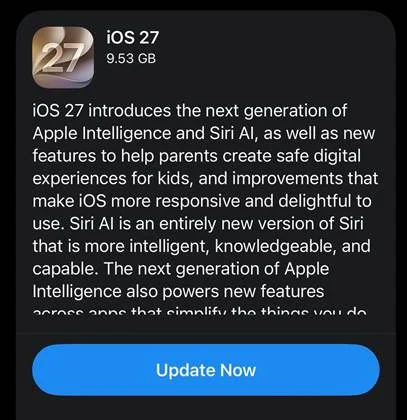
Apple’s refreshed operating systems have come out of beta with numerous new security features and bug resolutions. Launched alongside its new iPhone series, iOS 27 tackles 122 vulnerabilities, while macOS 27 addresses over 200, some improvements being attributed to AI systems like Anthropic’s Claude and OpenAI’s Codex Security.
Improved Security Features
Apple has strengthened enterprise authentication, added new executable code controls on Macs, and enhanced the security of managed devices. macOS 27 now requires Platform Single Sign-On (SSO) to use Touch ID for biometric authentication in addition to a password on supervised Macs, with support for Apple Watch as well. Platform SSO also incorporates web-based authentication, QR code capabilities, and various modern identity provider workflows.
Discontinuation of Legacy Update Management
Apple has retired legacy update management in all 27.0 operating systems. This change spans software update commands, queries, recommended cadence configurations, and deferral limitations, with declarative management now being the exclusive approach for managing and enforcing updates.
Detailed Application Execution Controls
Apple provides organizations with heightened control over software execution on Macs. New declarative management rules allow or block executable binaries based on code-signing attributes. The Endpoint Security framework is capable of terminating processes associated with blocked binaries, enabling administrators to automatically authorize managed applications without the need for separate rules for each.
Tackling AI Security Issues
Artificial intelligence poses new security complexities that Apple is addressing in its latest OS versions. A salient example is a macOS 27 patch that fixes an issue where Apple Intelligence could circumvent security prompts. Unveiled at WWDC2025, Apple’s Foundation Models framework delivers on-device models to developers, while more demanding tasks utilize Apple’s Private Cloud Compute infrastructure, incorporating a large language model (LLM) for 2026.
Postponed AI-Driven Security Feature
An AI-driven agent from the iOS/macOS 27 betas intended to detect and alter compromised passwords has been delayed. Although the precise reasons are not outlined, the feature’s capability to navigate websites, request authentication, modify credentials, and refresh password managers would necessitate highly sensitive permissions.
Conclusion
Apple’s iOS and macOS 27 introduce considerable advancements in security, targeting numerous vulnerabilities and bolstering enterprise authentication. Although some AI-driven capabilities have been postponed, this update represents a significant leap forward in securing Apple devices.
Reader questions
Frequently asked questions
Fast answers to the questions readers ask most about Apple updates security functionalities with the overhaul of iOS and macOS 27.
What vulnerabilities does iOS 27 address?
iOS 27 fixes 122 vulnerabilities, which include memory corruption issues, privilege escalation, kernel memory access, and remote code execution.
How has enterprise authentication been enhanced?
Enterprise authentication has been improved with Platform Single Sign-On (SSO) necessitating Touch ID for biometric verification on supervised Macs, plus web-based authentication, QR codes, and other contemporary workflows.
Why was the AI-driven password management feature postponed?
The feature’s postponement relates to the sensitive privileges it would entail, encompassing website navigation, authentication, credential modification, and password manager updates.
What modifications have been introduced to update management in iOS and macOS 27?
Legacy update management has been discontinued, with declarative management now solely responsible for overseeing and enforcing updates.
How does Apple regulate executable code on Macs?
Apple implements new declarative management rules to allow or restrict executable binaries based on code-signing attributes, with the Endpoint Security framework terminating processes associated with denied binaries.
What AI-related security concerns does Apple address?
Apple addresses AI security issues by rectifying bugs that allowed the bypass of security prompts and by offering on-device models for developers while utilizing Private Cloud Compute infrastructure for larger tasks.
