We independently review everything we recommend. When you buy through our links, we may earn a commission which is paid directly to our Australia-based writers, editors, and support staff. Thank you for your support!
Urgent Update Issued for Cisco UC Suite Vulnerability
Summary Overview
Cisco has issued patches addressing a significant vulnerability in UC products.
This vulnerability permits unauthenticated remote attackers to run arbitrary code.
Products at risk include Unified Communications Manager, Unity Connection, and more.
The flaw received a rating of 8.2 out of 10 from CISA and has no available workarounds.
Applying patches is essential to avert exploitation by malicious actors.
Cisco’s Pressing Security Notice
Cisco has announced patches for a serious vulnerability discovered in its unified communications (UC) suite. This vulnerability, which has been externally exploited, enables unauthenticated remote attackers to execute arbitrary code on the impacted devices. The critical nature of this issue has necessitated immediate actions to protect systems that depend on these UC products.
Extent of the Threat
The vulnerability affects various Cisco UC products, such as Unified Communications Manager (CM), CM SME, CM IM&P, Unity Connection, and Webex Dedicated Calling Instance. A flaw in the HTTP request validation process supplied by users has led to this remote code execution vulnerability.
No Alternatives Available
Regrettably, there are no alternative solutions for this vulnerability, which has been rated 8.2 out of 10 by the United States Cybersecurity and Infrastructure Agency (CISA). Consequently, timely patching is vital to thwart potential exploitation and safeguard sensitive enterprise communications.
Conclusion
The major vulnerability impacting Cisco’s UC products requires swift action from administrators. Given the possibility of unauthorized access and control over systems, implementing the available patches is the sole protection against this critical threat. CISA’s categorization of the flaw as a must-fix underscores the need for prompt intervention.
Q: Which products are impacted by this vulnerability?
A:
The products impacted include Cisco’s Unified Communications Manager, CM SME, CM IM&P, Unity Connection, and Webex Dedicated Calling Instance.
Q: How serious is this vulnerability?
A:
This vulnerability has been rated 8.2 out of 10 by CISA, indicating a high severity level that demands immediate attention.
Q: Are there any alternatives to address this issue?
A:
No, there are no alternatives available. The only means to reduce risk is to apply the patches supplied by Cisco.
Q: How can I make sure my systems are protected?
A:
Make sure all affected systems are updated with the latest patches from Cisco. Regularly monitor for any new updates or advisories from Cisco and relevant security organizations.
We independently review everything we recommend. When you buy through our links, we may earn a commission which is paid directly to our Australia-based writers, editors, and support staff. Thank you for your support!
We independently review everything we recommend. When you buy through our links, we may earn a commission which is paid directly to our Australia-based writers, editors, and support staff. Thank you for your support!
Soundcore C40i by Anker, Open-Ear Earbuds, Clip-On Headphones, Flexible Joint Design, Button Controls, Lightweight Comfort, Stable Fit with Attachable Ear Grips, Expansive Drivers for Clear Sound
We independently review everything we recommend. When you buy through our links, we may earn a commission which is paid directly to our Australia-based writers, editors, and support staff. Thank you for your support!
Apple Aims to Evolve Siri into an Integrated Chatbot
Quick Overview
Apple is reengineering Siri into an AI chatbot known as Campos.
Campos will be incorporated into iPhone, iPad, and Mac devices.
The upgrade to Siri is a component of Apple’s plan to progress in AI technology.
Apple collaborates with Google to harness its Gemini models.
Campos will have options for voice and text inputs.
Apple is also creating an AI-enabled wearable pin.
Apple’s AI Revamp with Campos
Apple is gearing up to convert its virtual assistant, Siri, into a cutting-edge AI chatbot dubbed Campos. This major enhancement is anticipated to integrate thoroughly within Apple’s ecosystem, encompassing iPhones, iPads, and Macs, replacing the current Siri interface.
Obstacles and Strategic Decisions
Apple’s initiative to overhaul Siri is a tactical choice to keep pace with rivals in the AI sector. The initial rollout of “Apple Intelligence” in 2026 did not generate the desired excitement, leading Apple to reconsider its approach. This transformation is regarded as vital for sustaining competitive balance with other technology leaders.
Alliance with Google
In a key partnership, Apple has agreed to collaborate with Google to employ its Gemini models for the new version of Siri. This alliance is significant as it unites two prominent players in the smartphone market. Campos will run on an upgraded version of Google’s model, known internally as Apple Foundation Models version 11.
Capabilities and Features of Campos
Slated to launch later this year, Campos will present both voice-activated and typing-enabled interaction modes, giving users increased flexibility in how they interact with their devices. This integration is expected to be one of the key highlights in Apple’s upcoming operating systems.
Future Developments: AI-Driven Wearable
In addition to Siri, Apple is also investigating further advancements in AI technology with the creation of an AI-driven wearable pin. Set to potentially launch as soon as 2027, this device will include multiple cameras, a speaker, microphones, and capabilities for wireless charging.
Conclusion
Apple’s imminent transformation of Siri into the Campos chatbot marks a significant shift in its AI approach. By collaborating with Google and incorporating advanced AI functionalities, Apple seeks to enhance user experience across its products. The future introduction of an AI-driven wearable further emphasizes Apple’s dedication to progress in artificial intelligence.
Q&A
Q: What is Campos?
A: Campos is the code name for Apple’s upcoming AI chatbot, designed to succeed the existing Siri interface in iPhones, iPads, and Macs.
Q: Why is Apple collaborating with Google?
A: Apple is collaborating with Google to take advantage of its advanced Gemini models, ensuring Campos is powered by leading-edge AI technology.
Q: What new functionalities will Campos provide?
A: Campos will provide voice and typing modes, giving users flexible interaction methods.
Q: When can we anticipate the AI-driven wearable pin?
A: The AI-driven wearable pin is expected to be available as soon as 2027, featuring cameras, a speaker, microphones, and wireless charging capabilities.
Q: How does Campos align with Apple’s overarching strategy?
A: Campos is part of Apple’s initiative to advance its AI capabilities and stay competitive with other tech giants in the fast-evolving AI landscape.
We independently review everything we recommend. When you buy through our links, we may earn a commission which is paid directly to our Australia-based writers, editors, and support staff. Thank you for your support!
OnePlus Buds Pro 3 – Wireless Earphones – Lunar Radiance
We independently review everything we recommend. When you buy through our links, we may earn a commission which is paid directly to our Australia-based writers, editors, and support staff. Thank you for your support!
Brief Overview
Tesla rolls out its inaugural driverless Robotaxi service in Austin, Texas.
This launch signifies Tesla’s foray into Level 4 autonomy with FSD Unsupervised.
The service runs without safety monitors, shifting liability onto Tesla.
The Texas Gigafactory facilitates swift growth of the Robotaxi fleet.
Charging and cleaning solutions have been established to ensure vehicle availability.
The Cybercab symbolizes Tesla’s vision for fully autonomous transport.
FSD Unsupervised lets passengers relax without overseeing the vehicle.
Real-world driving data has been pivotal in reaching this achievement.
Driverless Breakthrough: Tesla’s Robotaxi Debuts in Austin
The Initial Journeys Are Taking Place
The rollout was first detected when former Tesla AI engineer, Tsla99T, posted video evidence of a Model Y commuting through Austin with an empty driver’s seat. The car tackled complicated urban surroundings, including intersections and pedestrian encounters, with remarkable assurance and seamlessness.
After the initial buzz in the community, Tesla’s Director of Autopilot Software, Ashok Elluswamy, verified the launch. He emphasized the technical milestones accomplished to attain this level of trustworthiness and safety without human oversight.
Expanding the Fleet from Giga Texas
Although Tesla has not yet revealed the precise number of Model Y vehicles currently operating in the Austin Robotaxi fleet, the capacity for growth is vast. In contrast to competitors who depend on pricey, low-volume cars, Tesla is making use of its established mass-production capabilities.
The Texas Gigafactory is already equipped to produce millions of Model Ys annually. This manufacturing strength provides Tesla a significant edge in swiftly growing the service throughout Austin and ultimately into other areas.
Tackling the Charging and Cleaning Challenge
While the software manages the driving, administering a driverless fleet brings forth fresh logistical challenges. In the absence of a driver to connect a charger or clean up a spill, Tesla has needed to reimagine how to uphold vehicle “uptime.”
Presently, the Austin fleet depends on specific charging and cleaning hubs. These facilities act as the central location where vehicles return when the battery runs low or after a designated number of trips, ensuring the interior remains welcoming for the next rider.
Introducing the Cybercab: The Future of No Human Oversight
The current Model Y fleet serves as a transitional phase towards Tesla’s ultimate goal: the Cybercab. This specialized two-seater, designed from scratch for autonomy, aims to completely eliminate the need for human personnel at charging stations.
The Cybercab will incorporate inductive wireless charging, allowing the car to simply park over a pad to recharge its 35 kWh battery. By eliminating the charging port, Tesla removes the physical necessity for a person or robotic arm to connect the car.
Transitioning from Supervised to Unsupervised
For over ten years, Elon Musk has discussed the hardware and software necessities to attain genuine autonomy. The transition from FSD (Supervised) to FSD Unsupervised embodies that vision, changing the car from a helper to a driver.
In the former supervised version, drivers were regularly reminded to keep their hands on the steering wheel and their eyes on the road. With Level 4 autonomy within the Austin geofence, passengers can now use their phones, work, or simply savor the surroundings.
The Rider Experience
Social media is already buzzing with videos from everyday users who successfully hailed a ride. The clips depict the steering wheel turning automatically as the Model Y navigates through dense traffic, including sharp turns and merging onto multi-lane streets.
Several users have commented on how “boring” the experience feels, which is indeed the highest compliment an autonomous system can earn. When the car operates like a cautious, seasoned human, the anxiety factor diminishes, turning it into a straightforward means of getting from A to B.
A Decade of Innovation Yields Results
The journey to this point has been long, with many skeptics doubting that a vision-centric system could ever attain Level 4 autonomy. This launch in Austin serves as a massive affirmation of Tesla’s AI-forward strategy to crack the self-driving code.
The company has harnessed billions of miles of real-world driving data from its global fleet to train its neural networks. This data edge is something smaller startups simply cannot replicate, and it is now flourishing on the streets of Texas.
Conclusion
The introduction of Tesla’s Robotaxi service in Austin signifies a major advancement in autonomous vehicle technology. With the launch of FSD Unsupervised, Tesla has achieved Level 4 autonomy, eliminating safety drivers and taking on liability for vehicle actions. The Texas Gigafactory buttresses fleet growth, while specialized charging and cleaning hubs ensure operational efficiency. The forthcoming Cybercab promises additional innovations aimed at a fully autonomous fleet. As Tesla’s real-world data continues to train its AI, the firm is well-positioned to broaden its unsupervised service into additional cities.
Q: What is the importance of Tesla’s Robotaxi launch in Austin?
A: The launch signifies Tesla’s entry into Level 4 autonomy with FSD Unsupervised, operating a driverless vehicle service without safety monitors and assuming liability for vehicle actions.
Q: How does Tesla plan to expand its Robotaxi service?
A: Tesla utilizes its Texas Gigafactory, which can produce millions of Model Ys each year, to swiftly grow the Robotaxi fleet in Austin and potentially in other regions.
Q: What challenges does Tesla encounter with a driverless fleet?
A: Without drivers, Tesla confronts logistical challenges like charging and cleaning by employing dedicated hubs and automated systems to sustain vehicle uptime.
Q: What is the Cybercab, and how does it relate to Tesla’s future objectives?
A: The Cybercab is a proposed autonomous two-seater vehicle featuring wireless charging and automated cleaning, aiming to further minimize human involvement in vehicle operations.
Q: How does FSD Unsupervised alter passenger liability?
A: With FSD Unsupervised, Tesla assumes responsibility for the vehicle’s actions, allowing passengers to unwind and enjoy their rides without monitoring the car’s performance.
Q: What role does real-world data play in Tesla’s autonomous strategy?
A: Tesla leverages billions of miles of driving data from its global fleet to train its neural networks, providing a competitive edge in creating dependable autonomous systems.
We independently review everything we recommend. When you buy through our links, we may earn a commission which is paid directly to our Australia-based writers, editors, and support staff. Thank you for your support!
Wireless Headphones, Bluetooth 5.3 in-Ear Headphones with 4 ENC Calls, Noise Cancelling, Microphones, HiFi Stereo, Mini Earbuds, 42 Hours Playtime, LED Display, Wireless Headphones, IP6
We independently review everything we recommend. When you buy through our links, we may earn a commission which is paid directly to our Australia-based writers, editors, and support staff. Thank you for your support!
Blue Origin’s Venture into Enterprise Satellite Networks
Quick Overview
Blue Origin intends to launch 5,408 satellites aimed at enterprise communications by the end of 2027.
The TeraWave network aspires to achieve data speeds reaching 6Tbps, catering to data centers, government agencies, and corporations.
It will accommodate 100,000 enterprise users worldwide, not including individual consumers.
Blue Origin’s New Glenn rocket will be essential for launching these satellites.
This initiative enhances competition with SpaceX’s Starlink and the emerging satellite systems from China.
TeraWave: A New Chapter in Enterprise Satellite Communication
Blue Origin, the space venture founded by Jeff Bezos, is preparing to initiate an ambitious plan to launch 5,408 satellites to create the TeraWave network. This low Earth orbit (LEO) satellite constellation is specifically designed to serve data centers, government entities, and large corporations, representing a strategic move into a market currently dominated by Elon Musk’s SpaceX.
Launch Timeline and Technical Details
The satellite launch is scheduled to begin in the final quarter of 2027. The network is set to offer unparalleled data rates of up to 6Tbps, enabled by cutting-edge optical communication technologies. This will be vital for extensive data handling and governmental functions that require swift and dependable communication infrastructures.
Market Position and Competitive Environment
The TeraWave network is designed to support around 100,000 enterprise users, setting itself apart from consumer-oriented networks like SpaceX’s Starlink. While Starlink has roughly 10,000 satellites, Blue Origin’s network is engineered for enterprise-level solutions, utilizing its New Glenn reusable rocket for satellite launches.
Global Satellite Network Competition
Blue Origin’s endeavor is in line with a larger industry movement towards building effective satellite communication systems. SpaceX is broadening its Starlink network, boasting over 6 million users globally, while Chinese firms are swiftly advancing similar networks, capitalizing on reusable rocket innovations to cut costs.
Prospects for Space-Based Data Centres
Both Bezos and Musk foresee a time when space-based data centers will be standard. These facilities are anticipated to meet the escalating demands for AI data processing, which necessitates substantial energy and resources. The TeraWave network represents a progression towards this future, laying the groundwork for upcoming innovations.
Conclusion
Blue Origin’s TeraWave network signifies a remarkable leap in enterprise satellite communications, providing speedy connectivity for data-heavy applications. As rivalry in the space-based internet service sector intensifies, Blue Origin’s targeted approach towards businesses distinguishes it from competitors such as SpaceX’s Starlink.
FAQ Section
Q: What is the TeraWave network?
A: The TeraWave network is Blue Origin’s proposed enterprise-grade satellite constellation, intended to provide high-speed data services to data centers, government bodies, and corporations.
Q: When will the satellite launch take place?
A: The TeraWave satellite launches are anticipated to commence in the final quarter of 2027.
Q: How does TeraWave differ from Starlink?
A: TeraWave is designed for enterprise clients, offering specialized, high-speed connectivity solutions, in contrast to Starlink, which focuses on individual consumers.
Q: What significance does the New Glenn rocket have in this project?
A: Blue Origin’s New Glenn rocket, a reusable launch vehicle, will be pivotal in placing the TeraWave satellites into orbit.
Q: How many clients will the TeraWave network serve?
A: The TeraWave network aims to serve around 100,000 enterprise clients worldwide.
Q: Why is there urgency in establishing space-based data centres?
A: There is a pressing need for space-based data centres as a remedy for the rising demand for AI data processing, which requires notable energy and resources on Earth.
Q: What are the potential security advantages of LEO satellite networks?
A: LEO satellite networks provide improved security and faster connection speeds compared to conventional satellite systems, making them appealing for government and enterprise use.
We independently review everything we recommend. When you buy through our links, we may earn a commission which is paid directly to our Australia-based writers, editors, and support staff. Thank you for your support!
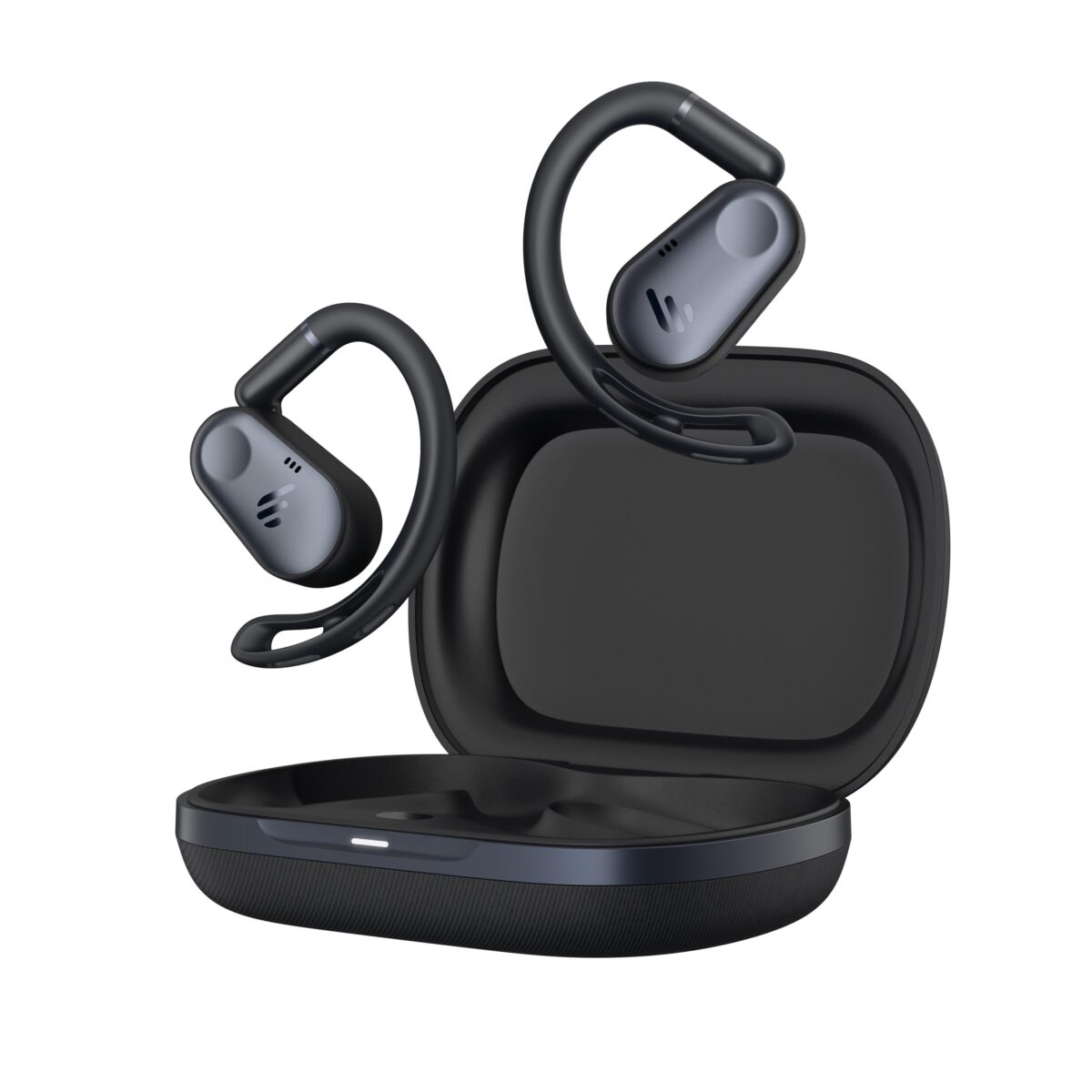
Edifier Open Ear True Wireless Earbuds, Headphones with Hi-Res Audio 40H Playtime IP55 Dust & Waterproof Bluetooth 5.4, Lightweight Ergonomic Ear Hooks for Cycling Running Workout – Black
We independently review everything we recommend. When you buy through our links, we may earn a commission which is paid directly to our Australia-based writers, editors, and support staff. Thank you for your support!
TechBest: Eightfold AI Faces Legal Issues
Eightfold AI’s Legal Issues in Covertly Evaluating Job Applicants
Quick Overview
Eightfold AI is facing a lawsuit for allegedly screening job candidates without their awareness.
The suit claims violations of the Fair Credit Reporting Act (FCRA).
Job candidates assert they were not notified or given a chance to contest inaccuracies.
Eightfold compiles intricate profiles predicting job compatibility through extensive data.
This lawsuit may influence the role of AI in hiring practices.
Claims Against Eightfold AI
Eightfold AI, a prominent AI-based hiring platform, is encountering a lawsuit in California. The firm, supported by significant venture capital entities such as SoftBank Vision Fund, is accused of assessing job candidates without informing them, allegedly violating the Fair Credit Reporting Act (FCRA).
Legal Context and AI’s Involvement
The lawsuit showcases how consumer rights advocates are leveraging existing legislation against rising AI technologies. These systems, capable of processing vast personal information, must adhere to regulations intended to shield job candidates from possible abuse.
Effects on Job Candidates
Applicants Erin Kistler and Sruti Bhaumik, possessing considerable backgrounds in science and technology, claim they were impacted by Eightfold’s tools during their applications to firms like PayPal and Microsoft. The suit asserts they were not made aware of the evaluations nor given a chance to rectify any inaccuracies.
Wider Ramifications for AI in Recruitment
This lawsuit could establish a precedent that impacts AI utilization in hiring practices across various sectors. Eightfold’s method of creating comprehensive talent profiles, which encompass personality insights and educational quality ratings, is under examination for potentially infringing on job seekers’ rights.
Eightfold’s Client Base and Influence
Eightfold engages a substantial number of Fortune 500 companies, including major players like Salesforce and Bayer, extending its services to governmental agencies in states such as New York and Colorado. Despite the ongoing lawsuit, Microsoft and PayPal are not included as defendants.
Conclusion
The legal action against Eightfold AI prompts important discussions regarding the ethical and lawful use of AI in recruitment. As AI continues to integrate into various fields, this case highlights the necessity for transparency and conformity to existing laws to protect job candidates.
Q: What are the primary claims against Eightfold AI?
A:
Eightfold AI is accused of covertly evaluating job candidates without their awareness, potentially breaching the Fair Credit Reporting Act (FCRA).
Q: Why is this lawsuit pivotal for AI in recruitment?
A:
The lawsuit could shape the manner in which AI is utilized in hiring, underscoring the need for clarity and applicants’ rights under current regulations.
Q: How does Eightfold AI assess job applicants?
A:
Eightfold employs AI technology to generate detailed profiles of candidates, evaluating personality characteristics and predicting job suitability based on expansive data analysis.
Q: Are companies like Microsoft and PayPal part of the lawsuit?
A:
No, even though candidates for these firms are involved in the suit, Microsoft and PayPal are not named as parties in the legal action.