Matthew Miller, Author at Techbest - Top Tech Reviews In Australia - Page 61 of 187

WaterNSW Welcomes the Generative AI Transformation


We independently review everything we recommend. When you buy through our links, we may earn a commission which is paid directly to our Australia-based writers, editors, and support staff. Thank you for your support!
WaterNSW Utilizes Generative AI for Digital Transformation

Quick Overview

  • WaterNSW incorporates generative AI to enhance digital operations.
  • Key focus areas encompass application development and customer engagement.
  • Pega GenAI Blueprint platform evaluated for prompt-driven engineering.
  • Digital assistants to offer reliable and precise information.
  • AI implementation to boost customer interactions and internal workflows.
  • Both gradual enhancements and significant transformations are priorities.

WaterNSW’s AI Evolution Journey
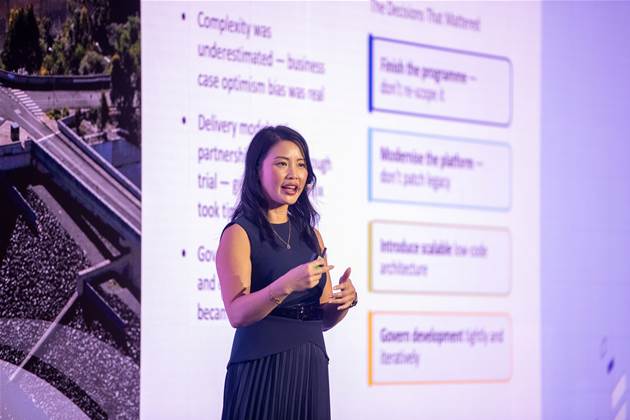
WaterNSW investigates generative AI for digital improvement

Leeanne Chau of WaterNSW.

Transition from Paper to Digital

WaterNSW, responsible for overseeing water resources in New South Wales, has effectively shifted from a largely paper-oriented system to digital customer transactions. With this change complete, the focus now turns to integrating AI into its operations to boost digital responsiveness, as stated by Leeanne Chau, Chief Information Officer and Executive General Manager of Strategy and Transformation at WaterNSW.

Focusing on Application Development and Customer Engagement

WaterNSW intends to harness AI to accelerate application design and delivery. The next goal is customer engagement, with the agency aiming to enhance the utilization of its newly digitalized services. By implementing AI, WaterNSW seeks to foster more effective and engaging interactions with its clientele.

Adopting Prompt-driven Engineering

Aligning with other prominent organizations like NAB, WaterNSW is embracing prompt-driven engineering via platforms like the Pega GenAI Blueprint. This low-code, generative AI solution aids in modernizing applications by streamlining workflows and examining existing codes and documents.

Enhancing Application Design Process

With Pega Blueprint, WaterNSW aims to decrease the time needed for prototyping and iterations in application design, thereby significantly speeding up the overall process. This initiative is expected to improve the efficacy and rapidity of delivering new applications.

Virtual Assistants for Superior Interaction

Another significant AI initiative at WaterNSW involves the implementation of virtual assistants. These tools are designed to deliver consistent, accurate information within the heavily regulated framework in which WaterNSW operates. The Pega Generative AI Knowledge Buddy is among the solutions being considered.

Benefits for Internal and External Stakeholders

Internally, virtual assistants will assist staff in quickly navigating the organization’s vast knowledge repository. Externally, these assistants will enhance customer interactions, particularly for farmers increasingly utilizing digital platforms for their transactions.

Both Incremental and Transformational AI Integration

WaterNSW is not exclusively concentrated on large-scale overhauls. The organization is equally committed to achieving incremental advancements through AI. By pursuing this approach, it aspires to continually elevate various aspects of its operations.

Conclusion

WaterNSW is committed to incorporating generative AI to refine both its internal functions and customer interactions. With a spotlight on application development and customer engagement, the organization is investigating novel AI solutions to propel digital transformation and operational effectiveness.
Q: What are WaterNSW’s primary objectives for applying AI?

A: WaterNSW’s primary objectives for applying AI include accelerating application development and enhancing customer engagement.

Q: Which platform is WaterNSW considering for AI integration?

A: WaterNSW is considering the Pega GenAI Blueprint platform for integrating AI into its workflows.

Q: In what ways will virtual assistants support WaterNSW?

A: Virtual assistants will deliver consistent and accurate information, supporting both internal personnel and external customers in swiftly obtaining needed information.

Q: What is the importance of prompt-driven engineering for WaterNSW?

A: Prompt-driven engineering facilitates quicker application design and delivery by automating workflows and revitalizing existing applications.

Q: How does WaterNSW plan to enhance customer interactions?

A: WaterNSW aims to employ conversational AI, enabling natural language discussions with customers to elevate engagement and service quality.

Q: Is WaterNSW concentrating exclusively on significant AI transformations?

A: No, WaterNSW is also keen on using AI for smaller, incremental enhancements across its processes.

Tesla Marks Achievement with Launch of 150th Supercharger Station in Australia


We independently review everything we recommend. When you buy through our links, we may earn a commission which is paid directly to our Australia-based writers, editors, and support staff. Thank you for your support!

Brief Overview

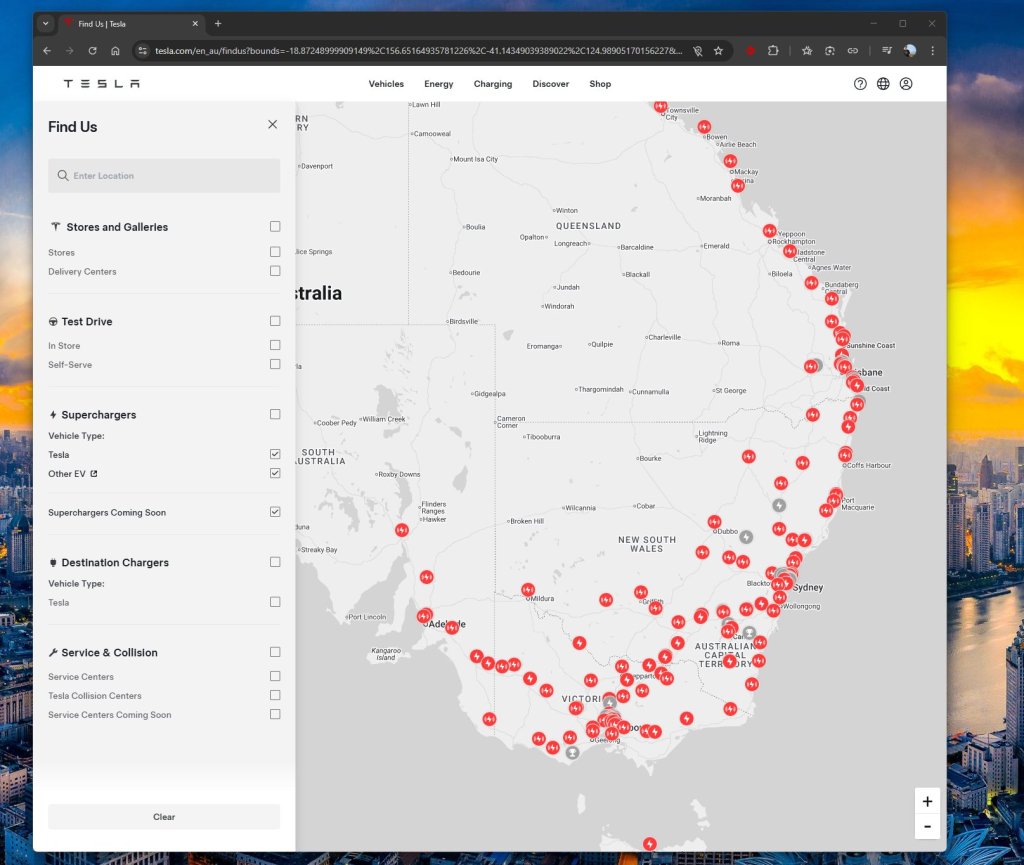
  • Tesla marks the opening of its 150th Supercharger station in Australia, situated in the Hunter Valley wine region.
  • The new station in Pokolbin boasts 8 high-speed V4 Supercharger stalls.
  • Chargers are available for non-Tesla EVs equipped with CCS2 ports as well.
  • Rates fluctuate between A$0.50 and A$0.70 per kWh depending on peak usage.
  • This expansion caters to the rising EV market and promotes tourism in rural areas.

Charging in the Hunter Valley

Situated in the renowned Hunter Valley, Tesla’s 150th Supercharger location in Pokolbin represents a key milestone in the company’s network expansion in Australia. This site, located within Roche Estate, offers a harmonious mix of functionality and recreational options for EV users. It features 8 high-speed V4 Supercharger stalls with CCS2 connectors, allowing modern electric vehicles to recharge swiftly.

Reaching 150 Locations

Tesla’s journey to 150 Supercharger locations is a testament to its dedication to promoting EV usage throughout Australia. The network traverses varied landscapes, from busy highways to isolated regional paths, enhancing electric travel accessibility for all Australians. The local team has played a crucial role in this growth, reflecting the rising interest in Tesla’s Model 3 and Model Y.

Costs and Availability

Pricing at the new Pokolbin Supercharger location fits Tesla’s typical model, adjusting for peak and off-peak hours. Drivers can anticipate charges between A$0.50 and A$0.70 per kWh. Non-Tesla vehicle owners may also utilize these stalls for a small fee or a subscription via the Tesla App.

Honoring the Achievement

Tesla celebrated this landmark on social media, recognizing the hard work of its local charging team. The growth of the network has exceeded expectations, paralleling the surging interest in electric vehicles. The reliability, simplicity, and smooth integration of the Supercharger network with Tesla cars are well-regarded.

Future Aspirations

With 150 sites operational, Tesla is concentrating on further expansion, which includes the deployment of advanced V4 technology. New locations are under development nationwide, improving both urban and rural access. As governmental incentives for EVs increase, Tesla is ready to uphold its leadership in charging infrastructure, guaranteeing a seamless experience for EV drivers.

Importance for Australian EV Owners

The 150th Supercharger location represents a significant advancement in the maturity of the EV market in Australia. It illustrates that infrastructure is keeping pace with demand, facilitating urban and regional travel alike. This milestone affirms the practicality of EVs for Australians, paving the way for longer road trips without dependence on conventional fuels.

Conclusion

Tesla’s 150th Supercharger station in Australia highlights the firm’s commitment to expanding its charging network, promoting EV adoption, and improving travel convenience for all electric vehicle users. The Pokolbin location in the Hunter Valley is a notable addition, embodying Tesla’s approach to combining charging facilities with lifestyle destinations.

Q: What does Tesla’s 150th Supercharger site signify?

A: It signifies a significant step in Tesla’s initiatives to enhance EV infrastructure throughout Australia, enabling long-distance travel and supporting the increasing number of electric vehicles.

Q: Where can the 150th Supercharger site be found?

A: The site is located in Pokolbin, within the Hunter Valley wine region, a favored spot for both locals and visitors.

Q: Are non-Tesla EVs permitted to utilize the Supercharger network?

A: Yes, non-Tesla EVs with CCS2 connectors can use the Supercharger network, usually for a minor premium or through a subscription option.

Q: How does Tesla’s Supercharger network fare against other charging choices?

A: Tesla’s network is celebrated for its dependability, ease of use, and smooth integration with Tesla vehicles, raising the benchmark for public charging systems.

Q: What are the costs associated with using the Superchargers?

A: Charges range from A$0.50 to A$0.70 per kWh, influenced by peak and off-peak timings. Non-Tesla users may face extra costs.

Q: What future upgrades are in store for Tesla’s Supercharger network?

A: Tesla intends to keep expanding its network, with additional sites under construction and plans to implement V4 technology for quicker charging speeds.

Philips Audio Fidelio T2 Noise Cancelling True Wireless in-Ear Bluetooth Headphones – Review


We independently review everything we recommend. When you buy through our links, we may earn a commission which is paid directly to our Australia-based writers, editors, and support staff. Thank you for your support!

Philips Audio Fidelio T2 Noise Cancelling True Wireless in-Ear Bluetooth Headphones – Excellent Call Quality, Compatible with Voice Assistant and up to 40 Hours of Music Playback – Black

Samsung Galaxy Buds FE + Charger Review


We independently review everything we recommend. When you buy through our links, we may earn a commission which is paid directly to our Australia-based writers, editors, and support staff. Thank you for your support!

Samsung Galaxy Buds FE + Charger – Wireless Earbuds, Active Noise Cancellation, Comfortable Fit, 3 Microphones, Touch Control, Bass Bass, White (Spanish Version)

National Cabinet Urged to Accelerate Electrification as Energy Crisis Intensifies


We independently review everything we recommend. When you buy through our links, we may earn a commission which is paid directly to our Australia-based writers, editors, and support staff. Thank you for your support!

“`

The Journey to Electrification in Australia: An Urgent Appeal

Short Overview

  • Australia is experiencing its third energy crisis in six years.
  • A coalition advocates for a transition to a fully electrified economy.
  • Electric technologies demonstrate significantly greater efficiency than fossil fuels.
  • Electricity meets only 21.5% of Australia’s energy requirements.
  • The coalition suggests a five-point framework for electrification.
  • Electrifying transport represents a substantial opportunity for economic advancement.
  • Government intervention is essential for making electrification accessible to everyone.

The Consequences of Inaction

Australia is currently confronted with its third international energy crisis in the last six years, affecting families and enterprises all over the country. A coalition comprising energy, industry, and consumer advocacy organizations is pressing the National Cabinet to hasten the transition to a completely electrified economy. Key figures, such as the Electric Vehicle Council and Rewiring Australia, emphasize that moving away from fossil fuels is pivotal for the nation’s economic stability.

Efficiency as a Powerful Tool

On average, electric technologies are three times more efficient than fossil fuel-dependent systems, permitting lower energy consumption and enhanced service quality. Research reveals that 75% of the global energy framework could be electrified utilizing current technologies, with policy backing.

Homes in Australia with energy efficiency

Current Status

At present, only 21.5% of Australia’s energy demand is satisfied by electricity, with residential buildings achieving 53% electrification and road transport only 0.13%. The commercial sector is leading with 73% electrification, indicating potential for further development.

A Five-Point Framework for the National Cabinet

The coalition presents a plan for governments to enhance electrification, focusing on the conversion to electric vehicles and the elimination of gas appliances in homes and businesses. Strong public charging facilities and financial incentives are essential elements of this approach.

Supporting the Industry and Grid

The manufacturing and food processing industries require assistance to implement clean industrial heating technologies. Developing renewable energy storage and grid infrastructure is vital to meet the growing electricity demands.

Representing the Coalition

Experts advocate for a decisive transition towards electrification, highlighting its potential to significantly lower living expenses. Francis Vierboom, CEO of Rewiring Australia, underscores the necessity for immediate action to safeguard Australia’s energy future.

“As Australia grapples with its third global energy crisis in six years, we urge Australian governments convening for National Cabinet on Monday to enhance the security, affordability, and productivity of Australia’s energy systems by rapidly advancing electrification throughout the economy.”Francis Vierboom, CEO, Rewiring Australia.

The Future of Transport

Transport electrification offers a significant chance to maintain economic value within Australia, decreasing dependency on imported fuels. The industry advocates for long-term policies to facilitate this change.

Ensuring Accessibility for All

The plan highlights the importance of supporting renters, individuals in apartments, and low-income Australians, ensuring equitable access to the advantages of electrification. Encouraging landlords to upgrade appliances is vital for inclusive energy savings.

Why This is Urgent Now

Australia’s global competitiveness depends on lowering energy costs. Utilizing renewable resources can offer a strategic edge, positioning the nation as a leader in sustainable energy practices.

Conclusion

The urgent energy crisis facing Australia necessitates a swift transition toward electrification. A coalition of industry leaders and advocates is calling for comprehensive governmental action to ensure a sustainable and economically feasible future. The plan emphasizes increasing electric vehicle use, moving away from gas, and improving renewable infrastructure.

Q: Why is electrification crucial for Australia?

A: Electrification decreases reliance on unstable fossil fuels, boosts energy efficiency, and strengthens economic security.

Q: How do electric technologies compare in efficiency to fossil fuels?

A: On average, electric technologies are three times more efficient than those based on fossil fuels.

Q: Which sectors exhibit the greatest potential for electrification?

A: The transport sector, with its currently low electrification, and the commercial sector, which is leading at 73%, present substantial potential.

Q: What is the suggested roadmap for electrification?

A: The strategy involves promoting electric vehicles, phasing out gas appliances, and investing in renewable infrastructure and public outreach.

Q: How can electrification advantage low-income Australians?

A: By lowering energy expenses and delivering focused assistance to overcome financial and physical challenges in upgrading to electric technologies.

Q: What significance does government policy hold in this transition?

A: Government policy is vital in providing incentives, infrastructure, and public support to expedite electrification across the economy.

“`

NAB Collaborates with Databricks to Revolutionize SIEM Design


We independently review everything we recommend. When you buy through our links, we may earn a commission which is paid directly to our Australia-based writers, editors, and support staff. Thank you for your support!

Quick Read

  • NAB collaborates with Databricks to jointly develop a new SIEM solution, Lakewatch.
  • Lakewatch is presently in a private preview stage, with no public release timeline announced.
  • NAB intends to consolidate more than 30TB of daily security data with larger datasets to enhance cybersecurity.
  • This partnership signifies Databricks’ entry into the security market.
  • The platform is set to integrate data from 15 security vendors and provide customized security agents.

NAB Teams Up with Databricks for SIEM Development

National Australia Bank (NAB) has made a pivotal advancement in the cybersecurity field as one of the five design partners for Databricks’ new security information and event management (SIEM) platform, Lakewatch. This partnership denotes Databricks’ first step into the security industry, generating significant excitement within the technology community.

NAB partners with Databricks on SIEM development

Lakewatch: A New Era in Security

Lakewatch is now in a “private preview” stage, with details regarding its public launch still undisclosed. NAB’s chief security officer, Sandro Bucchianeri, emphasized the bank’s daily processing of over 30TB of security data, conveying a goal to merge these signals with larger enterprise datasets to enhance its cybersecurity framework.

Utilizing Current Infrastructure

NAB already employs Databricks on AWS as a fundamental aspect of its enterprise data platform, Ada. The existing partnership between NAB and Databricks sparked conversations about extending Databricks technology into security solutions, which led to NAB’s role in the design of Lakewatch.

The Future of Cybersecurity

Bucchianeri expressed enthusiasm for the collaboration, mentioning, “Collaborating with Databricks to shape a product tailored to the needs of cyber defenders moving forward … is exciting for us.” The platform is designed to address both present and future security requirements.

Integration and Advancement

Databricks has disclosed that Lakewatch will facilitate data integration from 15 security vendors, offering an “agentic” SIEM where customized security agents can be created for incident detection and resolution. This adaptability is a crucial advantage for organizations seeking bespoke security solutions.

Conclusion

NAB’s alliance with Databricks to create Lakewatch represents a significant development in the cybersecurity landscape. By harnessing Databricks’ technological expertise and NAB’s substantial data capabilities, this collaboration promises to deliver a powerful SIEM platform. With its ability to integrate extensive security data and provide customizable security agents, Lakewatch stands as a promising asset for future cybersecurity efforts.

Q&A Section

Q: What is Lakewatch?

A: Lakewatch is an emerging security information and event management (SIEM) platform under development by Databricks, with NAB serving as a primary design partner.

Q: Why is NAB participating in this initiative?

A: NAB aims to unify its vast daily security data with larger datasets to strengthen its cybersecurity capabilities, utilizing its existing partnership with Databricks.

Q: What distinguishes Lakewatch from other SIEM offerings?

A: Lakewatch is promoted as an “agentic” SIEM, permitting the creation of custom security agents for incident detection and response, offering enhanced flexibility in security operations.

Q: When will Lakewatch be publicly available?

A: Lakewatch is currently in a private preview phase, with no definitive date established for its general release.

Q: How many other organizations are participating in the co-development of Lakewatch?

A: NAB is among five design partners; however, the names of the other four have not been revealed.

Q: Does Databricks have prior experience in the security domain?

A: Lakewatch signifies Databricks’ initial entry into the security market, broadening its scope from data management to cybersecurity.

Xiaomi Mi Buds 3 Wireless Earbuds Review


We independently review everything we recommend. When you buy through our links, we may earn a commission which is paid directly to our Australia-based writers, editors, and support staff. Thank you for your support!

Xiaomi Mi Buds 3 Wireless Earbuds, IP55 Water and Dust Resistant, Single Charge 7 Hours Play Time, Carbon Black

Razer Hammerhead HyperSpeed Wireless Review


We independently review everything we recommend. When you buy through our links, we may earn a commission which is paid directly to our Australia-based writers, editors, and support staff. Thank you for your support!

Razer Hammerhead HyperSpeed Wireless (PS Licensed) Multi-Platform Gaming Earbuds for Playstation 5 / PS5, PC, Mobile: ANC – Noise Cancelling Mic – Bluetooth 5.2 – RGB Chroma – 30 Hr Battery – White

Raycon Open Earbuds Review


We independently review everything we recommend. When you buy through our links, we may earn a commission which is paid directly to our Australia-based writers, editors, and support staff. Thank you for your support!

Raycon Open Earbuds – True Wireless Open Ear Bluetooth Headphones, Hook Design, IPX5 Water Resistant, 40 Hours of Battery Life, Black

Telstra Upgrades Event Streaming through Flink Integration


We independently review everything we recommend. When you buy through our links, we may earn a commission which is paid directly to our Australia-based writers, editors, and support staff. Thank you for your support!

Telstra’s Latest Integration: A Major Advancement in Event Streaming Technology

  • Telstra will incorporate Apache Flink into its current Kafka-powered event streaming framework.
  • This integration is designed to bolster network observability and improve customer service standards.
  • Flink’s rapid in-memory processing capabilities will facilitate real-time data evaluation.
  • Managed services for both Flink and Kafka will be provided by Confluent.
  • Event streaming is essential for AI and analytics in Telstra’s activities.

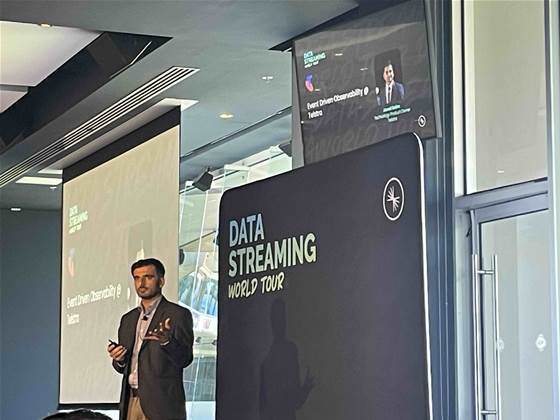
Telstra to incorporate Flink into its event streaming functionalities

The Integration of Apache Flink

Telstra is preparing to improve its event-oriented network observation framework, which has been in place for four years, by integrating the Apache Flink data processing engine. This integration, slated to commence in the upcoming months, aims to enhance Telstra’s capacity to process and analyze streaming data in real-time.

Utilizing Managed Services from Confluent

Telstra plans to combine Flink with its current Kafka-focused event stream processing functionalities, both of which will be utilized through managed services offered by Confluent. This strategic initiative is anticipated to increase the speed and efficiency of data processing, enabling Telstra to swiftly tackle network challenges.

Improving Network Observability

With Flink’s integration, Telstra intends to monitor significant changes in its network, facilitating early problem identification and faster restoration of complete services. The enhanced observability will ensure that customers receive the promised service levels, leading to greater overall satisfaction.

Enhancing Product Development and Customer Benefit

Telstra leverages network data to guide service innovation and ensure customers achieve the expected value from performance-related service enhancements. By investigating trends and customer demands, Telstra can create customized products, improving the selections available on its network.

Strengthening AI and Analytics Initiatives

The addition of Flink is also perceived as a move towards fortifying Telstra’s AI and analytics capacities. High-quality, accessible data from the network is essential for informed decision-making, vital for progressing AI initiatives.

Summary

Telstra’s incorporation of Apache Flink into its existing Kafka-based platform signifies a notable improvement in its event streaming proficiencies. This action is poised to enhance network observability, stimulate product development, and bolster AI and analytics endeavors, ultimately improving service for customers.

Q&A

Q: What is the primary goal of integrating Apache Flink into Telstra’s platform?

A: The primary goal is to improve real-time data processing and analytical capabilities, thereby enhancing network observability and customer service standards.

Q: In what way does Flink enhance Telstra’s event streaming proficiencies?

A: Flink’s in-memory processing speeds facilitate quicker data analysis, enabling earlier problem identification and faster service restoration.

Q: What is Confluent’s role in this integration?

A: Confluent supplies managed services for both Apache Flink and Kafka, aiding the integration and functioning of these systems.

Q: How will this integration influence Telstra’s customers?

A: Customers can anticipate enhanced service standards, as improved observability enables Telstra to address network problems more efficiently and quickly.

Q: Why is data vital for Telstra’s AI and analytics projects?

A: High-quality, available data is crucial for informed decision-making, laying the groundwork for effective AI and analytics initiatives.

Q: What advantages does event-driven observability provide for Telstra?

A: It empowers Telstra to monitor significant network changes, leading to quicker problem detection and resolution, ensuring superior service delivery.