
Matthew Miller, Author at Techbest - Top Tech Reviews In Australia - Page 34 of 187

Bendigo Bank Aims to Establish Australia’s First ‘Agentic SOC’


We independently review everything we recommend. When you buy through our links, we may earn a commission which is paid directly to our Australia-based writers, editors, and support staff. Thank you for your support!
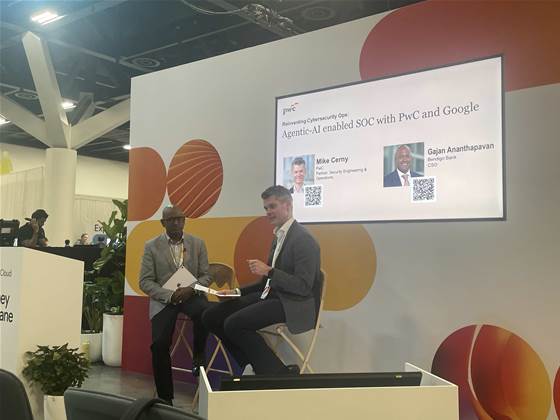
Bendigo Bank’s Innovative Leap Towards an Agentic SOC

Quick Overview

  • Bendigo Bank is unifying its security operations under a single technology platform.
  • The institution aims to set up Australia’s first agentic Security Operations Centre (SOC).
  • Agentic AI will decrease reliance on conventional SOC analysts.
  • This initiative is backed by Google Cloud and PwC.
  • Initial implementation features Google Threat Intelligence and Google SecOps.
Bendigo Bank is set to develop Australia's leading agentic SOC

(L-R) Bendigo Bank’s CSO Gajan Ananthapavan and PwC’s Mike Cerny.

Agentic AI: The Next Generation of Security Operations

Bendigo Bank is leading a transformative strategy in security operations by creating what it envisions as Australia’s first agentic Security Operations Centre (SOC). This effort involves shifting to an integrated technology stack, utilizing cutting-edge AI to enhance incident response effectiveness and minimize dependence on traditional SOC analysts.

Transitioning from Traditional to Agentic SOC

Chief Security Officer Gajan Ananthapavan highlighted at the Google Cloud Summit Sydney the imperative for security operations to reflect the evolving landscape of threats. He asserted that the conventional SOC framework will slowly phase out as agentic AI features gain traction, enabling in-house teams to concentrate on strategic, high-impact initiatives.

Collaborations and Technological Framework

Bendigo Bank’s bold initiative is bolstered by Google Cloud’s technological resources and a strategic alliance with PwC. In just four months, the bank has rolled out Google Threat Intelligence, Google SecOps, and the Google Security Command Center, with the goal of boosting its security posture and operational responsiveness.

The Impact of Agentic Features

Agentic features are anticipated to significantly improve decision-making during incident responses, facilitating proactive enhancements in security controls and overall posture. Ananthapavan envisions using real-time insights to strengthen defenses, such as optimizing web application firewalls to more effectively safeguard customer-facing services.

Conclusion

Bendigo Bank’s endeavor to establish an agentic SOC represents a major advancement in modernizing security operations throughout Australia. By embracing advanced AI and forming strategic partnerships, the bank aims to elevate its operational efficiency and security stance, heralding a new phase in digital security.


Q&A

Q: What constitutes an agentic SOC?

A: An agentic SOC is a Security Operations Centre that utilizes agentic AI capabilities to improve incident response and lessen dependency on traditional analysts.

Q: What prompts Bendigo Bank to pursue an agentic SOC?

A: The bank seeks to enhance efficiency in responding to incidents and prioritize high-value security activities as the threat environment changes.

Q: What role does Google Cloud play in this initiative?

A: Google Cloud supplies the technological foundation for the agentic SOC, including Threat Intelligence, SecOps, and a Security Command Center.

Q: In what way will agentic features enhance security operations?

A: They will facilitate real-time decision-making, strengthen security controls, and enable proactive enhancements in the bank’s security framework.

Q: What is the relevance of this initiative for Australia’s security operations?

A: This initiative positions Bendigo Bank as a frontrunner in the integration of advanced AI in security, possibly setting a benchmark for other organizations across Australia.

Soundcore P40i by Anker Wireless Earbuds Review


We independently review everything we recommend. When you buy through our links, we may earn a commission which is paid directly to our Australia-based writers, editors, and support staff. Thank you for your support!

Soundcore P40i by Anker, Noise Cancelling Wireless Earbuds, Adaptive Noise Cancelling to Environments, Heavy Bass, 60H Playtime, 2-in-1 Case and Phone Stand, IPX5, Wireless Charging (Blue)

Wireless Earbuds Sport, Bluetooth 5.4 Headphones 2024 Bluetooth Earbuds Review


We independently review everything we recommend. When you buy through our links, we may earn a commission which is paid directly to our Australia-based writers, editors, and support staff. Thank you for your support!

Wireless Earbuds Sport, Bluetooth 5.4 Headphones 2024 Bluetooth Earbuds with 75Hrs Stereo, 4 ENC Mic, Over-Ear Buds with Earhooks Noise Canceling Earphones , IP7 Waterproof Headset for Workout/Running

Tesla Introduces FSD v14 Lite for 7-Year-Old Vehicles Featuring HW3 (2026.20.5.1)


We independently review everything we recommend. When you buy through our links, we may earn a commission which is paid directly to our Australia-based writers, editors, and support staff. Thank you for your support!

Brief Overview

  • Tesla unveils FSD v14 Lite for vehicles equipped with HW3, infusing older models with updated functionalities.
  • This update enhances autonomy and usability for cars that are up to 7 years old.
  • FSD v14 Lite delivers a more fluid and natural driving experience.
  • This launch demonstrates Tesla’s dedication to older models amidst advancements in hardware.
  • Owners in Australia might experience a delay in receiving this update.

Tesla’s FSD v14 Lite: A New Chapter for Older Vehicles

In a notable development, Tesla has introduced the FSD v14 Lite update for vehicles featuring the HW3 computer, improving the autonomy capabilities of earlier models. First launched with the 2019 Model 3, HW3 was revolutionary for its time. However, the introduction of HW4 has left many HW3 users feeling overlooked until this announcement.

Tesla's FSD v14 Lite update for older cars

New Features of FSD v14 Lite

FSD v14 Lite is designed for early-access users with AI3, with a promise of gradual rollout to a wider demographic. This update integrates driving patterns from AI4’s v14 series, tailoring them to the camera and processing framework of AI3. Importantly, it does not include the ‘Mad max’ mode for speed preferences, a feature appreciated by some Tesla enthusiasts.

Major Improvement for Global Users

For Tesla users globally with vehicles aged 6-7 years, the shift from the legacy Autopilot (AP) system to FSD v14 Lite signifies a considerable enhancement. Previously, functions like navigating roundabouts needed driver input, whereas FSD can now manage these tasks autonomously, leading to a more integrated driving experience.

A Contemporary Driving Experience

The update presents numerous features aimed at improving convenience and autonomy. It encompasses capabilities such as automatic reversing, toggling between Drive and Reverse, and parking at designated locations. These enhancements reflect Tesla’s mission to offer a modern driving experience across its lineup of vehicles.

Functionality and Constraints

FSD v14 Lite utilizes a neural network-driven driving behavior framework, delivering smoother, quicker, and more instinctive responses. The ‘Lite’ label suggests that the software has been fine-tuned to work within the limits of the HW3 processor. Although HW3 cannot achieve unsupervised, robotaxi-level autonomy, this update closes the gap, providing a supervised FSD experience.

Conclusion

For Tesla owners who have invested in HW3 vehicles, the FSD v14 Lite rollout is a testament to Tesla’s commitment to enhancing older models. While the complete potential of autonomous driving remains designated for HW4 and newer, this update guarantees that owners of older models remain included. As Australia awaits its update, the excitement for improved driving features intensifies.

Q: What is FSD v14 Lite?

A: FSD v14 Lite is an update for Tesla vehicles featuring the HW3 computer, enhancing autonomy and driving functionalities.

Q: How does FSD v14 Lite benefit older Tesla vehicles?

A: It adds features such as automatic reversing, gear shifting, and parking, while improving overall driving behavior.

Q: Is full autonomous driving supported by HW3?

A: No, HW3 does not support unsupervised, robotaxi-level autonomy, but FSD v14 Lite offers a supervised experience.

Q: When can Australian Tesla owners expect this update?

A: There may be a delay for Australian owners, but the update is likely to be distributed gradually.

Government to Strengthen eSafety Commissioner’s Powers with Increased Authority


We independently review everything we recommend. When you buy through our links, we may earn a commission which is paid directly to our Australia-based writers, editors, and support staff. Thank you for your support!

TechBest: eSafety Commissioner Receives Expanded Authority

Brief Overview

  • The Australian government enhances the capacity of the eSafety Commissioner.
  • Maximum fines for non-compliance will escalate to $99 million.
  • eSafety is actively scrutinizing five leading social media platforms.
  • International interest in Australia’s strategy for youth engagement on social media.

Strengthening the eSafety Commissioner

The federal government of Australia plans to strengthen the eSafety Commissioner’s ability to gather intelligence, aiming for tighter enforcement of the social media age limit. This enhancement will allow the Commissioner to mandate social media firms to prove their efforts in preventing users under 16 from signing up.

eSafety Commissioner authority enhancement

Heightened Penalties for Violations

The upper limit for penalties imposed on technology companies that fail to follow the age restrictions on social media will rise to $99 million, doubling the existing threshold of $49.5 million. This initiative comes in response to data suggesting that the original restrictions have not sufficiently curbed teenage social media activity.

International Focus on Australia’s Restrictions

Australia’s innovative social media age restrictions have garnered global interest, with other nations contemplating similar initiatives. The UK’s recent suggestion aims to expand these limitations to gaming and live-streaming services.

Difficulties in Enforcing the Restrictions

In spite of the ban, a survey indicated that 85% of Australians aged 12 to 15 continue to use social media. Many bypass the regulations by providing false age information. The eSafety Commissioner highlights that platforms are not utilizing the available age verification methods effectively.

Public and Legal Reactions

Public sentiment in Sydney indicates doubt regarding the efficacy of harsher penalties. Meanwhile, Reddit is contesting the ban legally, citing concerns over freedom of speech, as the government is poised to defend its position.

Conclusion

The Australian government’s move to enhance the eSafety Commissioner’s powers represents a crucial advancement in enforcing social media age restrictions. While the intent is to ensure adherence, significant obstacles remain in effectively applying these rules among major tech corporations.

Q: What additional powers will the eSafety Commissioner obtain?

A: The Commissioner will now be able to require social media companies to provide proof of their actions to prevent users under 16 from registering.

Q: What are the updated penalties for violations?

A: The maximum fine will increase to $99 million from the previous limit of $49.5 million.

Q: Which platforms are under scrutiny for violations?

A: Platforms being investigated include Meta’s Instagram and Facebook, Google’s YouTube, Snap’s Snapchat, and TikTok.

Q: Why are other nations interested in Australia’s social media policies?

A: Countries are analyzing Australia’s methods due to escalating concerns about social media’s effects on the mental and physical well-being of youth.

Q: How are teenagers evading the social media restrictions?

A: Many teenagers circumvent the ban by falsely claiming they are older than 16 or using selfies accepted by platforms as age verification.

Q: What public sentiments exist regarding the effectiveness of the policy?

A: Some Australians express skepticism that stricter penalties will ensure compliance, as platforms may not prioritize enforcement of these rules.

Q: What role does Reddit play in the legal disputes against the policy?

A: Reddit is contesting the ban in the highest court in Australia on free speech grounds, with the government prepared to uphold its decision.

Queensland Government Allocates More Than $340 Million for Technology Projects


We independently review everything we recommend. When you buy through our links, we may earn a commission which is paid directly to our Australia-based writers, editors, and support staff. Thank you for your support!

Quick Read

  • Queensland government allocates more than $340 million towards technology projects.
  • Over $256 million designated from a ‘digital fund’ for tech initiatives.
  • Major projects encompass clinical imaging, asset management, and digital water systems.
  • Extra funding obtained outside of the Queensland Government Digital Fund.
  • Investments aim at system upgrades and acquiring new hardware.

Queensland’s Ambitious Tech Commitment

The Queensland government has revealed a groundbreaking investment that exceeds $340 million in diverse technology projects, representing a substantial advancement in tech-integrated governance. This considerable funding, partly sourced from a newly launched ‘digital fund’, is committed to upgrading systems and introducing state-of-the-art hardware across various domains.

Digital Fund Distribution

From the digital fund, an impressive $47.3 million is allocated for updating Queensland Health’s Clinical Imaging Informatics Systems. This project aims to improve real-time access to centralised patient imaging, equipping clinicians with data-informed decision-making capabilities.

Moreover, $37.2 million is reserved to revamp QBuild’s enterprise asset management and financial solutions. This initiative will phase out obsolete legacy systems, thus increasing the productivity of public infrastructure maintenance and construction.

Water Systems and Pathology Upgrades

An important $36.9 million will be directed over four years towards essential digital water systems. The objective is to enable smooth water trading and enhance customer satisfaction. Additionally, $30.5 million is allocated for the initial phase of updating Pathology Queensland’s outdated Laboratory Information System, guaranteeing that the state’s healthcare is supported by advanced technology.

ERP and HPC Improvements

A corporate enterprise SAP re-platforming initiative in Health is set to receive $28.1 million to sustain vital services, including payroll and supply chain management for health services. Concurrently, $26.7 million is earmarked to upgrade high-performance computing (HPC) and data platforms, which will serve as the foundation for science-informed decision-making in critical areas such as water security and disaster management.

Other Technology Projects

  • $20.4 million in 2026-27 for CITEC’s ICT initiatives, covering upgrades for data storage and connectivity equipment.
  • $18.4 million over two years for enhancements to the Queensland Digital Licence service portal.
  • $15.2 million for digital transformation initiatives in the Queensland Building and Construction Commission.

Conclusion

The Queensland government’s forward-looking investment strategy positions the state at the leading edge of technology-enhanced public services. By concentrating on healthcare, infrastructure, and digital identity, the government aims to provide a more effective and responsive service to its residents.

Q: What is the total investment by the Queensland government in tech initiatives?

A: The Queensland government is committing over $340 million to technology initiatives.

Q: How much of this investment stems from the digital fund?

A: No less than $256 million is derived from the digital fund.

Q: Which sectors are mainly addressed by this investment?

A: Primary sectors include healthcare, infrastructure, water systems, and digital identity.

Q: What is the purpose of replacing the Clinical Imaging Informatics Systems?

A: The intention is to improve real-time access to patient imaging data, assisting clinicians in making informed decisions based on data.

Q: What is the importance of investing in digital water systems?

A: It seeks to streamline water trading and enhance customer satisfaction.

Q: How does the government plan to improve high-performance computing?

A: By investing $26.7 million in HPC and data platforms for robust, science-based decision-making.

Q: Are there any allocations for cybersecurity?

A: Yes, $5 million will be allocated for cybersecurity and technology projects throughout Queensland.

Q: What role does CITEC play in this initiative?

A: CITEC, the primary ICT service provider for the state, will receive $20.4 million for various related projects.

NSW Government Enhances P25 Network with Extra $209 Million Funding


We independently review everything we recommend. When you buy through our links, we may earn a commission which is paid directly to our Australia-based writers, editors, and support staff. Thank you for your support!

NSW Government Channels Funds into P25 Network and Other Technological Enhancements

Quick Overview

  • The NSW Government is committing an extra $209 million over the next ten years towards the P25 radio system for emergency services.
  • This investment focuses on updating outdated technology, repairing infrastructure, and closing service gaps.
  • The NSW Police and the Electoral Commission are also poised to receive substantial funds for technological improvements.
  • AI scribe technology for healthcare providers shines as a notable feature in the budget.

Advancing Public Safety Communications

NSW Government Allocates Extra $209 Million to P25 Network

The NSW Government’s commitment to infuse an additional $209 million into the P25 radio system highlights its dedication to enhancing emergency communication infrastructures throughout the state. This funding will facilitate the replacement of essential equipment that is approaching the end of its usable life, alongside repairing infrastructure damaged by natural disasters and vandalism. It forms part of a broader strategy to ensure a safe and dependable service that meets the demands of expanding populations.

Major Recipients in the State Budget

Beyond the P25 system, the 2026-27 state budget details various other technology investments. The NSW Electoral Commission is projected to obtain $84.6 million for cybersecurity enhancements, which are essential in the lead-up to future elections.

The NSW Police will also significantly benefit, with a total of $108.8 million earmarked for the acquisition of new technologies and upgrades to digital infrastructures. This includes $19.2 million specifically for IT hardware and surveillance systems, aiding the recently formed Armed Response Command.

Leveraging Artificial Intelligence in Healthcare

A critical investment is the $38.7 million designated for AI scribe technology, intended to alleviate clinicians’ workloads. This initiative is part of a larger effort to incorporate AI into healthcare practices, thereby improving productivity and patient care throughout NSW.

Further Technological Investments

The budget also accommodates financial allocations for an array of additional projects:

  • $14 million for enhancements to the NSW Digital Planning System.
  • $12.1 million for replacing NSW Police technology assets to improve cyber resilience.
  • $6.8 million for developing a new regulatory platform for wildlife licensing.
  • $6.5 million for audio-visual link suites in correctional facilities.
  • $4.9 million for the replacement of the BASIX system used for housing evaluations.
  • $3.5 million for the advancement of an energy security system.
  • $1.3 million for enhancements at the State Library of NSW.

Conclusion

The NSW Government’s significant investment in the P25 network along with other technological improvements reflects a strong commitment to modernizing crucial infrastructure across the state. This strategic funding aims to boost public safety, enhance healthcare services, and secure digital systems for the years to come.

Q: What does the P25 radio network entail?

A: The P25 radio network is a digital communication framework utilized by emergency services to ensure dependable and secure communications during their operations.

Q: Why is the extra $209 million funding essential?

A: The funding is vital to substitute aging equipment, fix damaged infrastructures, and fill in gaps within the network so that it remains reliable and secure for emergency service needs.

Q: In what ways will AI scribe technology help clinicians?

A: AI scribe technology will aid in lessening administrative loads on clinicians, enabling them to concentrate more on patient care and enhancing overall healthcare efficiency.

Q: What cybersecurity enhancements is the NSW Electoral Commission implementing?

A: The upgrades aim to bolster the security surrounding electoral systems, safeguarding the integrity and reliability of elections in NSW.

Q: How does the budget bolster NSW Police?

A: The budget allocates resources for state-of-the-art technologies, digital infrastructure improvements, and new equipment to enhance the NSW Police force’s capability and responsiveness.

US Government Steps In as OpenAI Readies to Unveil Next AI Model


We independently review everything we recommend. When you buy through our links, we may earn a commission which is paid directly to our Australia-based writers, editors, and support staff. Thank you for your support!

OpenAI’s Latest AI Models: Essential Information for Australians

Summary Overview

  • Launch of OpenAI’s GPT-5.6 models: Sol, Terra, Luna.
  • US government conducts extensive vetting for the launch, restricting initial access.
  • Models are aimed at surpassing rivals such as Anthropic and Google.
  • Pricing designed to fit varied financial plans.
  • Global release expected, with Australia included.

OpenAI’s Celestial Models: Sol, Terra, and Luna

OpenAI's Celestial Models: Sol, Terra, and Luna

The new GPT-5.6 collection from OpenAI presents three unique models: Sol, Terra, and Luna. Sol is optimized for intricate tasks including advanced cybersecurity and logical reasoning. Terra caters to business needs, while Luna is aimed at budget-friendly automation.

Performance Comparison

OpenAI's GPT-5.6 performance comparison with rivals

In various benchmarks, GPT-5.6 Sol has outperformed competitors like Anthropic’s models, scoring an impressive 91.91% in Terminal-Bench 2.1. The sophisticated inference-time compute of these models enables them to effectively solve intricate problems.

The Cost of Progress

Pricing details for OpenAI's GPT-5.6 models

The pricing for OpenAI’s models varies: Sol is priced at US$5.00 per million input tokens and US$30.00 for output. Terra and Luna provide more affordable choices, particularly for developers concentrating on cost-effective projects.

US Government’s Role

Involvement of US Government in OpenAI's GPT-5.6 launch

Due to worries over the potential exploitation of advanced AI in cyber warfare, the US government is closely monitoring OpenAI’s new models. Consequently, the rollout is being executed with caution, granting access selectively.

When Will Australians Gain Access to GPT-5.6?

Australians accessing OpenAI's GPT-5.6 models

At present, GPT-5.6 access is restricted to a selected group of US partners. Nonetheless, OpenAI aims to broaden its availability internationally, including Australia, in the upcoming weeks. Local businesses should be on the lookout for formal invitations as the rollout evolves.

Conclusion

OpenAI’s GPT-5.6 series represents a major leap in AI technology, featuring models crafted for a variety of uses. Although currently limited to approved US partners, a wider distribution is anticipated, bringing fresh prospects for Australian developers and organizations.

Q: What new models has OpenAI introduced?

A: OpenAI has released three models within the GPT-5.6 series: Sol, Terra, and Luna.

Q: What is the reason for the US government’s involvement?

A: The involvement arises from concerns regarding the possible misuse of high-level AI functions in cyber warfare.

Q: How do the new models stack up against competitors?

A: The GPT-5.6 models excel beyond competitors such as Anthropic in essential benchmarks, showcasing enhanced reasoning and problem-solving skills.

Q: When will these models become available in Australia?

A: OpenAI intends to extend the rollout globally, including Australia, in the upcoming weeks.

Q: What are the pricing alternatives for these models?

A: Pricing differs, with Sol available at US$5.00 per million input tokens and US$30.00 for output, while Terra and Luna provide more budget-friendly alternatives.

Agentic AI Renders Digital Sovereignty Crucial, Not Discretionary


We independently review everything we recommend. When you buy through our links, we may earn a commission which is paid directly to our Australia-based writers, editors, and support staff. Thank you for your support!

Digital Sovereignty in the Age of AI: Vital for Security and Trust

Brief Overview

  • Agentic AI is amplifying the requirement for digital sovereignty to safeguard data security and ensure operational resilience.
  • Digital sovereignty goes beyond mere data residency; it encompasses governance, access restrictions, and operational self-sufficiency.
  • New Zealand is strategically positioning itself to embrace AI and uphold digital sovereignty within its national AI framework.
  • Investments led by various sectors in New Zealand highlight the advantages of “sovereign-by-design” methodologies.
  • Organizations are required to tackle sovereignty challenges, including increased data transfer and international dependencies.

Agentic AI and the Imperative for Digital Sovereignty

The swift advancement of agentic AI is urging organizations to elevate digital sovereignty as a priority. As AI technologies evolve from trial phases to comprehensive production, the capacity to autonomously plan, carry out, and oversee actions across diverse systems is on the rise. This transition demands solid sovereignty strategies to maintain oversight of data and operations.

Digital sovereignty is now crucial - Agentic AI has rendered it essential

Deciphering the Aspects of Digital Sovereignty

Digital sovereignty encompasses more than simply where data resides. It signifies governance of data locations, access rights, operational frameworks, controls over external suppliers, and the capability to shift workloads while retaining independence. Within the realm of agentic AI, sovereignty challenges manifest on both practical and operational levels.

  • Loss of command over execution as AI agents undertake multi-step procedures.
  • Amplified and less perceivable data movements through AI prompts, tool interactions, and records.
  • International legal and operational dependencies influencing sovereignty.
  • Challenges in auditability and accountability if agentic actions lack transparency.

Sovereign-by-Design: Advantages for New Zealand

New Zealand is proactively advancing its AI initiatives and digital sovereignty as part of its national agenda. With plans to unveil a national AI strategy in 2025, the nation seeks to boost productivity and market competitiveness. Investments in AI research and commercialization are positioning New Zealand to spearhead AI adoption while prioritizing sovereignty.

The Significance of Sovereignty in Future Economies

New Zealand stands as an exemplar for executing sovereign-by-design strategies. Enterprises like HPE are partnering with telecommunications and service providers to upgrade infrastructure and bolster national connectivity. This method integrates governance, security, and operational control into digital frameworks, conforming with jurisdictional and regulatory standards.

Four Essential Considerations for Digital Sovereignty

  1. AI Amplifies Sensitive Data Movements: AI technologies generate intricate data flows that necessitate meticulous governance to avert sensitive information exposure.
  2. Consistent and Compliant Operations: AI requires stable functioning within security and compliance frameworks, favoring sovereign-by-design methodologies.
  3. Definitive Accountability and Command: Integrating sovereignty controls curtails reliance on unclear paths and guarantees substantiable audit trails.
  4. Applicable Guardrails for Agentic AI: Policies and authorizations must limit AI actions, with specified and verifiable controls established.

Conclusion

As AI increasingly becomes entrenched in organizational workflows, digital sovereignty is a pivotal basis for assuring security, compliance, and resilience. With the growth of agentic AI functionalities, organizations must emphasize sovereignty to preserve control over data and operations. New Zealand’s anticipatory stance towards AI adoption and sovereignty acts as a guiding framework for other countries.

Q: Why is digital sovereignty crucial in the AI era?

A: Digital sovereignty guarantees oversight over data processing locations and access rights, ensuring security and operational autonomy in AI-enabled entities.

Q: In what way does agentic AI influence digital sovereignty?

A: Agentic AI, capable of executing actions autonomously, complicates governance and control, necessitating strong sovereignty protocols.

Q: What does “sovereign-by-design” mean?

A: A “sovereign-by-design” methodology incorporates governance, security, and control into the foundational structure, preventing reliance on makeshift solutions.

Q: How is New Zealand dealing with AI and digital sovereignty?

A: New Zealand is formulating a national AI strategy and funneling investments into AI research and commercialization, highlighting sovereignty in its developmental agenda.

Q: What are the dangers of neglecting digital sovereignty?

A: In the absence of digital sovereignty, organizations encounter threats such as data breaches, loss of control, regulatory non-compliance, and operational susceptibility.

Q: How can organizations effectively implement digital sovereignty?

A: Organizations can embrace a sovereign-by-design strategy, embedding compliance, security, and oversight into their digital framework from the beginning.

Westpac Names Macquarie BFS CIO as New Chief of IT


We independently review everything we recommend. When you buy through our links, we may earn a commission which is paid directly to our Australia-based writers, editors, and support staff. Thank you for your support!

Westpac’s IT Future with Leadership from Macquarie BFS

Brief Overview

  • Richard Heeley from Macquarie BFS has been named as Westpac’s new CIO.
  • Heeley is set to succeed Scott Collary, who is stepping down.
  • The incoming CIO will prioritize the acceleration of Westpac’s tech strategy.
  • Heeley has a wealth of experience in extensive digital transformations within retail banking.
  • Heeley will partner with Westpac’s Unite, Data, Digital, and AI divisions.

Westpac’s Strategic Leadership Shift

In a tactical decision to enhance its technological prowess, Westpac has appointed Richard Heeley, the previous chief information officer of Macquarie’s banking and financial services sector, as its new IT leader. This announcement was made via an ASX filing, signifying a major leadership transition for Australia’s oldest financial institution.

Richard Heeley’s Responsibilities and Role

In his capacity as Westpac’s new CIO, Heeley is responsible for propelling the bank’s technology agenda forward. His responsibilities encompass the bank’s infrastructure, cybersecurity, and engineering aspects. Heeley will also closely collaborate with the Unite, Data, Digital, and AI teams, headed by Peter Herbert and Andrew McMullan, to foster innovation and operational effectiveness.

Westpac selects Macquarie BFS' CIO as its new IT director

Unite Initiative and Digital Advancement

Heeley’s appointment arrives at a pivotal moment as Westpac initiates its Unite program—a technological simplification effort aimed at streamlining the bank’s operations onto a singular IT system. This initiative is essential for boosting service delivery and enhancing customer experiences through optimized digital platforms.

Established Knowledge in Retail Banking

Heeley is acknowledged as a technology frontrunner with a solid history of managing extensive digital transformations within the retail banking industry. His background in developing and operating key platforms at significant scale will be vital in simplifying Westpac’s systems and increasing their robustness, ultimately providing an outstanding digital banking experience for customers.

Conclusion

The appointment of Richard Heeley as Westpac’s new CIO signifies a strategic transition towards a more digitally integrated future. With his vast experience in digital banking and large-scale tech transformations, Heeley is anticipated to lead efforts that will not only streamline processes but also improve the overall customer experience at Westpac.

Questions from Readers

Q: Why was Richard Heeley chosen for the CIO role at Westpac?

A: Richard Heeley was selected for his extensive experience in digital transformations and successful leadership in technology within retail banking.

Q: What does the Unite program entail?

A: The Unite program is Westpac’s strategy to simplify its technology landscape by integrating operations onto a single IT stack.

Q: In what way will Heeley’s role affect Westpac’s digital direction?

A: Heeley will propel Westpac’s digital vision by enhancing infrastructure, cybersecurity, and engineering, while working alongside main tech teams.

Q: What qualifications does Richard Heeley bring to Westpac?

A: Richard Heeley brings nearly ten years of experience as CIO at Macquarie BFS, specializing in managing digital transformations and scaling essential banking platforms.