Matthew Miller, Author at Techbest - Top Tech Reviews In Australia - Page 171 of 187

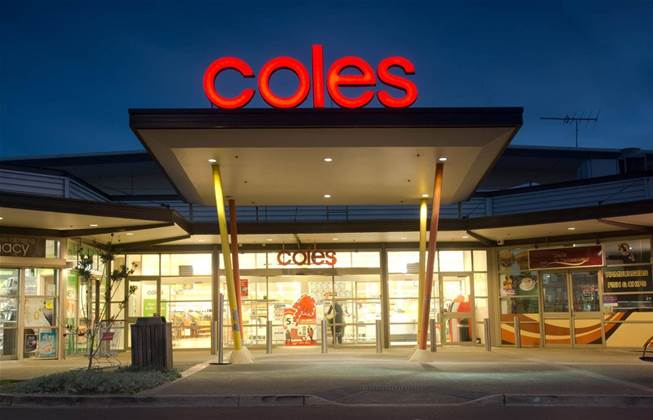
Coles Group Reveals Total Cost of Ownership for Enterprise Applications


We independently review everything we recommend. When you buy through our links, we may earn a commission which is paid directly to our Australia-based writers, editors, and support staff. Thank you for your support!

Coles Group Improves Cost Management for Enterprise Applications with In-Depth TCO Analysis

Coles Group reveals total cost of ownership for enterprise applications

Quick Overview

  • Coles Group is concentrating on assessing the total cost of ownership (TCO) for its enterprise applications.
  • The retailer utilizes Apptio’s Cloudability for managing cloud expenses, with intentions to broaden its application to other cost dimensions.
  • Coles is integrating costs related to personnel, support, infrastructure, and licensing into its TCO assessments.
  • These findings are aiding Coles in optimizing application management and evaluating the consolidation or retirement of underutilized applications.
  • IBM’s acquisition of Apptio in 2023 has further strengthened the tool’s functionality for enterprise cost management.

Reasons Coles Group is Emphasizing TCO for Enterprise Applications

Coles Group, among Australia’s leading retailers, is making substantial progress in refining its cost management approach by acquiring a deeper insight into the total cost of ownership (TCO) for its enterprise applications. This effort aims to ensure that all cost factors—such as personnel, support services, infrastructure, and licensing—are included, thus rendering a clearer financial overview for each application.

Beyond Cloud Cost Management

Since 2021, Coles has employed Apptio’s Cloudability tool for overseeing its Azure cloud expenses. Nevertheless, the company is now extending its focus beyond merely cloud costs to grasp the complete TCO of its applications. This approach involves incorporating additional costs like shared infrastructure, outsourced support, and personnel expenses.

Daniel Nicholson, Coles’ Head of Architecture, noted that while the organization had detailed analyses of its cloud expenditure, linking those expenses directly to specific applications was challenging. To remedy this, Coles is utilizing the full range of Apptio tools to improve its cost attribution abilities.

IBM’s Acquisition of Apptio

In mid-2023, IBM revealed its acquisition of Apptio, emphasizing the increasing significance of cost management solutions for businesses. Apptio’s suite of tools offers organizations visibility into their IT investments, facilitating the connection of expenses to business results. For Coles, this acquisition might lead to greater advancements in leveraging Apptio for managing its enterprise applications.

Examining the TCO Components

Previously, Coles could only approximate the TCO for its applications, mainly based on contracts and broad cost allocations. Now, the retailer has begun to incorporate more detailed costs, including:

  • Personnel Costs: Coles can now assess the standard support costs related to application management, considering the number of personnel involved.
  • Shared Platform Costs: Certain applications rely on shared database platforms or cloud services, allowing Coles to attribute these costs more effectively.
  • Outsourced Support: Expenses from external partners like Accenture and IBM are now included in the TCO calculation.

These comprehensive insights enable Coles to maintain a 12-month trailing TCO for each application, with this data stored in its enterprise architecture system, which operates on LeanIX, a platform designed to manage the complexity of an organization’s IT framework.

Effects on Business Decisions

Through a deeper understanding of the TCO associated with each application, Coles can engage in more informed discussions with its business units. For instance, if a specific application is not being fully utilized but incurs substantial costs, the company can initiate discussions about consolidating applications or even decommissioning those that have outlived their utility.

This capability is increasingly crucial in today’s competitive retail landscape, where cost efficiency is paramount to sustaining profitability. With a clearer understanding of its IT expenditures, Coles can make smarter choices regarding resource allocation and optimizing its application portfolio.

Improved IT and Finance Alignment

A primary motivator for Coles’ emphasis on TCO is the need for enhanced alignment between IT and finance departments. As per Nicholson, the company’s Chief Financial Officer (CFO) and IT Finance teams are eager to comprehend the actual costs linked to application operations. This clarity has been made possible through the detailed breakdowns offered by Apptio and LeanIX.

With these insights, Coles can more effectively illustrate how technology costs directly bolster internal capabilities and business outcomes. This alignment fosters more strategic dialogues between IT and the wider business.

Conclusion

Coles Group is advancing its enterprise cost management approaches by acquiring a more nuanced understanding of the total cost of ownership (TCO) for its applications. By utilizing Apptio and LeanIX, the retailer can now factor in personnel, support, infrastructure, and licensing expenses in its TCO analyses. This facilitates the optimization of its application portfolio, ensuring resources are allocated efficiently. With IBM’s acquisition of Apptio in 2023, Coles is set to further capitalize on cutting-edge tools to oversee and manage its IT costs.

Q&A

Q: What is TCO, and why is it significant for Coles Group?

A:

TCO stands for Total Cost of Ownership. It encompasses the entire cost associated with owning and operating an application, including not only licensing but also personnel, support, shared platforms, and infrastructure. For Coles, comprehending TCO is vital for making educated choices regarding resource distribution and possible application consolidations or retirements.

Q: How does Apptio assist Coles with TCO management?

A:

Apptio is a cost management platform that allows companies to track their IT expenditures. Coles utilizes Apptio’s Cloudability to oversee cloud usage costs and is now broadening its application of Apptio to assess the total cost of ownership for other segments of its IT framework, such as shared services and personnel expenses.

Q: How does IBM’s acquisition of Apptio influence Coles’ cost management strategy?

A:

The acquisition of Apptio by IBM in 2023 could enhance the platform’s functionality, equipping Coles with more powerful tools for managing and optimizing its IT expenditures. This acquisition may pave the way for further innovations in how Coles monitors and governs the TCO of its enterprise applications.

Q: How does understanding TCO benefit the business and IT teams at Coles?

A:

By comprehending the comprehensive costs of running each application, Coles can achieve better synergy between its IT and finance teams. This facilitates more strategic discussions about resource distribution, application consolidation, and cost-saving measures, ultimately assisting the company in optimizing its IT investments.

Q: What role does LeanIX play in Coles’ TCO management?

A:

LeanIX is an enterprise architecture management tool that aids Coles in tracking and overseeing its IT landscape. By utilizing LeanIX, the retailer can store and manage the 12-month trailing TCO for each application, providing decision-makers with a clear overview of how IT investments are supporting business functions.

Belkin SOUNDFORM Play True Wireless Earbuds Review


We independently review everything we recommend. When you buy through our links, we may earn a commission which is paid directly to our Australia-based writers, editors, and support staff. Thank you for your support!

Belkin SOUNDFORM Play True Wireless Earbuds, Wireless Earphones with 3 EQ Presets, IPX5 Sweat and Water Resistant, 38 Hours Play Time for iPhone, Galaxy, Pixel and More, Black, Small

Honor Choice Earbuds X5 Review


We independently review everything we recommend. When you buy through our links, we may earn a commission which is paid directly to our Australia-based writers, editors, and support staff. Thank you for your support!

Honor Choice Earbuds X5

“Google Pixel 5 Review”


We independently review everything we recommend. When you buy through our links, we may earn a commission which is paid directly to our Australia-based writers, editors, and support staff. Thank you for your support!

google

Panasonic B310 Wireless Noise Cancelling Bluetooth Earbuds Review


We independently review everything we recommend. When you buy through our links, we may earn a commission which is paid directly to our Australia-based writers, editors, and support staff. Thank you for your support!

Panasonic B310 in Ear Wireless Noise Cancelling Bluetooth Earbuds with Built-in Mic, Compact Design and Charging Case (RZ-B310WDE-K)

Soundcore Space A40 Adaptive ANC Wireless Earbuds Review


We independently review everything we recommend. When you buy through our links, we may earn a commission which is paid directly to our Australia-based writers, editors, and support staff. Thank you for your support!

soundcore by Anker Space A40 Adaptive Active Noise Cancelling Wireless Earbuds, Reduce Noise by Up to 98%, Ultra Long 50H Playtime, 10H Single Playtime, Hi-Res Sound, Comfortable Fit, Wireless Charge

Soundcore P30i Noise Cancelling Earbuds Review


We independently review everything we recommend. When you buy through our links, we may earn a commission which is paid directly to our Australia-based writers, editors, and support staff. Thank you for your support!

Soundcore P30i by Anker Noise Cancelling Earbuds, Strong and Smart Noise Cancelling, Powerful Bass, 45H Playtime, 2-in-1 Case and Phone Stand, IP54, Wireless Earbuds, Bluetooth 5.4 (Black)

Earbuds Review


We independently review everything we recommend. When you buy through our links, we may earn a commission which is paid directly to our Australia-based writers, editors, and support staff. Thank you for your support!

Sennheiser SPORT True Wireless

Tesla’s FSD Expanding Worldwide in 2026, Right-Hand Drive Variants Expected to Arrive Soon in Australia


We independently review everything we recommend. When you buy through our links, we may earn a commission which is paid directly to our Australia-based writers, editors, and support staff. Thank you for your support!

Tesla’s FSD Global Launch: Implications for Australia

Tesla’s Full Self-Driving (FSD) technology has captured significant attention in the automotive sector, particularly with its advancements in the United States and Canada. Now, the anticipation for its introduction into the international sphere, especially in right-hand drive (RHD) nations like Australia, appears to be coming to a close. With a proposed timeline for 2026, Tesla is getting ready to launch FSD in RHD regions, subject to regulatory approval. Here’s what Australian Tesla users and fans should be aware of.

Brief Overview

  • Tesla FSD International Launch: Tesla intends to extend FSD to global markets, including Australia, by the first quarter of 2026.
  • RHD Vehicle Models: FSD tailored for RHD cars, essential for Australian motorists, is predicted to be available by late Q1 or early Q2 of 2026.
  • Upcoming Features: Future updates will feature Actually Smart Summon, Cybertruck Autopark, and eye-tracking capabilities compatible with sunglasses.
  • Highway Enhancements: The End-to-End network for highways will unify the city-street framework for improved efficiency.
  • Approval from Authorities: The Australian FSD rollout hinges on adherence to local regulatory standards.

Introduction of Actually Smart Summon

This week, Tesla launched the “Actually Smart Summon” feature for its customer vehicles. This enhancement is part of Tesla’s ongoing commitment to advancing its autonomous driving technology. It refines the previously existing Smart Summon by providing more accurate, fluid, and human-like vehicle maneuvering when retrieving your car from a stationary position.

Sunglasses-Compatible Eye-Tracking

A notable issue for Tesla drivers using the hands-free FSD function has been the difficulty in wearing sunglasses without hindering the system’s performance. Tesla’s forthcoming update will resolve this with the implementation of eye-tracking technology that functions even when drivers are wearing sunglasses. This innovation may greatly enhance the user experience, particularly in bright areas like Australia.

End-to-End Network Integration on Highways

Another thrilling advancement for Tesla’s FSD is the development of the End-to-End network on highways. This update will amalgamate the city-street stack with the highway stack, previously functioning separately. Although FSD’s highway performance has generally been hailed positively, this integration promises additional improvements for a more fluid long-distance travel experience.

FSD for Cybertruck and New Features

Cybertruck enthusiasts have been anxiously anticipating the FSD functionalities that were initially promised with their premium vehicles. Tesla is expected to deploy FSD for Cybertruck by the end of this month, addressing the current absence of even basic Autopilot features in these models. Furthermore, new capabilities like Unpark, Park, and Reverse within FSD are planned, offering increased autonomy and adaptability in intricate driving situations, such as maneuvering through crowded parking areas or performing three-point turns.

Global Expansion and Regulatory Challenges

Tesla’s ambitions for worldwide proliferation are evident, with plans for FSD launches in Europe and China by Q1 2026, contingent on regulatory consent. Australia, along with other RHD markets, is included in this vision, with a target launch window of late Q1 to early Q2 of 2026. Gaining regulatory approval will be vital in these territories, as Tesla is expected to submit comprehensive evidence demonstrating that its FSD software provides a safer driving alternative to human drivers.

Elon Musk has suggested that more information will emerge at Tesla’s upcoming event on October 10th, which will center on their new Robotaxi initiative—potentially providing deeper insights into the FSD rollout strategy.

Expansion for Right-Hand Drive Vehicles

For Tesla owners in Australia, the most thrilling update is the forthcoming arrival of FSD in RHD markets. The prolonged wait since the initial launch of FSD Beta in late 2020 may soon be concluding. Tesla is aiming for a late Q1 or early Q2 2026 introduction, with the final barrier being regulatory approval. Although this timeline may appear far off, with less than a year remaining, it feels increasingly within reach.

Many Australian Tesla owners, who have invested in the FSD package, are eager to become early adopters and assist in refining the software. As the countdown occurs, excitement is building.

Tesla's FSD Expansion to Global Markets in 2026, RHD Models Set for Early Launch in Australia

Conclusion

Tesla’s Full Self-Driving software is poised for international growth, with Australian markets anticipating RHD-compatible FSD by late Q1 or early Q2 of 2026. The software will introduce a range of new features, including Actually Smart Summon, eye-tracking with sunglasses, and an End-to-End highway network. The deployment relies on receiving regulatory approval, and more details are anticipated during Tesla’s October 10th announcement.

Q: When is Tesla’s FSD expected to launch in Australia?

A:

Tesla’s FSD is projected to be ready in Australia by late Q1 or early Q2 of 2026, subject to regulatory consent.

Q: What new features should Australian Tesla owners look forward to with FSD?

A:

Anticipated features include Actually Smart Summon, eye-tracking technology for sunglasses, the End-to-End highway network, and advanced functionalities for Cybertruck’s FSD.

Q: Why is eye-tracking with sunglasses important?

A:

Integrating eye-tracking with sunglasses will enable drivers to utilize hands-free FSD more efficiently in bright environments where sunglasses are often necessary.

Q: What impact will the End-to-End network have on FSD capabilities?

A:

The End-to-End network will merge the city-street and highway systems, potentially enhancing FSD’s efficiency for long-haul travel.

Q: What obstacles does Tesla encounter in the global deployment of FSD?

A:

Tesla’s worldwide rollout of FSD hinges on fulfilling various regulatory standards across different nations. The company will need to supply comprehensive evidence to validate the software’s safety compared to human drivers.

Q: How can Australian Tesla owners participate as early testers?

A:

While precise details remain unavailable, early testers are generally chosen based on software purchase records and location. Interested Australian owners should remain alert for official announcements from Tesla for the latest opportunities.