Matthew Miller, Author at Techbest - Top Tech Reviews In Australia - Page 145 of 187

No Nuclear Power for Australia: Government Excludes It


We independently review everything we recommend. When you buy through our links, we may earn a commission which is paid directly to our Australia-based writers, editors, and support staff. Thank you for your support!

Quick Read: Main Points

  • The Australian Labor Party has clinched re-election in the 2026 federal election, dismissing the Coalition’s nuclear energy initiative.
  • Peter Dutton’s scheme to construct seven nuclear reactors by 2050 failed to garner public or political backing.
  • Financial, environmental, and legal challenges were significant obstacles for the nuclear initiative.
  • Labor’s renewable energy plan, concentrating on solar, wind, and energy storage, continues to influence Australia’s energy landscape.
  • Australia will uphold its federal and state prohibitions on nuclear energy for the foreseeable future.
  • The Albanese government remains dedicated to achieving 82% renewable energy in the grid by 2030 and net-zero emissions by 2050.
Australia rules out nuclear energy after 2026 election results

Labor Secures Authority Amid Energy Policy Clash

The 2026 federal election yielded a definitive result: Prime Minister Anthony Albanese and the Labor Party will remain in power. Central to the campaign was a clear divergence in energy philosophies — one anchored in renewables, the other in nuclear energy.

Labor’s agenda, focused on relief from rising living costs and expanding clean energy, resonated with Australians concerned about expensive and unreliable energy alternatives. Conversely, Opposition Leader Peter Dutton’s nuclear vision failed to persuade a doubtful voter base, confirming nuclear energy as a non-viable option in Australia’s near-term landscape.

The Coalition’s Nuclear Proposal: Too Pricey, Too Late

Dutton’s Vision

Dutton’s initiative sought to rejuvenate Australia’s energy framework by building seven nuclear power facilities across five states. The project included small modular reactors (SMRs) by 2035 and larger plants by 2037, aiming for a cumulative capacity of 14 gigawatts by 2050. The policy promised savings and energy reliability, particularly as coal facilities go offline.

Projected Costs vs. Reality

While the Coalition projected a $331 billion expenditure for the nuclear development — considerably lower than Labor’s $594 billion renewable strategy — critics quickly dismissed the assertion. Independent analysis from CSIRO and AEMO estimated nuclear energy costs ranging from $145 to $238 per megawatt-hour, compared to significantly lower rates for solar and wind.

In contrast, the Coalition’s own projections optimistically claimed costs of $30 per megawatt-hour — a figure many energy economists regarded as unrealistic considering global trends in nuclear expenses.

Legal and Political Challenges

Australia’s federal prohibition on nuclear energy, established in 1998, would necessitate bipartisan consensus to amend — a nearly impossible task given the opposition from Labor, the Greens, and several critical independents. State-level prohibitions persist in Queensland, Victoria, and other regions, complicating any nuclear expansion.

Even leaders within the Liberal Party, like Queensland Premier David Crisafulli and Victoria’s Brad Battin, expressed their disapproval of nuclear power — underscoring its political unpopularity even among Coalition members.

Why the Nuclear Initiative Failed to Captivate Voters

Limited Public Backing

Despite international discussions regarding nuclear energy’s contribution to decarbonisation, Australian public sentiment remains predominantly negative. Polls during the campaign indicated only 35% of Australians supported nuclear energy, a figure that declined further when voters were informed of Dutton’s specific policy details.

Environmental Issues

Dutton’s intention to prolong the operational lives of coal plants while waiting for nuclear reactors to become operational posed significant climate risks. The Climate Change Authority projected that the strategy could result in up to 2 billion tonnes of CO₂ emissions by 2050 — undermining Australia’s net-zero commitment and broader climate obligations.

Campaign Miscalculations

Dutton’s choice to refrain from campaigning in electorates earmarked for nuclear facilities allowed Labor to dominate the narrative. Energy Minister Chris Bowen labeled nuclear the “Voldemort policy” — a term for the policy that cannot be mentioned — capitalizing on its unpopularity. Labor’s portrayal of nuclear as a threat to Medicare and educational financing proved politically effective.

Labor’s Renewable Vision Gains Traction

Advancements Since 2022

The Albanese administration reports that the share of renewables in the national grid has surged by 25% since 2022. In 2026 alone, over 330,000 rooftop solar systems were installed. These milestones served as proof of the viability and scalability of renewable energy options.

Infrastructure and Financial Commitments

Labor’s Clean Energy Future strategy entails substantial investments in wind, solar, battery storage, and pumped hydro projects. Offshore wind initiatives covering 30,000 km² are already in progress. These projects are backed by the CSIRO and AEMO, both of whom champion a renewables-led shift as the most economical pathway forward.

With coal plants set for closure by 2035, the government must ensure sufficient energy storage and transmission networks to uphold grid reliability and affordability for households.

Conclusion

The Australian voters have sent a clear signal: nuclear energy will not be part of the country’s impending future. Labor’s strong emphasis on renewables, financial relief, and climate pledges secured the support of voters cautious of the dangers and expenses associated with nuclear power. For now, Australia will pursue its energy future through solar, wind, and storage solutions—keeping nuclear energy firmly off the table.

Q: What factors contributed to Labor’s victory in the 2026 election?

A:

Labor prevailed thanks to its emphasis on financial relief, investment in renewable energy, and robust leadership from Anthony Albanese. The party effectively positioned itself as the stable and forward-thinking option, while the Coalition’s nuclear energy plan was perceived as risky and costly.

Q: What did the Coalition propose regarding nuclear energy?

A:

The Coalition suggested constructing seven nuclear reactors at the locations of decommissioned coal facilities, aiming for 14 gigawatts of capacity by 2050. This included small modular reactors by 2035 and larger facilities by 2037, at a projected cost of $331 billion.

Q: What led to the failure of the nuclear initiative?

A:

The proposal collapsed due to legal obstacles, high expenses, insufficient public endorsement, environmental risks, and errors in campaigning. Polls indicated limited voter support, with numerous state leaders, including some from the Liberal Party, expressing opposition to the idea.

Q: Is nuclear energy prohibited in Australia?

A:

Yes, nuclear energy is banned at the federal level under regulations established in the 1990s. Most states also enforce their own prohibitions. Overturning these laws would demand widespread political support, which is currently absent.

Q: What are Labor’s energy objectives?

A:

Labor seeks to achieve 82% renewable energy in the grid by 2030 and aim for net-zero emissions by 2050. The strategy encompasses investments in solar, wind, hydro, battery storage, and grid infrastructure to replace retiring coal facilities.

Q: How did the public react to nuclear energy in surveys?

A:

Only about 35% of Australians were in favor of nuclear energy. Support diminished further as voters educated themselves about the Coalition’s plan, particularly concerning costs and timelines.

Q: What economic concerns surround nuclear energy?

A:

Independent analyses have indicated that nuclear energy is considerably more expensive than renewables. Projects in other nations have faced delays and budget overruns, prompting worries about viability and financial risk for taxpayers.

Q: What are the next steps for Australia’s energy industry?

A:

Australia will persist in its transition toward a renewable energy framework. The focus will continue on expanding wind and solar capacities, enhancing storage solutions, and updating transmission networks to ensure reliability and sustainability.

Microsoft Anticipates Strong Expansion for Azure Cloud Services


We independently review everything we recommend. When you buy through our links, we may earn a commission which is paid directly to our Australia-based writers, editors, and support staff. Thank you for your support!

Quick Overview

  • Microsoft’s Azure cloud revenue jumped by 33% in Q3, surpassing analyst forecasts.
  • AI accounted for 16 percentage points of Azure’s growth, an increase from 13% in the previous quarter.
  • Projected Azure revenue for Q4 is anticipated to be between US$28.75B and US$29.05B, indicating a growth of 34–35%.
  • Strong performance is primarily attributed to non-AI cloud services, according to Microsoft CFO Amy Hood.
  • Azure secured a significant commercial partnership with OpenAI, leading to an 18% rise in bookings.
  • Microsoft’s capital expenditure soared by 53% to US$21.4B in Q3, reflecting a shift in focus towards chip investments.
  • Microsoft’s stock price soared, adding over US$200B (A$313B) to its market capitalization.
  • Azure’s expansion counters market concerns regarding AI saturation and US trade tariffs.

Azure Exceeds Expectations, Eases Market Concerns

Azure cloud services display strong growth potential

Microsoft’s recent quarterly results have communicated a definitive signal to investors: Azure continues to thrive. The tech behemoth’s cloud sector witnessed a revenue increase of a notable 33% for the quarter concluding on 31 March, exceeding analyst anticipations of 29.7%. This performance occurs amid widespread market unpredictability, ranging from AI investment slowdowns to the repercussions of US tariffs on global technology expenditures.

AI Demand Robust — Yet Not the Sole Growth Catalyst

Artificial Intelligence remains a significant factor in Azure’s growth, contributing 16 percentage points to the 33% increase. This marks an increase from 13 points in the previous quarter, underscoring heightened enterprise adoption of AI technologies. However, Microsoft CFO Amy Hood was prompt to indicate that Azure’s remarkable quarter was chiefly propelled by its non-AI offerings. She remarked that the true advantage stemmed from early supply deliveries to clients, rather than solely from AI capability advancements.

AI services indeed form a part of the overall equation. Microsoft’s longstanding collaboration with OpenAI, the creator of ChatGPT, has led to a new Azure agreement that significantly boosted commercial bookings by 18%. Although Microsoft refrained from disclosing the contract’s financial impact, the agreement emphasizes Azure’s crucial role in facilitating cutting-edge AI developments.

Market Doubts Alleviated After Data Centre Issues

Prior to the earnings announcement, a number of analysts flagged concerns regarding Microsoft’s cancellation of specific data centre leases — which many interpreted as an indication of overcapacity or diminished demand. Nevertheless, CEO Satya Nadella clarified that Microsoft frequently modifies its infrastructure strategies, and the recent scrutiny of these decisions may have been exaggerated.

“The forecasts were skeptical initially, allowing them the room to exceed expectations significantly,” noted Dan Morgan, a senior portfolio manager at Synovus Trust. The unexpectedly robust figures contributed to a surge in Microsoft’s stock, enhancing its market capitalization by over US$200 billion (A$313 billion).

Revenue, Profit and Shifts in Capital Strategy

Microsoft reported a quarterly revenue of US$70.1 billion, showing a year-over-year increase of 13%. Earnings per share stood at US$3.46, surpassing expectations of US$3.22. The Intelligent Cloud division — inclusive of Azure — generated US$26.8 billion of the overall revenue.

Capital expenditure soared by 53% to US$21.4 billion, but Microsoft is realigning its investment strategy. The firm is transitioning from long-lasting assets such as data centre facilities to shorter-lived assets like CPUs and GPUs. These investments in chips enable Microsoft to expedite service deployment and recognize revenue more rapidly. This approach resonates with statements from Microsoft’s VP of investor relations, Jonathan Neilson, who highlighted the significance of chip deployment in revenue generation.

Impacts on the Global and Australian Tech Landscape

Microsoft’s aggressive move into AI infrastructure carries broader ramifications. A slowdown in AI investments by major tech companies could have cascading effects on the global tech supply chain, affecting chip manufacturers such as Nvidia, AMD, and Intel. JP Morgan economists project that data centre expenditures could contribute between 10 and 20 basis points to US GDP growth in 2026–2026.

For Australian tech startups and IT leaders, Microsoft’s optimistic outlook indicates that cloud services — especially hybrid models and AI workloads — will retain strategic importance. The ongoing expansion of Azure in Australia also highlights the necessity of cloud readiness, data sovereignty, and AI integration for staying competitive.

Conclusion

In spite of market concerns regarding AI saturation, data centre lease cancellations, and trade policy influences, Microsoft has posted a stellar quarter. Azure cloud services increased by 33%, exceeding expectations owing to both AI and conventional cloud solutions. The company’s future forecast remains robust, anticipating growth of 34–35% in Q4. Strategic pivots towards chip investments and the rapid deployment of AI infrastructure position Microsoft to sustain its leadership in cloud computing well into 2026 and beyond.

Q: What factors fueled Azure’s growth this quarter?

A:

Although AI contributed 16 percentage points, the bulk of Azure’s expansion stemmed from its traditional cloud services. Timely customer deliveries and robust commercial bookings, including a notable agreement with OpenAI, were also critical contributors.

Q: How did investors respond to Azure’s performance?

A:

Investor confidence surged in the wake of the results, with Microsoft’s market valuation increasing by over US$200 billion (A$313 billion). The strong performance eased concerns regarding cloud demand and economic challenges.

Q: What is the significance of Microsoft’s capital expenditure transition?

A:

Microsoft is shifting its investment strategy from long-term infrastructure like buildings to shorter-lived assets such as AI chips. This approach facilitates quicker revenue recognition and addresses rising demand for AI services.

Q: How does Microsoft’s growth outlook compare to its competitors?

A:

Microsoft’s Azure has surpassed many expectations, aligning with strong cloud performance from Google. This positions it competitively against Amazon Web Services (AWS), particularly in AI-integrated cloud solutions.

Q: What implications does this have for the Australian tech sector?

A:

Azure’s ongoing growth indicates persistent investment opportunities for Australian businesses. It reinforces the need for cloud adaptation, AI workflow integration, and alliances with international cloud providers to sustain technological competitiveness.

Q: Is Microsoft concerned about AI capacity limitations?

A:

Yes, Microsoft has recognized constraints regarding AI infrastructure capacity. This awareness has prompted significant capital investments in chips and scalable AI-ready data centre frameworks.

Q: Could US tariffs impact Microsoft’s cloud operations?

A:

While trade tariffs remain a consideration, Microsoft’s results indicate that enterprise cloud spending has yet to be impacted. Robust advertising metrics from firms like Meta further suggest stable business investment patterns.

Noise Buds N1 in-Ear Truly Wireless Earbuds Review


We independently review everything we recommend. When you buy through our links, we may earn a commission which is paid directly to our Australia-based writers, editors, and support staff. Thank you for your support!

Noise Buds N1 in-Ear Truly Wireless Earbuds with Chrome Finish, 40H of Playtime, Quad Mic with ENC, Ultra Low Latency(up to 40 ms), Instacharge(10 min=120 min), BT v5.3(Carbon Black)

CMF by Nothing Buds 2 Wireless Earbuds Review


We independently review everything we recommend. When you buy through our links, we may earn a commission which is paid directly to our Australia-based writers, editors, and support staff. Thank you for your support!

CMF by Nothing Buds 2 Wireless Earbuds, 48dB Hybrid ANC, Dirac Opteo Hi-Fi Sound, Ultra Bass 2.0, 6 HD Mics with Clear Voice 3.0, IP55 Waterproof, Bluetooth Earphones with Dual Connection, Orange

Virgin Australia Utilizes Kafka to Enhance Customer Experience


We independently review everything we recommend. When you buy through our links, we may earn a commission which is paid directly to our Australia-based writers, editors, and support staff. Thank you for your support!

Virgin Australia Upgrades Passenger Experience with Confluent Kafka

Quick Read

  • Virgin Australia integrates Confluent Kafka to supersede legacy batch-processing mechanisms.
  • Kafka empowers real-time data for monitoring flights, baggage, and rebooking processes.
  • Flight State Engine (FSE) oversees live updates from numerous data sources.
  • “Journey Tracker” and baggage updates now send real-time alerts through the app.
  • Automated Passenger Recovery (APR) swiftly rebooks passengers on canceled flights.
  • Kafka accelerates the creation of passenger manifests, minimizing flight prep duration.
  • Virgin aims for enhanced operational responsiveness and customer satisfaction with live insights.
Virgin Australia utilizes Kafka for real-time passenger services

Revamping the Aviation Experience with Instantaneous Data

Virgin Australia has undertaken a major step in digital innovation by implementing Confluent Kafka to enable real-time data processing throughout its operations. The airline is enhancing customer-oriented services like live flight notifications, baggage tracking, and automated passenger recovery by transitioning from outdated batch processing systems to Kafka’s event streaming technology.

Flight State Engine: Central to Live Flight Updates

At the center of this evolution is the Flight State Engine (FSE), a real-time data conduit that acts as the definitive source for flight status. By aggregating data from multiple internal and third-party sources, FSE processes and organizes information in real-time — essential due to intermittent connectivity at certain regional airports across Australia. This system guarantees precise and timely flight updates for passengers as well as operational personnel.

Transitioning from Outdated Systems

The FSE was originally developed on Oracle’s now-defunct SOA platform and has been migrated to Kafka technology. This transition enhances reliability and scalability while aligning with Virgin’s initiative towards cloud-native frameworks.

Instantaneous Journey and Baggage Updates

New functionalities in the Virgin Australia mobile application, including the “Journey Tracker” and baggage tracking, now leverage event streams. The Journey Tracker provides passengers with immediate updates on gate alterations, delays, and other pertinent flight details. Simultaneously, real-time baggage tracking informs users when their luggage is loaded onto the plane and when it’s ready for collection at the carousel — with notifications precisely timed to alert users when to approach the baggage area.

Automated Passenger Rebooking in Disruptive Scenarios

Flight cancellations are no longer synonymous with lengthy lines or customer service delays. Virgin Australia has introduced an Automated Passenger Recovery (APR) solution, which utilizes Kafka to identify disruptions and automatically rebook impacted passengers. Notifications are sent through the app, allowing passengers to accept new bookings or consider alternatives — all in real-time.

Boosting Efficiency: Quicker Manifests and Flight Readiness

Kafka is also streamlining backend operations such as the generation of passenger manifests. Virgin reports that this process now operates up to 40 seconds faster, which aids in reducing turnaround times and expedites flight departures. In aviation, every second matters, and this enhancement contributes to improved punctuality and customer satisfaction.

Cloud-Native Design and Integration of Analytics

Kafka’s cloud-native functionality is empowering Virgin Australia to accommodate emerging use cases like real-time analytics. The analytics team is beginning to utilize Kafka to access transactional data that was previously confined to various systems, unlocking new possibilities for data-informed decision-making.

Conclusion

Virgin Australia’s adoption of Confluent Kafka exemplifies how cutting-edge data streaming technologies are transforming the airline sector. From real-time updates and baggage tracking to automated flight rebooking, Kafka is assisting Virgin in providing an enriched, real-time customer experience while enhancing operational flexibility. As the airline continues to develop its digital ecosystem, Kafka is set to play an increasingly vital role in data-driven innovation.

Q: What is Confluent Kafka and what role does it play for Virgin Australia?

A:

Confluent Kafka is a distributed event streaming platform that facilitates real-time data processing. Virgin Australia employs it to supersede outdated batch processing infrastructures, allowing for live updates and quicker operational responses.

Q: What exactly is the Flight State Engine (FSE)?

A:

The FSE is a Kafka-driven data pipeline that consolidates, purifies, and organizes flight data from multiple sources. It delivers an authoritative perspective on flight status for both passengers and personnel.

Q: How does the Virgin Australia app leverage Kafka?

A:

The application incorporates real-time features like Journey Tracker and baggage tracking. These services provide immediate updates to passengers regarding gate adjustments, delays, and baggage conditions utilizing Kafka event streams.

Q: What is the Automated Passenger Recovery (APR) system?

A:

APR is a Kafka-driven system that identifies flight cancellations and automatically rebooks impacted travelers. Passengers receive alerts and can either accept the new itinerary or modify the options through the app.

Q: How does Kafka enhance flight operations?

A:

Kafka decreases the time required to produce passenger manifests and optimizes the flow of data between systems. This results in expedited flight preparation and better on-time performance.

Q: Is this system adaptable for future expansions?

A:

Absolutely, Kafka supports cloud-native structures and real-time analytics, enabling Virgin Australia to expand its digital offerings and merge additional use cases such as predictive insights.

Q: How does this benefit passengers in isolated or remote regions?

A:

Kafka is capable of processing data from systems with unreliable internet connections, such as those in remote airports, ensuring that passengers continue to receive accurate and timely updates regardless of their location.

Q: Will additional airlines likely follow this path?

A:

Considering the evident advantages in improving passenger experiences and operational efficiency, it is probable that other airlines will implement similar real-time data streaming technologies soon.

AI-Enhanced X4 ROVR Cleaning Robot Makes Its Way into Australian Supermarkets


We independently review everything we recommend. When you buy through our links, we may earn a commission which is paid directly to our Australia-based writers, editors, and support staff. Thank you for your support!

Quick Read: Essential Insights

  • The X4 ROVR, an autonomous cleaning robot powered by AI, is set to appear in Australian supermarkets starting May.
  • Created by Tennant Australia, the robot employs 3D LiDAR and smart navigation to clean safely around customers.
  • Already operational globally in stores like Walmart and TK Maxx, it is now expanding to Coles, Woolworths, and other major retail chains in Australia.
  • Eco-friendly and efficient – it can clean up to 1,860 square metres per tank, backed by a 2.5-hour runtime on lithium-ion batteries.
  • Allows staff to concentrate more on customer service while upholding high hygiene standards.

AI Cleaning Robots Arrive in Australian Supermarkets

With the introduction of the X4 ROVR, an AI-driven autonomous floor scrubber from Tennant Australia, Australian supermarkets are enhancing their hygiene protocols. Starting in May, shoppers will notice these robots smoothly moving through aisles at major grocery chains such as Woolworths and Coles, ensuring clean floors without disrupting the shopping experience.

Having already been integrated into international retail giants like Walmart and TK Maxx, the X4 ROVR is set to redefine cleanliness and operational efficiency in bustling commercial spaces.

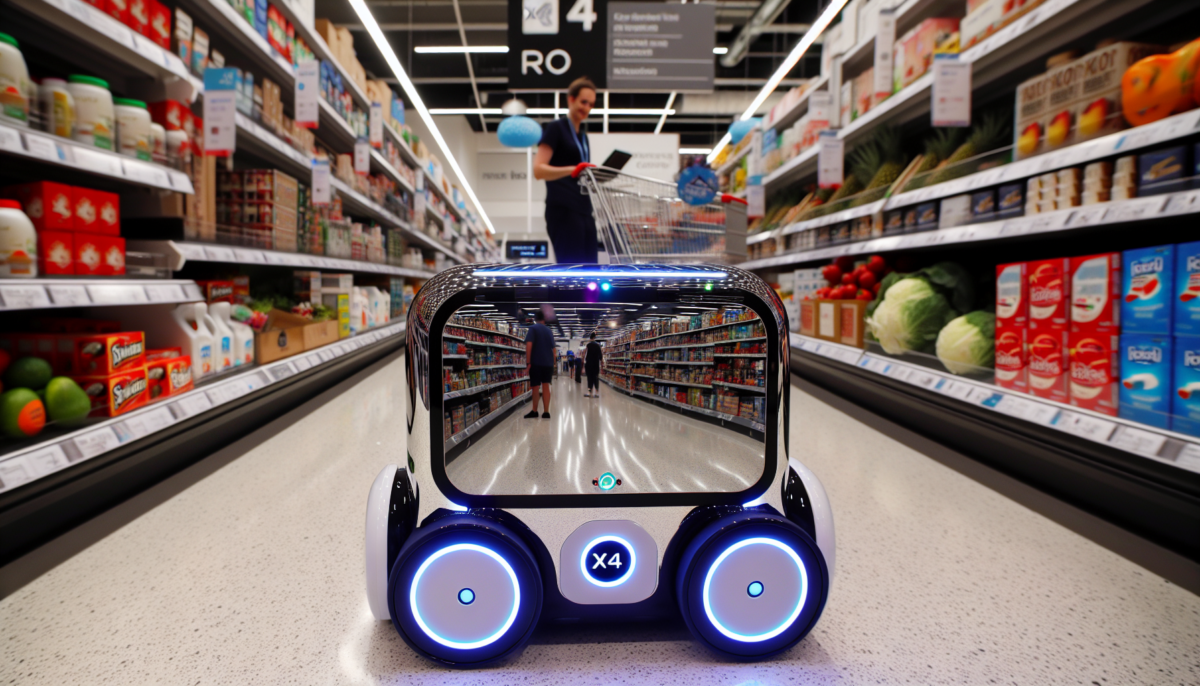
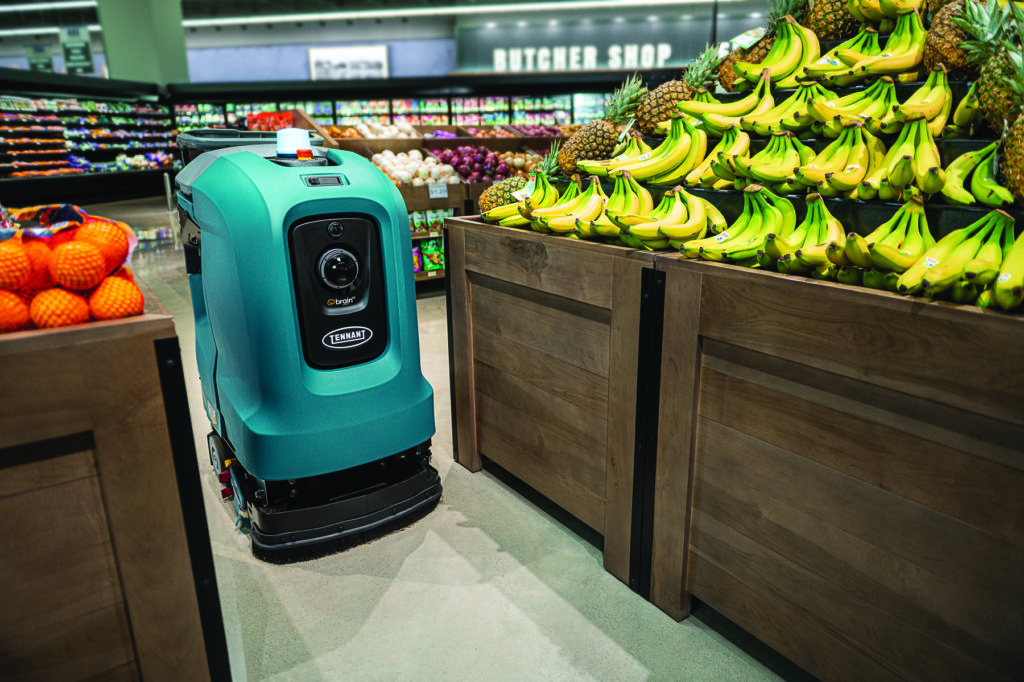
Autonomous X4 ROVR AI Cleaning Robot Navigating Supermarket Aisles

Functionality of the X4 ROVR

Comprehensive Vision Using Sophisticated LiDAR

Fitted with a blend of 3D LiDAR and dual lower LiDAR sensors, the X4 ROVR boasts a complete 360-degree awareness of its environment. This technology enables it to detect obstacles, shoppers, and shelving while navigating through intricate supermarket layouts.

Seamless Navigation and Collision Avoidance

Its compact form and flexible movement enable the robot to maneuver through narrow aisles and tight turns. It autonomously recalibrates its route to prevent collisions, ensuring safe operation even during peak shopping hours.

Clever and Reliable Cleaning

The X4 ROVR employs AI-driven algorithms to map its path and make sure no area is overlooked. It determines the most effective cleaning trajectory based on store layout and customer flow, ensuring consistent cleanliness every time.

Impactful Efficiency

Robust Cleaning Functions

Thanks to its dual disk scrub path and high-efficiency vacuum mechanism, the robot effectively eliminates spills, dirt, and debris. Its performance surpasses that of conventional cleaning practices, particularly in high-traffic areas like entrances and produce sections.

Versatility for Diverse Floor Types

Whether dealing with polished concrete, tiles, or sealed wood, the X4 ROVR adjusts its pressure and cleaning mode for optimal results on different surfaces without causing any damage.

Enhanced Productivity and Battery Duration

With a single tank of cleaning solution, the robot can clean up to 1,860 square metres, approximately the size of a typical Coles or Woolworths store. Its lithium-ion battery has a life of up to 2.5 hours on a complete charge, minimizing downtime and boosting operational efficiency.

Aiding Supermarket Staff

Markus Haefeli, Vice President APAC at Tennant, points out that the robot is meant to assist, not replace, human workers. “This shift in the shopping landscape allows for quick management of spills while prioritizing hygiene. As the robot tackles floor cleaning and reaches challenging areas, it empowers employees to enhance the customer experience,” he stated.

In simple terms, envision fewer floor spills requiring barriers and more attentive staff ready to assist you with locating items or navigating checkout lines.

International Experience Meets Local Demand

The X4 ROVR’s debut in Australia underscores a growing movement towards automation in the retail industry, having already showcased its benefits in worldwide retail settings. The COVID-19 pandemic has heightened the need for contactless technologies and superior hygiene, and Australian shoppers are likely to welcome these advancements.

This initiative also brings Australian supermarkets in line with global leaders in retail innovation, giving local shoppers access to the same advanced technology as consumers in the US and Europe.

Conclusion

The introduction of the X4 ROVR in Australian supermarkets marks a significant advancement in AI-enhanced automation within retail. With its sophisticated navigation, exceptional cleaning capabilities, and intelligent design, the robot guarantees cleaner, safer, and more efficient shopping environments. As it handles scrubbing tasks, human staff can direct their attention to delivering superior service – a benefit for both retailers and customers. Shoppers can look forward to this futuristic assistant in supermarket aisles come May.

Q: What is the X4 ROVR and what are its functions?

A:

The X4 ROVR is an autonomous cleaning robot powered by AI, developed by Tennant Australia, designed for effective supermarket floor cleaning using advanced sensors, navigation technologies, and a robust scrub-and-vacuum system.

Q: Which supermarkets will be utilizing the X4 ROVR?

A:

While specific locations have not yet been disclosed, the X4 ROVR is anticipated to launch in key Australian supermarket chains, including Coles and Woolworths, starting in May 2026.

Q: Is it safe for use around customers?

A:

Absolutely. The X4 ROVR employs 3D LiDAR and obstacle detection technology to navigate safely around shoppers, shelves, and carts. It is designed to operate during store hours without hindering customers.

Q: How long can it clean before needing to recharge?

A:

Its lithium-ion battery supports up to 2.5 hours of uninterrupted cleaning on a full charge and can clean as much as 1,860 square metres per tank.

Q: Will this robot eliminate cleaning staff jobs?

A:

No. The X4 ROVR is meant to enhance the capabilities of current staff by taking care of repetitive floor cleaning tasks, giving employees more time to focus on customer service and other duties.

Q: Which types of flooring can it handle?

A:

The robot is designed to adapt to various hard flooring surfaces, including concrete, tiles, and sealed wood, making it appropriate for all supermarket areas.

Q: How can businesses or retailers obtain more information?

A:

Retailers keen to learn about the X4 ROVR can visit tennantco.com for comprehensive specifications, case studies, and contact details.

Meta.AI Now Joins ChatGPT, Gemini, Copilot, and Others in the Expanding AI Collection on Your Phone


We independently review everything we recommend. When you buy through our links, we may earn a commission which is paid directly to our Australia-based writers, editors, and support staff. Thank you for your support!

Meta AI joins ChatGPT, Gemini, and Copilot on mobile as new AI contender

Brief Overview

  • Meta introduces a dedicated Meta AI application driven by its state-of-the-art Llama 4 model.
  • The app prioritizes voice-first interactions for more organic dialogues.
  • Unique features currently being trialed in Australia encompass full-duplex voice and document management.
  • Integrated functions include web searches, image creation/editing, and a community-led Discover feed.
  • Serves as a substitute for the Meta View app for Ray-Ban Meta smart glasses, ensuring smooth integration.
  • The web version of Meta AI has been refreshed to align with mobile app capabilities.
  • The app is freely available for download, featuring a hands-free ‘Ready to talk’ voice activation feature.

Meta AI App Launches on Mobile: A New Era in AI Assistants

Meta has officially engaged in the competitive landscape of mobile AI assistants by releasing its standalone Meta AI app, aiming to compete with ChatGPT, Google Gemini, Microsoft Copilot, among others. Utilizing the innovative Llama 4 large language model, the app transitions Meta’s AI from social media to a specialized, voice-oriented experience. Australians are among the initial users globally to enjoy its comprehensive features, including unique tools that are not yet accessible elsewhere.

Voice-Centric Design with Llama 4

The Importance of Voice

The Meta AI app is fundamentally centered around voice interactions, striving to replicate the natural rhythm of human dialogue. Powered by the Llama 4 model, the assistant provides contextually relevant, insightful responses that resemble conversing with an actual person rather than entering commands into a chatbot. Meta asserts that the model has undergone notable enhancements in conversational memory, comprehension, and tonal adjustment.

Experience Full-Duplex Voice: A Future Preview

Australia is among the first nations to pilot Meta’s full-duplex voice demonstration. This feature allows the AI to engage in simultaneous dialogue with users, creating a natural, fluid exchange—much like real conversations—as opposed to the turn-taking format commonly employed by most AI assistants at present. Though still experimental and lacking real-time web connectivity, it represents a significant advancement toward genuine interactions.

Essential Features of the Meta AI App

Integration of Web Search

Meta AI has the capability to conduct real-time web searches during discussions, delivering current answers, suggestions, and brief overviews. This distinguishes it from many competitors that depend solely on pre-existing data.

Discover Feed: Collaborative Creativity

Users can navigate the Discover feed to see how others are utilizing Meta AI. This includes trending prompts, innovative concepts, and editable content that make interactions both effective and enjoyable.

Image Creation and Editing

Meta AI facilitates the generation and modification of images via text or voice commands, all within the chat interface. This encompasses stylized art, lifelike images, and real-time edits—perfect for both content creators and casual users.

Document Management: Upcoming PDF Functions

Australians are once again among the first to experiment with Meta’s document creation and analysis features. Users have the ability to craft text/image documents, export them as PDFs, and even import files for summaries or insights, all in the AI ecosystem.

Integration with Smart Glasses: A New Era for Wearables

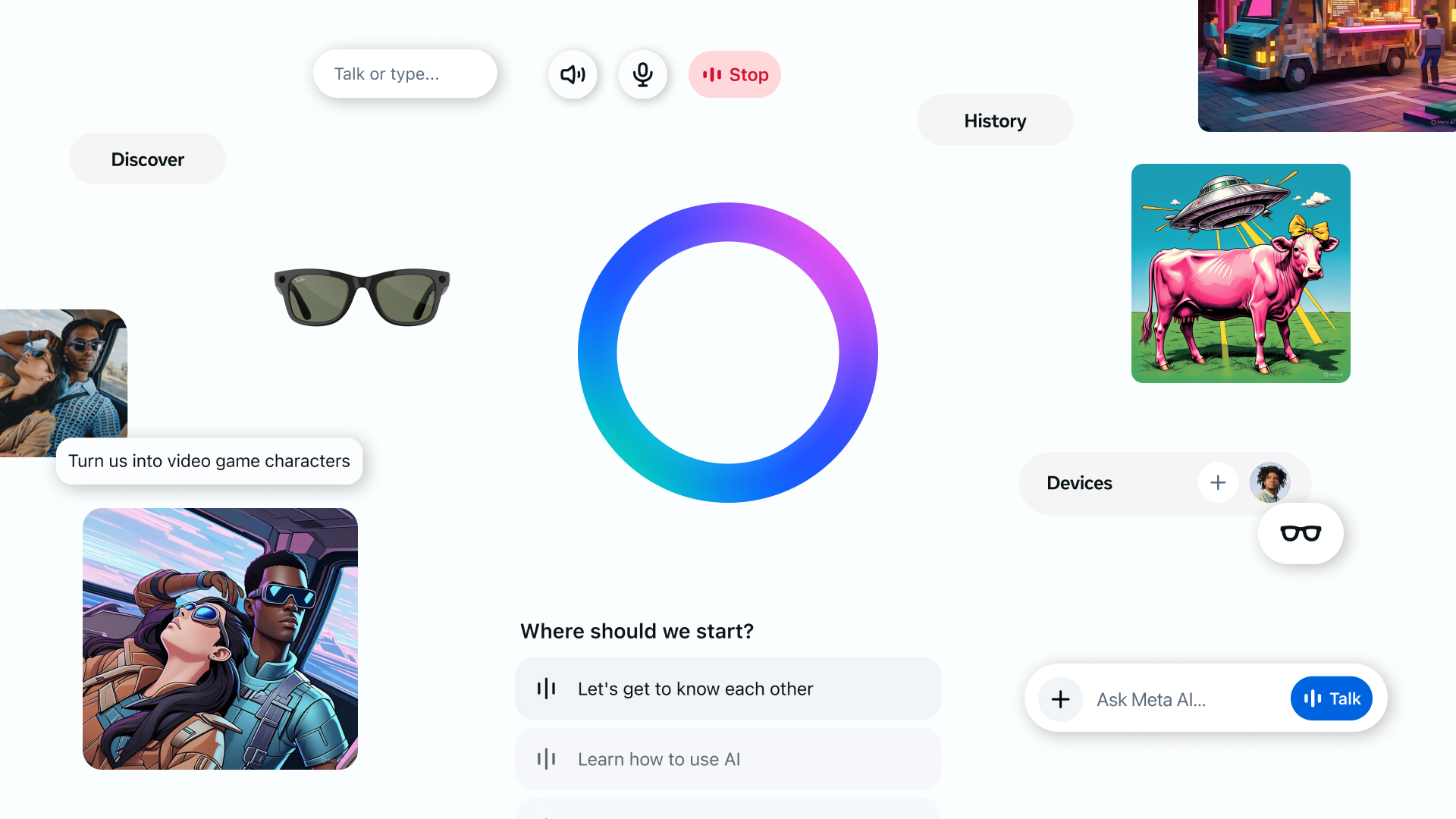
Users of Ray-Ban Meta smart glasses will discover that the Meta AI app replaces the older Meta View app. Settings, connected devices, and retained media will transition to a new ‘Devices’ tab. This integration enhances user experience—enabling conversations to commence on their glasses and continue later on their phone or online.

Enhancements to the Web Interface

The Meta AI web application (meta.ai) is now synchronized with the mobile interface. It features the same voice interaction abilities, Discover feed, and enhanced image creation tools. Document generation and analysis—presently being trialed in Australia—are also available through the web platform.

Convenience Without Hands

The app includes a customizable ‘Ready to talk’ feature for hands-free voice activation. This is ideal for users multitasking or utilizing wearable technology. The app can be downloaded for free and is available now in app stores.

Australia Leads the Charge in Meta’s AI Deployment

Australia has been selected as a key testing ground for Meta’s most advanced functionalities, such as full-duplex voice and document management. This early access highlights Meta’s commitment to the Australian audience and its intent to gather real-world insights for global refinement.

Meta’s Vision for an AI-Infused Ecosystem

With this application, Meta endeavors to integrate AI throughout its ecosystem—from mobile and web platforms to wearable technology. The aim is to create a unified experience where users can engage with Meta AI seamlessly across all devices and interfaces, preserving context at all times.

Conclusion

Meta’s innovative AI app represents a significant advancement in the ongoing race for AI assistants. Emphasizing voice interaction, real-time search capabilities, image editing, and document management, it aspires to serve as a comprehensive tool for productivity and creativity. With Australia steering the trial phase for crucial features, local users are positioned at the forefront of the next advancement in digital assistance. The integration with Ray-Ban Meta smart glasses and an advanced web interface positions Meta AI as a genuinely cross-platform solution.

Q: What distinguishes the Meta AI app from other AI assistants?

A:

The Meta AI app is an independent application utilizing the Llama 4 model to provide sophisticated voice-first AI interactions. It sets itself apart by emphasizing real-time vocal conversations, web search integration, image editing, and pioneering features like document management and full-duplex voice available in Australia.

Q: What does full-duplex voice entail, and why is it crucial?

A:

Full-duplex voice enables the AI to listen and talk simultaneously, emulating authentic human dialogue. This enhances the natural and fluidity of interactions compared to traditional sequential responses.

Q: Will the Meta AI app work with my Ray-Ban Meta smart glasses?

A:

Certainly, Meta AI replaces the Meta View app, providing direct integration with Ray-Ban Meta smart glasses. Users can initiate conversations on their glasses and continue them via the app or the web.

Q: Is the Meta AI app cost-free?

A:

Yes, downloading and utilizing the app is entirely free. It offers customizable options, including the hands-free voice activation feature.

Q: What unique features are offered to users in Australia?

A:

Users in Australia receive early access to pioneering full-duplex voice and document management features. These capabilities enable them to generate PDFs and analyze documents directly through the AI platform.

Q: Does Meta AI function offline?

A:

Currently, the Meta AI app requires an internet connection for most functionalities, including web searches, voice recognition, and document management.

Q: What is the purpose of the Discover feed?

A:

The Discover feed showcases trending prompts and usage examples shared by the community. Users can explore, remix, and utilize these prompts to enhance their own interactions with the AI.

Q: Where can I obtain the Meta AI app?

A:

The Meta AI app is accessible for download on both iOS and Android app stores. For additional information, please visit meta.ai.

For further tech news and updates throughout Australia, check out techbest.com.au.

JBL Wave Buds Review


We independently review everything we recommend. When you buy through our links, we may earn a commission which is paid directly to our Australia-based writers, editors, and support staff. Thank you for your support!

JBL Wave Buds, JBL Deep Bass Sound, Comfortable fit, Up to 32 (8h + 24h) total hours of battery life with speed charging, Stay aware of your surrounding, Hands-free calls with VoiceAware, Black

Sydney University Introduces Innovative Master of IT Program Highlighting AI, Blockchain, Cybersecurity, and Additional Technologies


We independently review everything we recommend. When you buy through our links, we may earn a commission which is paid directly to our Australia-based writers, editors, and support staff. Thank you for your support!

  • SAE University College unveils a groundbreaking Master of Information Technology (MIT) in Sydney.
  • This two-year program is crafted to tackle Australia’s pressing digital skills deficit.
  • The syllabus encompasses AI, blockchain, cybersecurity, mobile app creation, and much more.
  • A hands-on, project-oriented learning model equips students with job-ready, practical experience.
  • SAE’s inventive tech ecosystem fuses IT with fields like film, music, and visual effects.
  • Attractive scholarships are available for all new students starting in 2026.
  • Graduates will be ready for a variety of positions such as AI expert, cybersecurity advisor, and UX/UI designer.

A New Chapter in Tech Education: SAE’s Master of Information Technology Launches in Sydney

SAE Master of Information Technology program showcasing AI, blockchain, and cybersecurity

To address the burgeoning shortage of digital professionals in Australia, SAE University College has introduced its cutting-edge Master of Information Technology (MIT) program at its Sydney location. This two-year postgraduate course is specifically designed to equip students with essential technical expertise in the Australian tech sector, utilizing a practical, project-based learning method in SAE’s esteemed creative and cross-disciplinary atmosphere.

Tackling the Talent Gap in Technology

According to the Tech Council of Australia, Australia’s digital economy is projected to need over 1.2 million tech professionals by 2030. Fulfilling this requirement necessitates collaborative efforts from educational institutions to generate highly qualified graduates prepared to begin work immediately. The new MIT program from SAE is established with this goal, focusing on career-ready education in areas such as artificial intelligence, blockchain, mobile development, and cybersecurity.

Stage 1: Establishing Strong Technical Foundations

IT Fundamentals

Students start with core computing principles, including hardware/software integration, data management techniques, network designs, and the basics of cybersecurity.

Programming Fundamentals and Practices

Initial modules concentrate on writing clean, effective code, debugging, and the principles of object-oriented programming. Students are taught to create practical solutions using industry-standard languages and tools.

Web Development

Covering everything from front-end design to back-end database integration, learners create full-stack applications while honing in on usability, accessibility, and responsive design concepts.

IT Project Management

Employing Agile methodologies, students oversee software development projects from inception to completion, integrating stakeholder engagement, documentation, and sustainability practices.

Stage 2: Specialization and Cutting-Edge Innovation

Artificial Intelligence Applications

Students delve into machine learning, neural networks, and ethical AI design, acquiring skills to develop intelligent systems that tackle intricate, real-life problems.

Mobile App Development

Given the mobile-first approach prevalent in today’s digital sphere, students design, develop, and showcase mobile applications using industry-standard tools while taking user requirements and ethical development into account.

Data Analysis

This section enhances analytical capabilities using data pipelines, statistical methodologies, and data ethics. Students learn to extract actionable insights and communicate them effectively.

Collaborative Software Development

Teamwork and collaboration come to the forefront as students join development squads to create robust software solutions, incorporating feedback and aligning with sustainability objectives.

Blockchain Technology

This module examines both the theory and application of decentralized systems, smart contracts, and the socio-economic aspects of blockchain in sectors such as finance, supply chain, and healthcare.

Cybersecurity

As cyber threats rise, students devise plans for risk evaluation, threat reduction, and compliance. This section emphasizes secure architecture and the communication of risks to stakeholders.

Client-Focused Project Management

Students leverage their knowledge to address genuine client problems, crafting tailored software solutions while managing timelines, communications, and deliverables using Agile methodologies.

Industry Projects A & B

Two capstone projects allow students to tackle complex industry challenges. These projects bring together technical capabilities with interdisciplinary collaboration and stakeholder interaction.

A Creative and Collaborative Educational Atmosphere

SAE’s unique edge stems from its artistic campus culture. With fields such as film, music, game development, and visual effects housed together, IT students collaborate across disciplines, gaining insights into a wider spectrum of problem-solving techniques.

“Having IT alongside disciplines like Audio, Music, Film or VFX and Virtual Production allows for that intersection to happen in real time between students,” noted Matthew Evans, Executive General Manager at SAE Global. “This enhances both creative and technological fields.”

Dedication to Inclusivity and Affordability

To promote accessibility and diversity within tech, SAE is extending a substantial scholarship program to all individuals commencing the MIT in 2026. This initiative also features a competitive fee structure, making it a compelling choice for both domestic and international students pursuing high-quality, future-oriented education in Australia.

Graduates will be prepared for positions such as:

  • Artificial Intelligence Specialist
  • Cybersecurity Advisor
  • Software Architect
  • UX/UI Designer
  • Technology Project Supervisor

As the tech field undergoes swift transformations, SAE’s MIT program serves as a crucial pathway for professionals aiming to remain ahead and spearhead innovation.

Conclusion

SAE University College’s newly established Master of Information Technology provides a thorough, practical education in areas vital to Australia’s digital future. With its innovative learning environment, industry-focused curriculum, and dedication to diversity, this program lays a strong groundwork for the tech leaders of tomorrow. Applications are currently open for the 2026 intake.

Q: Who can apply for SAE’s Master of Information Technology?

A:

The program is available to individuals with an accredited undergraduate degree in IT, computer science, or a similar field. International applicants are also welcome and must fulfill English language criteria.

Q: What distinguishes SAE’s MIT program from others in Australia?

A:

SAE merges technical expertise with creative collaboration, enabling students to engage in interdisciplinary projects within film, music, and visual effects. Its project-based approach ensures graduates possess hands-on experience.

Q: What key subjects are covered in the program?

A:

The MIT spans AI, blockchain, cybersecurity, mobile development, data analysis, and software engineering, all taught with a strong emphasis on ethical and sustainable practices.

Q: How does the project-oriented learning model function?

A:

Students participate in practical, real-world projects throughout their studies. Two major capstone projects allow them to showcase their abilities and collaborate with industry partners.

Q: Are there scholarships or financial support options available?

A:

Yes, SAE provides a generous scholarship to all new Masters students starting in 2026, in addition to a competitive tuition fee structure to enhance accessibility.

Q: What career paths are open post-graduation?

A:

Graduates can pursue careers as AI experts, software architects, cybersecurity advisors, UX/UI designers, and IT project managers in various industries.

Q: How does SAE incorporate sustainability into its curriculum?

A:

Students are encouraged to create sustainable software solutions and consider the environmental and social impacts of their projects as part of their learning outcomes.

Q: Where can I find additional information or submit an application?

A:

Visit sae.edu.au/courses/information-technology/master-of-information-technology/ for course details, application prerequisites, and scholarship opportunities.

NVIDIA Claims Liquid-Cooled Blackwell Chips Are 25 Times More Energy Efficient and 300 Times More Water-Conservative


We independently review everything we recommend. When you buy through our links, we may earn a commission which is paid directly to our Australia-based writers, editors, and support staff. Thank you for your support!

Quick Read: Essential Insights

  • NVIDIA introduces the liquid-cooled Blackwell platform, enhancing AI capabilities while significantly reducing energy and water consumption.
  • Compared to conventional air cooling, the GB200 NVL72 boasts 25 times greater energy efficiency and 300 times better water efficiency.
  • The GB300 NVL72 is designed to achieve 30 times improvements in energy efficiency.
  • Liquid cooling technology could result in savings of over A$6 million per year for a 50MW data centre.
  • Industry leaders such as AWS, Vertiv, and Schneider Electric are already on board with this new paradigm.
  • Liquid cooling is essential for managing the intense heat generated by trillion-parameter AI models.

Transforming Data Centre Cooling with NVIDIA’s Blackwell Platform

As AI models expand in size, traditional air-cooled data centres find it increasingly challenging to manage their cooling needs. NVIDIA’s innovative Blackwell platform, incorporating liquid-cooled systems like the GB200 NVL72 and GB300 NVL72, heralds a significant transformation in the construction and operation of high-performance data centres.

NVIDIA introduces liquid-cooled Blackwell chips improving energy and water efficiency

Why Liquid Cooling Represents the Future of AI Infrastructure

Current AI applications generate substantial heat, with server racks now accommodating power densities ranging from 20kW to an astonishing 135kW. Air cooling, once adequate, can no longer effectively handle this thermal load. In contrast, liquid cooling, nearly 1,000 times denser than air, efficiently removes heat, enabling higher computational density and improved efficiency.

This shift is driven by the need to optimize AI performance rather than just cooling servers. Liquid cooling allows data centres to sustain higher operational efficiencies without the extensive energy consumption and environmental repercussions commonly associated with air-cooled systems.

NVIDIA GB200 NVL72 & GB300 NVL72: Built for Advanced AI

The GB200 NVL72 and GB300 NVL72 are designed as full rack-scale systems, equipped with liquid cooling to address the requirements of trillion-parameter AI models and intricate reasoning tasks. The GB200 NVL72 surpasses air-cooled systems by being 25 times more energy efficient and 300 times more water efficient. The GB300 NVL72 aspires to achieve even higher efficiency levels, aiming for a goal of 30x improvement in energy efficiency.

NVIDIA Blackwell chips attain unmatched water and energy efficiency with liquid cooling

Significant Cost Reductions for Data Centres

Cooling can account for up to 40% of the total energy expenditure in a data centre. According to NVIDIA, a 50MW data centre adopting the GB200 NVL72 system could reduce its costs by over A$6 million each year in terms of energy and water for cooling. This financial advantage also enables data centres to allocate more resources to computational tasks rather than cooling.

High-density configurations facilitated by technologies such as NVIDIA NVLink require efficient cooling solutions, and liquid cooling addresses this need directly, supporting up to 120kW per rack without compromise.

Collaboration with Industry and Global Implementation

Prominent infrastructure firms, including Vertiv, Schneider Electric, CoolIT Systems, and Boyd, are teaming up with NVIDIA to launch cooling solutions and reference designs tailored to the Blackwell systems. Cloud giants like AWS are also adopting these advanced liquid cooling technologies, noting substantial increases in computational power alongside reductions in energy usage.

These partnerships underline the importance of cooling technology, not only for performance but also for sustainable AI advancement on a global scale.

Availability in Australia

Although NVIDIA has yet to disclose specific details regarding the availability or pricing of the GB200 NVL72 and GB300 NVL72 in Australia, local businesses can anticipate access through NVIDIA’s established network of enterprise partners and system integrators. Australia’s rapidly expanding data centre sector is well-equipped to take advantage of these cutting-edge cooling solutions.

Conclusion

NVIDIA’s Blackwell liquid-cooled AI systems signify a vital advancement in data centre design. By tackling the cooling challenges posed by extensive AI models, NVIDIA is setting the stage for more sustainable, powerful, and efficient AI infrastructure. Liquid cooling has transitioned from being an optional enhancement to an essential requirement for the next generation of high-performance computing.

Q&A: Your Inquiries Addressed

Q: Why is liquid cooling crucial for contemporary AI data centres?

A:

Liquid cooling is vital because AI models demand server racks that can handle power densities exceeding 120kW, far surpassing the limits of conventional air cooling systems. Liquid cooling effectively dissipates heat, enabling enhanced computational performance and sustainability.

Q: How much can data centres save by transitioning to NVIDIA’s liquid-cooled systems?

A:

NVIDIA estimates that a 50MW data centre could save upwards of A$6 million annually in energy and water expenses by utilizing the GB200 NVL72 system.

Q: What distinguishes the GB200 NVL72 from the GB300 NVL72?

A:

The GB200 NVL72 provides 25 times greater energy efficiency and 300 times better water efficiency than traditional systems. The GB300 NVL72 seeks to achieve even more substantial efficiency gains, aiming for a 30 times improvement.

Q: Who are some of the industry allies supporting NVIDIA’s liquid-cooled systems?

A:

Organizations such as Vertiv, Schneider Electric, CoolIT Systems, and Boyd are creating cooling frameworks and components to support NVIDIA’s Blackwell platform. Cloud service providers like AWS are likewise utilizing these technologies to enhance efficiency.

Q: Will these systems be available in Australia?

A:

While specific information on availability in Australia is still to be confirmed, it is anticipated that NVIDIA’s enterprise partners and system integrators will provide the GB200 NVL72 and GB300 NVL72 to the Australian market.

Q: How does liquid cooling affect environmental sustainability?

A:

Liquid cooling significantly cuts down on water and energy consumption relative to air cooling, rendering data centres more environmentally friendly while also accommodating larger AI workloads.