David Leane, Author at Techbest - Top Tech Reviews In Australia - Page 11 of 50

ASD Aims to Phased Out Key Eight Cybersecurity Framework in the Next Two Years


We independently review everything we recommend. When you buy through our links, we may earn a commission which is paid directly to our Australia-based writers, editors, and support staff. Thank you for your support!

Australia’s Cybersecurity Framework: Shift from Essential Eight to an Updated Essentials Series

Brief Overview

  • The Australian Signals Directorate (ASD) intends to phase out the Essential Eight cybersecurity framework within the next two years.
  • A novel “Essentials” series will take its place, encompassing IT, cloud, operational technology, and agentic AI.
  • This change is designed to overcome structural constraints and offer more adaptable, outcome-oriented guidance.
  • Feedback on the initial chapter for enterprise IT is welcome until July 12, 2026.
ASD plans to phase out Essential Eight cybersecurity framework within the upcoming two years

Shift from Essential Eight to the Updated Essentials Series

The Australian Signals Directorate (ASD) has revealed its intention to phase out the Essential Eight guidance framework in the next two years. This transition is driven by the changing landscape of cybersecurity threats and the necessity for a more holistic approach that addresses contemporary technological scenarios.

The Rationale for Change

Chris Horlyck, who leads cybersecurity resilience at the Australian Cyber Security Centre (ACSC) within ASD, indicated that the Essential Eight was initially crafted for traditional IT environments and does not adequately extend to cloud-based and shared-responsibility models. As cloud usage has become commonplace, the framework’s deficiencies in these contexts required a move toward more versatile and outcome-focused guidelines.

Presenting the Essentials Series

The upcoming “Essentials” series will fill these voids by concentrating on specific security areas such as enterprise IT, operational technology, cloud, and potentially agentic artificial intelligence (AI). The innovative framework will offer organisations the agility to implement security strategies that correspond with their unique operational demands.

Emphasis on Contemporary Defensible Architecture

The new Essentials series is shaped by ASD’s Modern Defensible Architecture document, highlighting a layered defense method and the safeguarding of crucial assets over a simple perimeter-based strategy. This initiative is intended to help organisations sustain strong cybersecurity frameworks against evolving threats.

Tackling Previous Concerns

The transition to the Essentials series also aims to resolve ongoing issues regarding the maturity level demands of the Essential Eight, which have been regarded as variable. By separating threat-informed controls from a rigid maturity structure, the new framework seeks to offer more consistent and foreseeable guidance.

Next Steps and Stakeholder Engagement

ASD has initiated a consultation process for the Essentials series, beginning with the first chapter that concentrates on enterprise IT. Stakeholders are encouraged to share their perspectives via the ACSC Partner Portal by July 12, 2026, making sure that the new framework meets the diverse requirements of the cybersecurity sector.

Conclusion

The discontinuation of the Essential Eight framework signifies a major evolution in Australia’s cybersecurity strategy, introducing a more adaptive Essentials series. By addressing earlier limitations and emphasizing flexible security results, ASD aims to better prepare organisations to handle the complexities of modern cyber threats.


Q: What led to the shift from the Essential Eight to the Essentials series?

A: The transition was prompted by the necessity of addressing the structural shortcomings of the Essential Eight, specifically its limited applicability to cloud and shared-responsibility contexts.

Q: What areas will the new Essentials series encompass?

A: The Essentials series will focus on distinct security areas such as enterprise IT, operational technology, cloud, and potentially agentic AI.

Q: In what way will the new framework offer enhanced flexibility?

A: The Essentials series will prioritize outcomes and intent over rigid controls, enabling organisations to select tools that best suit their particular environments.

Q: Will existing investments in Essential Eight compliance be disregarded?

A: No, the current investments in Essential Eight compliance will still hold relevance under the new Essentials framework.

Q: What is the timeline for the phase-out of the Essential Eight?

A: The Essential Eight will stay in effect during a transition phase, with deprecation commencing in 12 months and complete cessation within 24 months.

Q: How can organisations give their input on the new Essentials series?

A: Organisations can submit feedback on the initial chapter of the Essentials series through the ACSC Partner Portal by July 12, 2026.

Melbourne Residences and Enterprises Empowered: Teaslec’s Innovations in Solar, Battery, and EV Charging


We independently review everything we recommend. When you buy through our links, we may earn a commission which is paid directly to our Australia-based writers, editors, and support staff. Thank you for your support!

Quick Read

  • Teaslec Energy Solutions provides exceptional solar installation services customised to the specific demands of your home.
  • Residential battery storage enables you to capture and utilize solar energy during peak evening times.
  • Specialised EV chargers deliver quicker charging capabilities for electric vehicles at your residence.
  • Business solar solutions convert operational costs into reliable assets.
  • Routine maintenance, encompassing panel cleaning and repairs, guarantees peak system efficiency.

Enhancing Energy Production with Professional Solar Installations

As energy costs rise throughout Australia, numerous homes and companies are opting for solar power to attain financial savings. Teaslec Energy Solutions delivers professional installations that take into account your roof’s configuration, orientation, and shading obstacles to enhance energy production.

Solar energy solutions for Melbourne homes and businesses

Home Battery Storage: Saving Solar Energy for Future Use

Teaslec’s solar battery storage options enable homeowners to accumulate surplus energy for use during peak demand, minimising dependency on the grid and providing protection during outages. Solutions like Sungrow and Tesla Powerwall offer scalable options customised to your requirements.

Battery storage solutions for Melbourne homes and businesses

Effective Charging with Dedicated EV Chargers

Teaslec’s EV charger installations provide a swift, convenient method to charge electric vehicles at home, with choices ranging from portable chargers to high-speed Level 2 AC units.

Commercial Solar Solutions: Scaling for Enterprises

Teaslec delivers commercial solar solutions that transform energy expenditures into assets, featuring tax benefits and depreciation advantages for businesses. This assists in safeguarding profit margins against utility price variations.

Significance of Solar Panel Upkeep and Repairs

Consistent cleaning and timely repairs ensure your solar system functions at optimal levels. Teaslec provides all-encompassing maintenance services to avert generation losses and minimize downtime.

Testimonials from Satisfied Customers

Teaslec’s portfolio highlights successful projects and contented clients who commend their professional services and problem-solving skills. From resolving shading challenges to flawless battery installations, Teaslec has established its proficiency in the industry.

Local Expertise Throughout Victoria

Based in Box Hill North, Teaslec offers local knowledge and assistance throughout Melbourne and its suburbs, ensuring a smooth experience from installation through to government rebate documentation.

Contact Us

Prepared to manage your energy expenses? Reach out to Teaslec at 1300 044 121 or visit their website to get a customised quote.

Conclusion

Teaslec Energy Solutions provides inclusive solar, battery, and EV charging services designed for Australian homes and businesses. Amid rising energy prices, their expertise in both installation and maintenance offers economic relief and energy self-sufficiency.

Q: What distinguishes Teaslec’s solar installations?

A: Teaslec personalizes each installation according to the distinct layout and requirements of your property, using high-efficiency photovoltaic panels to optimise energy production.

Q: What advantages do home battery systems provide for homeowners?

A: Home battery systems permit the storage of surplus solar power for use during peak hours, decreasing dependence on the grid and offering protection from blackouts.

Q: What are the benefits of upgrading to a specialised EV charger?

A: Specialized EV chargers provide quicker charging capabilities, simplifying the process of charging electric vehicles at home compared to standard outlets.

Q: What benefits do commercial solar solutions offer?

A: Commercial solar solutions convert energy cost into predictable assets, complete with tax advantages and depreciation benefits for businesses.

Q: Why is routine maintenance for solar panels necessary?

A: Maintenance, which includes cleaning and repairs, ensures solar systems function efficiently, mitigating generation losses and expensive downtime.

Q: How can I reach Teaslec for a quote?

A: You can connect with Teaslec at 1300 044 121 or visit their website to secure a tailored quote and discuss your energy needs.

NAB Creates Integrated Operations Center for Threat Intelligence


We independently review everything we recommend. When you buy through our links, we may earn a commission which is paid directly to our Australia-based writers, editors, and support staff. Thank you for your support!

NAB Develops Integrated Operations Hub for Threat Intelligence

Overview

  • NAB unveils NAB Nexus, a centralized operations hub for threat intelligence.
  • The hub combines technology, cyber security, fraud, payments, and physical safety.
  • Key objectives include real-time threat detection and response.
  • NAB Nexus is designed to stay ahead of threats enabled by AI.
  • The hub operates 24/7 for ongoing surveillance and quicker reactions.

NAB Nexus: A Centralized Operations Hub for Threat Intelligence

NAB develops integrated ops hub for threat intelligence

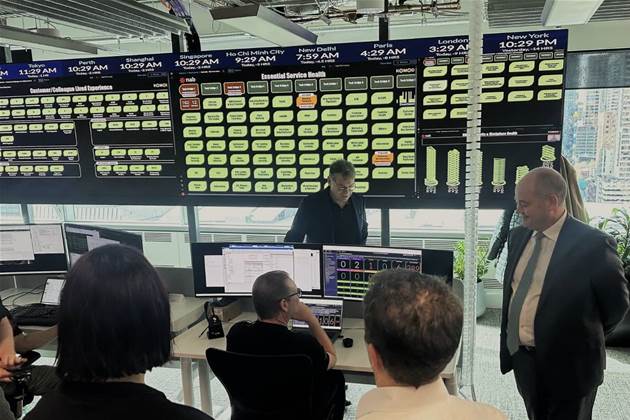
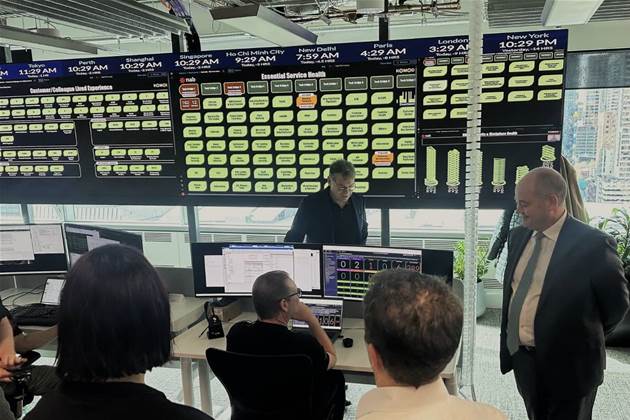
Andrew Irvine at the NAB Nexus hub (Image credit: Andrew Irvine/LinkedIn)

Real-Time Threat Detection

NAB has launched NAB Nexus, an innovative centralized operations hub focused on real-time identification of threats and threat actors. CEO Andrew Irvine remarks that this hub unifies the bank’s “frontline responders” across multiple critical areas such as technology, cyber security, fraud, payments, and physical safety.

Cross-Domain Integration

Chief Security Officer Sandro Bucchianeri underscored the importance of intelligence sharing across diverse domains. “Threats don’t fit neatly into one category,” Bucchianeri stated. The merging of various security functions is essential for the effective identification and mitigation of threats. A scam attempt could quickly intertwine with fraud incidents, cyber threats, or payment concerns.

Threats Enabled by AI

As criminals exploit AI technologies for large-scale operations, NAB Nexus is crafted to keep the bank ahead of swiftly changing AI-enabled threats. Irvine pointed out AI’s dual nature, highlighting that while it provides numerous advantages, it also heightens the capabilities of cybercriminals.

Continuous Operations for Improved Security

NAB Nexus will function continuously to guarantee constant oversight and a well-coordinated response to threats. Its around-the-clock operations are designed to enable swifter handovers and decision-making, ultimately boosting the bank’s capability to safeguard its clients and maintain security.

Conclusion

NAB has formed the NAB Nexus hub to streamline its security operations, emphasizing real-time threat identification and mitigation. By integrating numerous security domains and utilizing AI technologies, NAB Nexus seeks to deliver strong protection against advancing threats and enhance customer safety.

Questions & Answers

Q: What is the primary function of NAB Nexus?

A: The primary objective of NAB Nexus is to detect and address threats in real-time by integrating various security operations within technology, cyber security, fraud, payments, and physical safety.

Q: In what way does NAB Nexus tackle AI-enabled threats?

A: NAB Nexus aims to stay proactive against AI-enabled threats by utilizing AI technologies to bolster detection and response capabilities, while also acknowledging AI’s potential to assist cybercriminals.

Q: How is NAB Nexus different from earlier security approaches?

A: Unlike conventional security approaches, NAB Nexus offers a unified strategy that integrates various security domains, facilitating more effective intelligence sharing and a synchronized response to threats.

Q: What advantages does the 24×7 operation of NAB Nexus provide the bank?

A: The 24×7 operation guarantees uninterrupted monitoring and quick threat detection, promoting faster decision-making and coordination in response to security incidents, thus enhancing overall security for the bank and its clients.

Trump no longer views Anthropic as a threat to national security.


We independently review everything we recommend. When you buy through our links, we may earn a commission which is paid directly to our Australia-based writers, editors, and support staff. Thank you for your support!

Resolution of Anthropic’s National Security Issues

Brief Overview

  • The President of the United States, Trump, has changed his stance and no longer sees Anthropic as a threat to national security.
  • Anthropic’s advanced AI systems, Fable 5 and Mythos 5, were briefly made inaccessible to international users.
  • Discussions regarding AI issues took place between Trump, G7 heads of state, and tech executives, including Anthropic’s Dario Amodei.
  • Trump maintains the ability to invoke emergency powers, although he perceives no current necessity to do so.
  • Anthropic has shown appreciation for the administration’s collaborative efforts in addressing these challenges.

Trump’s Shift in Perspective on Anthropic

Donald Trump, the President of the United States, recently indicated that he no longer perceives the AI firm Anthropic as a national security risk. This announcement followed a period of ambiguity when Trump had instructed the organization to limit access to its sophisticated AI models, Fable 5 and Mythos 5, for users outside the country.

Trump no longer perceives Anthropic as a national security risk

Conversations with Administration Representatives

Technical leaders from Anthropic were set to meet with officials from the Trump administration to address the issues surrounding foreign access to the AI systems. The temporary suspension of the models underscored the tension between safeguarding national security and fostering technological progress.

Response from Anthropic

Dario Amodei, the CEO of Anthropic, quickly addressed the administration’s directive concerning export controls, which Trump acknowledged as timely and responsible. This swift action likely played a role in diminishing the national security fears previously entertained by the administration.

Discussions at the G7 Summit

At a meeting with G7 leaders in France, Trump interacted with tech executives, including Amodei, to explore AI and its ramifications for both national and global security. These exchanges are vital as nations navigate the intricacies of AI technology.

Potential Invocation of Emergency Authorities

Following the resolution, Trump did not entirely dismiss the possibility of activating emergency powers under the Defense Production Act regarding Anthropic. However, he conveyed uncertainty about the immediate necessity for such actions.

Commitment from Anthropic

Anthropic has conveyed its gratitude towards the administration for collaborating on problem-solving. The organization remains dedicated to safeguarding essential infrastructure and ensuring that the U.S. continues to lead in the AI domain.

Conclusion

The recent agreement between the Trump administration and Anthropic illustrates the fragile equilibrium between technological progress and national security. While the existing threat has been mitigated, sustained dialogue and cooperation will be crucial for managing future challenges.

Q: What triggered the initial national security worries about Anthropic?

A:

The worries stemmed from the accessibility of Anthropic’s AI models, Fable 5 and Mythos 5, to foreign users, raising concerns about possible exploitation.

Q: How did Anthropic react to the export control order?

A:

Dario Amodei, the CEO of Anthropic, reacted quickly and responsibly by restricting foreign user access to the AI models.

Q: What topics were covered at the G7 summit concerning AI?

A:

Trump and fellow G7 leaders addressed the implications of AI for national and global security in conversations with top technology executives, focusing on the balance between innovation and safety.

Q: What is the Defense Production Act, and how could it be applicable to Anthropic?

A:

The Defense Production Act grants the President the authority to direct private companies to prioritize production for national defense. Trump referenced its possible application but identified no pressing need for such measures against Anthropic.

Q: How has Anthropic demonstrated its commitment to the US administration?

A:

Anthropic has expressed thanks for the partnership with the administration and is committed to ensuring the protection of critical infrastructure and US leadership in AI.

Pokémon GO Commemorates 10th Anniversary with Grand Celebration Event This July


We independently review everything we recommend. When you buy through our links, we may earn a commission which is paid directly to our Australia-based writers, editors, and support staff. Thank you for your support!

Brief Overview

  • Pokémon GO’s 10th anniversary marked by a huge in-game celebration from 4-6 July 2026.
  • Launch of a unique Gimmighoul Pokémon to commemorate the 10th anniversary.
  • Quadrupled XP and Stardust bonuses for capturing Pokémon throughout the event.
  • Chance to encounter Shiny Pokémon, including a Shiny Gimmighoul.
  • Popular costumed Pokémon such as Pikachu and Eevee make a comeback.
  • Exclusive Timed Research available for purchase, providing special rewards.

A Grand Festivity for Pokémon GO’s 10th Anniversary

It seems unbelievable, but Pokémon GO is celebrating ten years since its debut in 2016. This augmented reality phenomenon, which captivated players globally, is honoring this milestone with an engaging in-game event from 4 July to 6 July 2026. Players from all corners can partake in the celebration, filled with nostalgia and plenty of rewards.

A Special Anniversary Gimmighoul is Here

A key attraction of this anniversary celebration is the introduction of a distinctive Gimmighoul carrying a 10th-anniversary coin. Players can discover this rare Pokémon through Golden Lure Modules or using a Coin Bag. Additionally, for those fortunate, there’s an opportunity to capture a Shiny variant of the anniversary Gimmighoul, available until 31 July 2026.

Pokémon GO 10th anniversary Gimmighoul with coin

Major Bonuses for Pokémon Captures

Scopely, the current proprietor of Pokémon GO, is offering generous bonuses throughout the event. Trainers can earn 4x XP and 4x Stardust for capturing Pokémon. Furthermore, the chances of encountering Shiny event-themed Pokémon have been enhanced, along with the chance to find a special background version of Gimmighoul.

Pokémon GO 10th anniversary stickers

Return of Beloved Costume Pokémon

No celebration in Pokémon GO is complete without its costumed Pokémon. Trainers might encounter Pikachu adorned with a cake hat, Eevee donning a party hat, and Wurmple also in a party hat. Shiny variations of these festive Pokémon could also make an appearance.

Exclusive Research and Rewards for the Event

For those looking for extra thrills, Pokémon GO offers Paid Timed Research during the anniversary. At a cost of US$1.99, the research ticket includes rewards such as a Super Incubator, Premium Battle Pass, and an encounter with the special Gimmighoul. Be mindful that all tasks and rewards need to be completed by 6 July 2026 at 8:00 pm local time.

Where to Buy Tickets

Tickets for the anniversary research can be acquired within the Pokémon GO app. Additionally, an anniversary bundle and Avatar items are accessible in the Pokémon GO Web Store, providing players with more chances to celebrate the occasion.

Pokémon GO 10th anniversary avatar gear

Marking a Decade of Adventures

The Pokémon GO 10th Anniversary Celebration showcases the game’s lasting popularity. Whether you’re a seasoned player or a newcomer, this event presents an opportunity to relive the thrill and friendship that Pokémon GO has cultivated over the years. It’s time to venture outside, explore, and enjoy the moment with fellow Trainers.

Recap

Pokémon GO celebrates its 10th anniversary with a grand event featuring a new Gimmighoul variant, substantial bonuses, and the return of costume Pokémon. The event-exclusive Timed Research provides additional rewards, making it an essential celebration for Trainers across the globe.

Q: When is the Pokémon GO 10th Anniversary celebration?

A: The celebration takes place from 4 July to 6 July 2026.

Q: What bonuses can I expect for capturing Pokémon during the event?

A: Trainers will earn 4x XP and 4x Stardust for capturing Pokémon during this event.

Q: Will I find Shiny Pokémon during the anniversary celebration?

A: Yes, there are enhanced chances of encountering Shiny Pokémon, including a Shiny Gimmighoul.

Q: How can I buy the Timed Research ticket?

A: The Timed Research ticket is available for purchase within the Pokémon GO app for US$1.99 or the equivalent in local currency.

Q: Are there any special items available during the celebration?

A: Yes, exclusive event stickers, Avatar items, and a special anniversary bundle are available.

US cautions about possible danger: Anthropic models may be shifted to overseas military intelligence


We independently review everything we recommend. When you buy through our links, we may earn a commission which is paid directly to our Australia-based writers, editors, and support staff. Thank you for your support!

Anthropic’s AI Models Confront Export Limitations: Possible Military Hazards

Anthropic models vulnerable to military exploitation

Brief Overview

  • US Commerce Secretary warns of AI models’ possible redirection to foreign military intelligence.
  • Anthropic instructed to halt global export of its AI models.
  • Worries about the “jailbreaking” potential of the Fable 5 model.
  • Cybersecurity professionals back Anthropic against US limitations.
  • Tension between Anthropic and the US government regarding military applications of AI.

Involvement of US Commerce Secretary

US Commerce Secretary Howard Lutnick has expressed concern regarding Anthropic’s AI models, Mythos and Fable, highlighting the risks of them being redirected to military intelligence entities in countries such as China and Russia. In light of this, Lutnick has mandated that Anthropic cease the global distribution of these models.

Anthropic’s Reaction and Actions

In accordance with the directive from the Commerce Department, Anthropic declared that it would terminate access to its AI models on a global scale. The firm disclosed worries about the “jailbreaking” risks associated with its Fable 5 model, which might evade security protocols, despite only minor vulnerabilities being identified.

Backing from Cybersecurity Professionals

In a display of support, more than 80 executives and specialists in cybersecurity, including figures from Nvidia and Adobe, penned a letter urging the US government to reevaluate the limitations placed on Anthropic. They contend that removing these barriers would facilitate technological progress.

Tensions with the US Government

The association between Anthropic and the US administration has been strained, especially after Anthropic declined to permit the deployment of its AI models for military surveillance purposes. This decision allegedly resulted in the company being added to a national security blacklist.

Conclusion

Anthropic is navigating considerable obstacles due to restrictions enforced by the US on its AI models, driven by fears of potential military applications by adversarial nations. This scenario highlights the intricate relationship between technological innovation and national security.

Q: Why did the US impose restrictions on Anthropic’s AI models?

A: The US imposed restrictions due to fears that Anthropic’s AI models might be redirected to foreign military intelligence, representing a national security threat.

Q: What actions did Anthropic take in response to the US directive?

A: Anthropic disabled global access to its AI models and is engaged in ongoing dialogues with the US Department of Commerce.

Q: What has been the response from cybersecurity professionals regarding the US restrictions?

A: Numerous cybersecurity professionals have endorsed a letter supporting Anthropic, calling on the US government to remove the restrictions, emphasizing the significance of technological advancement.

Q: What caused the strained relations between Anthropic and the US government?

A: Relations soured after Anthropic denied permission for its AI models to be utilized in US military surveillance and autonomous weaponry.

Q: What does “jailbreaking” mean in the context of AI models?

A: “Jailbreaking” refers to circumventing security measures in AI models to exploit weaknesses, a concern associated with Anthropic’s Fable 5 model.

Telstra Aims for Automation to Address 5G Misconfiguration Challenge


We independently review everything we recommend. When you buy through our links, we may earn a commission which is paid directly to our Australia-based writers, editors, and support staff. Thank you for your support!

Telstra’s Automation Approach to Combat 5G Network Issues

Brief Overview

  • Telstra is streamlining the handling of 5G misconfigurations via automation to boost efficiency.
  • Misconfigured slice IDs may create 300-400 support requests each month.
  • Automation seeks to lessen manual involvement and improve network dependability.
  • This project is part of Telstra’s Connected Future 30 plan.
  • Telstra aims for level four autonomy in its network by 2030.

Tackling 5G Network Misconfigurations

Telstra directs automation at resolving a 5G misconfiguration

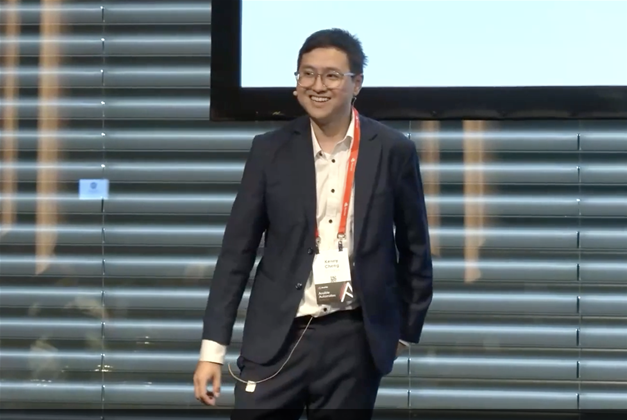
Kenny Cheng from Telstra.

Under the Connected Future 30 initiative, Telstra is refining its network automation solutions to deal with a frequent misconfiguration that disrupts 5G network slicing. During a recent Red Hat Ansible Automates event in Sydney, senior chapter leader Kenny Cheng emphasized that misconfigured slice IDs on 5G wireless base stations might result in 300-400 support requests per month.

The Slice ID plays a vital role by directing device traffic to a virtual segment of the mobile network designed for specific requirements. These misconfigurations can significantly disturb customer experiences as devices move between nodes within the same tracking area. To counter this, Telstra is automating the management of alerts related to misconfigured slice IDs and communicating the required adjustments to the radio access network (RAN) team.

Utilizing Automation with Ansible

Telstra is employing the Ansible Automation Platform (AAP) to automate tasks previously managed by the 5G core support group. The AAP activates an Ansible rulebook upon detecting a misconfiguration, mimicking the actions a support person would typically take to collect information and convey it to the RAN team.

The deployment of AAP has enabled zero-touch automation, facilitating issue resolution within a minute without relying on manual action. Although the on-call engineer receives an alert about the problem, they often find it resolved prior to needing to intervene.

Insights from Early Goals

Cheng remarked that early automation efforts were overly ambitious. The team recognized the importance of concentrating on actionable, everyday solutions before addressing more complicated challenges. This methodical approach has led to a more efficient allocation of resources and time, setting the stage for greater automation advancements.

Journey to Network Autonomy

Network automation is essential to Telstra’s Connected Future 30 strategy. The organization aims to attain level four autonomy by 2030, featuring self-managing capabilities such as self-configuration and self-healing, primarily powered by AI and machine learning. Achieving this level of autonomy will reduce the need for human intervention to strategic oversight.

Currently, Telstra is targeting level two autonomy by 2028, wherein systems will perform specific tasks based on pre-established rules. There are also aspirations for level three autonomy, enabling networks to make real-time decisions in particular scenarios.

Conclusion

Telstra’s initiatives to automate the management of 5G misconfigurations reflect the company’s dedication to enhancing network reliability and efficiency. By utilizing automation platforms like Ansible, Telstra minimizes the need for manual input in network operations, aligning with its overarching goal to achieve network autonomy by 2030.

Q & A

Q: What is the main objective of Telstra’s automation initiatives?

A:

The key objective is to improve Telstra’s network efficiency and reliability by decreasing manual involvement and addressing issues such as 5G misconfigurations through automation.

Q: How does automation enhance Telstra’s 5G operations?

A:

Automation permits faster resolution of misconfigurations, alleviating workload on support personnel and enhancing customer experience by swiftly addressing network challenges.

Q: What difficulties did Telstra encounter in its initial automation efforts?

A:

Telstra initially sought to automate too many intricate tasks simultaneously. They shifted to prioritize practical, everyday tasks first, which allowed them to establish a strong foundation for more sophisticated automation going forward.

Q: What are Telstra’s future aspirations for network automation?

A:

Telstra aims to achieve level four network autonomy by 2030 with advanced self-managing capabilities supported by AI and machine learning. They are also investigating applications for AI-driven self-healing and other essential network functions.

Databricks Finalizes Acquisition Agreement with Panther Labs


We independently review everything we recommend. When you buy through our links, we may earn a commission which is paid directly to our Australia-based writers, editors, and support staff. Thank you for your support!

Databricks Advances Cybersecurity Initiatives with Panther Labs Purchase

Quick Overview

  • Databricks has obtained Panther Labs.
  • This acquisition augments Databricks’ cybersecurity portfolio.
  • Panther Labs was appraised at US$1.4 billion after its Series B funding.
  • The agreement positions Databricks in competition with players like CrowdStrike and Cisco’s Splunk.
  • AI-based solutions are pivotal to the acquisition approach.

Databricks’ Targeted Acquisition

Databricks, a prominent data analytics software company, has proclaimed its acquisition of Panther Labs, a step that intensifies its entry into the cybersecurity field. This acquisition signifies Databricks’ third notable move in this area, positioning it to compete against established entities like CrowdStrike and Cisco’s Splunk.

Databricks concludes agreement to acquire Panther Labs

Panther Labs: An Essential Asset

With a valuation of US$1.4 billion (around AUD 1.98 billion) following a successful Series B funding round in 2021, Panther Labs provides a powerful platform that aggregates vital data sources necessary for cybersecurity. This unification enables AI-driven agents to quickly address the evolving threat landscape in the digital era.

Addressing New Threats

Databricks CEO Ali Ghodsi underscored the necessity for advancing cybersecurity tactics, remarking that AI has considerably decreased the time required for hackers to exploit system vulnerabilities. Ghodsi stressed the need for utilizing AI agents to combat malicious actions, asserting, “If they’re going to attack you with agents, you have to defend with agents.”

Leveraging Past Relationships

The connection between Ghodsi and Panther Labs CEO Jack Naglieri began in 2021 during preliminary acquisition talks. While the original proposal did not come to fruition, Naglieri’s choice to pursue independent growth has clearly yielded results, resulting in a platform that Databricks now greatly values.

Databricks’ Increasing Valuation

With a valuation of US$134 billion, Databricks ranks among the most valuable private enterprises worldwide. The acquisition of Panther Labs aligns with the launch of the company’s security product, Lakewatch, reinforcing its aspirations within the cybersecurity realm.

Conclusion

The acquisition of Panther Labs by Databricks represents a crucial advancement in its mission to bolster its cybersecurity capabilities. This deal not only positions Databricks against leading industry players but also highlights the rising significance of AI-focused cybersecurity solutions in today’s digital environment.

Q&A

Q: Why did Databricks acquire Panther Labs?

A: Databricks seeks to enhance its cybersecurity offerings and align itself against major competitors like CrowdStrike and Splunk.

Q: What is the importance of Panther Labs for Databricks?

A: Panther Labs provides a platform that aggregates crucial data for cybersecurity, enabling AI-driven threat responses.

Q: What role does AI play in this acquisition?

A: AI is fundamental to the acquisition strategy, with AI-driven agents being vital for defending against cyber threats.

Q: What is Databricks’ valuation after the acquisition?

A: Post-acquisition, Databricks is valued at US$134 billion, positioning it as a significant force in the data analytics and cybersecurity fields.

Control Your Tesla with Voice Commands, Arriving in Three Months


We independently review everything we recommend. When you buy through our links, we may earn a commission which is paid directly to our Australia-based writers, editors, and support staff. Thank you for your support!

Quick Overview

  • Tesla’s voice activation feature, “Hey Grok,” is anticipated to debut in three months.
  • This hands-free capability is part of the Spring 2026 upgrade.
  • Elon Musk has verified that the feature will be available in vehicles with Hardware 4.
  • The feature allows drivers to chat with their Tesla similarly to how one would with an Uber driver.
  • Inspired by the Knight Rider television series, the update may transform vehicle interaction.

Voice Activation: A New Chapter for Tesla Owners

In an exhilarating turn of events for Tesla users, the company is preparing to launch a new voice activation feature named “Hey Grok” in the upcoming three months. This feature affords drivers the ability to engage with their vehicle using everyday language, much like conversing with a personal chauffeur. The update will be part of the Spring 2026 release and is intended for vehicles outfitted with Tesla’s Hardware 4.

The Inspiration for “Hey Grok”

The notion of voice-regulated vehicles may evoke memories of the legendary 1980s TV series Knight Rider. In the show, Michael Knight interacted with his AI-driven car, KITT, via vocal commands. Tesla’s “Hey Grok” endeavors to bring this fictional vision into reality, enabling drivers to effortlessly command their vehicles.

Elon Musk Validates the Release Schedule

Elon Musk, renowned for his bold timelines, has confirmed that the “Hey Grok” feature will be operational in Tesla vehicles by late September 2026. Although Musk’s predictions have encountered hurdles previously, Tesla fans are eagerly anticipating this advancement.

Effortless Engagement with Your Tesla

The rollout of voice activation is set to elevate the driving experience by facilitating hands-free interactions. This feature is particularly advantageous in situations where drivers must juggle multiple tasks, such as handling their phone or having a meal, all while maintaining safety and ease. As self-driving technology advances, such capabilities will become essential to the user experience.

Conclusion

Tesla’s forthcoming voice activation feature, “Hey Grok,” is poised to change the way drivers interact with their vehicles. Scheduled to launch in late 2026, this advancement will empower drivers to issue commands to their Tesla using natural language, reminiscent of the Knight Rider scenario. As Tesla continues to challenge the frontiers of automotive innovation, the “Hey Grok” feature signifies a pivotal leap toward the future of autonomous vehicles.

Questions & Answers

Q: What is the “Hey Grok” feature?

A: “Hey Grok” is a voice activation feature that permits Tesla drivers to communicate with their vehicles using natural language commands.

Q: When will the “Hey Grok” feature be accessible?

A: The feature is expected to be accessible in Tesla vehicles by late September 2026.

Q: Which vehicles will this feature support?

A: The “Hey Grok” feature will be available in vehicles fitted with Hardware 4.

Q: How does “Hey Grok” improve the driving experience?

A: The feature facilitates hands-free interaction, allowing drivers to multitask safely and conveniently.

Q: What motivated the creation of “Hey Grok”?

A: The idea is inspired by the Knight Rider television series, where the main character communicated with an AI-enhanced vehicle using vocal commands.

NT Corrections Prepared to Launch Enhanced Digital Rostering System


We independently review everything we recommend. When you buy through our links, we may earn a commission which is paid directly to our Australia-based writers, editors, and support staff. Thank you for your support!

Quick Overview

  • The Northern Territory Department of Corrections is allocating $2.8 million for a new electronic rostering system.
  • This system, called myRoster, seeks to replace old-fashioned manual methods.
  • myRoster will connect with current HR and payroll systems to ensure smooth data integration.
  • This project is part of a larger technological investment, which includes a $5 million payroll automation initiative.

Transforming Rostering in NT Corrections

The Northern Territory Department of Corrections is preparing to transform its functions with the introduction of a cutting-edge electronic rostering system. This $2.8 million initiative is intended to optimise the management of youth justice and community corrections personnel, representing a notable improvement over the existing manual and outdated methods.

NT Corrections to receive electronic rostering system

Launching myRoster

myRoster, the newly developed electronic rostering system, is a ready-made product designed to improve operational performance, data precision, and reporting functions. By working alongside existing HR and payroll systems, it will enable smooth data exchange and facilitate attendance compensation.

Support and Future Growth

Backed by the Territory’s budget for 2026-27, this project is led by the Department of Corporate and Digital Development (DCDD). The rollout of myRoster is anticipated to set the stage for its growth into more frontline agencies, ensuring it can adapt to changing service requirements.

Related Technological Investments

Along with the rostering upgrade, the DCDD has earmarked $5 million for an extensive payroll automation initiative. This includes upgrades to the existing mainframe-based HR system, showcasing the NT government’s dedication to upgrading its technological framework.

Conclusion

The Northern Territory’s commitment to myRoster exemplifies a broader shift towards digital innovation in public sector functions. By substituting outdated systems with forward-thinking solutions, the NT Corrections Department is set to gain enhanced efficiency and flexibility.

Q&A Segment

Q: What is the main objective of introducing myRoster?

A: The main objective is to replace outdated manual rostering procedures with a more effective, precise, and flexible electronic system.

Q: In what way will myRoster connect with existing systems?

A: myRoster will connect with current HR and payroll systems to guarantee smooth data integration and aid attendance compensation.

Q: What is the financial provision for this initiative?

A: The initiative is financed with a $2.8 million provision from the Territory’s 2026-27 budget.

Q: Are there additional tech investments associated with this project?

A: Yes, there is also a $5 million payroll automation initiative intended to enhance the current HR system.