
Australia Introduces Its Inaugural Electric Bendy Bus, Proudly Manufactured in Perth

We independently review everything we recommend. When you buy through our links, we may earn a commission which is paid directly to our Australia-based writers, editors, and support staff. Thank you for your support!
Brief Overview
- Australia launches its inaugural electric bendy bus, manufactured in Perth by Volvo Buses and Volgren.
- The bus is equipped with a Volvo BZL Electric Articulated chassis featuring a dual motor configuration.
- It boasts a battery capacity of 497 kWh, allowing for a complete recharge in approximately four hours.
- Local production fosters Australian employment and highlights engineering expertise.
- The bus will first be used in Perth’s public transport system for trial runs.
- Designed to accommodate up to 105 passengers, it decreases emissions per rider.
- Volvo’s comprehensive support infrastructure guarantees effective maintenance and operation.
The Robust Hardware Keeping Perth Moving
At the core of this substantial locally manufactured vehicle is the cutting-edge Volvo BZL Electric Articulated chassis. The robust, single frame variant of this electric platform has been reliably operating in Australian capital cities for several years, confirming its durability in tough environments.
Volvo has expanded this framework into a dual frame articulated design to manage substantial passenger volumes. Driving the high-capacity unit is a dual motor arrangement referred to as the EPT802, which houses two 200 kW electric motors for a total peak output of 400 kW.
Significant Battery Capacity Designed for Real World Routes
To keep such a large vehicle on the move during demanding transit periods, a considerable amount of energy storage is necessary. Volvo has equipped the BZL Articulated with 12 Lithium Iron Phosphate battery packs strategically placed throughout the structure.
This arrangement provides an impressive total energy capacity of 497 kWh. LFP chemistry is an exceptionally wise choice for heavy commercial transport, delivering outstanding thermal stability and a long cycle life that fleet operators require for a decade of operation.
Locally Assembled to Safeguard Australian Employment
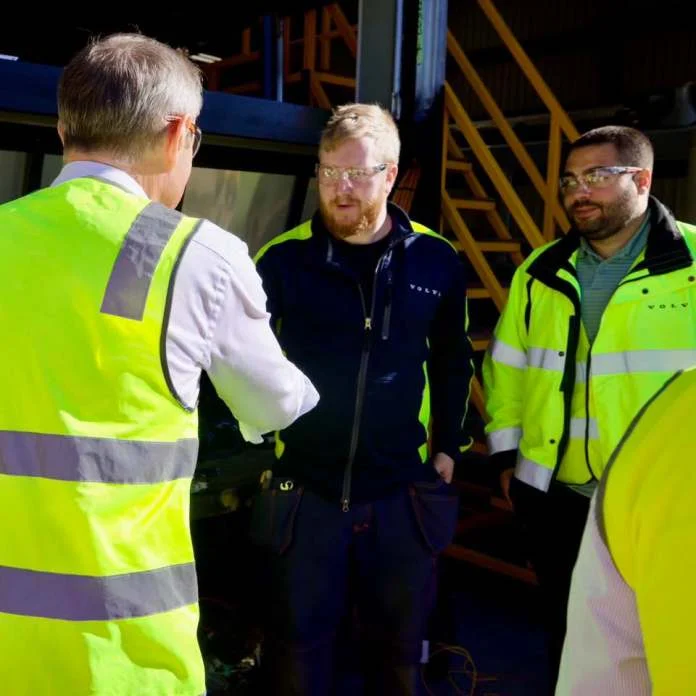
One of the significant achievements of this launch is that the vehicle is assembled by local workers. While some competing heavy vehicles come as fully finished imports, Volvo adheres to its longstanding approach of partnering with local body builders.
The electric chassis arrives in Australia and is transported directly to Volgren’s specialized manufacturing plant in Malaga, Perth. Volgren, being the largest bus body manufacturer in the nation, undertakes the intricate process of crafting the protective outer shell and interior design.
A Major Victory for Domestic Production
WA Premier Roger Cook shared insights about the launch on social media, underscoring the significance of local industry in the state’s shift towards a more sustainable future. He provided a glimpse behind the scenes, mentioning that electric bendy buses are set to appear soon on Perth streets.
Customized for the Active Public Transport Authority Network
The very first units produced are going directly into service with the Public Transport Authority of Western Australia. The partnership between the PTA and Volvo Buses has been extensive, spanning over ten years and involving hundreds of vehicles supplied to the state.
Increased Seating Means Lower Emissions Per Rider
Considering the significant capacity benefits, the reasoning behind shifting to articulated electric models becomes clear. A typical 12-metre Transperth bus reaches a maximum of about 80 passengers, accounting for standing room during peak hours.
The new 18-metre BZL Electric Articulated elevates that capacity to 105 passengers, featuring 57 fixed seats and a spacious low floor standing area. This is a considerable increase for high-demand urban corridors when passenger density is at its peak.
Utilizing an Established National Support Network
Transitioning a large public transport system to electric power presents operational challenges for any government. Operators must not only consider vehicle procurement but also ensure parts availability, technician training, and the minimization of unexpected downtime.
Safety Features Integrated into the Roof
A notable engineering decision with the BZL platform is how Volvo addresses the placement of the heavy batteries. Rather than packing the battery packs into the floor or rear engine compartments, they are neatly positioned on the roof structure.
The Broader Initiative Toward Eco-Friendly Transit Networks
Perth’s electric bus fleet is rapidly expanding, aided by ongoing infrastructure enhancements at local depots to accommodate high-power charging requirements. The state aims to create a robust, clean transport network capable of adapting to future population growth.
Conclusion
The launch of Australia’s first electric bendy bus represents a major advancement in sustainable public transport. Manufactured by Volvo and Volgren in Perth, this electric articulated bus not only supports local production but also offers a cleaner, quieter, and more efficient transportation solution. With its significant passenger capacity and innovative battery technology, it aims to lower emissions and alleviate congestion in urban settings.
Reader questions
Frequently asked questions
Fast answers to the questions readers ask most about Australia Introduces Its Inaugural Electric Bendy Bus, Proudly Manufactured in Perth.
What makes Australia's first electric bendy bus distinctive?
It is the first fully electric articulated bus in Australia, constructed locally in Perth by Volvo Buses and Volgren.
What is the maximum passenger capacity of the new electric bendy bus?
The new bus can accommodate up to 105 passengers, providing 57 fixed seats and additional standing space.
What type of battery technology is used in the bus?
It utilizes 12 Lithium Iron Phosphate battery packs, delivering a total installed energy capacity of 497 kWh.
How long does it take to recharge the bus?
The bus can be fully charged in about four hours using standard CCS2 plug-in charging infrastructure.
How does local production benefit the community?
Local manufacturing bolsters Australian jobs, enhances the skills of local workers, and showcases the nation’s engineering expertise.
What are the ecological advantages of the electric bendy bus?
The bus decreases emissions per commuter and contributes to reduced urban congestion by transporting more passengers in a single vehicle.
