
AIBUILD’s Emotion-Aware Companion Robots: Transforming Proactive Home Care for Seniors in Australia

We independently review everything we recommend. When you buy through our links, we may earn a commission which is paid directly to our Australia-based writers, editors, and support staff. Thank you for your support!
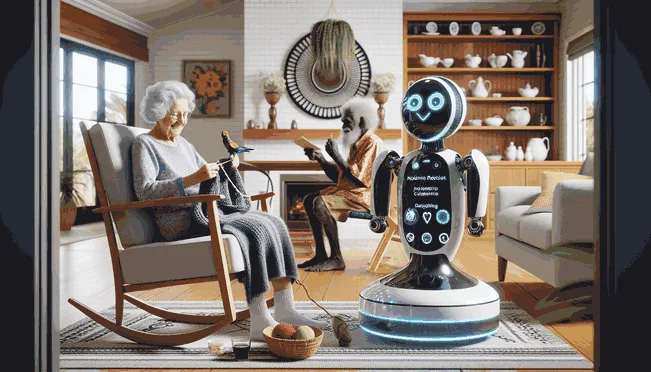
AIBUILD’s Emotionally Intelligent Companion Robots: Revolutionising Aged Care in Australia
Quick Overview
- Cutting-edge robots proactively support elderly Australians in their residences.
- Integrates AI with emotion-sensitive detection for holistic care.
- Identifies subtle physical and emotional shifts for timely intervention.
- Safeguards privacy and dignity while enhancing caregiving efforts.
Transforming Home Aged Care
The aged care industry in Australia has typically focused on aspects such as funding and staffing, strongly emphasizing the importance of enabling older Australians to stay in their homes. Nonetheless, the technology backing this objective has frequently been responsive rather than anticipatory. AIBUILD offers a fresh solution with emotion-aware companion robots crafted to sense changes prior to them escalating into critical issues.
Predictive Capabilities of Companion Robots
The existing technology in aged care commonly provides reactive solutions, such as fall alarms. AIBUILD’s companion robots aspire to bridge this gap by forecasting problems through subtle changes in behavior, posture, and habits. These autonomous robots seamlessly integrate into households, creating a baseline of normalcy to spot anomalies that could indicate emerging concerns.
The Technology Supporting the Awareness
The companion robots employ an advanced mix of camera-based perception, sensor integration, and real-time AI analysis. This technique enables them to comprehend daily activities without necessitating users to wear devices or alter their behaviors. The technology captures both physical stability and emotional health, utilizing conversational AI to assess speech and emotional tone.
Privacy, Dignity, and Human Interaction
While the adoption of AI robots in homes prompts privacy considerations, AIBUILD guarantees that its system emphasizes dignity and respect. The robots are engineered to notify human caregivers without replacing them, utilizing insights from certified psychotherapists to sensitively interpret emotional signals. This methodology enhances care by providing context and empowering human caregivers.
Conclusion
AIBUILD’s emotionally intelligent companion robots deliver a revolutionary approach to aged care in Australia, moving from reactive responses to proactive assistance. With cutting-edge AI and a commitment to privacy and dignity, these robots elevate human caregiving, allowing older Australians to safely and independently stay in their homes while offering reassurance for their families.
FAQs
Reader questions
Frequently asked questions
Fast answers to the questions readers ask most about AIBUILD’s Emotion-Aware Companion Robots: Transforming Proactive Home Care for Seniors in Australia.
In what ways do AIBUILD’s robots stand out from existing aged care technology?
Unlike reactive technologies, these robots harness AI to forecast problems through monitoring subtle changes, offering proactive care insights.
What technologies are employed by the companion robots?
They incorporate camera-based perception, sensor integration, and real-time AI analysis to comprehend daily life and spot changes.
How do the robots maintain user privacy and dignity?
The system is crafted to honor personal spaces, prioritizing alerts to human caregivers and not substituting them, ensuring a human touch.
Are these robots capable of replacing human caregivers?
No, the robots are designed to supplement human care by providing additional insights, allowing caregivers to concentrate on crucial areas.
How do family members and caregivers receive updates?
Family members receive updates through an app, while professional caregivers access structured insights and analyses via an administrative platform.
Is the technology clinically diagnostic?
No, the robots are not intended for clinical diagnosis but for identifying potential signals that may need human intervention.
