Blog - Page 102 of 211 - Techbest - Top Tech Reviews In Australia

CMF by Nothing Buds Wireless Bluetooth Earbuds Review


We independently review everything we recommend. When you buy through our links, we may earn a commission which is paid directly to our Australia-based writers, editors, and support staff. Thank you for your support!

CMF by Nothing Buds Wireless Bluetooth Earbuds, 42dB Noise Cancelling Earphones, Dirac HD Audio, 35.5H Playtime, BT5.3, IP54, 4HD Mics Wireless Headphones for iPhone & Android Dark Grey

Transport for NSW Revamps Technology Division


We independently review everything we recommend. When you buy through our links, we may earn a commission which is paid directly to our Australia-based writers, editors, and support staff. Thank you for your support!

Transport for NSW Revamps Technology Division

Quick Overview

  • Transport for NSW has established a new ‘Group Technology’ department for a more coordinated service delivery method.
  • Jason Tuendemann, who was recently appointed, is now the group chief technology officer.
  • Important positions such as CISO, CDO, and an executive director of strategy are currently being sought after.
  • This restructuring is in line with TfNSW’s comprehensive technology strategy and digital-first mentality.
  • The new arrangement consolidates cyber security roles under Group Technology.
Transport for NSW revamps tech unit

New Leadership and Strategic Positions

Transport for NSW (TfNSW) is experiencing a substantial change with the formation of a ‘Group Technology’ section, targeting a more unified and strategic stance towards its service provision. This decision comes in the wake of Jason Tuendemann’s recent selection as the group chief technology officer following Kurt Brissett’s exit.

The organisation is actively searching for three vital roles: chief information security officer (CISO), chief data officer (CDO), and an executive director of strategy, architecture, and partnerships. These positions are intended to report directly to Tuendemann, which aligns with TfNSW’s goal for a unified leadership team.

Strategic Revamp and Digital Initiative

The restructuring signifies part of a broader organisational overhaul including TfNSW’s inaugural enterprise-wide technology strategy. This strategy adopts a ‘digital-by-default’ approach to embed technology into its processes.

Additionally, the agency’s corporate plan for 2024-2025 includes initiatives for a robust data strategy. The newly appointed chief data officer will oversee the establishment of an enterprise data practice to ensure data reliability, security, and accessibility throughout its lifecycle.

Centralised Cybersecurity Focus

The reorganisation also accentuates a strong focus on cybersecurity, with the CISO charged with leading initiatives to safeguard TfNSW’s digital framework. The previous CISO, Murray Taylor, held the position from September 2021 until May 2024, and was succeeded by Natasha Scott, who moved to the NSW Department of Planning, Housing and Infrastructure.

TfNSW’s updated operational framework illustrates its commitment to acknowledging the strategic role of data, security, and technology as pivotal in shaping the future of transportation, with the goal of delivering enhanced real-time value to passengers and users.

Conclusion

Transport for NSW is strategically transforming its technology division by forming a centralised ‘Group Technology’ unit. With new leadership, the division will concentrate on a digital-by-default strategy, extensive data plans, and strengthened cybersecurity initiatives. This evolution aims to improve service delivery and provide immediate value to NSW’s transportation users.

Q: What is the aim of the newly established ‘Group Technology’ department?

A: The ‘Group Technology’ department is intended to centralise and strategically enhance service delivery within TfNSW.

Q: Who has taken the position of the new group chief technology officer?

A: Jason Tuendemann has been appointed as the new group chief technology officer.

Q: What positions are currently being filled under the new framework?

A: TfNSW is looking to hire a chief information security officer, chief data officer, and an executive director of strategy, architecture, and partnerships.

Q: What does the ‘digital-by-default’ initiative entail?

A: It is a strategy for seamlessly integrating technology into operations, prioritising digital solutions as the standard choice.

Q: In what way will the new framework influence cybersecurity?

A: The new framework consolidates cybersecurity functions under Group Technology, with a dedicated CISO overseeing initiatives to protect digital infrastructure.

Q: What is the importance of the comprehensive data strategy?

A: The data strategy aims to treat data as a strategic resource, ensuring its reliability, security, and accessibility throughout its lifecycle.

Push Play Active Wireless Earbuds Review


We independently review everything we recommend. When you buy through our links, we may earn a commission which is paid directly to our Australia-based writers, editors, and support staff. Thank you for your support!

Push Play Active Wireless Earbuds, Bluetooth Headphones, Noise Isolating, 34 Hrs Battery, Secure-Fit Over-Ear Hanger, Sweat Water Resistant, Microphone for iPhone Android – Black/Orange​

Tesla Introduces Unsupervised FSD: Robotaxi Prepared, However No Passengers Aboard Yet


We independently review everything we recommend. When you buy through our links, we may earn a commission which is paid directly to our Australia-based writers, editors, and support staff. Thank you for your support!

Quick Overview: Tesla’s Launch of Unsupervised FSD

  • Tesla has officially introduced unsupervised Full Self Driving (FSD) capabilities for Model Ys.
  • Testing of autonomous driving in Austin, Texas, has reported no incidents.
  • The launch of robotaxi services is expected on June 12th in Austin.
  • Tesla has achieved a milestone with its camera-only strategy for autonomous driving.
  • There is potential economic disruption for traditional taxis and rideshare services.

Tesla Reveals Unsupervised Full Self Driving

Tesla has officially rolled out its Full Self Driving (FSD) function in unsupervised mode, marking a crucial milestone in the autonomous vehicles landscape. Elon Musk stated that multiple Model Ys have been operating autonomously for several days, navigating the streets of Austin, Texas, without any issues.

Tesla presents unsupervised FSD: Robotaxi ready, but no passengers on board yet

The Path to Complete Autonomy

For almost a decade, Tesla has led the charge in autonomous vehicle development. The recent ‘We Robot’ event highlighted autonomous rides for the public, paving the way for unsupervised FSD. Clips have surfaced showing Teslas independently moving from production facilities to parking lots in controlled environments.

Testing in Austin: A Safety Milestone

Recent evaluations on public roads in Austin have shown Tesla’s Model Ys functioning without drivers or overseers, achieving zero incidents. This achievement, accomplished before the planned June launch of the Robotaxi service, underscores the effectiveness of Tesla’s camera-only computer vision system.

Economic Effects and Future Outlook

The launch of a driverless Robotaxi service is poised to transform the transportation industry. With low production costs and reduced operational expenses, Tesla’s offering could significantly challenge established competitors such as traditional taxis, Uber, and Waymo.

Community Feedback and Next Steps

Local community members have taken and shared photographs of the Robotaxis in operation, reflecting Tesla’s developments. With the initial customer delivery from factory to user expected shortly, attention is now shifting to broadening the service to additional areas and clientele.

Conclusion

Tesla’s introduction of unsupervised Full Self Driving technology represents a critical juncture in automotive advancement. With successful trials in Austin and an upcoming Robotaxi debut, Tesla is establishing new benchmarks in autonomous driving. The wider implications of this technology on the economy and transportation sector will unfold as it expands.

Q: What is Tesla’s Full Self Driving (FSD)?

A: FSD refers to Tesla’s autonomous driving system that enables vehicles to function without human input.

Q: Where were the recent tests carried out?

A: The tests were conducted on public streets in Austin, Texas.

Q: When is the expected launch date for the Robotaxi service?

A: The Robotaxi service is expected to begin on June 12th in Austin.

Q: What distinguishes Tesla’s autonomous technology?

A: Tesla employs a camera-only computer vision methodology, contrasting with other systems that frequently depend on extra sensors like LIDAR.

Q: How has the community reacted to Tesla’s Robotaxis?

A: The local populace has demonstrated interest, with residents capturing images and updates of the Robotaxis operating.

Q: What economic consequences could arise from Tesla’s Robotaxi service?

A: The service could disrupt conventional taxi and ridesharing sectors due to its minimal operational expenses and lack of drivers.

Transforming Planning: Removing Development Hold-ups for Australians


We independently review everything we recommend. When you buy through our links, we may earn a commission which is paid directly to our Australia-based writers, editors, and support staff. Thank you for your support!

Quick Read

  • Objective Build seeks to transform planning operations within Australian councils.
  • It eliminates bottlenecks through the automation of repetitive tasks.
  • The platform is crafted specifically for planners, rather than being adapted from existing software.
  • Objective Build improves workflow, mitigates burnout, and enhances overall efficiency.
  • It aids councils in achieving housing objectives by expediting development assessments.

Revolutionising Council Planning with Objective Build

A better approach to planning: eliminating development delays for Australians

As Australia advances with bold housing initiatives, council planning systems frequently find themselves in a gridlock, depending on antiquated spreadsheets and manual procedures. Statutory planners, well-educated and experienced, discover their skills underutilised as they deal with administrative tasks. Enter Objective Build, a pioneering platform launched at the Planning Institute of Australia (PIA) Congress, aimed at modernising and optimising the planning process for councils across Australia.

Planners: Knowledgeable, Vital, Yet Overwhelmed

Statutory planners are essential to urban development, integrating aspects like growth, sustainability, and heritage. However, they encounter obstacles such as tedious administrative duties, rising volumes of development applications, and a lack of qualified personnel. Public dissatisfaction is also increasing due to perceived application processing delays. Objective Build alleviates this by automating routine tasks, enabling planners to concentrate on their primary responsibilities.

A Platform Designed for Planning Needs

In contrast to conventional systems repurposed for planning, Objective Build is specifically created for the requisites of council planning teams. It enhances the decision-making process by supplying relevant planning precedents and context, allowing for more consistent outcomes. The platform additionally provides team leaders with real-time visibility, enhancing management and reducing burnout.

Generating Impactful Results

With Australia’s housing aspirations on the line, the effective processing of development applications is critical. Objective Build tackles this by fostering greater effectiveness among current planners, instead of relying on a surge in workforce numbers. By enhancing public trust and aiding planners, the platform guarantees that councils can efficiently fulfil the increasing housing demands.

Conclusion

Objective Build is poised to reshape the planning environment for Australian councils by automating everyday tasks, thereby permitting planners to engage in strategic and meaningful work. The platform is distinctly crafted for the planning industry, assisting councils in meeting housing targets while building public trust.

Q: What distinguishes Objective Build from other planning systems?

A: Objective Build is specifically built for council planning, not modified from existing software, making it more relevant and effective for planners.

Q: In what way does Objective Build optimize planners’ workflow?

A: By automating repetitive duties and offering real-time visibility, Objective Build alleviates burnout and allows planners to focus on work that has a greater impact.

Q: Is Objective Build capable of assisting councils in achieving housing objectives?

A: Certainly, by simplifying development assessments, Objective Build empowers councils to handle applications more efficiently, which is vital for achieving housing goals.

Q: How does Objective Build enhance public trust?

A: By boosting efficiency and fostering better communication, Objective Build aids councils in demonstrating transparency and dependability in their planning processes.

Wireless Bluetooth 5.3 Headphones Review


We independently review everything we recommend. When you buy through our links, we may earn a commission which is paid directly to our Australia-based writers, editors, and support staff. Thank you for your support!

Bluetooth Headphones, In-Ear Headphones, Wireless Bluetooth 5.3 Wireless Headphones with 4 Mics, 2023 ENC Noise Cancelling Wireless Earbuds, 48H Deep Bass, IP7 Waterproof Earphones, LED Display, USB-C

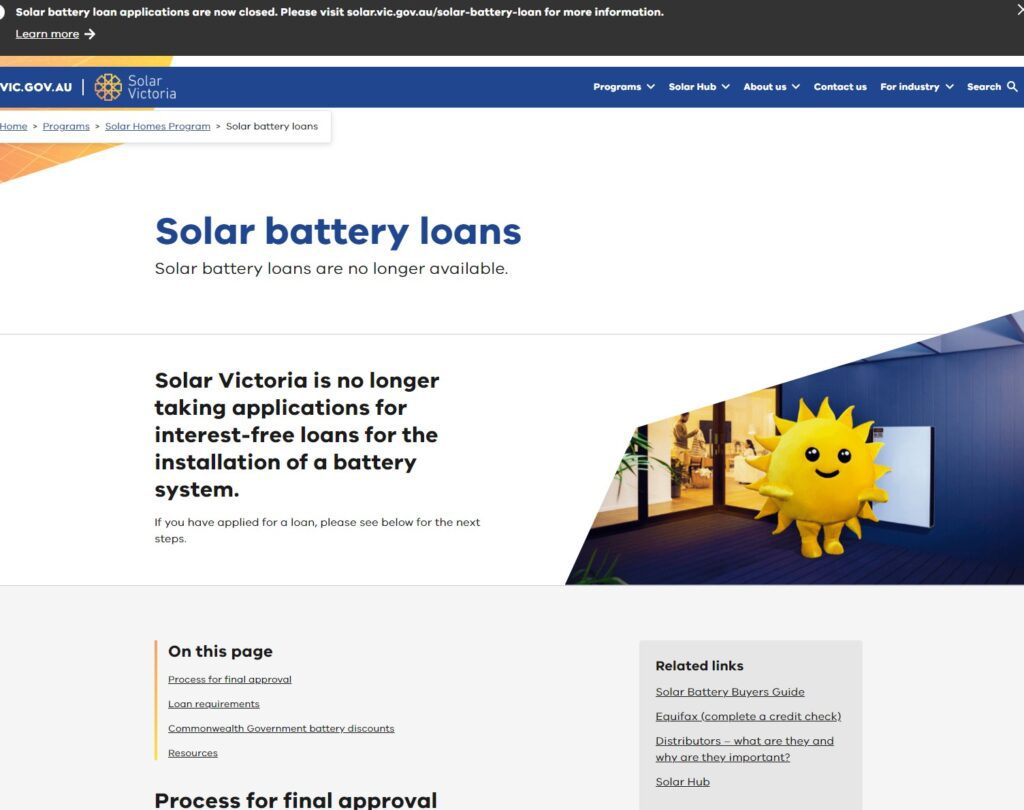
Victoria Wraps Up Home Battery Loan Initiative as Federal Rebates Approach in July


We independently review everything we recommend. When you buy through our links, we may earn a commission which is paid directly to our Australia-based writers, editors, and support staff. Thank you for your support!

Victoria Concludes Home Battery Loans as Federal Rebates Near

Brief Overview

  • Victoria concludes its home battery loan initiative prior to new federal rebates.
  • Interest-free financing available up to A$8,800, greatly decreasing battery expenses.
  • Federal rebates commence on July 1, potentially further lowering costs.
  • Victoria’s Solar Homes Initiative has aided over 360,000 residences.
  • Net-zero emissions goal by 2045, with interim objectives by 2035.
  • Commonwealth Government’s Affordable Homes Batteries Initiative starts July 1.

Closure of Victoria’s Solar Battery Loan Initiative

Solar Victoria has recently revealed the closure of its home battery loan initiative, a move that many homeowners find disappointing just as a new federal rebate program is about to launch. This initiative previously offered interest-free loans up to A$8,800 over a four-year period, greatly alleviating the initial expenses of home battery systems.

Effects on Homeowners

Homeowners aiming to upgrade their solar installations with battery storage could have profited from combining both state and federal incentives. For example, the usual installation cost of a Tesla Powerwall 3, around A$15,000, could have been substantially decreased with these incentives. However, the end of the state initiative means this option is now unavailable.

Upcoming Federal Rebates

The Commonwealth Government’s Affordable Homes Batteries Initiative is expected to launch on July 1. This program intends to make battery storage more accessible, supporting Australia’s dedication to renewable energy and diminished emissions.

Victoria’s Dedication to Renewable Energy

Since August 2018, the Victorian Solar Homes Initiative has played a crucial role in assisting over 360,000 households with solar installations. This aligns with Victoria’s ambitious strategy to attain net-zero emissions by 2045, with renewable energy targets established at 65% by 2030 and 95% by 2035.

Initiatives in the Sector

  • Sector Commitments: Promises made across different sectors, aided by programs such as the $100 million Community Climate Change and Energy Action initiative.
  • Energy Shift: Strategies to eliminate coal-fired power and enhance renewable energy capabilities.

Conclusion

The termination of Victoria’s home battery loan initiative represents a major transformation in the framework of solar energy incentives in Australia. While the forthcoming federal rebates set to begin in July present fresh prospects, the sudden cessation of the state initiative leaves numerous homeowners uncertain. This action highlights the continuous evolution of Australia’s energy policies and the commitment to a sustainable future.

FAQ

Q: What was the primary advantage of the Victorian home battery loan initiative?

A: The initiative provided interest-free loans up to A$8,800, lowering the initial costs for homeowners intending to install battery storage systems.

Q: When do the federal rebates commence?

A: The federal rebates from the Affordable Homes Batteries Initiative are scheduled to begin on July 1.

Q: How will this affect the cost of a Tesla Powerwall 3?

A: Without the ability to combine state and federal incentives, the initial expense of a Tesla Powerwall 3 will remain elevated, approximately A$10,545 after federal rebates.

Q: What are Victoria’s renewable energy aspirations?

A: Victoria targets 65% renewable energy by 2030 and 95% by 2035, contributing to its aspiration of net-zero emissions by 2045.

Sydney Enhances HR Capabilities for Improved Career Management


We independently review everything we recommend. When you buy through our links, we may earn a commission which is paid directly to our Australia-based writers, editors, and support staff. Thank you for your support!

Concise Overview

  • Sydney City Council improves HR functionalities with SAP SuccessFactors.
  • Chris Youness, the Chief of People and Culture, leads the revitalization initiative.
  • The original system setup was inadequate; enhancements were essential.
  • Collaborated with Discovery Consulting for an extensive system evaluation.
  • Improvements in HR processes have decreased administrative tasks by as much as 35%.
  • Emphasis on key HR functions and streamlined payroll systems.
  • Improved career development and customization for staff training.

Revamping SAP SuccessFactors

The City of Sydney has initiated an important project to strengthen its human resources capabilities by utilizing the SAP SuccessFactors platform. This effort seeks to foster a more tailored approach to career management for its employees, correcting earlier identified deficiencies in system setup.

Sydney upgrades HR systems for career development

Recognizing System Issues

On his arrival in mid-2022, Chris Youness, the chief of people and culture for the council, realized that the current SuccessFactors system was not ideally configured. This led to a comprehensive review and a partnership with Discovery Consulting, which uncovered 32 recommendations for enhancements.

Optimizing HR Operations

The adoption of these recommendations has led to noteworthy improvements in HR processes. Chris Youness noted that the administrative load on personnel has been reduced by as much as 35%, enabling HR teams to redirect their focus towards fundamental responsibilities rather than system oversight.

Automation and Productivity

Automation initiatives, especially in payroll, have revolutionized operational efficiencies. Outdated paper-based systems have been succeeded by self-service kiosks and automated attendance systems, resulting in less stressed teams and smoother payroll functions.

Improving Career Pathways

The council is focusing on fostering internal career pathways, using SuccessFactors to accommodate staff at various stages of their career journeys. The emphasis is on customization, automation, and empowering employees to identify training opportunities that align with their current roles and ambitions.

Conclusion

The HR revitalization initiative at the City of Sydney highlights the significance of utilizing technology to enhance staff career management. By addressing system inadequacies and prioritizing customization and automation, the council strives to create a nurturing environment for employee growth and advancement.

Q: What is the primary aim of Sydney’s HR system enhancement?

A: The main goal is to improve career management through a personalized approach, rectifying system inefficiencies, and emphasizing essential HR functions.

Q: How did the Sydney City Council tackle the initial system challenges?

A: The council worked together with Discovery Consulting to perform a health evaluation of the SAP SuccessFactors system, resulting in 32 improvement recommendations.

Q: What effects has the project had on HR operations?

A: HR operations have been simplified, decreasing the administrative load by as much as 35%, which has allowed teams to concentrate on critical tasks.

Q: In what ways has automation enhanced payroll processes?

A: Automation has replaced manual, paper-based procedures with self-service kiosks and automated systems, resulting in more efficient and less stressful payroll processes.

Q: What are the future objectives for employee career development?

A: The council intends to establish improved career pathways tailored to current staff stages, allowing them to select appropriate development opportunities.

JBL Tune Beam 2 Wireless Bluetooth in-Ear Headphones Review


We independently review everything we recommend. When you buy through our links, we may earn a commission which is paid directly to our Australia-based writers, editors, and support staff. Thank you for your support!

JBL Tune Beam 2 Wireless Bluetooth in-Ear Headphones with Noise Cancelling, 48 Hours Playback Time, IP54 Water and Dust Proof, Multipoint Connection, Ergonomic Design, Black

Mobileye’s Eyes-Off L3 Technology Selected for 2028 Worldwide Launch, Car Manufacturer Stays Anonymous


We independently review everything we recommend. When you buy through our links, we may earn a commission which is paid directly to our Australia-based writers, editors, and support staff. Thank you for your support!

Brief Overview

  • Mobileye’s Imaging Radar selected by a prominent car manufacturer for a 2028 launch.
  • This technology will enable SAE Level 3 autonomous driving at freeway speeds.
  • Mobileye’s 4D imaging radar provides enhanced perception in difficult situations.
  • Imaging radars enhance environmental awareness by incorporating height information.
  • Mobileye’s radar tech utilizes digital signal processing for improved precision.
  • The cost of the technology is not publicly revealed but is vital for broad acceptance.

Mobileye’s Radar Innovation: The Next Frontier in Autonomous Driving

The push to advance Advanced Driver Assistance Systems (ADAS) towards fully autonomous solutions is intensifying, with Mobileye at the forefront. The firm has declared that a leading global automaker has opted for Mobileye Imaging Radar as a crucial element of its forthcoming system that allows for eyes-off, hands-off driving in personal vehicles, following a detailed assessment of Mobileye’s offerings against competitors.

Mobileye Imaging Radar for 2028 Global Release

Groundbreaking Technology for SAE Level 3 Automation

Set for a 2028 introduction, the chosen automaker intends to utilize Mobileye’s Imaging Radar for SAE Level 3 automated driving at motorway speeds. This tech aims to deliver outstanding detection abilities in challenging weather like fog and rain, and at long ranges, surpassing current sensor technologies.

Benefits of 4D Imaging Radar

By 2028, it will have been a decade since the inception of Mobileye’s 4D imaging radar development. This innovation provides sensor redundancy, yielding superior perception in tough lighting, environmental, and traffic situations, complementing camera-based perception affordably.

Technical Characteristics and Features

Current automotive radars deliver approximations of distance, direction, and relative speed. In contrast, imaging radars add an extra dimension – height. Mobileye’s cutting-edge Imaging Radar processes signals digitally from start to finish via a specially designed radar processor, ensuring unparalleled accuracy and reliability in environmental awareness.

Key Components and Performance Metrics

At the heart of Mobileye’s Imaging Radar are radar radio-frequency integrated circuits (RFIC) that offer adaptability in signal transmission, high-confidence detection of objects, and minimal noise levels. The radar processor features computing power of 11 TOPS, managing over 1,500 virtual channels at a rate of 20 frames per second, with remarkable angular resolution and dynamic range.

Safety and Detection Capabilities

Mobileye’s Imaging Radar is proficient in identifying small, distant objects and specific threats in intricate conditions, making it essential for safe highway navigation at speeds exceeding 130 kph. It can recognize road users up to 315 meters away and potential dangers up to 230 meters, functioning effectively in tunnels, construction zones, and congested surroundings.

Cost Factors

The pricing of Mobileye’s hardware and software is not publicly disclosed but will play a crucial role in its uptake. Reduced costs may enable this technology to be incorporated into more budget-friendly vehicles, likely contributing to more lives saved by promoting the availability of autonomous driving.

Conclusion

Mobileye’s Imaging Radar has been adopted by an undisclosed automaker for a 2028 release, with the goal of achieving SAE Level 3 autonomous driving. This state-of-the-art technology is expected to offer superior detection capabilities and reliability, though pricing remains a key consideration for mass adoption.

Q: What is Mobileye’s Imaging Radar?

A: Mobileye’s Imaging Radar is a next-generation radar technology that enhances environmental perception by incorporating height information into traditional radar functionalities, processed digitally for better accuracy.

Q: What level of autonomous driving will the technology support?

A: The technology is designed to enable SAE Level 3 autonomous driving, facilitating eyes-off, hands-off operation at highway speeds.

Q: When is the technology projected to be released?

A: The anticipated release for the technology is in 2028, marking ten years since the beginning of Mobileye’s 4D imaging radar development.

Q: Which automaker is collaborating with Mobileye?

A: The automaker has not been named, but is referred to as a leading global entity.

Q: What are the advantages of Mobileye’s Imaging Radar?

A: The radar provides superior perception in adverse conditions, advanced object detection abilities, and improved safety for autonomous driving.

Q: How does cost influence the adoption of this technology?

A: Even though the cost is yet to be revealed, lower pricing could lead to wider adoption, making the technology accessible in less expensive vehicles.