Matthew Miller, Author at Techbest - Top Tech Reviews In Australia - Page 99 of 187

DVA Evaluates ChatGPT-Powered Tool with 300 Staff Members


We independently review everything we recommend. When you buy through our links, we may earn a commission which is paid directly to our Australia-based writers, editors, and support staff. Thank you for your support!

AI in Governance: DVA’s ChatGPT-Driven Tool Experiment

Quick Overview

  • The Department of Veteran’s Affairs (DVA) is piloting an AI chatbot called CLIKChat.
  • This proof-of-concept phase includes participation from 300 DVA personnel.
  • CLIKChat’s goal is to facilitate access to policy and compensation details.
  • The tool utilizes the OpenAI ChatGPT 4.1 Mini model.
  • CLIKChat does not have the capability to access personal or veteran files.
  • Only staff trained in AI are authorized to use this tool.
  • The public and DVA clients will not have access to CLIKChat.
  • Its development aligns with national AI guidelines for responsible governmental use.

DVA’s AI Project: CLIKChat

The Department of Veteran’s Affairs (DVA), Australia’s foremost veterans’ support agency, has initiated a new technological venture by commencing a proof-of-concept trial for a chatbot named “CLIKChat.” Composed of 300 employees from the claims benefits sector, this initiative seeks to assess whether the tool can enhance customer interaction efficiency.

DVA tests ChatGPT-based tool with 300 staff members

Design and Features

Utilizing OpenAI’s ChatGPT 4.1 Mini model, CLIKChat is crafted to simplify the access to DVA records and policy details. Nevertheless, it is important to note that it does not retrieve personal information or veteran records, nor does it render decisions or offer recommendations. Instead, it acts as a digital assistance tool, ensuring claims teams can swiftly explore publicly accessible information with increased precision.

Internal Application and Training

CLIKChat is exclusively intended for internal use. Access to the tool is restricted to staff members who have undergone necessary AI training, though specifics regarding the training program are not revealed. The tool remains unavailable to the public or DVA clients, emphasizing its function as a support system for internal processes.

Development Protocols and Guidelines

Commencing in May and beginning its trial in October, the development of CLIKChat adheres to national AI policies and frameworks, specifically the Policy for the responsible use of AI in government. This ensures that the application of AI remains ethical and effective within governmental functions.

Comparable Initiatives and Future Directions

The Department of Employment and Workplace Relations has created a similar AI tool named Parlihelper, which summarises Senate estimates sessions. Moreover, other governmental entities, such as the National Archives, are investigating AI applications to assist with vital tasks, reflecting a wider trend towards AI incorporation in public services.

Conclusion

The DVA’s trial of the CLIKChat AI tool signifies a notable advancement in utilizing technology to improve operational effectiveness. By complying with national guidelines and focusing on internal enhancements without jeopardizing personal information, the initiative highlights a careful yet forward-thinking stance towards AI adoption within governmental systems.


Q&A Session

Q: What is the primary objective of CLIKChat?

A: CLIKChat’s goal is to improve access to policy and compensation information for DVA staff, enhancing customer engagement and accuracy.

Q: Who is permitted to use CLIKChat?

A: CLIKChat is strictly for internal purposes and available to DVA staff who have completed the AI training. It is not open to the public or DVA clients.

Q: Does CLIKChat have access to personal or veteran information?

A: No, CLIKChat does not access personal or veteran records and does not provide decisions or recommendations.

Q: On what model is CLIKChat based?

A: CLIKChat is based on OpenAI’s ChatGPT 4.1 Mini model.

Q: How does CLIKChat maintain ethical standards?

A: The development of CLIKChat is aligned with national AI policies and frameworks, particularly the Policy for the responsible use of AI in government.

Donner Bluetooth Headphones with Noise Cancellation Review


We independently review everything we recommend. When you buy through our links, we may earn a commission which is paid directly to our Australia-based writers, editors, and support staff. Thank you for your support!

Donner Bluetooth Headphones with Noise Cancellation, in-Ear Headphones Wireless with 12 mm Audio Driver, Intense Bass, Noise Cancelling Headphones with 4 Microphones, 32 Hours Battery, Bluetooth 5.2,

Amazfit PowerBuds Review


We independently review everything we recommend. When you buy through our links, we may earn a commission which is paid directly to our Australia-based writers, editors, and support staff. Thank you for your support!

Amazfit Up Headphones OWS Open Ear Wireless Earbuds with Bluetooth 5.3, Easy Touch Control, IPX 4 Water Resistant, AI Background Noise Reduction, Earphones Compatible with Android & iOS

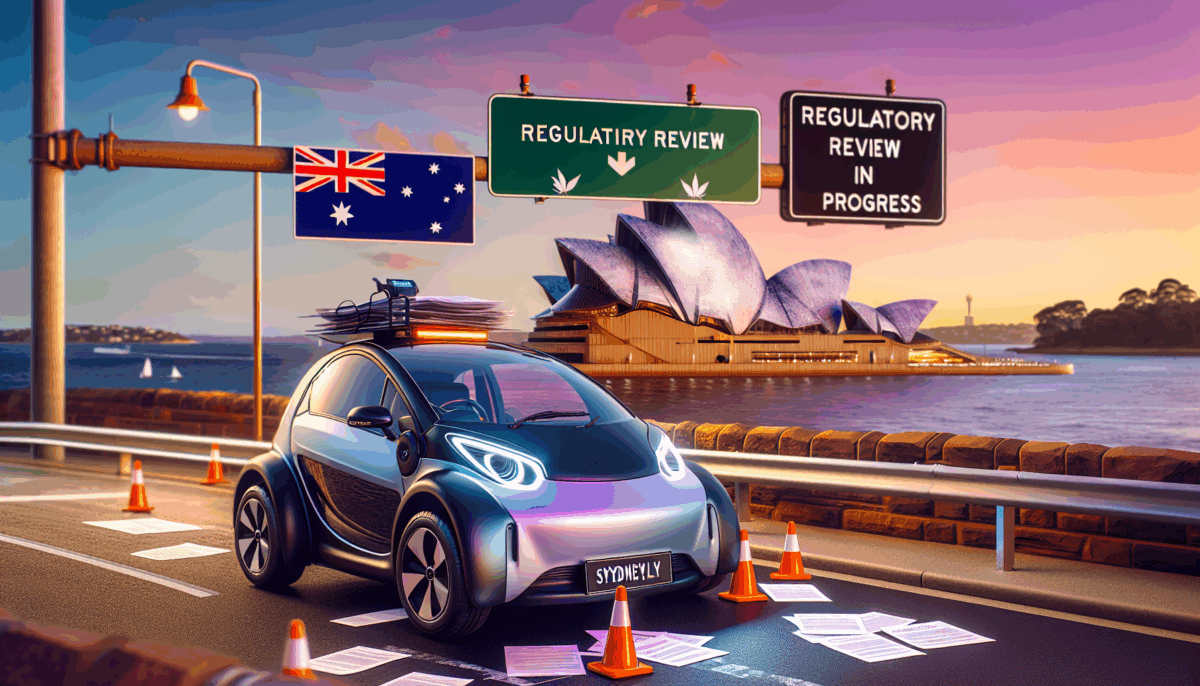
Tesla’s Daring Step: Text Messaging While Driving Function Undergoes Regulatory Review in Australia


We independently review everything we recommend. When you buy through our links, we may earn a commission which is paid directly to our Australia-based writers, editors, and support staff. Thank you for your support!

Australia scrutinizes Tesla's texting feature while driving

Brief Overview

  • Tesla’s Full Self-Driving (FSD) technology could soon permit texting while driving.
  • This capability encounters legal and regulatory obstacles in Australia.
  • Handheld mobile phone usage while driving is currently prohibited by Australian law.
  • Severe penalties and demerit points are enforced for infractions in Australia.
  • Tesla may have to take on liability for accidents that occur with FSD activated.
  • AI-enhanced surveillance cameras are utilized in Australia to enforce mobile usage laws.

Tesla’s Ambitious Plans: Texting and Driving

Elon Musk, famous for his bold declarations, recently stated at the 2026 Tesla Shareholder Meeting that Tesla’s Full Self-Driving (FSD) technology might soon permit drivers to “text and drive” safely in the near future. This announcement has ignited considerable discussion and regulatory examination, particularly in countries like Australia, where mobile phone use while driving is heavily regulated.

Legal Challenges in Australia

Australia’s traffic safety laws are strict, making handheld mobile phone use while driving illegal throughout the nation. This encompasses all forms of texting, scrolling through social media, or even holding the device while stopped at lights. The legal consequences of Tesla’s upcoming FSD features are substantial, as this technology challenges established laws meant to maintain road safety.

Existing Laws and Consequences

In Australia, drivers with valid licenses must follow rigorous regulations that ban most mobile phone usage. Violating these rules can lead to significant fines and demerit points that vary across states. For example, in New South Wales, fines can be as high as A$562 in school zones, along with five demerit points. Repeat offenders face potential license revocation and increased insurance costs, highlighting the necessity of these protective measures.

Technology’s Role in Enforcement

To address unlawful mobile phone usage, Australian states such as NSW, VIC, and QLD utilize AI-powered detection systems to observe drivers. These technologies capture and analyze images for violations, resulting in infringement notices being sent by mail. This automated enforcement supports immediate fines enforced by law enforcement, thereby improving road safety.

Concerns Over Insurance and Liability

Should Tesla move forward with its FSD feature, the company might have to accept liability for accidents that happen while the software is in use. Tesla already provides its own insurance offerings in select areas, possibly leveraging data to assess fault. However, third-party insurance providers may reject claims against Tesla unless there is an official admission of liability, leaving drivers at risk of lacking coverage during incidents.

Conclusion

Tesla’s ambitious initiative to integrate a texting capability via its Full Self-Driving technology faces major regulatory and legal barriers in Australia. While the innovation promises improved safety, it contradicts existing laws meant to minimize distractions while driving. As this discussion progresses, Tesla and regulatory agencies will need to navigate these intricacies to ensure the safety of drivers and compliance with legal standards.

Q: What is Tesla’s upcoming FSD feature?

A: Tesla plans to permit texting while driving with its Full Self-Driving software, anticipated to launch soon.

Q: Are there legal issues in Australia?

A: Indeed, Australia enforces strict regulations against handheld phone usage while driving, presenting challenges for Tesla’s feature.

Q: What penalties exist for unlawful phone usage in Australia?

A: Penalties include fines up to A$1,251 and demerit points, varying by state, with possible license suspension for habitual offenders.

Q: How is mobile phone usage monitored in Australia?

A: AI-driven cameras along with police enforcement issue penalties for violations, ensuring adherence to traffic safety laws.

Q: Will Tesla take responsibility for accidents?

A: Tesla may need to embrace liability for accidents that occur under FSD usage to reduce legal exposure and provide insurance coverage.

Q: What are the insurance concerns for Tesla owners?

A: Owners could encounter difficulties with third-party insurers unless Tesla formally acknowledges liability for incidents related to FSD.

Q: How does this affect new drivers?

A: Learner and P1 license holders face stricter bans on phone usage, reinforcing the development of safe driving practices early on.

NAB Reaches Significant Landmark by Moving Tech Positions In-House


We independently review everything we recommend. When you buy through our links, we may earn a commission which is paid directly to our Australia-based writers, editors, and support staff. Thank you for your support!

NAB’s Tech Evolution: Internal Growth and AI Emphasis

Quick Overview

  • NAB changes its employee-contractor ratio to 70/30, prioritizing employees.
  • 90% of NAB’s applications have transitioned to the cloud.
  • AI adoption has increased to 15,000 team members for improving task efficiency.
  • Over 4,500 engineers at NAB are now employing generative AI for development tasks.
  • Pete Steel is set to join NAB as Group Executive for Digital, Data, and AI soon.
  • NAB’s statutory net profit for FY25 amounts to $6.76 billion.

Reducing Contractor Reliance

The National Australia Bank (NAB) has successfully transformed its workforce structure, emphasizing in-house employees over contractors. At the close of FY25, 71% of the technology and enterprise operations team consists of NAB employees, a notable change from 2018 when contractors accounted for 70% of the workforce. This adjustment underscores the bank’s dedication to lessening external reliance and bolstering internal strengths.

NAB achieves milestone with tech role insourcing

Cloud Transition Achievements

NAB has achieved significant milestones in migrating its applications to the cloud. Currently, 90% of its applications have been transitioned, an increase from 85% just half a year ago. This initiative is part of NAB’s overall plan to enhance operational efficiency and scalability through cloud solutions.

Enhancing AI Integration

AI is increasingly embedded in NAB’s operations. The bank now has more than 4,500 engineers utilizing generative AI for software development, up from 2,500 six months ago. Additionally, 15,000 employees are leveraging AI to optimize routine tasks, and 1,400 frontline staff are using AI-driven tools to improve customer service.

Leadership and Future Directions

The forthcoming appointment of Pete Steel as Group Executive for Digital, Data, and AI is anticipated to further drive NAB’s AI initiatives. Steel’s expertise will aid the bank’s strategic objectives regarding customer experience, employee efficiency, software development, and operational productivity.

Financial Performance

In spite of technological advancements, NAB reported a statutory net profit of $6.76 billion for FY25, a slight decrease from $6.96 billion in FY24. The bank remains committed to aligning technology investments with its long-term strategic vision.

Conclusion

NAB’s technological evolution illustrates a strategic pivot towards insourcing and significant AI adoption. The bank’s initiatives in cloud migration, AI integration, and diminishing contractor reliance reflect its commitment to modernization and operational excellence.

Q: What is NAB’s current employee-contractor ratio?

A: NAB currently operates with a 70/30 ratio favoring employees, reversing the former 30/70 ratio.

Q: What percentage of NAB’s application portfolio has been migrated to the cloud?

A: 90% of NAB’s applications have made the transition to the cloud.

Q: How many NAB employees are utilizing AI for routine tasks?

A: 15,000 NAB employees are using AI to enhance efficiency for routine tasks.

Q: Who is the newly appointed Group Executive for Digital, Data, and AI at NAB?

A: Pete Steel will be joining NAB as the Group Executive for Digital, Data, and AI.

Q: What is NAB’s net profit for FY25?

A: NAB recorded a statutory net profit of $6.76 billion for FY25.

Galaxy Buds3 Wireless Open Type Earbuds Review


We independently review everything we recommend. When you buy through our links, we may earn a commission which is paid directly to our Australia-based writers, editors, and support staff. Thank you for your support!

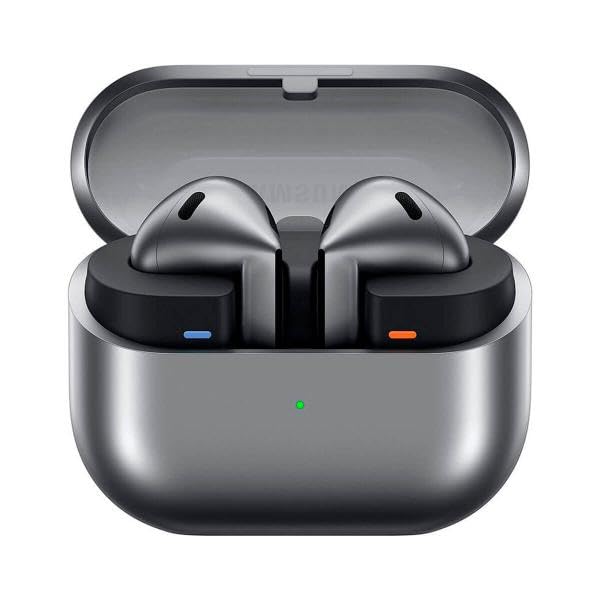
SAMSUNG Galaxy Buds3 Wireless Open Type Earbuds, Adaptive Noise Cancelling, Immersive 360 Hi-Fi Sound, Long Battery Life, IP57 Waterproof, Silver 2026 [Version

Australia Includes Reddit and Kick in Teen Social Media Prohibition


We independently review everything we recommend. When you buy through our links, we may earn a commission which is paid directly to our Australia-based writers, editors, and support staff. Thank you for your support!

Australia’s Growing Teen Social Media Restrictions: Reddit and Kick Included

Australia incorporates Reddit, Kick in teen social media restrictions

Quick Overview

  • Australia broadens its teen social media restrictions to include Reddit and Kick.
  • Penalties reaching $49.5 million for non-compliance by social media companies.
  • Law commences on December 10.
  • eSafety Commissioner calls for ongoing evaluations by technology companies.
  • List of age-limited platforms is fluid due to advancing technology.

Grasping the Ban

The eSafety Commissioner of Australia has enlarged the ambit of its trailblazing teen social media ban to now include Reddit and the live streaming service Kick. This action signifies a proactive approach to assure that platforms primarily facilitating online socialization are subjected to age limitations.

Severe Penalties for Non-Adherence

Starting December 10, social media firms that do not enforce adequate measures to prevent those under 16 from accessing their platforms may incur fines up to $49.5 million. This substantial fine emphasizes Australia’s dedication to protecting younger internet users.

Fluid Nature of the Restricted List

The eSafety Commissioner has indicated that the inventory of age-restricted platforms will be regularly refreshed. As technology progresses and new platforms arise, the criteria for what constitutes an age-restricted platform may alter, requiring continuous assessments by technology companies.

Platforms Currently Not Affected

Certain widely used platforms such as Discord, GitHub, LEGO Play, Roblox, Steam and Steam Chat, Google Classroom, Messenger, WhatsApp, and YouTube Kids are not presently designated as age-restricted. Nevertheless, this classification may shift as their main functions change.

Conclusion

Australia’s historic decision to broaden its teen social media ban to cover Reddit and Kick marks a crucial advancement in online safety. With significant penalties for non-compliance and a flexible stance on the list of restricted platforms, the initiative intends to adjust to the rapid progression of digital technology.

Q: Why did Australia extend its social media ban to encompass Reddit and Kick?

A: Australia has broadened the ban to ensure platforms mainly enabling social interaction are restricted to protect younger users.

Q: What is the penalty for social media companies that fail to comply with the ban?

A: Companies may face fines up to $49.5 million for not taking adequate measures to prevent under-16 users.

Q: When will the new law come into force?

A: The law will become effective on December 10.

Q: Are any platforms currently exempt from this restriction?

A: Yes, platforms like Discord, GitHub, LEGO Play, Roblox, Steam, Google Classroom, Messenger, WhatsApp, and YouTube Kids are currently free from this ban.

Q: Can the list of restricted platforms change over time?

A: Yes, the list is adaptable and will be modified as new platforms appear or existing ones alter their primary use.

Q: What is the function of the eSafety Commissioner in this regulation?

A: The eSafety Commissioner manages the enforcement of the ban and prompts tech firms to continually reassess their platforms.

Apple AirPods Pro 3 Wireless Earbuds Review


We independently review everything we recommend. When you buy through our links, we may earn a commission which is paid directly to our Australia-based writers, editors, and support staff. Thank you for your support!

Apple AirPods Pro 3 Wireless Earbuds, Active Noise Cancelling, Heart Rate Sensor, Hearing Aid, Bluetooth Headphones, Space Audio Sound, USB-C Charging Case, Dustproof and Sweatproof and Water

US Prosecutors Charge Cybersecurity Specialists with Operating Cybercrime Network


We independently review everything we recommend. When you buy through our links, we may earn a commission which is paid directly to our Australia-based writers, editors, and support staff. Thank you for your support!

Brief Overview

  • Three experts in cybersecurity have been charged with operating a ransomware scheme in the United States.
  • Those identified include Ryan Goldberg and Kevin Martin.
  • The scheme reportedly involved partnership with the ALPHV BlackCat hacking group.
  • The charges were brought in federal court in Miami.
  • Goldberg and Martin were affiliated with Sygnia and DigitalMint, respectively.
  • Both organizations are aiding the investigation.

Cybercrime Allegations

Three cybersecurity specialists from the US are accused of plotting a ransomware operation. The implicated, including Ryan Goldberg and Kevin Martin, reportedly collaborated with the ALPHV BlackCat hack group to extort US companies by encrypting their systems and demanding cryptocurrency payments.

US prosecutors allege cybersecurity experts operated a cybercrime scheme

Indictment Details

The charges, submitted in Miami, accuse the individuals of engaging in a complex cybercrime operation. Ryan Goldberg has been arrested, whereas Kevin Martin has entered a not guilty plea. The indictment does not name the affected companies but suggests their businesses extend across multiple US states, including California and Florida.

Professional Histories

Kevin Martin was associated with DigitalMint, an organization focused on cybercrime incident response. Ryan Goldberg worked as an incident response manager at Sygnia. Both companies have expressed they are not involved in any wrongdoing and are assisting law enforcement. Goldberg’s employment with Sygnia was terminated in light of the allegations.

Responses from Corporations

DigitalMint has acknowledged that a former staff member is facing indictment and is cooperating as a witness. Sygnia, upon gaining awareness of the developments, has also collaborated with legal authorities, ensuring that their company is not included in the investigation.

Conclusion

The indictment of three cybersecurity professionals accused of managing a ransomware operation has raised alarms regarding insider threats in the cybersecurity sector. With both DigitalMint and Sygnia collaborating with the investigation, this case emphasizes the significance of internal security protocols and organizational accountability.

Q: What charges are levied against the cybersecurity professionals?

A: They are accused of executing a ransomware scheme alongside the ALPHV BlackCat group to extort businesses through network encryption for cryptocurrency ransoms.

Q: Who are the implicated individuals?

A: The individuals identified are Ryan Goldberg and Kevin Martin, with an additional unnamed co-conspirator cited.

Q: Which companies were they affiliated with?

A: Ryan Goldberg was part of Sygnia, while Kevin Martin was associated with DigitalMint.

Q: How have the companies responded to the allegations?

A: Both companies have refuted involvement and are collaborating with the investigation. Sygnia has terminated Goldberg’s employment.

Q: In which states are the affected businesses located?

A: The impacted companies are situated in California, Florida, Virginia, and Maryland.