Matthew Miller, Author at Techbest - Top Tech Reviews In Australia - Page 59 of 187

Meta Introduces Revolutionary AI Model Developed by Superintelligence Team


We independently review everything we recommend. When you buy through our links, we may earn a commission which is paid directly to our Australia-based writers, editors, and support staff. Thank you for your support!


Meta’s Muse Spark AI Model: Advancing Superintelligence

Meta introduces Muse Spark AI model from superintelligence team

Brief Overview

  • Meta reveals Muse Spark, an innovative AI model from its superintelligence team.
  • The model is integral to Meta’s ambition to reclaim its AI dominance.
  • Initially launch on Meta AI application and website.
  • Future plans to incorporate Muse Spark into WhatsApp, Instagram, and Facebook chatbots.
  • Muse Spark is set to challenge AI leaders like Google and OpenAI.
  • Meta hints at future monetisation strategies through AI-based shopping features.

Meta’s Bold Move in AI

Meta Platforms has officially released Muse Spark, the first artificial intelligence model from its newly established superintelligence team. This action is part of Meta’s proactive approach to rival AI powerhouses such as Google and OpenAI, following a substantial US$14.3 billion ($20.3 billion) investment and strategic hires including Scale AI CEO Alex Wang.

The Muse Spark Model

Muse Spark is the first in a lineup of models, internally referred to as Avocado, aimed at revitalising Meta’s AI functions. Initially, this model will be available exclusively via the Meta AI app and website, with plans to transition from the Llama models that currently power chatbots on major platforms like WhatsApp and Instagram.

Evaluation and Performance

Although Meta has not revealed Muse Spark’s size, external assessments suggest its competitive capabilities. It demonstrates strong performance in language and visual comprehension, yet it falls short in coding and abstract reasoning. The model has secured fourth place on an AI testing index compiled by Artificial Analysis.

Future Vision: Plans Ahead

Meta CEO Mark Zuckerberg has voiced optimism regarding the model’s prospects, highlighting continuous enhancements. The company intends to launch larger iterations of Muse Spark and incorporate monetisation features via AI-enhanced shopping functionalities. These initiatives are aimed at boosting user engagement within Meta’s ecosystem.

Improved User Experience

Muse Spark is tailored to assist users with daily tasks, such as estimating caloric intake from a meal photograph or visualising a product within a home environment. The addition of a Contemplating Mode, which facilitates concurrent agent operation, heightens its reasoning abilities, akin to Google’s Gemini Deep Think and OpenAI’s GPT Pro.

Conclusion

The launch of Muse Spark by Meta signifies an important advance in its AI trajectory, endeavouring to reclaim its competitive vitality. With substantial funding and strategic foresight, Meta is ready to harness AI advancements to boost user interaction and pursue fresh monetisation opportunities.


Q: What is Muse Spark?

A: Muse Spark is Meta’s new AI model from its superintelligence team, crafted to contend with premier AI technologies.

Q: Where can Muse Spark be accessed?

A: Muse Spark is currently available on the Meta AI app and website.

Q: How does Muse Spark stack up against other AI models?

A: Muse Spark performs notably in language and visual understanding but shows weaknesses in coding and abstract reasoning.

Q: What are Meta’s intentions for Muse Spark?

A: Meta is planning to incorporate Muse Spark into its platforms and develop larger versions for extended applications and monetisation.

Q: What functionalities does Muse Spark provide?

A: Muse Spark features include calorie estimation from images and product visualisation, along with a Contemplating Mode for improved reasoning.

Q: How does Meta aim to monetise Muse Spark?

A: Meta plans to integrate AI-based shopping features within its platforms, guiding users to purchase items directly.

Unlock Complimentary MCA Access with Your NFTs!


We independently review everything we recommend. When you buy through our links, we may earn a commission which is paid directly to our Australia-based writers, editors, and support staff. Thank you for your support!

Brief Overview

  • The Museum of Contemporary Art Australia is now allowing NFTs for entry fees.
  • This unique offer is active from 13 to 27 April 2026 during the Data Dreams exhibition.
  • 95 tickets are on offer, representing the 95% of NFTs considered without financial value.
  • The Data Dreams exhibition highlights the contribution of AI to contemporary art.
  • It provides an insightful perspective on the relationship between technology and value.

Transforming Digital Fragments into Cultural Treasure

The Museum of Contemporary Art Australia (MCA) is ingeniously reinventing NFTs through its new program. By permitting NFTs as payment for entry to the Data Dreams: Art and AI exhibition, the MCA grants Australians the opportunity to exchange digital remnants for enriching cultural encounters. This initiative is innovative and serves as a commentary on the fleeting nature of digital art’s worth.

How to Trade Your NFT for Entry

From 13 to 27 April 2026, NFT owners may trade their digital possessions for entry tickets. The method is simple: visit the admissions desk, express your desire to pay with NFTs, and send the asset to the MCA’s designated wallet address. The museum welcomes NFTs from any blockchain, ensuring accessibility for all digital asset collectors.

What Awaits You at Data Dreams

Data Dreams: Art and AI is a pioneering exhibition that highlights AI’s creative capabilities. It features pieces like Fabien Giraud’s The Feral, an AI-generated film spanning a millennium, and Angie Abdilla’s Meditation on Country, which merges Indigenous wisdom with scientific exploration. Kate Crawford and Vladan Joler’s Anatomy of an AI System critically examines the framework underlying AI technologies.

A Thorough Exploration of the Machine Mind

The exhibition addresses intricate subjects, including the environmental effects of AI and the concealed human labor that supports technological systems. Trevor Paglen’s Adversarially Evolved Hallucinations and Hito Steyerl’s Mechanical Kurds question societal perceptions of surveillance and the role of AI.

Details to Note

Although NFTs can grant you entry, they will not be incorporated into the MCA’s collection. Rather, they serve a promotional function, blending digital and physical art experiences. Standard tickets are available for purchase, and MCA members, along with those under 18, can enter free of charge. Supported by Destination NSW, Data Dreams is a key event in the Sydney International Art Series.

Recap

The MCA’s initiative allowing NFT-for-entry is an intelligent convergence of technology and art, offering a new perspective on the significance of digital assets in a cultural framework. The Data Dreams exhibition encourages viewers to investigate the influence of AI on art, prompting reflection on the promises and realities of technology.

Q&A

Q: What is the duration of the NFT entry offer?

A: The offer is available from 13 April to 27 April 2026.

Q: Which blockchains are allowed for NFT entry?

A: The MCA accepts NFTs from any blockchain.

Q: How many tickets can I obtain through the NFT offer?

A: There are 95 tickets available, representing the 95% of NFTs now viewed as worthless.

Q: What is the central theme of the Data Dreams exhibition?

A: The exhibition investigates the convergence of art, technology, and value, with a particular focus on AI’s influence in contemporary art.

Q: Will my NFT become part of the MCA’s permanent collection?

A: No, the NFTs are only utilized for promotional objectives during this initiative.

Q: Are there alternative options for entry to the exhibition?

A: Yes, regular tickets can be purchased, and entry is free for both MCA members and guests aged 18 and younger.

Q: Is there a limitation on the number of NFTs I can use for entry?

A: The offer is restricted to one NFT per admission, with a total of 95 tickets available.

Bewinner Wireless Earbuds Gaming Earphones Review


We independently review everything we recommend. When you buy through our links, we may earn a commission which is paid directly to our Australia-based writers, editors, and support staff. Thank you for your support!

Bewinner Wireless Earbuds Gaming Earphones, BT 5.2 Noise Cancelling Sports Earbuds with Mic, Cool Light Effects, Headphones with Charging Case for Gamer, Mobile Phone (Black)

FBI Acts: Remote Update of Personal Routers to Remove Russian GRU Spies


We independently review everything we recommend. When you buy through our links, we may earn a commission which is paid directly to our Australia-based writers, editors, and support staff. Thank you for your support!

FBI’s Tactical Move: Remote Router Updates to Combat Russian Cyber Espionage

Brief Overview

  • The FBI executed remote patches on thousands of routers without the owners’ prior awareness.
  • Operation Masquerade focused on eliminating Russian GRU’s harmful DNS resolvers.
  • Devices from TP-Link and Mikrotik were compromised by Russian agents.
  • The FBI maintained normal operations of routers while eliminating threats.
  • Similar remote-update methods were previously implemented in 2021.
  • Security agencies recommend updating firmware and altering default credentials.
  • TP-Link disputes allegations of Chinese government influence.

Operation Masquerade: A Collaborative Initiative

The US Federal Bureau of Investigation (FBI) recently undertook an extraordinary measure by remotely updating thousands of privately held home and small office routers. This initiative was part of Operation Masquerade, a court-sanctioned effort aimed at removing Russian military intelligence agents, designated as GRU, from affected routers. These agents had been secretly capturing passwords and authentication tokens, creating a significant security risk.

FBI's remote router updates to combat Russian GRU espionage

Technical Implementation and Outcomes

Announced by the US Department of Justice (DoJ) and FBI, the operation entailed dispatching specific commands to previously compromised routers. These commands aimed to gather evidence of GRU activity and eradicate the harmful DNS resolvers they had installed. Russian intelligence operatives exploited weaknesses in routers to redirect user traffic to data-snatching sites.

The FBI utilized similar remote access techniques to substitute the malicious resolvers with legitimate ones managed by internet service providers. The operation was meticulously tested to confirm it did not disrupt the routers’ standard functionality. Users can undo changes by performing a factory reset on their routers.

The Fancy Bear Threat

The DoJ linked these Russian intrusions to a group identified as Fancy Bear, also known as Forest Blizzard, Sofacy, and APT 28. This group has a track record of exploiting TP-Link routers worldwide, modifying DNS configurations to reroute traffic to Russian-operated servers. The operation, labeled FrostArmada by Lumen’s Black Lotus Labs, affected over 18,000 routers across 120 nations.

Security Recommendations

Security professionals suggest several protective strategies for users, including applying firmware updates, checking DNS resolver configurations, and changing default device passwords. Additionally, disabling remote management interfaces accessible from the Internet is recommended to prevent future incidents.

TP-Link and the Global Router Industry

TP-Link, a significant entity in the home router market, found itself at the center of these breaches. Although the US Federal Communications Commission has announced a prohibition on importing new foreign-manufactured consumer routers due to security issues, TP-Link has defended its standing, claiming it has no affiliations with the Chinese government.

Conclusion

The FBI’s Operation Masquerade signifies a crucial advancement in combating cyber espionage conducted by Russian military intelligence. Through strategic remote updates, the FBI has managed to dismantle malicious set-ups without disrupting regular router operations. The initiative underscores the necessity of maintaining current security protocols and the continual fight against worldwide cyber threats.

Q&A

Q: How was the FBI able to remotely update routers without owner permission?

A: The FBI received court authorization, enabling them to send specific commands to compromised routers as part of Operation Masquerade.

Q: What vulnerabilities did Russian GRU take advantage of?

A: GRU exploited authentication bypass vulnerabilities to modify DNS settings in routers from TP-Link and Mikrotik, redirecting traffic to harmful sites.

Q: Can users revert the modifications made by the FBI?

A: Yes, users can revert the FBI’s changes by performing a factory reset on their routers.

Q: What steps can router owners take for self-protection?

A: Owners should apply firmware updates, check DNS resolver settings, change default passwords, and disable exposed remote management interfaces.

Q: How extensive was the GRU’s operation?

A: The FrostArmada campaign impacted over 18,000 routers across 120 countries, targeting both consumer devices and organizations.

Q: What is TP-Link’s perspective on the matter?

A: TP-Link has indicated that it has no connection to the Chinese government and is dedicated to preserving its reputation.

Microsoft States New Windows Recall Bypass Is Not a Security Vulnerability


We independently review everything we recommend. When you buy through our links, we may earn a commission which is paid directly to our Australia-based writers, editors, and support staff. Thank you for your support!

Microsoft Addresses Security Issues Related to Windows Recall Bypass

Microsoft Counters Windows Recall Security Concerns

Microsoft denies security flaw in Windows Recall bypass

Quick Overview

  • Microsoft defends the Recall feature in Windows 11 against purported security vulnerabilities.
  • Researcher Alexander Hagenah showcases a newly discovered bypass technique.
  • Microsoft asserts that this method functions within the security framework of Recall.
  • Recall integrates robust encryption and biometric verification mechanisms.
  • The security issues concern the vulnerability of the AIXHost.exe process.
  • Microsoft reasserts that there is no possibility of direct access to snapshots or encryption keys.

Context of Recall’s Security Apprehensions

Recall, an AI-enhanced capability in Windows 11, allows users to locate content on their devices, including sensitive information such as screenshots and browsing history. It came under fire in 2024 when researcher Alexander Hagenah uncovered weaknesses that permitted data extraction from an unprotected database. Microsoft halted the feature’s rollout and redesigned it, reintroducing it in April 2025.

Recent Bypass Discovery

Hagenah has recently pinpointed another vulnerability in the revamped Recall, claiming it enables complete content extraction from the AI tool’s SQLite database. This bypass occurs through the AIXHost.exe process, which lacks specific security restrictions and safeguards.

Microsoft’s Reaction

Microsoft disputes the notion that the bypass represents a security flaw, claiming it conforms to Recall’s established security schema. The corporation emphasizes its architectural design, which prevents any processes external to Virtualisation-Based Security (VBS) Enclaves from directly accessing encryption keys or snapshots.

Technical Perspectives

Recall’s security improvements comprise VBS enclaves, AES-256-GCM encryption, and Windows Hello authentication. Nonetheless, the AIXHost.exe process, essential for displaying the Recall timeline, operates beyond these secure enclaves, making it vulnerable to code injections without elevated privileges.

Conclusion

Microsoft asserts that the reported bypass concerning the Windows Recall utility does not constitute a security vulnerability, as it remains within the confines of the existing security architecture. In spite of concerns raised by researcher Alexander Hagenah, Microsoft reassures users that its infrastructure effectively curtails potential data leaks.

Q&A: Responding to Reader Queries

Q: What does the Windows Recall utility do?

A: Recall is an AI-powered feature in Windows 11 that aids users in searching and managing content, including screenshots and web history, on their devices.

Q: What was the newly identified vulnerability?

A: Researcher Alexander Hagenah discovered a technique to extract data from Recall’s SQLite database by taking advantage of the AIXHost.exe process, which has insufficient security protections.

Q: How has Microsoft reacted to the security concerns?

A: Microsoft maintains that the bypass is consistent with Recall’s documented security framework and does not constitute a security flaw, as it necessitates local user access and operates within existing protective measures.

Q: What safeguards are implemented for Recall?

A: Recall utilizes VBS enclaves, AES-256-GCM encryption, and Windows Hello biometric authentication to protect user information.

Q: Are there any dangers to users from this bypass?

A: Microsoft states that the bypass necessitates local access and functions within the outlined security framework, indicating minimal risk to users under typical circumstances.

Sennheiser TV Clear Earphones Review


We independently review everything we recommend. When you buy through our links, we may earn a commission which is paid directly to our Australia-based writers, editors, and support staff. Thank you for your support!

Sennheiser TV Clear Earphones, Wireless TV Headphones with Voice Intelligibility and Noise Cancellation, Ideal for Bluetooth-Enabled TVs, Without Transmitter

Huawei FreeBuds SE 4 ANC Wireless Earbuds Review


We independently review everything we recommend. When you buy through our links, we may earn a commission which is paid directly to our Australia-based writers, editors, and support staff. Thank you for your support!

Huawei FreeBuds SE 4 ANC Wireless Earbuds, 50 Hours Battery Life, Multi-Mode Action Noise Cancelling for Commuter and Office, 4.3g Lightweight Headphones, Bluetooth 5.4, Clear Calling, IP54

Bendigo Bank Progresses IT Revamp with Collaborations from Infosys and Genpact


We independently review everything we recommend. When you buy through our links, we may earn a commission which is paid directly to our Australia-based writers, editors, and support staff. Thank you for your support!

Bendigo Bank’s IT Evolution with Infosys and Genpact

Quick Summary

  • Bendigo Bank enters into a seven-year IT agreement with Infosys and a six-year contract with Genpact.
  • The partnerships are aimed at advancing IT service delivery and enhancing processes.
  • Changes to the workforce are anticipated, affecting both technology and business teams.
  • Bendigo Bank pledges to manage transitions thoughtfully and with dignity.

Revolutionary IT Collaborations

Bendigo and Adelaide Bank has initiated a major transformation of its technology operations, ushering in a new phase through its strategic alliances with Infosys and Genpact. The agreements, lasting seven and six years respectively, are poised to instigate considerable alterations within the bank’s IT framework.

Bendigo Bank IT evolution with Infosys and Genpact

Effects on Staffing

The bank has recognised that these collaborations will affect its technology and business sectors, although precise information on the degree of impact has not been revealed. CEO Richard Fennell emphasises the necessity of approaching these changes with compassion, acknowledging the difficult time for affected employees.

Infosys: Boosting IT Competencies

With the new agreement, Infosys is tasked with significantly enhancing Bendigo Bank’s IT service delivery. The partnership aims to bolster the bank’s skills in software development and artificial intelligence, fields in which Infosys has already shown significant proficiency.

Genpact: Improving Processes

Genpact, recognised for its capabilities in digital transformation, will concentrate on process improvement and delivery. This partnership is anticipated to elevate productivity and enhance risk management, aligning with Bendigo Bank’s strategic goals.

Conclusion

The partnerships between Bendigo and Adelaide Bank with Infosys and Genpact signify a transformative era in technology. While adjustments to the workforce are expected, the bank is dedicated to managing these shifts thoughtfully. The alliances are set to foster sophisticated IT service delivery and process improvement, laying a strong groundwork for future expansion.

FAQs

Q: What prompted Bendigo Bank to collaborate with Infosys and Genpact?

A: The partnerships seek to enhance IT service delivery, improve capabilities, and streamline processes, preparing the bank for prospective growth.

Q: What will be the impact of these partnerships on the bank’s workforce?

A: Workforce adjustments are anticipated, affecting technology and business teams, though specific details are still to be determined.

Q: What is Infosys’s role in the bank’s transformation?

A: Infosys will focus on improving IT service delivery and providing expertise in software development and artificial intelligence.

Q: How will Genpact contribute to Bendigo Bank?

A: Genpact will apply its expertise in process improvement and delivery, aiming to enhance productivity and strengthen risk management.

Q: What is the duration of the contracts with Infosys and Genpact?

A: The contract with Infosys is for seven years, and the agreement with Genpact is for six years.

Q: How does Bendigo Bank plan to manage workforce changes?

A: The bank is committed to managing transitions sensitively and respectfully, recognising the difficulties faced by impacted employees.

AI, Sovereignty, and Visibility: The Emerging Foundations of Cyber Strategy Evolution


We independently review everything we recommend. When you buy through our links, we may earn a commission which is paid directly to our Australia-based writers, editors, and support staff. Thank you for your support!

AI, Sovereignty, and Visibility: Transforming Cyber Strategy

Quick Overview

  • Data sovereignty has become a strategic priority for organisations due to geopolitical and regulatory dynamics.
  • The emergence of “shadow AI” creates governance challenges as employees engage with AI tools beyond established frameworks.
  • AI integration is significantly outpacing the formation of essential governance frameworks.
  • The threat landscape is swiftly evolving, with vulnerabilities being exploited more rapidly than ever before.
  • Numerous organisations fail to maximise their existing security solutions due to visibility challenges and disjointed models.
  • Eliminating barriers between infrastructure and security teams is vital for an effective cyber strategy.

Data Sovereignty as a Strategic Concern

With the ongoing evolution of the digital realm, data sovereignty has become a crucial issue for Australian businesses. Julian Challingsworth, MD & CEO of Infotrust, underscores the vital need to comprehend data location and access permissions. As geopolitical tensions rise and regulatory demands tighten, companies must adeptly handle these hurdles while fulfilling customer needs. Data governance and procurement strategies should align with national jurisdictions, establishing data sovereignty as a strategic concern.

AI, Sovereignty, and Visibility: Cyber Strategy Transformation

Tackling “Shadow AI” Issues

Challingsworth emphasizes the challenge of “shadow AI,” where staff utilize AI tools outside sanctioned governance protocols. This practice introduces considerable risks, as boards might remain uninformed about the scale of these activities within their organisations. Proper oversight and management of AI tools are essential to safeguard data integrity and security.

The Necessity for AI Governance

As AI adoption accelerates, organisations encounter familiar obstacles reminiscent of the initial days of cloud computing. Simon McKay, CEO of Cyber at Infotrust, highlights the urgent need for solid governance structures to oversee AI-related risks. The swift embrace of AI technologies demands effective guardrails to secure these tools and optimize their benefits.

The Shifting Threat Landscape

The threat environment is intensifying, with the interval between vulnerability detection and exploitation drastically shortening. McKay observes that vulnerabilities, which previously remained dormant for months, are now being exploited within days or even hours. AI technologies are amplifying both the scale and complexity of cyber-attacks, emphasizing the necessity for vigilant security measures.

Aiming to Optimize Current Cyber Resources

Dan Suto, Executive General Manager of Managed Technology at Infotrust, asserts that many organisations already hold the necessary cyber capabilities but are not fully leveraging them. Visibility remains a critical challenge, as it is impossible to protect that which is unseen. Organisations need to dismantle silos between their infrastructure and security teams to develop a unified cyber strategy.

Finding a Balance Between Technology Adoption and Governance

For rapidly evolving organisations, the urgency to integrate new technologies often surpasses governance frameworks, posing future risks. Suto advises achieving a balance between swift technological adoption and strong governance to reduce potential security vulnerabilities.

Conclusion

As cyber threats continue to evolve, Australian organisations must traverse the complexities of data sovereignty, AI governance, and visibility. By confronting these challenges, companies can bolster their cyber resilience while promoting innovation and growth. An effective cyber strategy necessitates coordinated efforts across infrastructure and security teams, ensuring that existing resources are fully utilized.

Q&A Section

Q: Why is data sovereignty increasingly viewed as a strategic issue?

A: Data sovereignty is essential due to geopolitical uncertainties, regulatory requirements, and customer expectations. Organisations must ensure their data governance complies with national laws and contractual obligations.

Q: What does “shadow AI” refer to, and why is it concerning?

A: “Shadow AI” pertains to the use of AI tools by staff members without formal approval or governance. It poses risks as it can result in unmonitored data processing and potential security vulnerabilities.

Q: In what way is AI adoption surpassing governance frameworks?

A: Organisations are swiftly integrating AI technologies without fully establishing the governance structures required to manage the related risks, mirroring patterns seen during early cloud adoption.

Q: What obstacles do organisations confront in the current threat environment?

A: The duration between vulnerability detection and exploitation is diminishing, and AI is enhancing the sophistication of attacks. Organisations must adopt robust security measures to keep pace with these developments.

Q: How can organisations enhance their current cyber capabilities?

A: By increasing visibility and breaking down silos between infrastructure and security teams, organisations can more effectively utilise their existing security resources and capabilities.

Q: What risks arise from adopting technology faster than governance?

A: Rapid technology adoption without sufficient governance can result in security risks and vulnerabilities, as governance frameworks may not evolve at the same speed as technological advancements.

Wireless Earbuds Bluetooth 5.3 Headphones 2024 Wireless Headphones in Ear with ENC Mic Review


We independently review everything we recommend. When you buy through our links, we may earn a commission which is paid directly to our Australia-based writers, editors, and support staff. Thank you for your support!

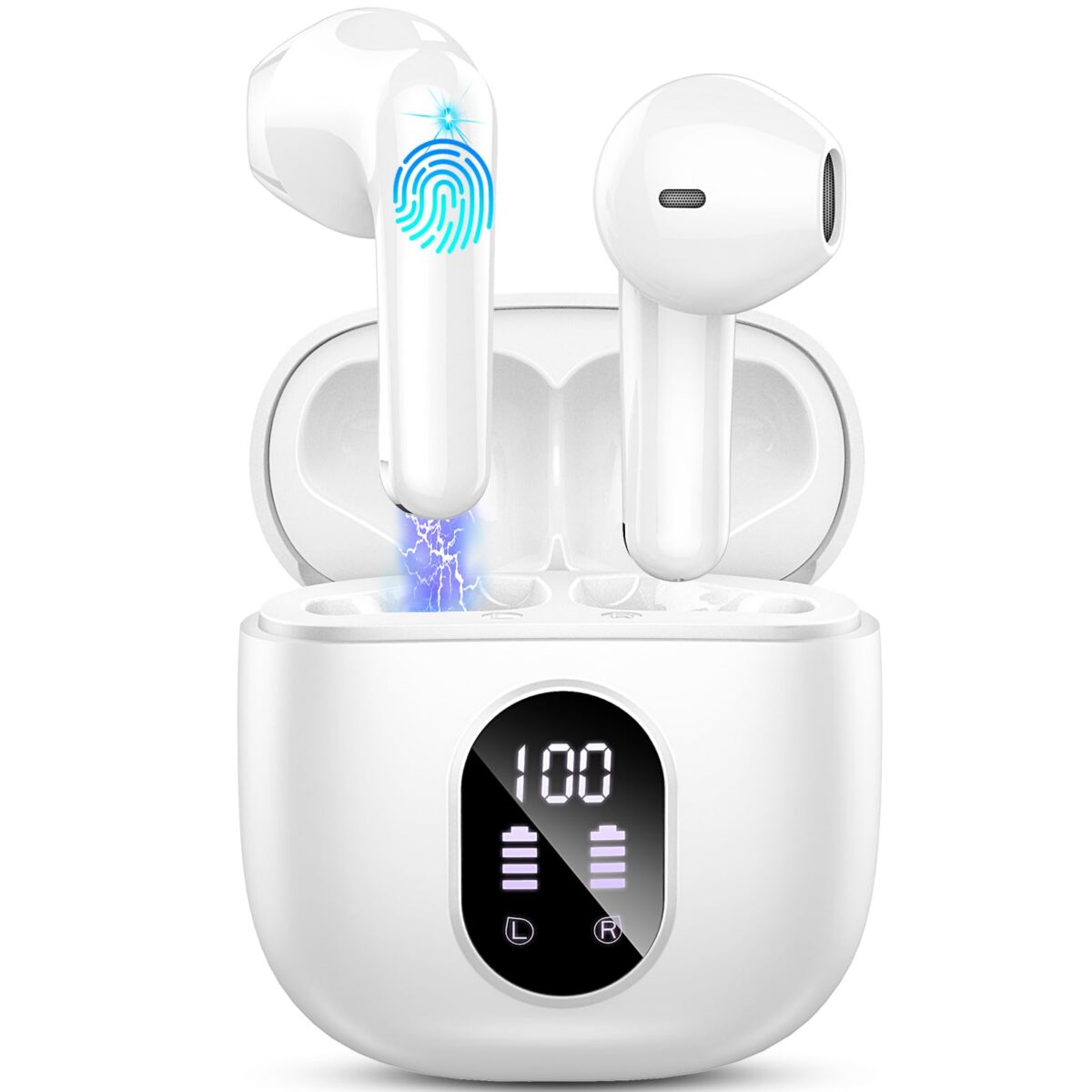
Wireless Earbuds, Bluetooth 5.3 Headphones 2024 Wireless Headphones in Ear with ENC Mic, Bluetooth Earphones Noise Cancelling Ear buds with 50H Hifi Stereo, IP7 Waterproof Headset, USB-C, LED Display