Matthew Miller, Author at Techbest - Top Tech Reviews In Australia - Page 156 of 187

**Minister for Climate Action and Energy Chris Bowen to Address Everything Electric Sydney**


We independently review everything we recommend. When you buy through our links, we may earn a commission which is paid directly to our Australia-based writers, editors, and support staff. Thank you for your support!
Quick Overview: Main Points

  • The Everything Electric exhibition is coming back to Sydney Olympic Park from 7-9 March 2026.
  • Participants can check out a diverse selection of electric vehicles, including cars, motorbikes, e-bikes, e-boats, e-scooters, and e-skateboards.
  • Guests will have the chance to test drive the newest EV models from companies like Polestar, BMW, Audi, BYD, Genesis, GWM, Hyundai, and MG.
  • Chris Bowen MP, Minister for Climate Change and Energy, will join Robert Llewellyn for a Fireside Chat on 7 March at 12 PM.
  • More than 25 expert-led live theatre sessions will delve into topics on electric transport and home energy.
  • Ticket prices range from A$20 to A$60, and children aged 15 and under can enter for free.

Everything Electric Sydney 2026: What to Look Forward To

The eagerly awaited Everything Electric exhibition returns to Sydney Olympic Park from 7-9 March 2026. As one of the largest events focused on electric vehicles (EVs) and clean energy in Australia, this exhibition offers an interactive experience for both fans and industry representatives. Attendees can delve into the latest advancements in electric transportation, renewable energy alternatives, and sustainable lifestyles.

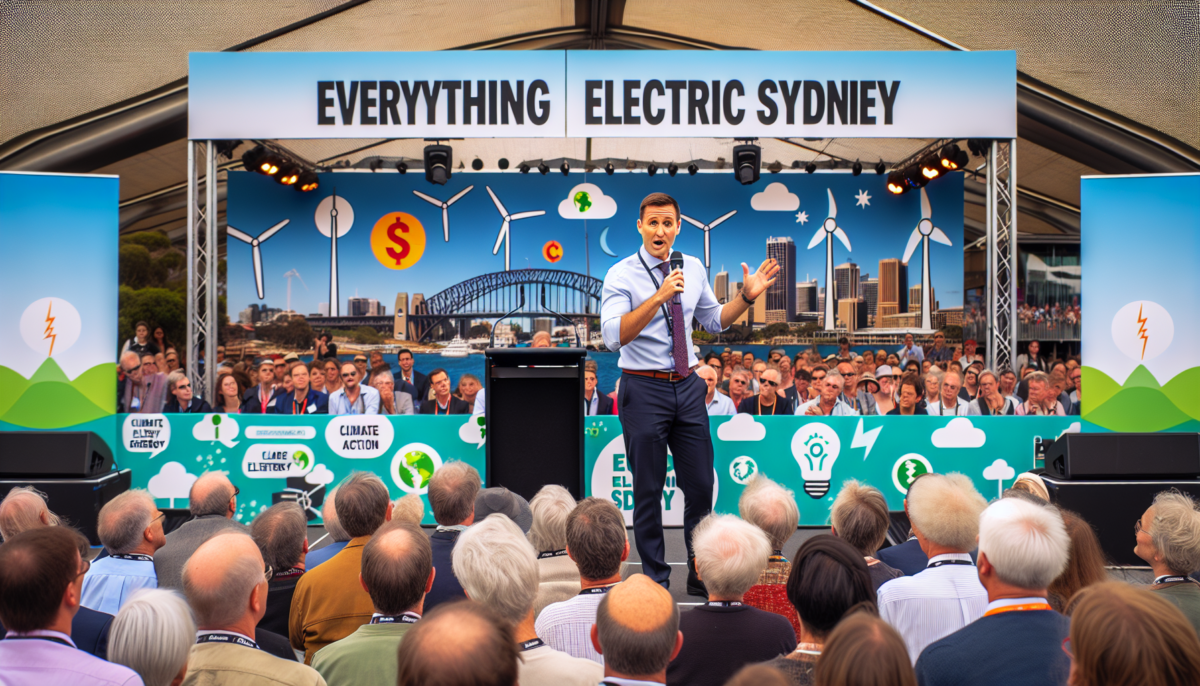
Chris Bowen to speak at Everything Electric Sydney event

Electric Vehicles Available for Viewing and Test Drives

A major attraction of the event is the comprehensive test drive program, allowing guests to experience the newest electric models. Renowned brands like Polestar, BMW, Audi, BYD, Genesis, GWM, Hyundai, and MG will present their latest EV offerings. Whether interested in a stylish sedan, a robust SUV, or a handy e-bike, the Everything Electric exhibition guarantees a varied selection.

The Importance of Test Driving

For anyone contemplating a transition to an EV, test driving is a vital process. It grants prospective buyers the chance to feel the driving experience, explore the range, and assess the features of different models firsthand. As Australia’s EV market continues to expand rapidly, the exhibition provides an incredible opportunity to compare various brands in a single venue.

Live Theatre Presentations and Expert Discussions

In addition to showcasing vehicles, the event will feature over 25 live theatre presentations led by experts and Fully Charged hosts. These sessions will cover an array of subjects, including the future of electric transport, home energy solutions, and the most recent advancements in battery technology.

Highlighted Topics

  • Transitioning to an electric vehicle
  • Charging infrastructure and alleviating range concerns
  • Integrating home solar and battery storage
  • Government initiatives and incentives for embracing clean energy
Chris Bowen discusses electric vehicle policies at Everything Electric Sydney

Chris Bowen’s Fireside Discussion

Chris Bowen MP, the Minister for Climate Change and Energy, will serve as a principal speaker at the event. On Friday, 7 March at 12 PM, he will participate in a Fireside Chat with Robert Llewellyn, the founder of Fully Charged. This discussion, taking place on the GIGA Theatre stage, is expected to address Australia’s energy transition, governmental policies, and the future landscape of electric mobility.

Relevance for Australia

As Australia aims for net-zero emissions, the policies and initiatives discussed by Bowen will be pivotal for both businesses and consumers. His involvement in the event underscores the government’s dedication to promoting EV adoption and clean energy alternatives.

Event Outline and Ticket Pricing

The Everything Electric exhibition is an inclusive event that appeals to individuals, families, and industry specialists. Here’s a ticket pricing overview:

  • General Admission (3-day access): A$60.00
  • Single-day tickets: A$40.00 (Friday or Saturday)
  • Sunday Access: A$20.00
  • Children 15 years and under: Free entry

For more information on the complete theatre program and to buy tickets, visit Everything Electric Australia.

Conclusion

The Everything Electric exhibition in Sydney is poised to be the most extensive event for EVs and clean energy solutions in Australia. From experiencing the latest electric vehicles to engaging in expert discussions, the event provides something for everyone. With Chris Bowen MP addressing the nation’s energy future and a variety of interactive sessions, this is a must-attend event for those passionate about the shift towards sustainable transport and energy alternatives.

Common Inquiries

Q: What is the Everything Electric exhibition?

A:

The Everything Electric exhibition focuses on electric vehicles, renewable energy, and sustainable technologies. It includes vehicle displays, test drives, expert talks, and interactive discussions on clean energy solutions.

Q: Where is the event held and on what dates?

A:

The event will take place at Sydney Olympic Park from 7-9 March 2026.

Q: Will there be opportunities to test drive electric vehicles at the event?

A:

Yes, attendees can experience the latest EV models from brands such as Polestar, BMW, Audi, BYD, Genesis, GWM, Hyundai, and MG.

Q: What subjects will be discussed in the live theatre sessions?

A:

Subjects include information on adopting electric vehicles, charging infrastructure, home energy options, and governmental policies regarding clean energy.

Q: What is the ticket pricing?

A:

General admission for the three-day event is A$60.00. Tickets for Friday or Saturday cost A$40.00, while Sunday tickets are A$20.00. Children 15 and under can enter for free.

Q: Why is Chris Bowen’s Fireside Chat important?

A:

Chris Bowen MP, as Minister for Climate Change and Energy, will share insights on Australia’s energy directives, incentives for EV adoption, and the transition to clean energy.

Q: Is the event family-friendly?

A:

Yes, the event is designed for families, offering free entry for children under 15 and engaging exhibits for all ages.

Q: How can I buy tickets?

A:

Tickets are available for purchase online at Everything Electric Australia.

Four Russians Taken into Custody in Worldwide Sweep Against Phobos Ransomware


We independently review everything we recommend. When you buy through our links, we may earn a commission which is paid directly to our Australia-based writers, editors, and support staff. Thank you for your support!

Worldwide Operation Against Phobos Ransomware Results in Arrests

Phobos ransomware operation leads to arrests

Brief Overview

  • Four Russian suspects apprehended for deploying Phobos ransomware.
  • These arrests occurred during a worldwide law enforcement initiative across 14 nations.
  • The operation targeted the 8Base ransomware collective, leading to the confiscation of 27 servers.
  • More than 400 firms were alerted by authorities regarding potential ransomware risks.
  • Phobos ransomware mainly focuses on small to medium enterprises with inadequate cybersecurity.
  • Recent arrests in South Korea and Italy have notably diminished the Phobos network.

Global Law Enforcement Responds

A coordinated international law enforcement effort has ensnared four Russian individuals accused of operating Phobos ransomware. Europol verified that the combined actions of agencies from 14 countries succeeded in dismantling 27 servers utilized by the cybercrime organization.

Who Were the Targets of the Operation?

The arrested individuals are said to have been pivotal players in the 8Base ransomware collective, a cybercriminal group that orchestrates extortion against businesses in Europe and beyond. Their tactics included encrypting confidential data and demanding ransom for decryption.

Phobos Ransomware: A Persistent Menace

Phobos ransomware is infamous for preying on small to medium businesses that frequently do not have adequate cybersecurity protections. This type of ransomware propagates via phishing emails and unsecured remote desktop connections, posing a continuous threat to enterprises globally.

International Endeavors to Unravel Phobos Activities

The recent arrests augment ongoing law enforcement efforts against Phobos operators. In June 2026, a Phobos-connected administrator was taken into custody in South Korea and subsequently extradited to the U.S. for prosecution. Furthermore, a significant affiliate was arrested in Italy in 2023 under a French arrest order.

How Authorities Are Countering Ransomware

Authorities are actively engaged in combating ransomware attacks by identifying and dismantling cybercriminal entities. As part of this initiative, law enforcement agencies have cautioned more than 400 companies regarding ongoing or looming ransomware threats, assisting them in implementing preventive strategies.

Conclusion

The apprehension of four Russian nationals linked to Phobos ransomware represents a notable triumph in the global battle against cybercrime. As law enforcement continues to track and dismantle ransomware operations, organizations are urged to bolster their cybersecurity measures to reduce the risk of future incidents.

Q&A: Key Inquiries Addressed

Q: What is Phobos ransomware?

A:

Phobos ransomware is a form of malware which encrypts files on victims’ systems and demands ransom for their restoration. It predominantly targets small to medium-sized enterprises via phishing emails and insecure remote desktop connections.

Q: Who was apprehended during the latest operation?

A:

Four Russian suspects accused of deploying Phobos ransomware were arrested as part of a synchronized law enforcement effort across 14 nations.

Q: What methods does Phobos ransomware use to infiltrate systems?

A:

Phobos ransomware commonly spreads through phishing emails with harmful attachments or through weak remote desktop setups that grant attackers access to victims’ computers.

Q: What ramifications did the arrests have on Phobos operations?

A:

The arrests considerably impaired the Phobos ransomware framework by taking down 27 related servers and eliminating critical members of the 8Base ransomware group.

Q: How can companies safeguard themselves against ransomware attacks?

A:

Businesses ought to adopt strong cybersecurity practices, including regular software updates, multi-factor authentication, employee training on phishing awareness, and keeping secure backups of essential data.

Q: What legal measures have been enacted against Phobos operators?

A:

Alongside the latest arrests, a Phobos administrator was captured in South Korea and later sent to the United States, while another significant associate was apprehended in Italy under a French arrest warrant.

Q: How are law enforcement bodies coordinating to tackle ransomware?

A:

International law enforcement groups, including Europol, are collaborating to identify, track, and dismantle ransomware organizations through joint operations and intelligence sharing across international boundaries.

Q: What actions should a company take if it becomes a ransomware victim?

A:

If a business falls victim to ransomware, it should immediately disconnect infected devices from the network, report the incident to law enforcement, refrain from paying the ransom, and restore data from secure backups if available.

“Telstra, Ericsson, and Qualcomm Break 5G Uplink Speed Record in Historic Milestone”


We independently review everything we recommend. When you buy through our links, we may earn a commission which is paid directly to our Australia-based writers, editors, and support staff. Thank you for your support!

Telstra, Ericsson, and Qualcomm Achieve 5G Uplink Speed Record

Quick Overview

  • Telstra, Ericsson, and Qualcomm reached a new 5G uplink speed record of 516 Mbps.
  • This achievement was made on a sub-6GHz 5G Standalone network.
  • The technology involved includes Uplink FDD, SU-MIMO, and Qualcomm’s Snapdragon X80 5G Modem-RF System.
  • This accomplishment meets the increasing need for high upload speeds in live streaming, video calls, and AI data processing.
  • Future technologies such as Uplink Transmit Switching and Carrier Aggregation promise further enhancements in performance and reliability.

Establishing a New Standard in 5G Uplink Speeds

In a remarkable achievement, Telstra, Ericsson, and Qualcomm have set a new record for 5G uplink speeds, hitting an impressive 516 Mbps. This accomplishment exceeds the prior record of 447 Mbps, which was established just a few months prior in October 2026. This milestone signifies a considerable leap in the capabilities of live commercial sub-6GHz 5G Standalone (SA) networks.

The Importance of High Uplink Speeds

As both consumers and businesses increasingly depend on high-speed uploads for tasks such as live streaming, video conferencing, and real-time AI data processing, improvements in 5G uplink capabilities hold immense significance. Enhanced uplinks ensure uninterrupted, high-quality experiences for users, while facilitating innovative applications like augmented reality (AR) and remote healthcare diagnostics.

The Technology That Made the Record Possible

The record was accomplished using a single 50MHz 5G SA carrier within the 2600MHz spectrum band. The team leveraged Uplink Frequency Division Duplexing (FDD) and Single User Multiple Input, Multiple Output (SU-MIMO) technologies. Key components included Ericsson’s RAN Processor 6672 and Radio 4466, along with Qualcomm’s Snapdragon X80 5G Modem-RF System.

Laptop displaying 5G uplink speed test results

Collaborations Fueling Innovation

The partnership between Telstra, Ericsson, and Qualcomm illustrates the critical role of collaborations in advancing technological frontiers. Emilio Romeo, Head of Ericsson Australia and New Zealand, noted that this accomplishment reflects the robustness of their Radio Access Network hardware and software solutions, while Qualcomm’s Durga Malladi emphasised the contribution of their Snapdragon X80 in enhancing uplink performance and capacity.

5G cell tower indicating Telstra's enhanced network infrastructure

Implications for Consumers

Although this record uplink speed may not yet be accessible for everyday usage, it paves the path for future improvements in network performance. Users with compatible devices in regions served by Telstra’s advanced network can look forward to benefiting from these advancements as they are implemented. This breakthrough is especially promising for sectors dependent on high-speed data transfers, such as telemedicine, smart cities, and autonomous vehicles.

Upcoming Advancements in 5G Uplink Technology

As we look to the future, developments like 3GPP Release 16 Uplink Transmit Switching and Uplink Carrier Aggregation are anticipated to further enhance the dependability and consistency of 5G networks. These improvements will facilitate even higher uplink speeds and minimized latency, establishing a robust foundation for next-generation applications and services.

Conclusion

Telstra, Ericsson, and Qualcomm’s accomplishment of a 516 Mbps 5G uplink speed represents a major milestone in telecommunications. This innovation meets increasing data requirements and lays the groundwork for future improvements that will elevate user experiences, particularly in data-heavy activities. As technology progresses, Australians can anticipate a swifter and more dependable 5G network.

Q&A

Q: What does the 516 Mbps uplink speed signify?

A:

It showcases the ability of 5G networks to manage high data upload demands, setting the stage for enhanced performance in live streaming, video conferencing, and cloud-based applications.

Q: Which technologies facilitated this record achievement?

A:

This record was attained through the use of Uplink FDD, SU-MIMO, and Qualcomm’s Snapdragon X80 5G Modem-RF System, paired with Ericsson’s advanced RAN Processor 6672 and Radio 4466.

Q: When can consumers expect to benefit from these advancements?

A:

Although the record speed is not readily available for consumer use, users with compatible devices in regions where Telstra has deployed its advanced network will gradually begin to experience improvements as these technologies are introduced.

Q: How does this new record alter the landscape compared to the prior record?

A:

The new record of 516 Mbps replaces the earlier uplink speed of 447 Mbps, highlighting the swift advancements in 5G technology in a short time frame.

Q: Which industries stand to gain the most from improved uplink speeds?

A:

Fields such as telemedicine, smart cities, autonomous vehicles, and media production will greatly benefit from the enhanced and more reliable uplink speeds.

Q: What future technologies will further boost 5G uplink performance?

A:

Innovations like 3GPP Release 16 Uplink Transmit Switching and Uplink Carrier Aggregation are expected to provide additional gains in speed and reliability.

“Australian States Intensify Action Against DeepSeek with Expanding Prohibitions”


We independently review everything we recommend. When you buy through our links, we may earn a commission which is paid directly to our Australia-based writers, editors, and support staff. Thank you for your support!

Brief Overview

  • Queensland and Western Australia have prohibited DeepSeek on government devices.
  • The prohibitions are in response to a federal directive expressing national security worries regarding the AI app created in China.
  • DeepSeek usage has also been limited in New South Wales and South Australia.
  • Other regions, including Tasmania, are currently examining their position.
  • Concerns over DeepSeek’s origins and data management are major security issues.
  • Large language AI models like ChatGPT remain unaffected by these prohibitions.

States in Australia Take Steps to Limit DeepSeek Due to Security Issues

Australian states widen DeepSeek bans over security concerns

Queensland and Western Australia Align with Federal Restrictions

Queensland and Western Australia have joined the ranks of Australian states banning DeepSeek, an AI application developed in China, from use on government devices. This move is in accordance with a directive from the federal government prohibiting public servants from using DeepSeek over national security concerns.

The Queensland government has officially banned the application on all government-supplied ICT services, which includes smartphones, laptops, tablets, and desktops. Agencies are tasked with uninstalling existing software and ensuring no future access through fleet management and internet filtering measures.

Western Australia’s Office of Digital Government has similarly instituted a cybersecurity directive to block DeepSeek from all government devices, in line with recommendations from the Department of Home Affairs.

New South Wales and South Australia Quick to Enforce the Ban

New South Wales has taken the lead as the first state to impose restrictions on DeepSeek, highlighting worries about emerging technologies and their potential risks. Following this, South Australia has also enacted measures to restrict access within government networks and has instructed public servants to remove the software from their devices.

What Concerns Do Australian Authorities Have About DeepSeek?

DeepSeek, particularly its AI assistant and DeepSeek-V3 model, has attracted global attention since its launch. However, its Chinese origins and data collection practices have raised alarms among Australian officials.

The primary concern revolves around the potential dangers linked to foreign-developed AI applications, such as data privacy issues, security weaknesses, and risks of foreign surveillance. These apprehensions have led both state and federal governments to adopt proactive measures.

Some Australian States Still Evaluating Their Position

While a number of states have promptly banned DeepSeek, others are in the process of reviewing their positions. Tasmania, for instance, has indicated it is analyzing security guidance prior to reaching a conclusive decision. Minister for Innovation, Science, and the Digital Economy Madeleine Ogilvie confirmed that any integration of AI software in Tasmania will adhere to a risk-based approach as detailed in its protective security policy framework.

Victoria, the Australian Capital Territory (ACT), and the Northern Territory have not yet released any formal bans on DeepSeek.

ChatGPT and Similar AI Models Not Impacted

Interestingly, the restrictions placed on DeepSeek do not apply to other large-language AI models like OpenAI’s ChatGPT. This indicates that Australian officials are specifically wary of DeepSeek’s data practices and its connections to China, rather than AI technology as a whole.

Conclusion

An increasing number of Australian states are banning DeepSeek from government devices due to national security issues. Queensland and Western Australia are the latest to implement these restrictions, following New South Wales and South Australia. The concerns regarding DeepSeek are centered on its origins in China and its data collection practices, which governments fear may present cybersecurity hazards. Meanwhile, states like Tasmania are still deciding on their approach, while AI models like ChatGPT remain unaffected.

Questions and Answers

Q: What is the reason for the DeepSeek bans in various Australian states?

A:

DeepSeek is banned due to worries about its Chinese origins and data collection policies that could potentially pose cybersecurity threats. Australian governments are implementing precautionary actions to safeguard sensitive data.

Q: Which states in Australia have implemented bans on DeepSeek?

A:

Queensland, Western Australia, New South Wales, and South Australia have enacted bans on DeepSeek across government devices, while a few states, like Tasmania, are still reviewing their positions.

Q: Is DeepSeek restricted for general public use within Australia?

A:

No, the current bans apply solely to government devices and networks. The public retains access to and can utilize DeepSeek.

Q: How do DeepSeek and ChatGPT differ?

A:

Both DeepSeek and ChatGPT are AI-driven language models, but DeepSeek has raised concerns because of its Chinese development and data collection practices. ChatGPT, created by OpenAI in the United States, isn’t subject to the same restrictions.

Q: Could other Australian states impose bans on DeepSeek in the future?

A:

It is a possibility. Some regions, including Tasmania, are carefully considering security concerns prior to making final decisions.

Q: Are businesses in Australia permitted to use DeepSeek?

A:

Yes, private companies and individuals are allowed to use DeepSeek unless further specific restrictions are enacted.

Q: How are Australian authorities enforcing the ban on DeepSeek?

A:

Governments are employing fleet management tools and internet filtering systems to block the access, installation, and use of DeepSeek on devices provided by the government.

Q: Might other AI applications face similar restrictions?

A:

That depends on security evaluations. Should an AI application be assessed as a risk to national security, it may encounter similar limitations in the future.

“Unveiled: Candidates for the 2026 Benchmark Awards in Technology Leadership”


We independently review everything we recommend. When you buy through our links, we may earn a commission which is paid directly to our Australia-based writers, editors, and support staff. Thank you for your support!

Honoring Innovation: Finalists Announced for the 2026 Benchmark Awards in Technology Leadership

The annual Benchmark Awards have revealed their finalists for 2026, featuring an extraordinary selection of IT leaders and initiatives that are revolutionizing Australian businesses, government, and society. These awards recognize innovation, aspiration, and the contributions made by outstanding technology leaders across multiple sectors.

Finalists of the 2026 Benchmark Awards for Technology Leadership Revealed

Quick Overview: Major Highlights

  • The 2026 Benchmark Awards honor exceptional IT leadership and transformative initiatives within Australia.
  • Finalists consist of leaders from federal, state, and local governments, along with representatives from sectors such as finance, energy, education, and healthcare.
  • The announcement of winners is scheduled for March 27, 2026, at Doltone House, Hyde Park, Sydney.
  • Categories span various industries, acknowledging both individual accomplishments and team contributions.
  • The awards aim to promote innovation and excellence within Australia’s technology sector.

What Are the Benchmark Awards?

The Benchmark Awards represent the top accolade in Australia for IT excellence, celebrating individuals and teams leading the charge in technology innovation and change. Conducted annually, these awards emphasize pioneering projects and leadership that provide tangible value to businesses, government entities, and communities across the nation.

Introducing the Finalists

Technology Leader in Federal Government

  • Tristan Cox, Chief Digital Officer, Aged Care Quality and Safety Commission
  • Chris Crozier, Chief Information Officer, Defence

Technology Leader in State Government

  • Richard Hill, Chief Information Officer, Department for Infrastructure and Transport SA
  • John Atkin, Commander, Digital Transformation & Reform, Northern Territory Police Force
  • Sherrie Killiby, Executive Director Opal Next Generation, Transport for NSW

Technology Leader in Local Government

  • Tom Gao, Chief Technology and Digital Services Officer, City of Sydney
  • Dane Hamilton, Chief Information Officer, Shoalhaven City Council
  • Dave Burns, Chief Information Officer, Sunshine Coast Council

Technology Leader in Finance

  • Jemma Hakobyan, Head of Information Technology Australia, Clearstream
  • Stevie-Ann Dovico, Chief Information Officer, Beyond Bank Australia
  • Jennifer Kazangi, Head of Technology, Police Bank
  • Vinay Lopes, Head of Technology, HSBC
  • Sanjeev Gupta, Chief Information and Transformation Officer, HBF Health


The Significance of These Awards

The Benchmark Awards not only celebrate remarkable accomplishments but also motivate the larger technology community to innovate and pursue excellence. By highlighting success stories, these awards foster collaboration, knowledge exchange, and the embrace of best practices across different sectors.

Save the Date: Event Information

The 2026 Benchmark Awards winners will be revealed at a distinguished conference and gala dinner on March 27, 2026, at Doltone House, Hyde Park, Sydney. The event aims to gather Australia’s best minds in technology for a memorable evening of celebration and inspiration.

Conclusion

The 2026 Benchmark Awards underscore the critical influence of technology leaders in advancing Australia’s digital evolution. By acknowledging individuals and initiatives across various fields, these awards honor innovation, leadership, and the positive effects of technology on businesses and society. From government ventures to breakthroughs in education, energy, and health, the finalists exemplify the forefront of IT excellence in Australia.

Q&A: Important Inquiries Regarding the 2026 Benchmark Awards

Q: What are the Benchmark Awards?

A:

The Benchmark Awards are an annual event that acknowledges remarkable accomplishments in IT leadership and innovation throughout Australia. They celebrate both individuals and projects that have made significant contributions and transformations through technology.

Q: Who are the finalists for 2026?

A:

The finalists comprise IT leaders from diverse sectors, including government, finance, health, education, retail, and more. Prominent nominees include Tristan Cox from the Aged Care Quality and Safety Commission and Fiona Rankin from TAFE NSW.

Q: When and where will the winners be announced?

A:

The winners will be announced on March 27, 2026, during a gala dinner held at Doltone House, Hyde Park, Sydney.

Q: How are finalists chosen?

A:

Finalists are selected based on their capacity to demonstrate innovation, measurable impact, and leadership in their specific areas. A panel of industry experts assesses nominations to identify the most deserving candidates.

Q: What categories are included in the awards?

A:

Categories range from Federal and State Government Leaders to sectors like Finance, Energy, Education, Health, and Not-for-Profit, encompassing a wide array of Australia’s technology landscape.

Q: Can the public attend the awards ceremony?

A:

Yes, tickets for the conference and gala dinner can be purchased, enabling attendees to connect with industry leaders and celebrate the achievements of the finalists.

“Microsoft and Meta Reinforce Their AI Investments Even with DeepSeek’s Cost-Effective Strategy”


We independently review everything we recommend. When you buy through our links, we may earn a commission which is paid directly to our Australia-based writers, editors, and support staff. Thank you for your support!

Microsoft and Meta Fortify AI Investments in Response to DeepSeek Disruption

Microsoft and Meta Fortify AI Investments in Response to DeepSeek Disruption

Quick Read

  • Microsoft and Meta are ramping up their AI investments notwithstanding concerns about expenditures.
  • DeepSeek, a Chinese startup, has created low-cost AI solutions that pose a threat to US supremacy in AI.
  • Microsoft is set to invest AU$128 billion in AI, while Meta has committed AU$104 billion.
  • Analysts and investors question the absence of short-term gains from these significant investments.
  • DeepSeek’s AI models are said to challenge or outdo Western AI at a mere fraction of the expense.
  • US technology leaders assert that substantial infrastructure is crucial for enduring competitiveness.

DeepSeek’s Disruption: A Low-Cost AI Revolution

The emergence of DeepSeek, a Chinese AI startup, has reverberated throughout the tech sector by introducing AI models that allegedly rival or excel beyond Western counterparts at a significantly lower expense. DeepSeek asserts it invested merely US$6 million (AU$9 million) in developing its innovative AI, prompting questions regarding the efficacy and cost-effectiveness of AI advancements in the US and elsewhere.

This stark disparity has ignited debates on whether Western tech behemoths are overspending on research and infrastructure. DeepSeek’s methodology could potentially shake up the AI domain, compelling established giants like Microsoft and Meta to reevaluate their strategies.

Microsoft and Meta's AI investments face challenges from DeepSeek's low-cost AI models

Meta and Microsoft’s Defence: Infrastructure is Key

Mark Zuckerberg, CEO of Meta, along with Microsoft’s CEO Satya Nadella, have both defended their considerable AI investments, asserting that expansive infrastructure is vital for sustained competitiveness. “Investing heavily in capital outlay and infrastructure will yield a strategic edge over time,” stated Zuckerberg during a post-earnings call.

Nadella of Microsoft echoed these insights, emphasizing that current investments address capacity limitations that hinder the company’s ability to fully exploit AI. He remarked, “As AI grows more efficient and accessible, we will encounter exponentially greater demand.” This perspective has led Microsoft to earmark AU$128 billion and Meta AU$104 billion for AI initiatives this fiscal year.

Investor Concerns: Is the Payoff Too Far Off?

While the goals of Microsoft and Meta are evident, a lack of immediate financial returns is sparking concerns among investors. Microsoft’s stock fell by 6% following a lackluster outlook for its Azure cloud segment. In similar fashion, Meta provided mixed signals with a robust fourth quarter yet a disappointing sales forecast for the first quarter.

Experts like Brian Mulberry, a portfolio manager at Zacks Investment Management, have called for a more explicit monetization pathway. “We truly want to see a defined roadmap outlining what that monetization model entails for the significant capital invested,” he noted.

Future Spending: A Balancing Act

Microsoft and Meta appear to be taking steps to rein in their extensive spending. Microsoft’s CFO Amy Hood indicated that capital expenditures for upcoming quarters would stabilize around AU$35 billion each quarter. Furthermore, Microsoft anticipates slower growth in fiscal 2026 compared to 2026.

This cautious approach indicates that although the firms are committed to AI, they are also aware of the necessity to balance investment with returns.

Summary

The advent of DeepSeek’s low-cost AI offerings has posed a challenge to conventional AI development frameworks, particularly the high-cost models used by Western tech leaders like Microsoft and Meta. While these firms advocate for their significant spending as crucial for establishing scalable infrastructure, investor patience is diminishing in light of the lack of short-term financial results. As the AI competition heats up, finding harmony between innovation and cost-effectiveness will be essential for upholding competitive superiority.

Q&A: Your Questions Answered

Q: What is DeepSeek, and why is it significant?

A:

DeepSeek is a Chinese enterprise that has innovated AI models capable of matching or exceeding Western alternatives at much lower costs. This has significantly disrupted the global AI framework and posed challenges to the expensive strategies of firms like Microsoft and Meta.

Q: How much are Microsoft and Meta spending on AI?

A:

Microsoft has allocated AU$128 billion, while Meta has committed AU$104 billion to AI investments this fiscal year. These amounts reflect their dedication to establishing infrastructure and remaining competitive in the AI sector.

Q: Why are investors concerned about these expenditures?

A:

Investors are apprehensive that the extensive spending has yet to produce evident financial returns. Both companies have experienced stock declines and calls for a more concrete monetization framework for their AI investments.

Q: How is Microsoft addressing capacity constraints in AI?

A:

Microsoft is making substantial investments in infrastructure to alleviate capacity restrictions and meet the escalating demand for AI. This investment includes significant capital outlay on data centres and computational power.

Q: What are the implications of DeepSeek’s low-cost AI model?

A:

DeepSeek’s affordable AI model could potentially reshape the industry by encouraging Western tech giants to reconsider their expensive methodologies. It also raises concerns regarding the efficiency of current developmental practices.

Q: Is there a plan to reduce AI spending at Microsoft and Meta?

A:

Yes, both companies have indicated intentions to stabilize or decelerate the growth rate of their AI spending in the upcoming years. Nonetheless, they remain committed to long-term investment strategies in AI.

Unveiled: The Finalists for Technology Leadership in the 2026 Benchmark Awards


We independently review everything we recommend. When you buy through our links, we may earn a commission which is paid directly to our Australia-based writers, editors, and support staff. Thank you for your support!

2026 Benchmark Awards: Celebrating Australia’s Technology Innovators

Quick Read: Key Highlights

  • The 2026 Benchmark Awards celebrate exceptional IT leaders and initiatives revolutionizing Australian industries.
  • Finalists encompass various sectors including government, finance, education, retail, health, and others.
  • The winners will be revealed at a gala event taking place on March 27, 2026, at Doltone House, Hyde Park Sydney.
  • Recognized leaders consist of CIOs, CTOs, and digital transformation executives driving forward-thinking initiatives.
  • Core themes include sustainability, digital transformation, customer-centric solutions, and data-oriented strategies.

2026 Benchmark Awards: Focus on Technology Excellence

The 2026 Benchmark Awards highlight Australia’s leading technology figures and groundbreaking projects that are instigating change in both business and public sectors. Organized by TechBest, these awards showcase individuals and initiatives harnessing technology to enhance value, efficiency, and innovation.

This year’s finalists represent a wide range of sectors, from governmental to retail, each exemplifying remarkable leadership in utilizing technology to tackle challenges and seize opportunities.

Federal Government Leaders

Figures like Tristan Cox, Chief Digital Officer at the Aged Care Quality and Safety Commission, and Chris Crozier, Chief Information Officer at Defence, are pioneering efforts to enhance public services and ensure national security. Their initiatives underline the growing significance of digital transformation within federal government functions.

State and Local Government Innovators

At the state level, Richard Hill from South Australia’s Department for Infrastructure and Transport and Sherrie Killiby from Transport for NSW are notable finalists advancing smart city projects and infrastructure development. Additionally, local government leaders such as Tom Gao from the City of Sydney are innovating city services through technological advancements.

Finance and Industrial Innovators

In the finance domain, Jemma Hakobyan from Clearstream and Sanjeev Gupta from HBF Health stand out as finalists enhancing data-centric and customer-oriented digital platforms. In the industrial sphere, Melanie Evans from Ventia and Hema Wadhwa from Aurecon excel in utilizing analytics to refine operational efficiency.

Energy and Education Trailblazers

Leaders in the energy sector like Caroline Williamson from Jemena are championing sustainability projects, while educational pioneers such as Fiona Rankin from TAFE NSW are embedding advanced technology into education systems to improve learning experiences.

Retail, Telecom, and Health Leaders

Retail finalists such as John Khoury from Strandbags are revolutionizing consumer interactions through digital solutions. In telecommunications and health, leaders like Rob Ison from Vocus and Rachna Gandhi from Ramsay Health Care utilize technology to enhance connectivity and healthcare delivery, respectively.

Not-for-Profit Innovators

Within the not-for-profit sector, finalists like Sharmila Lakshmanan from the Epilepsy Foundation of Australia exemplify how technology can yield significant social impact. Their contributions highlight the vital role IT plays in resolving societal issues.

Upcoming Gala Event

The winners will be unveiled during the 2026 Benchmark Awards conference and gala dinner on March 27, 2026, at Doltone House, Hyde Park Sydney. The event is set to gather Australia’s most brilliant minds in technology leadership to acknowledge their accomplishments.

Summary

The 2026 Benchmark Awards honor the remarkable contributions of Australia’s technology leaders across various fields. From governmental bodies to not-for-profit organizations, this year’s finalists illustrate the transformative role of technology in fostering innovation and addressing key challenges. Watch for the winner announcements in March 2026.

Q&A: Your Questions Addressed

Q: What is the aim of the Benchmark Awards?

A:

The Benchmark Awards acknowledge IT leaders and projects reshaping Australian industries through innovative technology, boosting efficiency, and enhancing services.

Q: Who are some prominent finalists for the 2026 awards?

A:

Prominent finalists include Tristan Cox from the Aged Care Quality and Safety Commission, Melanie Evans from Ventia, and John Khoury from Strandbags, among others.

Q: When and where will the winners be revealed?

A:

The winners will be announced on March 27, 2026, during a gala event at Doltone House, Hyde Park Sydney.

Q: What sectors are included in the awards?

A:

The awards encompass a broad spectrum of sectors, including government, finance, energy, education, retail, telecommunications, health, and not-for-profit organizations.

Q: How can individuals or teams be nominated for future awards?

A:

Individuals and teams can be nominated by showcasing exceptional technology utilization leading to transformative outcomes. Nominations are generally accepted via the event organizer’s website.

Q: Why are these awards significant for the tech industry?

A:

The awards offer recognition for innovation and leadership, motivating others in the industry to strive for excellence in technology-driven solutions.


2026 Australian Technology Leadership Awards Finalists

“Announced: Contenders for the 2026 Technology Leadership Benchmark Awards”


We independently review everything we recommend. When you buy through our links, we may earn a commission which is paid directly to our Australia-based writers, editors, and support staff. Thank you for your support!

Finalists for the 2026 Technology Leadership Benchmark Awards Announced

2026 Technology Leadership Benchmark Awards: Celebrating Australia’s IT Innovators

Overview

  • The contenders for the 2026 Technology Leadership Benchmark Awards have been revealed.
  • These awards recognise IT professionals fostering innovation across various sectors within Australia.
  • Categories encompass federal, state, and local government, finance, retail, energy, and education, among others.
  • The winners will be unveiled on March 27, 2026, during the Benchmark Awards gala in Sydney.
  • Honouring both individuals and teams for their impactful technology projects.

About the Technology Leadership Benchmark Awards

The Technology Leadership Benchmark Awards, hosted by TechBest, seek to acknowledge the outstanding efforts of IT leaders and their contributions to transforming businesses in Australia. These awards commend innovation, aspirations, and the real-world benefits achieved through technology across diverse industry sectors.

The awards event, featuring a conference and gala dinner, serves as a platform to highlight Australia’s leading IT talents and their pioneering accomplishments.

Finalists for 2026 by Category

Federal Government Technology Leader

  • Tristan Cox, Chief Digital Officer, Aged Care Quality and Safety Commission
  • Chris Crozier, Chief Information Officer, Defence

State Government Technology Leader

  • Richard Hill, Chief Information Officer, Department for Infrastructure and Transport SA
  • John Atkin, Commander, Digital Transformation & Reform, Northern Territory Police Force
  • Sherrie Killiby, Executive Director Opal Next Generation, Transport for NSW

Local Government Technology Leader

  • Tom Gao, Chief Technology and Digital Services Officer, City of Sydney
  • Dane Hamilton, Chief Information Officer, Shoalhaven City Council
  • Dave Burns, Chief Information Officer, Sunshine Coast Council

Finance Technology Leader

  • Jemma Hakobyan, Head of Information Technology Australia, Clearstream
  • Stevie-Ann Dovico, Chief Information Officer, Beyond Bank Australia
  • Jennifer Kazangi, Head of Technology, Police Bank
  • Vinay Lopes, Head of Technology, HSBC
  • Sanjeev Gupta, Chief Information and Transformation Officer, HBF Health

Industrial Technology Leader

  • Melanie Evans, CIO/Group Executive Digital Services, Ventia
  • Hema Wadhwa, Associate Director Asset Management, Performance, Data & Analytics, Aurecon
  • Douglas Zuzic, Chief Information Officer, ADCO Constructions

Energy Technology Leader

  • Caroline Williamson, General Manager – Data and Corporate Technology, Jemena
  • Brad Flanagan, Head of Digital Operations, Essential Energy

Education Technology Leader

  • Fiona Rankin, Chief Information Officer, TAFE NSW
  • Andrew Hottes, Chief Digital Information Officer, Cranbrook School
  • Sinan Erbay, Chief Information Officer, RMIT University
  • Andrew Roadknight, Head of Digital Initiatives, Kangan Institute
  • Glen Smith, Chief Technology Officer, Catholic Education Diocese of Bathurst

Retail Technology Leader

  • John Khoury, Group Chief Technology Officer, Strandbags
  • Tane Oakes, Chief Technology Officer, TEG
  • Balamurugan P M, Chief Technology Officer, National Rugby League
  • Angelo Clayton, Technology Director, Woolworths Group

Telecommunications & Media Technology Leader

  • Rob Ison, Chief Information Officer, Vocus
  • Scott Favelle, Technology Director, Seven West Media

Health Technology Leader

  • Rachna Gandhi, Group Chief Transformation and Digital Officer, Ramsay Health Care
  • Geoff Quattromani, Head of Technology, Johnson & Johnson MedTech
  • Cameron McBride, Divisional Director, Digital Technology Services, Western Health
  • Bindu Maheshwari, Head of Data and Analytics, Hearing Australia
  • Charl Ingram, Head of Information Technology, Cura Day Hospitals Group
  • Paul Benitez, Chief Medical Information Officer, Sydney Children’s Hospitals Network

Not-for-Profit Technology Leader

  • Sharmila Lakshmanan, Chief Information Officer, Epilepsy Foundation of Australia
  • Noel Toal, Chief Information Officer, DPV Health
  • Andrew Dome, Chief Digital Information Officer, Uniting NSW.ACT
  • Brett Wilson, Chief Information Officer, Australian Red Cross
  • Ian Robinson, Chief Information Officer, Life Without Barriers

Event Information

The champions of the 2026 Technology Leadership Benchmark Awards will be disclosed during the conference and gala dinner taking place on March 27, 2026, at Doltone House, Hyde Park, Sydney.

Conclusion

The 2026 Technology Leadership Benchmark Awards honour the significant achievements of IT leaders and their teams in fostering innovation throughout Australia. With finalists drawn from a wide array of industries, this occasion underscores the ongoing influence of technology on the nation’s advancement. Keep an eye out for the winners’ announcement on March 27, 2026.

Q&A: All You Need to Know

Q: What do the Technology Leadership Benchmark Awards entail?

A:

The Technology Leadership Benchmark Awards are yearly recognitions that honour the accomplishments of IT leaders and their transformative initiatives across various industry sectors in Australia.

Q: Who are the nominees for 2026?

A:

The nominees cover areas including government, finance, retail, energy, education, healthcare, and others. A comprehensive list can be found above, organised by sector.

Q: When and where will the champions be revealed?

A:

The champions will be revealed on March 27, 2026, at a gala dinner hosted at Doltone House, Hyde Park, Sydney.

Q: What is the selection process for finalists?

A:

Finalists are selected based on their innovative application of technology, their influence on their respective sectors, and the value they provide to their stakeholders.

Q: Is the public allowed to attend the awards event?

A:

Typically, attendance is restricted to industry professionals, nominees, and invited guests. Refer to the official TechBest website for ticketing information.

Q: Are there additional categories aside from individual leader awards?

A:

Indeed, the awards also acknowledge notable IT projects that are instigating transformative changes in Australian enterprises.

“AI in Cybersecurity: A Double-Edged Blade or Supreme Shield?”


We independently review everything we recommend. When you buy through our links, we may earn a commission which is paid directly to our Australia-based writers, editors, and support staff. Thank you for your support!

AI in Cybersecurity: Protector or Tool?

Quick Overview: Essential Insights

  • AI is transforming cybersecurity through improved threat detection, automation, and response functions.
  • Cybercriminals are taking advantage of AI for advanced phishing, deepfakes, and automated malware offenses.
  • AI has the capability to foresee vulnerabilities, allowing organisations to strengthen their defenses proactively.
  • Cisco’s AI offerings aim to bolster security with real-time insights, automation, and simplified management processes.
  • Grasping AI’s dual function as both a protector and a tool is vital for devising effective cybersecurity strategies.

The Double Nature of AI in Cybersecurity

The integration of artificial intelligence (AI) in cybersecurity is revolutionary, yet it presents a contradiction. While it enhances defenses through immediate threat detection and streamlining repetitive tasks, it also equips cyber attackers with sophisticated tools for executing more complex and scalable assaults. This balancing act illustrates AI’s dual function in the cybersecurity landscape, positioning it as both a protector and a tool.

As cyber threats grow more intricate and frequent in Australia and worldwide, comprehending AI’s dual characteristics is increasingly crucial for organisations aiming to protect their digital resources.

AI as a Protector: Strengthening Cyber Defense

Enhanced Threat Detection and Response

AI stands out in real-time threat detection and reaction by scrutinising large datasets, covering network traffic and user activities. In contrast to conventional methods that depend on identifying known malware signatures, AI concentrates on spotting anomalies, facilitating the identification of zero-day threats and evolving attack methods.

Systems like AI-enhanced Security Information and Event Management (SIEM) tools and Endpoint Detection and Response (EDR) solutions empower security teams to rank alerts, directing their attention to genuine threats. This reduces reaction times and alleviates potential damages.

Predictive Abilities

AI’s capacity to evaluate historical data patterns enables it to anticipate potential weaknesses. From recognising vulnerable areas in networks to flagging unaddressed applications, AI equips organisations to manage risks proactively, lowering the risk of exploitation.

Automation and Effectiveness

The shortage of adept cybersecurity personnel in Australia has made AI an essential tool. By automating repetitive assignments such as log assessments, vulnerability checks, and incident prioritisation, AI not only fills this gap but also diminishes human error—a frequent contributor to security incidents.

Robustness Against Advanced Threats

As attackers become more sophisticated, so too does AI. Flexible AI-powered systems can refresh their threat detection models with the latest intelligence, ensuring defenses stay robust against newly emerging threats, such as Advanced Persistent Threats (APTs).

AI as a Tool: Escalating Cyber Threats

AI-Driven Phishing Schemes

Phishing attacks have gained increased realism through AI. Cybercriminals utilise natural language processing (NLP) to create customised emails that replicate specific writing styles and contexts, making these attacks more difficult to detect.

Deepfakes and Social Manipulation

Deepfake technology is being harnessed to impersonate executives or staff through video or audio formats. This not only erodes trust but also facilitates schemes like unauthorized financial transfers and data breaches.

AI-Enhanced Malware

Cybercriminals are utilising AI to craft polymorphic malware capable of adapting to escape detection systems. This type of malware consistently modifies its code, rendering traditional defenses obsolete while optimizing its distribution for maximum effectiveness.

Automated Large-Scale Attacks

AI empowers attackers to automate processes like credential stuffing and vulnerability reconnaissance. This escalates the scale and speed of assaults, overwhelming traditional defenses and placing even smaller businesses at considerable risk.

Cisco AI: Pioneering Innovation in Cybersecurity

Cisco has positioned itself as a frontrunner in employing AI for cybersecurity. Its Security Cloud framework incorporates telemetry data from networks and endpoints to identify and tackle threats in real-time. By emphasizing behavioral anomalies, Cisco’s AI-driven solutions provide more accurate threat detection compared to static metrics.

The company’s AI-driven projects include Cisco AI Defence, which safeguards AI initiatives, and the Cisco AI Assistant for Security—an AI generative tool aiming to streamline operations for Security Operations Centre (SOC) analysts. These tools are designed to enhance human decision-making and automate intricate workflows.

Conclusion

Artificial intelligence is reshaping cybersecurity, offering both extraordinary safeguards and unique dangers. While it equips organisations to outpace advanced threats, it concurrently provides cybercriminals with instruments to take advantage of vulnerabilities. Companies like Cisco are establishing standards for the responsible use of AI, showcasing how innovation can act as a shield against contemporary cyber threats.

FAQs: Your Inquiries Clarified

Q: In what ways does AI enhance threat detection?

A:

AI enhances threat detection by processing extensive datasets in real-time to uncover anomalies and suspicious behaviors. Unlike conventional techniques, it is capable of identifying zero-day threats and previously unrecognized attack vectors.

Q: What threats does AI pose in the realm of cybersecurity?

A:

AI can be manipulated by attackers to formulate more advanced phishing operations, deepfakes, and malware. It also facilitates automated assaults, heightening the overall scale and intricacy of cyber threats.

Q: What role does Cisco play in implementing AI for cybersecurity?

A:

Cisco employs AI to refine threat detection and response through its Security Cloud platform. By emphasizing behavioral anomalies, it provides tools like the Cisco AI Assistant to optimize security workflows.

Q: Can AI assist small businesses with limited cybersecurity capabilities?

A:

Certainly, AI can automate repetitive processes such as vulnerability assessments and log evaluations, making it a cost-effective and efficient solution for small organisations with constrained resources.

Q: What does predictive analytics entail in AI cybersecurity?

A:

Predictive analytics employs AI to expose possible vulnerabilities and attack trends by examining historical data, allowing organisations to implement proactive measures to reinforce defenses.

Q: How does malware powered by AI function?

A:

AI-based malware utilizes machine learning to adapt and modify, making it more challenging to detect. It can dynamically change its code or behavior to avoid being caught by security measures.

“Australian Unity Speeds Up Bold Enterprise Automation Project”


We independently review everything we recommend. When you buy through our links, we may earn a commission which is paid directly to our Australia-based writers, editors, and support staff. Thank you for your support!

Australian Unity Advances Enterprise Automation with Low-Code Solutions

Australian Unity Advances Enterprise Automation with Low-Code Solutions

Quick Read

  • Australian Unity is utilizing low-code development via Appian to enhance member and investor satisfaction.
  • The organization has developed reusable components to accelerate application creation.
  • Efficiency has jumped, boasting an 80% straight-through processing rate for new submissions.
  • Innovative applications for regulatory compliance, onboarding, and customer insights have been produced.
  • A dedicated internal enterprise automation team has been established to spearhead automation projects.
  • Australian Unity is integrating AI and robotic process automation to revamp outdated systems.
  • Centralized technology operations have replaced a previously decentralized model to optimize workflows.

Enhancing Efficiency through Low-Code Development

Australian Unity, a mutual organization encompassing health insurance, banking, wealth management, and aged care, is at the forefront of enterprise automation. By harnessing the Appian low-code platform, the organization is transforming its legacy procedures, crafting scalable and efficient workflows that enhance experiences for members and investors.

Australian Unity intensifies automation using low-code tools
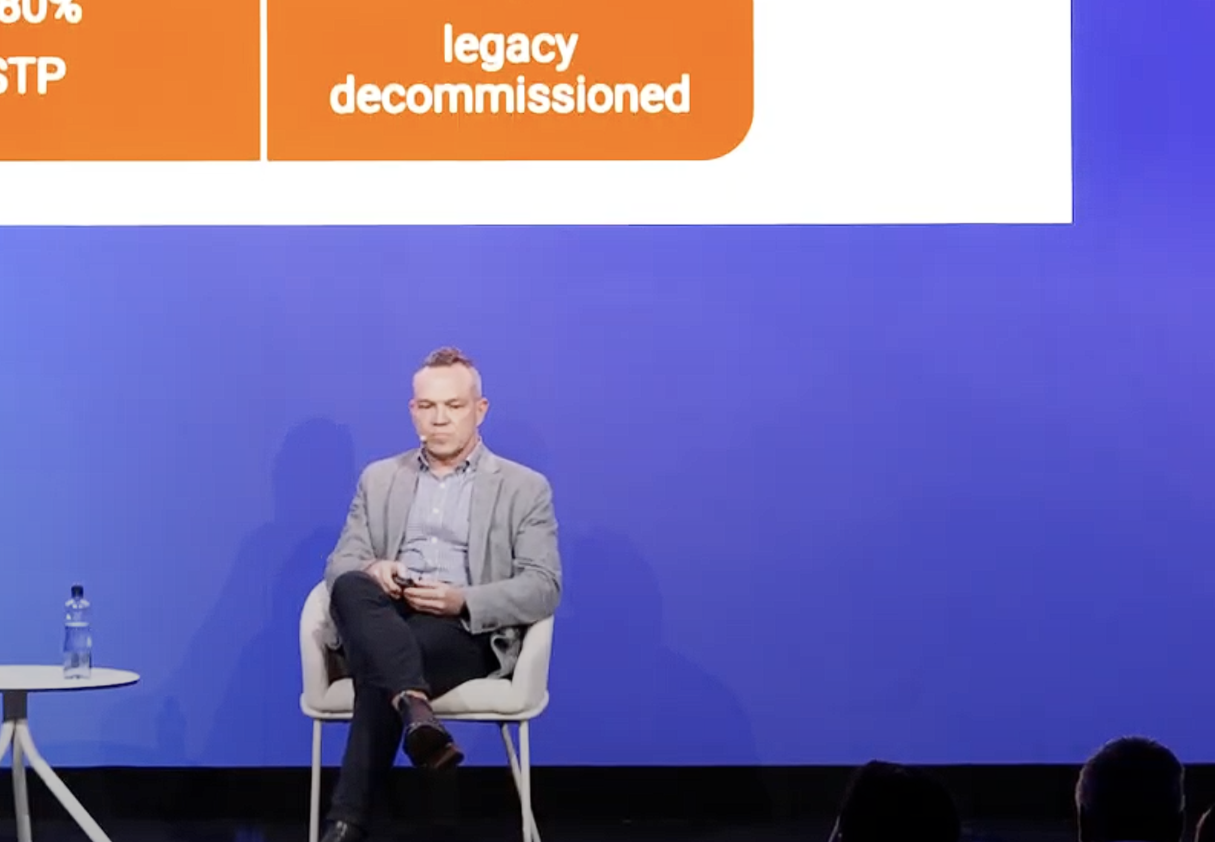
Michael McGavigan, Executive General Manager at Australian Unity. (Credit: Appian)

A key project in this undertaking was the creation of a digital solution for 10Invest, a long-term investment bond offering. Before automation, the process relied heavily on manual data entry, leading to errors and delays. The newly implemented application facilitated straight-through processing, reaching a notable 80% automation rate.

Reusable Components Accelerating Deployments

A significant milestone in Australian Unity’s automation journey was the establishment of a repository for reusable components. These include common APIs, workflows, dashboards, and ‘know your client’ (KYC) protocols. By reusing these essential building blocks, application development time has been notably reduced—from eight weeks for the initial application to six weeks for following ones.

“Reusability has empowered us to accelerate our pace and upscale our automation efforts,” remarked Michael McGavigan, Executive General Manager of Enterprise Architecture, Digital, and Automation Services.

Applications Revolutionizing Operations

Several fresh applications have been developed to boost operational efficiency and regulatory adherence. For instance:

  • Regulatory Oversight: A system was established to manage Target Market Determination (TMD) questionnaires, ensuring appropriate financial products for customers.
  • Onboarding and Offboarding: The retirement village onboarding procedure has been optimized, minimizing manual efforts.
  • Customer Insights: A ‘single view of customers’ application offers investment advisors a consolidated view of client profiles.

These digital advancements not only enhance customer interactions but also enable Australian Unity to meet compliance demands effectively.

Centralizing Technology for Enhanced Governance

In July, Australian Unity executed a reorganization of its technology operations. Previously, a decentralized model meant multiple platforms operated independently, leading to inefficiencies such as several workflow management and CRM systems. This has now been centralized under McGavigan’s direction, simplifying the organization’s technology ecosystem and enabling coordinated digital transformation.

Integrating AI and Robotic Process Automation

As part of its automation roadmap, Australian Unity is adopting cutting-edge technologies like AI and robotic process automation (RPA). These tools are being integrated into legacy systems to further boost efficiency and provide seamless, hassle-free experiences for members and investors. The organization’s internal enterprise automation team is leading these initiatives, with assistance from automation services partner Roboyo.

Summary

Australian Unity’s enterprise automation initiative represents a notable advancement in modernizing its processes. By utilizing low-code platforms, reusable components, and advanced technologies, the organization is improving scalability, cutting costs, and enriching customer experiences. With a consolidated technology structure and a committed automation team, Australian Unity is strategically positioned to spearhead digital transformation in Australia.

Q&A: Enterprise Automation at Australian Unity

Q: What is the primary aim of Australian Unity’s automation initiative?

A:

The main objective is to enhance operational efficiency, lower expenses, and provide superior experiences for members and investors by automating manual tasks and modernizing legacy systems.

Q: What significance does the Appian platform hold in this transformation?

A:

Appian delivers the low-code platform that Australian Unity employs for rapid application development. Its features allow for straight-through processing and reduce manual tasks.

Q: What effects has automation had on the organization’s processes?

A:

Automation has greatly decreased manual workload, with 80% of new applications now processed automatically. It has also facilitated quicker application development and improved compliance management.

Q: Which technologies are being integrated into Australian Unity’s legacy systems?

A:

Australian Unity is infusing AI, robotic process automation (RPA), and workflow automation tools into its legacy systems to boost efficiency and scalability.

Q: What is the role of the internal enterprise automation group?

A:

The group manages the organization’s automation strategy, concentrating on the implementation of advanced technologies and promoting digital transformation throughout the enterprise.

Q: How has the consolidation of technology operations benefited Australian Unity?

A:

Centralization has enhanced governance, eliminated redundancies (such as various CRM and workflow tools), and facilitated unified digital transformation efforts.