Matthew Miller, Author at Techbest - Top Tech Reviews In Australia - Page 147 of 187

Final-Hour Rescue: MITRE’s CVE Initiative Staves Off Closure


We independently review everything we recommend. When you buy through our links, we may earn a commission which is paid directly to our Australia-based writers, editors, and support staff. Thank you for your support!

MITRE’s CVE Initiative Narrowly Escapes Closure with 11-Month Funding Prolongation

Quick Overview

  • MITRE’s CVE (Common Vulnerabilities and Exposures) initiative was on the verge of closure due to a funding shortage.
  • The US government has prolonged funding for 11 months to uphold essential cybersecurity infrastructure.
  • The CVE database is crucial for documenting global cyber vulnerabilities.
  • The cybersecurity community expressed strong disapproval, leading the government to change its stance.
  • CISA reiterated the initiative’s importance and guaranteed there would be no service interruptions.
  • New independent organizations like the CVE Foundation are emerging to promote long-term stability.
MITRE CVE initiative narrowly escapes closure with emergency funding

What is the MITRE CVE Initiative?

The Common Vulnerabilities and Exposures (CVE) initiative, managed by the non-profit MITRE Corporation, is a globally acknowledged framework for identifying and cataloging publicly known cybersecurity vulnerabilities. It serves as a fundamental resource utilized by security experts, developers, and organizations around the world to monitor and address security threats.

Every vulnerability is assigned a unique CVE identifier, enabling IT teams to prioritize and resolve issues efficiently. The CVE framework is critical for sustaining cybersecurity practices across various sectors, including government and private businesses.

Funding Crisis Averted with Timely Intervention

In an unexpected development, the CVE initiative encountered a funding crisis that nearly led to its shutdown. Initially, the U.S. government did not pledge continued financial support, raising alarms within the global cybersecurity community. However, following considerable pushback from experts and stakeholders, the Cybersecurity and Infrastructure Security Agency (CISA) confirmed an extension of funding for 11 months, ensuring business continuity.

“We value the immense support for these programs demonstrated by the global cyber community, industry, and government in the past 24 hours,” stated Yosry Barsoum, VP at MITRE’s Center for Securing the Homeland.

Global Cybersecurity Community Responds

The potential closure of the CVE initiative caused widespread concern within the cybersecurity sector. Professionals in the industry depend on the CVE database as a key resource for vulnerability management. John Hammond, a researcher at the threat detection firm Huntress, expressed happiness over the funding extension: “I’m relieved that someone or something listened to the community’s concerns,” he remarked.

This situation illustrates the vulnerability of essential infrastructure when dependent on uncertain government funding, leading to calls for more sustainable solutions.

Emergence of the CVE Foundation and Independent Initiatives

In light of the uncertainty, a group known as the CVE Foundation has launched a new platform dedicated to ensuring long-lasting stability for the CVE system. The foundation presents itself as an autonomous organization focused on the “viability, stability, and independence” of vulnerability management.

While still in its infancy, the CVE Foundation symbolizes a rising trend toward decentralized and community-focused cybersecurity infrastructure.

Importance for Australian Organizations

Though the CVE initiative is based in the United States, its influence is undeniably global. Australian companies, government bodies, and cybersecurity experts depend on the CVE database to manage risks effectively. The Australian Cyber Security Centre (ACSC) frequently cites CVEs in its advisories and threat reports, making the ongoing accessibility of this database critical for national security.

With a surge in cyber-attacks targeting Australian critical infrastructure, including the 2023 breaches of Medibank and Latitude Financial, prompt access to vulnerability information has never been more crucial.

Conclusion

The MITRE CVE initiative has received an 11-month funding extension, sidestepping the potential for a significant service interruption. This last-minute development followed widespread dissent from cybersecurity practitioners and organizations that rely on the CVE database for tracking and addressing software vulnerabilities. While this crisis has been temporarily resolved, it highlights the necessity for stable, long-term funding models for critical cybersecurity infrastructure. Additionally, new independent efforts such as the CVE Foundation may assist in diversifying the ecosystem and guaranteeing ongoing support in the future.

Q: What is the CVE initiative and why is it significant?

A:

The CVE initiative catalogs publicly known cybersecurity vulnerabilities, assigning each a unique identifier. This system empowers IT professionals to track, evaluate, and address security flaws effectively. It plays a vital role in international cybersecurity operations.

Q: What put the CVE initiative at risk of shutdown?

A:

The initiative faced a funding shortage due to financial uncertainties within the US government. This situation raised alarms about the future of the CVE database, essential for managing cyber threats.

Q: How was the potential shutdown averted?

A:

After substantial pushback from the cybersecurity community, the US Cybersecurity and Infrastructure Security Agency (CISA) sanctioned an 11-month funding extension by invoking an option period in MITRE’s contract, ensuring uninterrupted operations.

Q: What does the CVE Foundation represent?

A:

The CVE Foundation is a newly established entity aiming to offer a sustainable, independent alternative or complement to MITRE’s CVE system. Its goal is to ensure the long-term reliability and availability of vulnerability data.

Q: What implications does this have for Australian organizations?

A:

Australian businesses and government entities heavily depend on CVE data to identify and rectify vulnerabilities. Any disruption of the CVE initiative could compromise national cybersecurity efforts and heighten vulnerability to cyber threats.

Q: Is there a potential long-term solution to funding issues?

A:

Indeed, the emergence of independent organizations like the CVE Foundation could assist in diversifying the funding and governance of vulnerability databases. Furthermore, international collaboration and public-private partnerships might provide more stable, long-term support.

Q: How can businesses prepare for possible interruptions?

A:

Organizations should closely monitor CVE data sources, consider subscribing to multiple vulnerability tracking services, and stay updated on changes in the cybersecurity landscape to avoid over-dependence on a single provider.

CEAT Tyres Introduces Self-Operating Robots for Tyre Deliveries in Mumbai


We independently review everything we recommend. When you buy through our links, we may earn a commission which is paid directly to our Australia-based writers, editors, and support staff. Thank you for your support!

Brief Overview

  • CEAT Tyres has introduced autonomous robots to move tyres inside its manufacturing facility in Mumbai.
  • The robot, named AMR 50 by Virya.ai, operates on AI technology and can manage payloads of up to 5,000kg.
  • Equipped with 3D LiDAR, 2D LiDAR, IMU, and depth cameras, the robot possesses comprehensive 360-degree spatial awareness.
  • It can reach a top speed of 11km/h and can manage slopes of up to 8%.
  • This initiative signifies a pivotal advancement in the automation of industrial logistics within India’s manufacturing industry.
  • Virya.ai, the Indian tech startup that created the AMR 50, comprises a small team of 11–50 employees.
  • CEAT’s move towards automation reflects a worldwide trend extending beyond the US and China in the realm of autonomous vehicle innovation.

Transforming Tyre Production with AI-Driven Robots

In a remarkable advancement towards intelligent manufacturing, CEAT Tyres has begun implementing autonomous mobile robots (AMRs) for tyre transportation at its Mumbai site. This represents a significant leap in the company’s automation strategy, aligning with a rising trend where manufacturers leverage robotics to enhance operational efficiency and lower labor costs in industrial settings.

Producing more than 140,000 tyres daily across six different plants, CEAT caters to leading automotive brands such as BMW, Mercedes, Audi, Kia, and Volvo. As productivity and accuracy become increasingly essential, the adoption of robotic technology is a natural progression for optimizing internal logistics.

Introducing the AMR 50: India’s Industrial Autonomy Solution

At the forefront of this change is the AMR 50, an autonomous towing robot crafted by the Indian startup Virya.ai. This sturdy machine is engineered to tow loads of up to 5,000 kilograms while efficiently navigating the dynamics of a busy manufacturing setting with minimal need for human oversight.

With a maximum velocity of 11km/h and the capability to traverse slopes of up to 8%, the AMR 50 is designed for both strength and adaptability. It is powered by a 300Ah battery, which can sustain around 3,000 charge cycles, rendering it a cost-effective and environmentally friendly choice for prolonged industrial application.

AMR 50 autonomous robot deployed by CEAT Tyres in Mumbai for internal tyre deliveries

High-Tech Sensing for Secure Navigation

A standout characteristic of the AMR 50 is its state-of-the-art perception capabilities. It integrates 3D LiDAR, 2D LiDAR, a 6-axis Inertial Measurement Unit (IMU), and a depth camera to form a comprehensive 360-degree, real-time awareness of its environment.

This advanced sensory framework enables the robot to autonomously recognize and avoid obstacles, guaranteeing safety for both the machine and human operators. It can dynamically adjust its trajectory based on ongoing environmental evaluations, a critical feature in fast-paced factory environments.

Small Team, Major Innovation: The Emergence of Virya.ai

Virya.ai, the driving force behind the AMR 50, operates as a compact startup in India, employing a workforce of merely 11–50 people as per LinkedIn. Nevertheless, this small entity has showcased exceptional innovation in autonomous robotics, taking on the larger US and Chinese tech giants in this field.

This development illustrates a wider trend: advanced autonomous vehicle technologies are increasingly emerging beyond Silicon Valley or Shenzhen. Emerging markets like India are becoming significant centres of innovation, providing scalable and relevant solutions to global industries.

Impact on the Manufacturing Industry

CEAT’s shift to automated logistics aligns with a global context where manufacturers are facing labor shortages, escalating costs, and a necessity for operational agility. By automating internal transport functions, companies can redirect human resources to more skilled roles, increase productivity, and diminish the likelihood of workplace injuries.

This transition might inspire other manufacturing leaders in Australia and the Asia-Pacific region to investigate similar AI-based automation strategies. As robotic costs decline and capabilities expand, barriers to entry are being lowered significantly.

Conclusion

CEAT Tyres has embraced the AMR 50 autonomous robot from Indian startup Virya.ai to optimize tyre deliveries at its Mumbai facility. This AI-driven system can carry 5,000 kg at speeds of 11 km/h while navigating intricate environments using advanced sensors. This action reflects a broader movement toward automation in manufacturing and emphasizes India’s expanding contribution to global autonomous vehicle innovation.

Q: What is the AMR 50 and who created it?

A:

The AMR 50 is an autonomous mobile robot designed by the Indian tech startup Virya.ai, intended for towing substantial loads of up to 5,000kg in industrial settings.

Q: How does this robot navigate its surroundings?

A:

The robot combines 3D LiDAR, 2D LiDAR, a 6-axis IMU, and a depth-sensing camera to generate a 360-degree awareness of its environment, enabling autonomous and safe navigation.

Q: What are the performance specifications of the AMR 50?

A:

The AMR 50 can transport up to 5,000kg, achieve velocities of up to 11km/h, and tackle gradients of up to 8%. Its 300Ah battery supports about 3,000 charge cycles.

Q: Why is CEAT utilizing autonomous robots?

A:

CEAT is employing autonomous robots to lower operational expenses, enhance efficiency, and improve safety within its tyre manufacturing facilities.

Q: Is this robot controlled remotely or does it operate fully autonomously?

A:

According to CEAT’s management, the AMR 50 functions independently using artificial intelligence, without any requirement for remote operation.

Q: What implications does this have for the global autonomous vehicle sector?

A:

This innovation highlights that advancements in autonomous vehicles are taking place on a global scale, extending beyond the US and China. Companies in emerging markets like India are also making impactful advancements.

Q: Could manufacturers in Australia benefit from similar technology?

A:

Certainly. Australian manufacturing sectors could adopt similar AMRs to enhance efficiency, safety, and scalability, especially in logistics-intensive fields such as automotive and mining.

Nvidia Struck with US$5.5 Billion Setback as US Restricts Chip Exports to China


We independently review everything we recommend. When you buy through our links, we may earn a commission which is paid directly to our Australia-based writers, editors, and support staff. Thank you for your support!

Summary Overview

  • Nvidia is set to incur a financial impact of US$5.5 billion (AU$8.6 billion) due to new US export limitations on its H20 AI chip to China.
  • The H20 chip was Nvidia’s cutting-edge model intended for the Chinese market, designed to satisfy increasing demand for AI inference.
  • The US Commerce Department has tightened regulations amid concerns that the chip might be utilized in Chinese supercomputers.
  • Leading Chinese technology firms like Tencent, Alibaba, and ByteDance had been investing significantly in H20 chips.
  • The prohibition affects Nvidia’s stock, purchasing commitments, and related financial reserves.
  • Nvidia plans to redirect efforts towards constructing AI infrastructure worth up to US$500 billion in the US, collaborating with partners such as TSMC.

US Export Restrictions Deliver Major Setback to Nvidia’s AI Aspirations in China

Nvidia suffers $8.6 billion loss due to US chip export restrictions to China

New Export Limitations Target Nvidia’s H20 AI Chip

The United States government has enacted strict export limitations on Nvidia’s H20 artificial intelligence (AI) chip, effectively prohibiting its sale to China. This action has resulted in a significant US$5.5 billion (AU$8.6 billion) accounting charge for the chip manufacturer, affecting its stock, purchase contracts, and related reserves.

The H20 chip, crafted specifically to align with earlier US export guidelines, was Nvidia’s most sophisticated product allowed for the Chinese market. It was pivotal to Nvidia’s goal of sustaining a competitive advantage in China’s rapidly growing AI industry.

Significance of the H20 Chip

While the H20 does not compare to Nvidia’s most powerful chips in training extensive AI models, it excels in inference — the method by which trained AI models provide answers to users. As AI applications proliferate in fields ranging from cloud computing to social media and fintech, inference is becoming the primary application of AI chips worldwide.

Prominent Chinese tech companies such as Tencent, Alibaba, and ByteDance had been reportedly increasing their H20 chip orders to facilitate demand from AI startups like DeepSeek. These chips offered a budget-friendly solution for quickly scaling AI inference capabilities.

US Security Concerns Regarding Supercomputing Functions

The US Department of Commerce pointed to national security issues as the basis for the heightened restrictions. Despite the H20 chip’s limited training function, its high-speed connectivity and memory bandwidth made it suitable for integration into large-scale supercomputing systems. Such potential raised alarms in Washington, where officials feared the chips could be used for military or surveillance tasks.

Since 2022, the US has enforced policies restricting exports of advanced chips that could support China’s supercomputing infrastructure. The Institute for Progress, a Washington-based think tank, contended that Chinese corporations were already utilizing H20 chips in ways that could infringe upon earlier export regulations, with Tencent and DeepSeek cited as examples.

Export Licensing Rules and Indefinite Controls

On April 9, Nvidia received official notification that the H20 chip would now necessitate a license for export to China. Merely five days later, the US government confirmed that these restrictions would be in place indefinitely. The likelihood of any licenses being approved remains unknown, and Nvidia has not provided any additional comments beyond its regulatory announcement.

Nvidia’s Focus Shift to Manufacturing in the US

The export ban arrives as Nvidia is investing significantly in domestic infrastructure. The firm has recently unveiled plans to create AI server infrastructure valued up to US$500 billion in the United States over the next four years, working closely with manufacturing collaborators including Taiwan Semiconductor Manufacturing Company (TSMC).

This strategic shift resonates with broader US policy objectives aimed at reshoring vital technology manufacturing and diminishing reliance on global supply networks, particularly those associated with China.

Widespread Consequences for the Global AI Sector

Nvidia’s financial repercussions reflect more than just lost revenue — they highlight a growing separation between the US and Chinese technology sectors. Amid escalating geopolitical tensions, firms such as Nvidia must navigate an increasingly intricate regulatory environment, while Chinese companies may intensify their endeavors to foster domestic alternatives to Western technologies.

Australia, with its investments in AI research and an increasing focus on semiconductor strategies, should keep a close watch on these developments. The global realignment of chip supply chains carries implications for innovation, supply security, and economic competitiveness throughout the region.

Conclusion

Nvidia confronts a US$5.5 billion financial setback stemming from new US government restrictions on the export of its H20 AI chip to China. The chip, essential for AI inference and widely utilized by Chinese tech giants, was perceived as a potential threat for incorporation into supercomputing infrastructure. This action emphasizes the escalating US-China technology tensions and is driving Nvidia to heavily invest in US-based AI infrastructure. This situation also signals a broader transition in global chip supply chains and export regulations, potentially influencing innovation strategies worldwide, including in Australia.

Q: What makes the Nvidia H20 chip important?

A:

The H20 chip is tailored for AI inference, an expanding segment in the AI market where trained models deliver responses to users. It was Nvidia’s most advanced AI chip permitted for sale in China and was greatly utilized by key Chinese tech firms.

Q: What led the US government to limit sales of the H20 chip?

A:

Despite its inferior AI training capabilities, the H20 chip features high-speed memory and interconnect performance, rendering it suitable for supercomputing. The US government expressed concern that it could be employed in Chinese supercomputers, which face export restrictions due to national security worries.

Q: How much is Nvidia projected to lose as a result of these restrictions?

A:

Nvidia has announced a US$5.5 billion (AU$8.6 billion) charge linked to inventory, purchase obligations, and reserves associated with the H20 chip.

Q: What part do Chinese firms play in this scenario?

A:

Corporations such as Tencent, Alibaba, and ByteDance were significant purchasers of the H20 chip, utilizing it to power AI projects amid surging demand. Their use of the chip created apprehensions regarding its potential usage in restricted supercomputing endeavors.

Q: Will the US government grant any exceptions via licensing?

A:

Although the US government has stated that export licenses will be mandatory, it remains uncertain how many licenses will be granted, if any at all. Nvidia has not commented on possible licensing outcomes.

Q: How is Nvidia reacting to the ban?

A:

Nvidia is reportedly redirecting its focus toward domestic manufacturing, with intentions to establish up to US$500 billion in AI infrastructure in the US in collaboration with TSMC and other partners.

Q: What implications does this have for Australia and the greater tech landscape?

A:

Australia should closely monitor the evolving geopolitical tensions that are reshaping the global semiconductor supply chain. These shifts could impact AI research, access to local chips, and national security strategies.

Woolworths Strengthens Technology Strategy with Expanded Google Cloud Agreement


We independently review everything we recommend. When you buy through our links, we may earn a commission which is paid directly to our Australia-based writers, editors, and support staff. Thank you for your support!

Brief Overview

  • Woolworths Group extends collaboration with Google Cloud for an additional five years.
  • Strengthened emphasis on advancing data, insights, and automation capabilities.
  • Since 2017, Google Cloud has aided Woolworths in the development of its data platform.
  • This alliance has led to enhancements in analytics, pricing tactics, and customer interactions.
  • Woolworths has recognized Google Cloud as its ‘Technology Partner of the Year’.
  • The retailer is focused on progressing digital transformation via cloud-driven innovations.
Woolworths expands Google Cloud partnership to enhance technology strategy

Woolworths Renews Partnership with Google Cloud to Foster Digital Advancements

Woolworths Group has revealed the renewal of its strategic alliance with Google Cloud, prolonging their collaboration for another five years. This renewed agreement demonstrates the supermarket leader’s ongoing dedication to harnessing cloud technologies to improve its operations, enhance the customer experience, and facilitate data-informed decision-making.

A Strengthening Collaboration Since 2017

Since the start of the partnership in 2017, Woolworths has taken advantage of Google Cloud’s infrastructure and tools to build and refine its Woolworths Data Platform. This platform has been essential in enabling quicker and more precise analytics, data visualisation, and automation throughout various business areas. John Hunt, Group CIO and Managing Director of Group Enablement at Woolworths, stated that this collaboration has significantly transformed how the company uses data.

Strategic Contributions Across Business Areas

Google Cloud’s contribution has influenced many aspects of Woolworths operations—from improving supply chain efficiency to retail pricing approaches. The technology has facilitated notable advances in how the retailer targets promotions, tailors merchandise offerings to regional markets, and streamlines internal processes. With the renewed contract, Woolworths aims to further integrate AI and machine learning within its digital strategy to enhance predictive analytics and personalise customer interactions.

Acknowledgment of Google Cloud’s Impact

Woolworths recently honoured Google Cloud as its ‘Technology Partner of the Year’, marking the success of their enduring partnership. This award, part of Woolworths’ annual IT and group enablement recognition initiative, underscores the tangible business results achieved through this alliance.

Cloud-Enriched Customer Experience

As customers increasingly seek personalised and seamless shopping experiences, Woolworths’ cloud-focused strategy is designed to meet these expectations. The retailer leverages Google Cloud to analyse customer preferences, shopping behaviours, and product feedback, allowing it to present more relevant promotions and stock products that cater to local demand. These insight-driven analyses also aid in minimising waste and enhancing inventory efficiency.

Looking Forward: A More Intelligent Retail Environment

In the future, the renewed partnership is anticipated to bolster Woolworths’ sustainability ambitions and digital transformation strategy. With cloud technology at its core, the retailer is set to investigate further innovations such as real-time supply chain transparency, automated restocking systems, and advanced fraud detection. This aligns with broader retail trends, where adaptability, responsiveness, and customer-focus are redefining business operations.

Conclusion

The renewal of Woolworths’ partnership with Google Cloud signifies a pivotal moment in the company’s digital journey. By reinforcing its commitment to cloud technologies, the retailer is not only improving operational efficiency and customer engagement but also establishing the foundation for a more intelligent and resilient retail ecosystem. With data at the centre of its strategy, Woolworths is positioning itself as a technology-driven leader in the Australian retail market.

Q: What motivated Woolworths to renew its partnership with Google Cloud?

A:

Woolworths renewed the partnership to further enhance its capabilities in data, automation, and analytics. Google Cloud has been instrumental in helping Woolworths evolve its operations and customer experiences through data-driven insights and innovation.

Q: What key technologies are employed in the partnership?

A:

The retailer employs Google Cloud services like BigQuery for data analysis, AI and machine learning tools for predictive analytics, and cloud resources for scalability and efficiency. These technologies support Woolworths’ Woolworths Data Platform and various digital efforts.

Q: How has the partnership benefited shoppers?

A:

Shoppers enjoy more personalised promotions, improved product availability in-store, and customised shopping experiences. The application of data analytics allows Woolworths to respond more adeptly to customer preferences and needs.

Q: What functionalities does the Woolworths Data Platform provide?

A:

The Woolworths Data Platform aggregates and evaluates data from multiple sources to yield actionable insights. It assists in decision-making in areas like pricing, inventory control, and marketing, enabling the company to function more efficiently and effectively.

Q: What future plans does Woolworths have with Google Cloud?

A:

Woolworths intends to broaden its use of AI and automation, enhance supply chain insights, and further initiatives geared towards sustainability. The renewed partnership will assist the retailer in continuing its digital transformation and remaining competitive in the dynamic retail landscape.

Q: How long has Woolworths collaborated with Google Cloud?

A:

Woolworths has been working with Google Cloud since 2017, fostering a robust collaborative relationship that has led to significant digital advancements throughout the organization.

Q: Why was Google Cloud named Woolworths’ ‘Technology Partner of the Year’?

A:

Google Cloud received this honor for its substantial contributions to Woolworths’ technology strategy, particularly in facilitating data transformation and actionable business insights that have propelled enhanced performance and innovation.

Q: What effect has the partnership had on Woolworths’ operations?

A:

The partnership has enhanced Woolworths’ ability to swiftly analyze vast amounts of data, optimize pricing and promotional tactics, improve product localization, and bolster better decision-making throughout its retail ecosystem.

US Judge Determines Google Unlawfully Controls Advertising Technology Sector


We independently review everything we recommend. When you buy through our links, we may earn a commission which is paid directly to our Australia-based writers, editors, and support staff. Thank you for your support!

Google Found to Possess Illegal Monopoly in Ad Tech: Consequences for Australia

Quick Overview

  • A US federal judge has determined that Google illegally monopolizes two major ad tech sectors: publisher ad servers and ad exchanges.
  • This ruling paves the way for US authorities to possibly compel Google to dismantle portions of its advertising operations.
  • Google has indicated plans to contest the ruling, asserting that its ad services are advantageous for both publishers and consumers.
  • Experts believe this ruling could heighten regulatory scrutiny on other tech giants like Meta, Amazon, and Apple.
  • The result may affect competition and digital advertising sectors worldwide, including in Australia.

Google’s Ad Tech Monopoly Verdict: What Transpired?

In a pivotal antitrust ruling, the United States District Court has declared that Google has unlawfully preserved monopolies in the markets for publisher ad servers and ad exchanges. Judge Leonie Brinkema, overseeing the case in Virginia, concluded that the tech giant participated in exclusionary practices detrimental to competition, publishers, and ultimately consumers.

US judge finds Google illegally dominates digital ad market

What are Publisher Ad Servers and Ad Exchanges?

Publisher ad servers are systems that assist digital publishers in managing, storing, and showcasing their advertising inventory. Ad exchanges, on the other hand, serve as marketplaces for the real-time buying and selling of digital advertising space. Together, they form crucial components of the online advertising ecosystem.

According to Judge Brinkema, Google improperly linked the operation of its ad exchange with its publisher ad server, hindering competitors from establishing a foothold in the market. She emphasized that these practices were not conducive to the interests of Google’s publisher clients, nor the consumers, instead functioning to bolster its market supremacy.

Mixed Verdict and Google’s Reaction

The court dismissed allegations that Google possessed a monopoly in advertiser ad networks, granting the company a partial victory. Nonetheless, the ruling regarding the publisher sector represents a significant setback.

Lee-Anne Mulholland, Google’s Vice President of Regulatory Affairs, affirmed the company’s intention to appeal. “We won half of this case, and we will appeal the other half,” she stated. “Publishers have a variety of choices, and they opt for Google due to our ad tech tools being simple, affordable, and effective.”

What Could Follow?

This verdict lays the groundwork for a subsequent trial to determine remedies. The US Department of Justice (DOJ) is advocating for Google to divest portions of its advertising business, especially Google Ad Manager, which encompasses both the ad server and exchange elements.

Previously, Google contemplated selling its ad exchange to meet European antitrust requirements, which indicates that a mandated divestiture has occurred before. Global regulatory scrutiny is intensifying, and this most recent court ruling adds fuel to the discussions.

Consequences for Australia and the Global Tech Environment

The Australian Competition and Consumer Commission (ACCC) has already expressed its concerns regarding Google’s dominance in the digital advertising supply chain. In its 2021 Digital Advertising Services Inquiry, the ACCC discovered that Google’s ad tech services were so intertwined that it effectively controlled the entire process of acquiring and selling online advertisements.

This US ruling could inspire Australian regulators to take more robust measures against Google and other tech behemoths. It also alerts local publishers and advertisers that a shift may be occurring toward increased competition and transparency in the ad tech arena.

Wider Effects on Big Tech Regulation

This case is part of a broader surge of antitrust actions within the United States. Other tech giants are also under examination:

  • Meta Platforms (Facebook, Instagram, WhatsApp) is facing trial for allegedly monopolizing personal social networks.
  • Amazon is contending with accusations of illegally dominating online retail markets.
  • Apple faces legal challenges concerning its alleged monopoly in the smartphone ecosystem.

These legal battles enjoy bipartisan support in the US and are likely to influence regulatory strategies in other nations, including Australia.

Conclusion

Google has been adjudged to illegally monopolize critical aspects of the online advertising sector. This ruling signifies a pivotal moment in ongoing antitrust initiatives against Big Tech, with global implications for digital advertising regulation. As Australia continues to evaluate its own digital markets, this decision could lead to more assertive enforcement and potentially reshape the ad tech landscape both locally and internationally.

Q: What exactly did the judge rule against Google?

A:

Judge Brinkema determined that Google unlawfully retained monopoly power in the markets for publisher ad servers and ad exchanges. This was achieved through anti-competitive actions that excluded competitors and harmed consumers.

Q: What are the implications of this ruling?

A:

The ruling opens the possibility for US regulators to pursue the breakup of Google’s advertising operations, particularly the enforced divestiture of its ad server and exchange tools. It also establishes a precedent for other countries, including Australia, to undertake similar regulatory measures.

Q: Will Google be compelled to sell parts of its business?

A:

That determination will occur in a future trial. However, the US DOJ has indicated that it believes Google should divest at least Google Ad Manager, which encapsulates both the ad server and exchange.

Q: How does this impact Australian publishers and advertisers?

A:

The ruling could result in heightened competition in the ad tech arena, potentially reducing costs for Australian publishers and enhancing transparency. Additionally, it amplifies the pressure on local regulators to take action based on similar findings.

Q: What is Google’s response?

A:

Google disagrees with the ruling and plans to appeal. The company contends that its ad tech tools are advantageous to publishers and that the market remains competitive.

Q: What are the next steps in the legal process?

A:

A subsequent trial will establish the appropriate remedies. This may involve structural changes, such as divestitures or alterations in how Google operates its ad services.

Q: Could this lead to regulation of other tech giants?

A:

Yes. The ruling reflects a readiness by courts to apply stringent antitrust remedies, which could impact other platforms like Meta, Amazon, and Apple that maintain similarly integrated ecosystems.

Q: How long will it take for changes to take effect?

A:

If structural alterations are mandated, they could take months or even years to execute, particularly since appeals are likely to stall proceedings. Nonetheless, the ruling itself establishes a strong precedent at this moment.

Queensland Embraces AI to Identify Tomorrow’s Olympic Stars


We independently review everything we recommend. When you buy through our links, we may earn a commission which is paid directly to our Australia-based writers, editors, and support staff. Thank you for your support!

Quick Overview: Essential Insights

  • Queensland has introduced an AI-enhanced app, YouFor2032, aimed at discovering future Olympic stars.
  • This application employs computer vision and motion capture technology to evaluate athletic skills remotely.
  • AI assessments feature metrics such as vertical jump, range of motion, and push-up precision.
  • Constructed on Microsoft Azure, utilizing React Native, Django, and TensorFlow technologies.
  • Athletes selected for further evaluation are invited for in-person assessments by the Queensland Academy of Sport (QAS) personnel.
  • This endeavor bolsters Australia’s preparations for the Brisbane 2032 Olympic Games.
Queensland employs AI to scout Olympic talent through motion tracking

AI-Driven Talent Discovery for Brisbane 2032

In an innovative step to enhance Australia’s Olympic aspirations, the Queensland government has released an advanced AI application tailored to uncover the next wave of elite athletes. Crafted by the Queensland Academy of Sport (QAS), the YouFor2032 app serves as part of a comprehensive plan for the Brisbane 2032 Olympic and Paralympic Games.

This app enables aspiring athletes to carry out virtual fitness evaluations from their homes, using a smartphone or tablet. By harnessing the power of computer vision and AI, YouFor2032 assesses athletic performance without the necessity for conventional motion-capture attire or face-to-face trials.

Understanding the Technology

Markerless Motion Capture and Pose Recognition

YouFor2032 incorporates video-based markerless motion capture and pose recognition algorithms to monitor joint movements and body positioning. This is done by evaluating self-recorded videos of users engaged in a variety of athletic tasks that assess strength, speed, flexibility, balance, and stamina.

Data-Driven Athlete Profiles

The AI framework, developed on TensorFlow, interprets movement data to extract vital performance indicators such as:

  • Vertical jump height
  • Fingertip reach
  • Push-up form and repetitions

The metrics are then compared with age-specific benchmarks and sport qualifications to formulate a detailed athlete profile. This profile assists QAS in pinpointing leading candidates for advanced physical evaluation.

From Virtual Assessments to Olympic Aspirations

Upon identifying strong candidates, the AI’s findings are examined by the QAS talent team. Athletes who reach the designated criteria or demonstrate exceptional ability are invited for physical testing sessions. These assessments confirm the AI’s results and offer more personalized advice on potential sports pathways.

“The AI and computer vision technology furnish the QAS talent team with quantifiable insights to create a complete understanding of the athlete’s current capabilities,” commented a spokesperson from the Queensland Department of Tourism and Sport.

Technical Framework Behind YouFor2032

The YouFor2032 platform is constructed using a contemporary technical framework that guarantees scalability and efficiency:

  • React Native powers the cross-platform mobile application
  • Django manages backend data processing
  • TensorFlow fuels the AI and computer vision functionalities
  • Microsoft Azure offers cloud infrastructure and computational resources

This solid architecture empowers the app to securely and efficiently handle large volumes of video data, allowing thousands of aspiring athletes from Queensland and across Australia to engage in the program.

Advancing Australia’s Olympic Vision

With Brisbane set to host the 2032 Olympic and Paralympic Games, the Queensland government’s investment in AI-enhanced talent discovery is part of a sustained national strategy to reinforce Australia’s position in global sports.

This initiative aligns with Australia’s National High Performance Sport Strategy 2026, which emphasizes innovation, inclusion, and data-driven decisions in athlete development. By incorporating AI early in the athlete pipeline, Australia seeks to unveil untapped talent that may otherwise remain unidentified in traditional frameworks.

Summary

Queensland’s YouFor2032 project represents a transformative change in the identification and cultivation of elite sports talent. By integrating artificial intelligence, computer vision, and cloud computing, the initiative fosters a more inclusive, data-focused, and scalable method of athlete scouting—just in time for Brisbane 2032. Leveraging digital innovation, Australia is setting the stage to field its strongest Olympic team ever.

Q&A: All You Need to Know

Q: What is the YouFor2032 app?

A:

YouFor2032 is an AI-enabled mobile application created by the Queensland Academy of Sport to identify prospective Olympic athletes. It evaluates physical performance through video recordings and computer vision technology.

Q: How does the app evaluate athletic performance?

A:

The app employs markerless motion capture and pose estimation to scrutinize movements in self-recorded videos. It quantifies metrics such as jump height, balance, and push-up repetitions, subsequently comparing these against age standards.

Q: What occurs after completing the virtual evaluation?

A:

The AI creates a performance profile, which is assessed by the QAS talent team. Athletes demonstrating potential are invited to partake in in-person evaluations for additional assessment and sport-specific advice.

Q: What technologies are utilized in the YouFor2032 platform?

A:

The platform is built on Microsoft Azure, utilizing React Native for the mobile app, Django for backend services, and TensorFlow for AI and machine learning capabilities.

Q: Can anyone in Australia access the app?

A:

At present, the app is aimed at Queensland residents as part of the Queensland Academy of Sport initiative. Nonetheless, its success may lead to a nationwide rollout in the future.

Q: How does this initiative correlate with Australia’s Olympic strategy?

A:

This effort supports the National High Performance Sport Strategy by modernizing the talent identification process through technology. The objective is to discover and nurture athletes who can represent Australia at the Brisbane 2032 Olympics and beyond.

Q: What distinguishes this from conventional talent scouting?

A:

Unlike traditional scouting methods that necessitate in-person evaluations and access to sports facilities, YouFor2032 allows athletes to participate from home using just a smartphone, making the approach more inclusive and far-reaching.

NSW Digital Licence Initiative Criticized for Escalating Expenses and Significant Hold-ups


We independently review everything we recommend. When you buy through our links, we may earn a commission which is paid directly to our Australia-based writers, editors, and support staff. Thank you for your support!

Quick Overview: Essential Insights from the Licence NSW Program Difficulties

  • The Licence NSW digital platform has encountered significant delays and budget overruns, with only a small portion of its planned services operational.
  • Initially estimated at $166.5 million in 2021, the total expenditure now surpasses $300 million, with an extra $133 million needed.
  • The platform was intended to unify over 130 licensing programs from 30 government entities by 2026, which has now shifted to 2029.
  • Currently, just 52 licence categories are operational, falling well short of the initial goal.
  • Older systems like OneGov GLS are still partially functional, with decommissioning delayed until 2026.
  • Challenges in customising Calytera’s Amanda software have resulted in prolonged development schedules.
  • Restructuring within the Government Technology Platforms division has added further complications to the delivery process.
  • The estimated economic advantage has increased to $850 million over a decade — contingent upon the program’s successful completion.
Delays and budget issues plague the digital licensing transformation in NSW

Significant Digital Transformation Encounters Obstacles

Introduced in 2021, the Licence NSW Program was promoted as a substantial upgrade in digital government services. Aimed at centralising and digitising over 130 distinct industry and occupational licences from 30 departments, the goal was to replace the outdated Siebel-based OneGov Government Licensing System (GLS).

Funded by $166.5 million from the Digital Restart Fund, the Department of Customer Service (DCS) chose Calytera’s Amanda platform for the overhaul. The Amanda software is utilized worldwide for licensing and regulatory compliance solutions, providing ready-to-use functionality. However, the expectation of quick deployment has not been realised.

Targets Missed and Confusing Progress Updates

Although the DCS initially slated the migration for completion by the end of 2026, that timeline has now slipped to the fiscal year 2029. Internal documents and official reports indicate discrepancies in progress tracking. Some reports suggest only eight licensing programs have been moved, while others indicate 16. Most recently, Minister for Customer Service and Digital Government Jihad Dib noted that 52 licence types were active — a stark contrast to the more than 130 initially promised.

Why Amanda Wasn’t the Perfect Fit

The Amanda platform was selected for its adaptability and modular features. However, NSW regulators required tailored workflows and data structures, leading to significant customisation needs. Initially, the DCS anticipated that 64% of Amanda’s core functionality could be reused across all programs. In reality, this belief proved overly ambitious, as regulators sought unique features that considerably delayed the rollout.

Rising Costs and Budgetary Challenges

The financial burden has been increasing. A $10 million emergency allocation was approved in November 2023 just to keep operations afloat. In June 2026, another $62.5 million was designated in the state budget to assist in migrating the remaining 80 licence types. Currently, the DCS is preparing to seek an additional $133 million for “parameter and technical adjustment” funding, alongside $196 million in new policy proposal funding to support Government Technology Platforms (GTP), the division overseeing this initiative.

Economic Expectations Versus Realities

Initial projections estimated that the Licence NSW program would yield $600 million in economic advantages over ten years. However, this figure has since been revised to $850 million, according to statements made during the 2026 Budget Estimates. Nevertheless, with the project’s slow progress and escalating costs, it remains uncertain whether these anticipated benefits will materialise.

Staffing Changes Exacerbate Delivery Challenges

Amid these difficulties, the GTP division underwent a substantial restructuring. The Public Service Association (PSA) reported that 112 permanent employees were left without ongoing positions, with many roles transitioned to temporary contracts. This restructuring likely disrupted continuity and hampered delivery for a project already facing technical and organizational obstacles.

What Lies Ahead?

Key migrations — including the high-risk work schemes and licences for NSW Police and real estate agents — are now scheduled for between mid-2026 and late 2026. However, internal documents characterize these schedules as “tentative.” Meanwhile, the GLS platform, which was meant to be decommissioned, will remain operational until at least 2026.

Conclusion

The Licence NSW program serves as a cautionary example of digital transformation efforts. Ambitious in scope, it has encountered escalating technical, financial, and organizational issues. With the timeline now extended to 2029 and over $300 million already spent or committed, the NSW Government faces considerable pressure to fulfil its commitment to streamlined and effective licensing services. Whether the state’s residents and businesses will reap the full rewards remains an unresolved issue.

Q: What does the Licence NSW program entail?

A:

Licence NSW is a governmental initiative aimed at consolidating and digitising over 130 occupational and industry licences into a cohesive digital platform. It seeks to simplify the application and renewal process through 30 agencies in NSW using the Amanda software from Calytera.

Q: What is causing the program’s delays?

A:

Delays are primarily due to underestimating the complexity involved in migrating a variety of licensing schemes, the requirement for extensive software customisation, and changes in staffing. The Amanda platform necessitated more adaptation than initially projected to satisfy diverse agency demands.

Q: How much has already been invested in the project?

A:

As of mid-2026, funding for the project has totaled over $240 million. The Department of Customer Service is looking for an additional $133 million to complete the project by 2029, in addition to $196 million for ongoing operational support.

Q: Which licences have already been processed?

A:

Licences for activities such as asbestos demolition, conveyancing, individual security officers, recreational fishing, paintballing, commercial agents, and specific plant items have been transitioned. Currently, 52 licence types are reportedly active, although this number is contested.

Q: What are the anticipated economic advantages of this initiative?

A:

The NSW Government predicts the program will yield $850 million in economic benefits over the next decade. These include lower administrative costs, enhanced compliance, and improved service for licence holders.

Q: When is the project expected to wrap up?

A:

The original completion date was set for 2026, but the program has now been extended to the 2028–29 fiscal year. Key deadline milestones are still seen as tentative, and the project could experience further delays.

Q: What role does Calytera’s Amanda platform play?

A:

Amanda serves as the primary software platform for managing licences digitally. It facilitates regulatory processes such as applications, renewals, inspections, and compliance. However, its standardised nature necessitated extensive modifications for context-specific use in NSW.

Q: How has the restructuring of Government Technology Platforms impacted progress?

A:

The restructure resulted in the displacement of over 100 permanent staff, many of whom transitioned to temporary roles. This likely disrupted project continuity and contributed to delays and delivery obstacles.

Queensland Launches Innovative Digital ID System in Significant Technological Revamp


We independently review everything we recommend. When you buy through our links, we may earn a commission which is paid directly to our Australia-based writers, editors, and support staff. Thank you for your support!

Quick Read

  • Queensland phases out QGov and introduces the Queensland Digital Identity (QDI) system.
  • QDI acts as the new centralized access point for state government digital services.
  • Accounts have been transferred or require fresh verification through official identification documents.
  • QDI features multi-factor authentication and biometric login using Passkey technology.
  • The system complies with Federal Digital ID standards to ensure interoperability and security.
  • Users are prohibited from establishing multiple accounts with identical identity information.
Queensland launches new digital identity system with significant security enhancements

Initiating Queensland’s Digital Identity Overhaul

Queensland has formally moved on from its older QGov platform, marking the beginning of a new chapter in secure digital access with the implementation of the Queensland Digital Identity (QDI) system. Overseen by the Department of Transport and Main Roads (TMR), the QDI platform now serves as the main entry point for a variety of Queensland Government digital services.

Reasons Behind the Retirement of QGov

QGov was launched more than ten years ago to facilitate a unified login experience across Queensland Government services. However, as digital security threats evolved and users demanded more seamless access, QGov was considered outdated. TMR announced that the system had reached its “end-of-life” stage, leading to the creation of a more secure, scalable, and contemporary platform.

Features of the QDI Platform

Unified Access Point

QDI now functions as the state’s singular login method, replacing the previously fragmented access across various services. Users can log in once and navigate all services ranging from driver licence renewals to vehicle registrations and health services.

Migration of Accounts and Initial Setup

A significant number of existing QGov accounts have been either transferred to the QDI system or integrated with current digital licence app accounts. New users, or those whose accounts were not automatically moved, must establish a QDI account by verifying their identity through a combination of a driver licence, passport, and birth certificate.

Verification of Identity and Unique Accounts

To bolster security and prevent identity duplication, every QDI account is linked to a distinct email address and identity document combination. Users are restricted from creating more than one account using the same identity details, addressing a critical problem that affected the QGov system.

Security Enhancements and Compliance

Multi-Factor Authentication and Biometric Capabilities

QDI incorporates sophisticated security measures such as multi-factor authentication (MFA) via SMS or authenticator applications. It also utilizes Passkey technology, allowing users to log in using biometric methods like fingerprint or facial recognition on compatible devices, reflecting global advancements in digital security.

Consistency with Federal Standards

TMR has confirmed that QDI has been developed in accordance with the Federal Government’s Digital ID framework, which is receiving additional investment as part of a $288 million initiative to establish a national Digital ID ecosystem. This guarantees that QDI is compatible with federal systems and complies with national security requirements.

Advantages for Queensland Residents

This digital shift offers Queensland residents quicker, safer, and more streamlined interactions with government services. Users can securely manage their digital identities with the assurance that their information is safeguarded through advanced encryption and authentication techniques.

Future Prospects

As the digital identity environment evolves further, Queensland’s adoption of QDI positions the state at the forefront of secure eGovernment solutions. With an emphasis on compatibility with federal systems and possibly other state-level frameworks in the future, QDI establishes a robust foundation for digital citizenship in Australia.

Conclusion

The transition to the Queensland Digital Identity (QDI) system represents a significant advancement in digital government services for Queensland. By replacing the outdated QGov platform, QDI offers a more secure, efficient, and user-friendly experience aligned with national digital identity standards. With features such as biometric login and account uniqueness, QDI is crafted to address the increasing demands for digital security and accessibility in today’s world.

Q: What is the Queensland Digital Identity (QDI)?

A:

QDI is the new secure digital identity platform for Queensland, succeeding the former QGov system. It serves as a single access point for various state government services online.

Q: Why was the QGov system replaced?

A:

QGov had reached the end of its operational life and could no longer fulfill the needs of modern security, scalability, or user experience. QDI provides improved security, interoperability, and a more cohesive user experience.

Q: How do I create or access my QDI account?

A:

Users can set up a QDI account by authenticating their identity using official documents such as a driver licence, passport, or birth certificate. Some accounts were automatically migrated from QGov or conflated with digital licence app accounts.

Q: Can I have multiple QDI accounts?

A:

No. QDI accounts are intended to be one of a kind. Users cannot generate multiple accounts with the identical identity documents to avoid duplication and fraud.

Q: What security features does QDI offer?

A:

QDI includes multi-factor authentication via SMS or authenticator apps, and Passkey support for biometric login, such as fingerprint or facial recognition on smartphones and compatible devices.

Q: Is QDI linked to the federal Digital ID system?

A:

Yes. QDI is structured to conform to the federal government’s Digital ID framework, guaranteeing compatibility and adherence to national digital identity security standards.

Q: What services can I access via QDI?

A:

QDI enables access to a variety of Queensland Government services including transport, licensing, health, education, and more—all within a single secure account.

Q: What should I do if I encounter issues logging into my account?

A:

If you experience difficulties, you should visit the official Queensland Government website or contact QDI support for assistance with account recovery or technical issues.

NVIDIA Studio Update Supercharges DaVinci Resolve with Robust RTX AI Boost


We independently review everything we recommend. When you buy through our links, we may earn a commission which is paid directly to our Australia-based writers, editors, and support staff. Thank you for your support!

Brief Overview: Essential Insights

  • The newest Studio Driver from NVIDIA boosts DaVinci Resolve 19 beta with robust RTX AI acceleration.
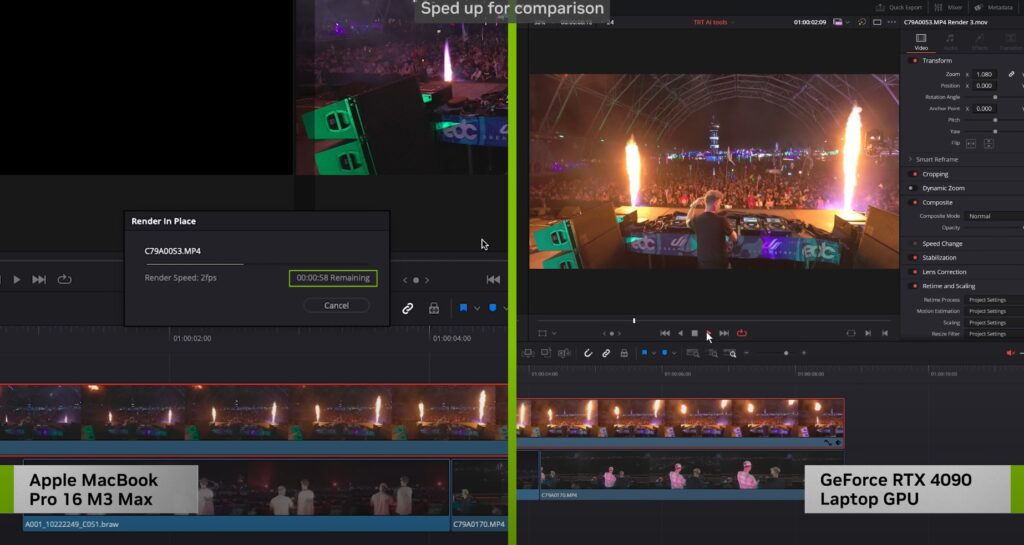
  • AI functionalities such as Magic Mask, Speed Warp, and Text-Based Editing operate notably quicker with RTX GPUs.
  • Users of GeForce RTX 4090 might experience performance enhancements of up to 4x in comparison to Apple’s Mac M2 Ultra systems.
  • New RTX Video technology introduces real-time HDR conversion, improving playback quality on compatible displays.
  • Flux1 NIM offers rapid text-to-image generation through API, aimed at sophisticated AI developers.
  • A complimentary Studio Driver update has been released for RTX 40 Series and NVIDIA RTX professional GPUs in Australia.

AI-Enhanced Creativity: NVIDIA Studio Driver Elevates DaVinci Resolve

NVIDIA has launched its latest Studio Driver, providing a notable performance increase for creators utilizing Blackmagic Design’s DaVinci Resolve 19 beta. This update harnesses the AI features of RTX GPUs, streamlining video editing for content creators throughout Australia aiming to enhance their efficiency.

NVIDIA Studio Driver upgrade boosts DaVinci Resolve AI acceleration with RTX GPUs

Enhanced AI Features in DaVinci Resolve 19

Following the update, DaVinci Resolve’s most intensive AI capabilities now utilize the Tensor Cores found in NVIDIA RTX GPUs. This translates to real-time performance improvements, shorter render durations, and streamlined workflows. Below are the primary AI-optimized tools:

IntelliTrack AI

Facilitates accurate motion tracking for stabilization, match moves, and audio panning with AI-driven precision.

UltraNR

Produces clearer visuals using AI-based denoising in the Colour page, which is especially beneficial for noisy or low-light footage.

Magic Mask AI

Automatically distinguishes people, objects, or backgrounds. On a GeForce RTX 4090, this feature operates up to 4x faster than on Apple’s Mac M2 Ultra.

Speed Warp AI

Generates exceptionally smooth slow-motion effects using AI frame interpolation—revolutionizing cinematic video effects.

Relight FX

Imitates additional lighting sources during post-production, providing editors with enhanced creative control over scene ambiance.

Text-Based Editing

Automatically converts audio to text and allows video editing based on the transcript, now optimized with RTX hardware for nearly instant results.

Music Remixer FX

Enables users to modify aspects like vocals, drums, and bass from existing tracks, remixing in real-time with AI assistance.

Dialogue Separator FX

Isolates voice dialogue from background sounds or echo, greatly improving audio clarity for post-editing.

Accelerated features in DaVinci Resolve 19 enhanced by NVIDIA RTX Studio Driver update

RTX Video: AI Upscaling and HDR Transformation

In addition to content creation, NVIDIA is enhancing video viewing experiences with upgraded RTX Video functionalities. Now supporting HDR conversion alongside its traditional AI upscaling, the feature enhances colour vibrancy and sharpens contrasts—assuming you have a compatible HDR display.

This enhancement proves invaluable for streamers, YouTubers, and everyday consumers seeking the optimal visual playback on RTX-enabled systems.

Flux1 NIM: A New Horizon for AI Developers

Targeted at the AI-savvy demographic, NVIDIA has introduced Flux1 NIM, a microservice capable of converting text prompts into images through sophisticated AI modeling. It’s tailored for rapid deployment via API, providing Australian developers and researchers with efficient, scalable generative AI solutions.

Real-World Effects: Creators Share Experiences

Creators are already noticing the benefits. JaeSol LOFT from Garage B14 remarked on their experience with the GeForce RTX 4090:

“The real-time ray tracing with lifelike lighting and shadows, powered by my GeForce RTX 4090 GPU, is simply astonishing.” JaeSol LOFT, Garage B14

Such feedback highlights how NVIDIA’s AI-focused strategy is reshaping creative sectors, particularly for professionals in Australia engaged in film, music, and design.

Availability in Australia

The updated NVIDIA Studio Driver is available as a free download. To take advantage, users require compatible hardware such as the GeForce RTX 40 Series or NVIDIA RTX professional GPUs, which are accessible in Australia through major retailers including Mwave, Scorptec, and Centre Com.

For further information or to download the driver, visit the official NVIDIA Studio Blog.

Conclusion

NVIDIA’s recent Studio Driver update significantly enhances DaVinci Resolve 19 beta with advanced AI features facilitated by RTX GPUs. Enhancements like Magic Mask, Speed Warp, and Text-Based Editing now function more quickly and effectively, streamlining content creation like never before. With additional improvements such as HDR video playback and tools like Flux1 NIM, the update firmly positions NVIDIA as a frontrunner in AI-enhanced creativity for Australian professionals.

Q: What is the primary advantage of the new NVIDIA Studio Driver for DaVinci Resolve users?

A:

The primary advantage is substantially improved performance for AI-enhanced tools like Magic Mask, Text-Based Editing, and Speed Warp. These improvements minimize processing times and facilitate real-time editing with RTX GPUs.

Q: How does NVIDIA’s RTX Video technology enhance video playback?

A:

RTX Video now encompasses HDR conversion, amplifying colour vibrancy and contrast. This enhancement greatly enriches the visual experience on HDR-compatible screens, particularly for streaming and high-resolution video playback.

Q: What hardware is necessary to use these new features?

A:

You will require a compatible NVIDIA RTX GPU, such as those in the GeForce RTX 40 Series or NVIDIA RTX professional line. Additionally, DaVinci Resolve 19 beta is needed to access the latest AI functionalities.

Q: Is this update provided at no cost?

A:

Yes, the NVIDIA Studio Driver is available for free download for users with compatible RTX hardware.

Q: What is Flux1 NIM and who is its intended audience?

A:

Flux1 NIM is an API-accessible AI microservice that allows users to generate images from text prompts. It is targeted at AI researchers, digital artists, and developers seeking to seamlessly incorporate generative AI into their workflows.

Q: How does RTX acceleration compare to Apple Silicon performance?

A:

NVIDIA claims that Magic Mask AI operates up to 4x quicker on a GeForce RTX 4090 than on Apple’s Mac M2 Ultra, illustrating a significant advantage for RTX in AI-driven editing operations.

Q: Where can Australians acquire suitable RTX hardware?

A:

Australian customers can find RTX 40 Series GPUs or NVIDIA RTX professional cards at retailers like Mwave, Scorptec, Centre Com, and Harvey Norman.

Orica Transitions SAP Platform from Microsoft Azure to Google Cloud in Significant Cloud Migration


We independently review everything we recommend. When you buy through our links, we may earn a commission which is paid directly to our Australia-based writers, editors, and support staff. Thank you for your support!

Brief Overview

  • Orica has transitioned its SAP S/4 HANA environment from Microsoft Azure to Google Cloud.
  • This transition was prompted by performance challenges, cost optimization, and the potential for AI integration.
  • The migration was finalized in a mere 83 working days with the assistance of Google Cloud Consulting and partners.
  • Reported improvements include backup durations shrinking from up to 16 hours to just 20 minutes, and enhanced Fiori app responsiveness.
  • Custom AI models built on SAP data have boosted sales forecast accuracy by 10%.
  • Orica marks the inaugural Asia-Pacific company to undertake this specific SAP cloud migration.
Orica transitions SAP from Microsoft Azure to Google Cloud for enhanced performance and AI functionalities

Orica’s Group CIO Rachael Sandel addressing the audience at Google Cloud Next 2026.

Strategic Transition to Google

Reasons Behind Orica’s Decision

ASX-listed mining and infrastructure solutions provider Orica has implemented a significant alteration in its cloud strategy by shifting its SAP environment from Microsoft Azure to Google Cloud. The decision, made in early 2026, stemmed from the necessity for enhanced performance, cost savings, and improved capabilities in artificial intelligence and analytics.

As articulated by Rachael Sandel, Orica’s Group CIO, the shift followed a thorough review that coincided with the conclusion of several Azure reservations. This review uncovered performance issues in their existing SAP S/4 HANA configuration, particularly after the upgrade to the 2022 version. Despite refining the application layer, Orica faced ongoing issues that led to a reassessment of the underlying infrastructure.

Support Gaps and Infrastructure Limitations

Orica also encountered a significant lack of support when Microsoft discontinued its Premier Support, compelling the company to depend on a third-party provider. Unfortunately, this support was inadequate at critical junctures, raising concerns regarding business continuity and operational dependability.

Technical Enhancements Following Migration

Performance and Backup Improvements

The transition to Google Cloud markedly enhanced system performance. A resource-intensive task that previously required weekend execution now finishes 50% quicker. Additionally, the response times for SAP Fiori applications and S/4 HANA core have displayed considerable improvements.

Most notably, backup durations for the SAP environment diminished from a lengthy 6–16 hours to a mere 20 minutes. This significant reduction in recovery durations is vital for enterprise continuity and data safeguarding.

Standardization and Cost Reduction

Throughout the re-platforming process, Orica standardized its cloud tasks utilizing Linux-based instances, replacing its earlier mixed-server OS environment. This simplification assisted in lowering administrative burdens and led to recurrent cost savings.

“We’ve succeeded in achieving ongoing sustainable savings through rightsizing and our relationship with Google Cloud,” stated Sandel.

AI-Driven Evolution Utilizing SAP Data

Unlocking AI and Analytics Capabilities

With its SAP data now residing on Google Cloud, Orica has incorporated Google’s AI platform to create an intelligent data repository. Initial findings indicate promising potential to harness machine learning for predictive analytics, especially within supply chain and demand planning frameworks.

In North America, Orica has already implemented a bespoke AI model trained on SAP data. This model employs 50,000 machine learning models to predict demand for every SKU combination. The outcome? A 10% enhancement in sales forecast accuracy — a significant advantage for inventory management and revenue assurance.

Plans for Global Expansion

While this AI project is currently confined to the North American landscape, Orica intends to expand these capabilities worldwide as part of its extensive digital transformation strategy.

Migration Complexity and Considerations

Selective Application Migration

Sandel cautioned that not every application was migrated to Google Cloud — a tactical decision based on risk, expense, and integration complexity. Each workload was appraised individually to guarantee feasibility within the tight migration timetable.

The migration endeavor, accomplished in just 83 working days, involved Orica’s own teams, Google Cloud Consulting, and partners such as Accenture, LTIMindtree, and Cognizant.

Conclusion

Orica’s transition from Microsoft Azure to Google Cloud for hosting its SAP S/4 HANA environment signifies a pivotal phase in the company’s digital progression. Driven by the demand for enhanced system performance, better support, and the opportunity to harness AI capabilities, the migration has already realized concrete benefits. With dramatically reduced backup times, optimized resource-intensive processes, and AI models delivering actionable insights, Orica is pioneering modern enterprise IT transformation in the Asia-Pacific region.

Q&A Section

Q: What prompted Orica to relocate its SAP environment from Azure to Google Cloud?

A:

Orica transitioned its SAP environment due to performance challenges, cost factors, insufficient support from Microsoft, and the ambition to utilize Google Cloud’s advanced AI and analytics functionalities.

Q: How much time did it take to migrate to Google Cloud?

A:

The re-platforming project was finished in 83 working days, involving Orica’s internal teams and partners like Google Cloud Consulting, Accenture, LTIMindtree, and Cognizant.

Q: What improvements has Orica witnessed since the migration?

A:

Notable enhancements include a 50% reduction in duration for resource-intensive jobs, quicker response times for SAP Fiori applications, and a dramatic decrease in backup times from up to 16 hours to merely 20 minutes.

Q: What is AI’s role in Orica’s new cloud setting?

A:

Orica is employing Google Cloud’s AI platform to construct and implement tailored machine learning models for demand forecasting, achieving a 10% increase in sales forecast accuracy in North America.

Q: Did Orica migrate all applications to Google Cloud?

A:

No, not all applications were transitioned. Each system was assessed based on cost, risk, and technical intricacy, and only feasible systems were moved in this migration phase.

Q: Is Orica considering global expansion for its AI initiatives?

A:

Yes, following initial success in North America, Orica plans to extend its AI-powered forecasting and analytics solutions globally.

Q: How has this migration affected Orica’s operating expenses?

A:

By rightsizing and streamlining its infrastructure on Google Cloud, Orica has achieved ongoing cost savings that are anticipated to continue over time.

Q: What significance does this migration hold in the APAC region?

A:

Orica stands out as the first organization in Asia Pacific to transition its SAP S/4 HANA environment from Microsoft Azure to Google Cloud, paving the way for similar enterprises contemplating cloud modernization.