We independently review everything we recommend. When you buy through our links, we may earn a commission which is paid directly to our Australia-based writers, editors, and support staff. Thank you for your support!
Fast Overview
Modernising Business Intelligence (BI) is essential for realizing genuine business value.
Persistent Systems Australia and Google Cloud are at the forefront of BI innovations.
Advanced analytics platforms are reshaping data strategies.
Main topics included actionable insights and sophisticated analytics.
The Imperative of Business Intelligence Modernisation
A recent executive roundtable held in Sydney brought together leaders from diverse sectors to explore Business Intelligence (BI) modernisation in collaboration with Persistent Systems Australia and Google Cloud. The event emphasized the pressing need to embrace next-level analytics platforms to maintain a competitive edge in the rapidly changing business environment.
The Impact of Persistent Systems and Google Cloud
As event sponsors, Persistent Systems Australia and Google Cloud highlighted their critical contributions to enhancing BI practices. Their state-of-the-art solutions are tailored to utilize cloud technology for improved data processing and analytics, making it simpler for companies to derive actionable insights.
Future-Ready Analytics Platforms
The roundtable explored the capabilities of future-ready analytics platforms. These systems provide unmatched prospects for data integration, real-time analytics, and predictive analysis. By modernising BI systems, organizations can discover new value opportunities and enhance strategic decision-making.
Conclusion
The Sydney roundtable reaffirmed the significance of upgrading Business Intelligence. With Persistent Systems Australia and Google Cloud in leadership roles, organizations are better positioned to capitalize on advanced analytics, keeping them agile and data-informed in a continuously changing market.
Q: Why is modernising BI vital for organizations?
A: BI modernisation allows organizations to maintain competitiveness by delivering deeper insights via advanced data analytics and refining decision-making processes.
Q: In what ways do Persistent Systems and Google Cloud facilitate BI modernisation?
A: They provide innovative solutions that combine cloud technologies to enhance data processing and analytics, leading to improved business results.
Q: What constitutes next-generation analytics platforms?
A: These platforms integrate advanced data processing, real-time analytics, and predictive modeling to offer actionable insights and strategic advantages.
Q: What advantages do organizations achieve by modernising their BI systems?
A: Organizations can enhance efficiency, identify new business prospects, and make informed choices by employing the latest analytics technologies.
Q: What obstacles do organizations encounter in BI modernisation?
A: Obstacles include complexities in data integration, substantial implementation costs, and the necessity for skilled individuals to oversee advanced analytics tools.
Q: How can organizations navigate these obstacles?
A: By collaborating with technology leaders such as Persistent Systems and Google Cloud, organizations can gain access to expertise and resources to facilitate BI modernisation initiatives.
We independently review everything we recommend. When you buy through our links, we may earn a commission which is paid directly to our Australia-based writers, editors, and support staff. Thank you for your support!
TOZO New OpenEarRing True Open Ear Headphones, Lightweight Comfort Open Ear Clip Wireless Earbuds, 40H Play Bluetooth 5.4 Headphones with Smart Digital Display Design Fit Sports Running, Workout Pink
We independently review everything we recommend. When you buy through our links, we may earn a commission which is paid directly to our Australia-based writers, editors, and support staff. Thank you for your support!
Bose Ultra Open Earbuds Fully Wireless Open Ear Earphones with Spatial Audio Bluetooth Connectivity with Mic Up to 7.5 Hours Playtime Splashproof Black
We independently review everything we recommend. When you buy through our links, we may earn a commission which is paid directly to our Australia-based writers, editors, and support staff. Thank you for your support!
BRICKSTORM is a surveillance malware linked to the China-associated UNC5221 APT.
Developed in Go, it averages a dwell time of 393 days.
Targets network devices such as firewalls and virtualization platforms.
Utilizes obfuscation and unique C2 domains for stealth.
Aimed at data exfiltration and geopolitical surveillance.
Possible connections to Silk Typhoon or Hafnium APT factions.
Mandiant provides a BRICKSTORM detection utility on GitHub.
The BRICKSTORM Threat Landscape
Google’s Threat Intelligence Group (GTIG) and Mandiant have provided insights into a complex backdoor surveillance malware named BRICKSTORM. Associated with the Chinese UNC5221 advanced persistent threat (APT), this malware has been operational since March, demonstrating an impressive capability to remain undetected for an average of 393 days in compromised networks.
Focus on Network Infrastructure
BRICKSTORM specifically targets network devices like firewalls, virtual private network (VPN) concentrators, and virtualization platforms such as VMware vCenter. These intrusions are designed to secure long-term, covert access, installing backdoors on devices that typically lack endpoint detection and response (EDR) capabilities.
Stealth and Obfuscation Techniques
This malware employs obfuscation methods, uses disposable command and control (C2) domains, and integrates fluidly with device workflows, thus complicating detection efforts. Such tactics enable it to avoid typical security defenses.
Espionage and Data Exfiltration
BRICKSTORM emphasizes data exfiltration, utilizing the SOCKS network protocol to bypass firewalls and security measures. It also engages in geopolitical surveillance and theft of intellectual property, aiding in the development of exploits. Among the sensitive information collected are admin mailboxes from compromised systems.
Relation to Other APT Groups
While BRICKSTORM’s operations suggest links to known factions like Silk Typhoon or Hafnium, Google-Mandiant proposes that it may represent a separate APT due to its specific targeting strategies.
Efforts in Detection
Mandiant has taken significant steps to facilitate detection by releasing a BRICKSTORM scanning Bash script on GitHub, suitable for Linux and BSD-based systems, offering an invaluable resource for cybersecurity experts.
Conclusion
The identification of the BRICKSTORM backdoor underlines the changing threat landscape in cyber espionage aimed at network infrastructure. With its extended persistence and intricate stealth strategies, it presents a considerable challenge for detection and countermeasures.
Q: What is BRICKSTORM?
A: BRICKSTORM is a surveillance malware associated with the China-linked UNC5221 APT, recognized for its prolonged persistence in networks and stealth methods.
Q: Why is BRICKSTORM challenging to detect?
A: It uses obfuscation, disposable C2 domains, and seamlessly integrates with device workflows to evade detection.
Q: What are the main targets of BRICKSTORM?
A: It targets network appliances like firewalls and virtualization platforms, as well as sectors such as legal services, BPOs, and SaaS providers.
Q: How can organizations defend against BRICKSTORM?
A: By utilizing advanced detection tools such as the BRICKSTORM scanning script from Mandiant and enhancing network security protocols.
Q: Is BRICKSTORM connected to any other APT groups?
A: It may be associated with groups like Silk Typhoon or Hafnium, but it also shows distinctive targeting patterns indicating a separate APT.
Q: What is the primary goal of BRICKSTORM?
A: The primary goal is data exfiltration, along with geopolitical espionage and theft of intellectual property.
We independently review everything we recommend. When you buy through our links, we may earn a commission which is paid directly to our Australia-based writers, editors, and support staff. Thank you for your support!
AGIG Initiates CRM Revamp to Improve Customer Experience
AGIG Initiates CRM Revamp to Improve Customer Experience
Quick Read
AGIG is currently in the second stage of its CRM revamp.
Deployment of SAP Service Cloud is designed to enhance customer interaction.
Emphasis is placed on upgrading services for at-risk customers.
Centralised service operations have already improved problem resolution.
Upcoming phases will incorporate additional systems and data sources.
CRM Revamp Journey
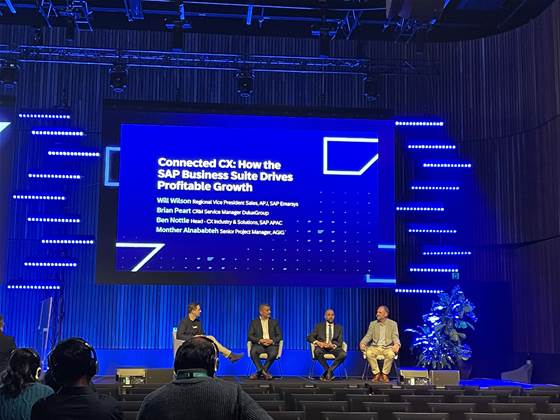
The Australian Gas Infrastructure Group (AGIG) is progressing with the second stage of its Customer Relationship Management (CRM) revamp. The initiative seeks to create a more interconnected, transparent, and proactive service model for its 2 million clientele.
At the SAP NOW AI summit in Melbourne, senior project manager Monther Alnababteh provided updates on the initiative’s progress. The first stage centralised and optimised customer service across different business sections, resulting in improved visibility and analytics capabilities.
Enhancing Customer Interaction
The second stage concentrates on enhancing customer interaction, particularly in marketing and proactive communications. This stage is aimed at strengthening relationships with stakeholders and fostering customer engagement.
AGIG intends to merge additional systems and data sources with SAP CRM, guided by a comprehensive roadmap to direct this effort.
Assisting At-Risk Customers
Although AGIG mainly operates as a distributor and does not engage directly with consumers, it keeps a priority services registry for at-risk customers in Victoria, South Australia, and Queensland. The CRM revamp has notably improved support for these individuals.
Since the revamp was launched, registrations for at-risk customers have surged by over 400%, while processing durations for these applications have seen a 75% decrease. Additionally, inquiry resolution times have improved by 25%.
Benefits for Stakeholders
Aside from customers, other stakeholders such as gas retailers and councils stand to gain from AGIG’s revamp. The objective is to ensure smooth communication and swift problem resolution during critical situations like emergencies and outages.
Conclusion
AGIG’s CRM revamp, supported by SAP Service Cloud, is advancing to boost both customer and stakeholder engagement. With noteworthy advantages already seen in service delivery, future phases will further integrate systems to enrich the overall customer journey.
Q: What is the aim of AGIG’s CRM revamp?
A:
The revamp aims to develop a more connected, transparent, and proactive service model to enhance engagement with customers and stakeholders.
Q: How did phase one of the revamp benefit AGIG?
A:
The first phase centralised and optimised customer service processes, improving visibility and enabling real-time analytics for identifying issues.
Q: What improvements have been observed for at-risk customers?
A:
Registrations for at-risk customers increased by over 400%, processing times improved by 75%, and inquiry handling times saw a boost of 25%.
Q: Who else gains from AGIG’s revamp besides customers?
A:
Other stakeholders, including gas retailers and councils, benefit from enhanced coordination and seamless communication during service provision.
Q: What are the future plans for AGIG’s CRM revamp?
A:
Future stages will involve integrating additional systems and data sources to further enhance engagement with both customers and stakeholders.
We independently review everything we recommend. When you buy through our links, we may earn a commission which is paid directly to our Australia-based writers, editors, and support staff. Thank you for your support!
Brief Overview
Nvidia and OpenAI unveil a 10GW partnership to boost AI advancement.
This collaboration merges Nvidia’s hardware with OpenAI’s software, yielding a robust alliance.
OpenAI obtains prioritized access to Nvidia’s premium GPUs, obtaining a strategic advantage.
Opportunity for groundbreaking AI models in sectors such as robotics, healthcare, and environmental science.
The 10GW power expansion prompts discussions about sustainable energy alternatives.
Strategic Association Between Nvidia and OpenAI
Nvidia and OpenAI have entered a transformative partnership poised to revolutionize artificial intelligence. By utilizing 10GW of Nvidia systems, this collaboration signifies a fresh chapter in AI development, setting a standard for competitors and accelerating the production of upcoming AI models.
Economic Factors
This partnership is a thoroughly integrated, long-term commitment with OpenAI investing significantly in Nvidia’s existing and upcoming chips. In return, Nvidia will infuse OpenAI’s enterprise solutions, such as ChatGPT, into its operations. This collaboration guarantees a perpetual improvement cycle, augmenting the capabilities of both parties.
Dominance in AI and Rivalry
The agreement guarantees OpenAI’s prime access to Nvidia’s GPUs during a time of limited availability, presenting a notable competitive edge. With competitors like Elon Musk’s xAI chasing similar resources, this arrangement positions OpenAI at the leading edge of AI advancement.
Exploring New Opportunities
By harnessing Nvidia’s cutting-edge computing capabilities, OpenAI plans to create intricate models skilled in multi-modal interactions. This could transform domains such as autonomous robotics and scientific advancements in healthcare and environmental science.
Driving the Future: The Energy Dilemma
The 10GW expansion entails substantial energy needs, akin to Victoria’s maximum electricity consumption. Accommodating this demand sustainably is essential, potentially involving fresh renewable energy projects or even nuclear power solutions to facilitate ongoing AI activities.
Conclusion
The partnership between Nvidia and OpenAI represents a significant milestone in AI progression, merging pioneering hardware and software to expand boundaries and foster innovation across various sectors. While it brings considerable energy challenges, the collaboration establishes a new benchmark for AI infrastructure and capacity.
Q: What is the main objective of the Nvidia and OpenAI partnership?
A: The main objective is to improve AI capabilities by implementing 10GW of Nvidia systems, facilitating the development of sophisticated AI models and securing a competitive advantage within the sector.
Q: In what ways does this partnership benefit OpenAI?
A: OpenAI secures priority access to Nvidia’s advanced GPUs, empowering it to extend the limits of AI research and create more advanced models.
Q: What are the energy demands for this deployment?
A: The 10GW deployment necessitates a considerable energy provision, comparable to the peak electricity demand of Victoria, requiring innovative energy strategies.
Q: How could this partnership influence AI research and applications?
A: This collaboration could result in breakthroughs in multi-modal AI systems, affecting fields such as robotics, healthcare, and environmental science by enabling more intricate and capable AI models.
Q: What possible solutions exist for the energy challenge?
A: Possible solutions encompass renewable energy initiatives through Power Purchase Agreements or investigating nuclear power options to secure a reliable energy supply.
We independently review everything we recommend. When you buy through our links, we may earn a commission which is paid directly to our Australia-based writers, editors, and support staff. Thank you for your support!
Quick Read
Australian telecommunications companies might soon implement Digital ID for verifying prepaid SIM cards.
The ACMA’s initiative seeks to minimize SIM-related fraud and prevent data breaches.
Introduced nearly a year ago, the Digital ID Act encourages the use of digital credentials.
The government has allocated $288.1 million for the rollout of Digital ID by 2026.
The proposal’s consultation phase concludes on October 25.
Digital ID: The Next Step in Prepaid SIM Verification for Australia
Introduction
In a development that may transform the customer onboarding process for prepaid mobile services, the Australian Communications Media Authority (ACMA) has put forth a proposal to enable telecommunications companies to authenticate customers through Digital ID. If adopted, this plan would connect digital wallets to verified identification such as driver’s licenses or Medicare cards for SIM activation, with the aim of curtailing fraud and simplifying the verification process.
Background: Digital ID Act and Its Implications
Almost a year post the introduction of the Digital ID Act, this proposal signifies a notable advancement towards wider acceptance of digital credentials. The Digital ID framework is aimed at addressing risks linked to data breaches, a crucial concern underscored by recent events involving major firms like Optus and Medibank.
Government Support and Financial Commitment
The Australian government has committed $288.1 million over a four-year period, as detailed in the Budget 2026-25, to facilitate the rollout of Digital ID throughout both the public and private sectors by December 2026. This financial investment emphasizes the significance attributed to digital identity as a fundamental aspect of contemporary verification procedures.
Current Verification Process for Prepaid SIMs
Since 2017, it has been a requirement for Australian telecommunications companies to confirm customer identities prior to activating prepaid mobile services. At present, this process involves a document verification system (DVS) to authenticate government-issued identification either in person or online.
ACMA’s Proposal and Consultation Period
The ACMA’s proposal is designed to ease the incorporation of Digital ID into the prevailing verification process without imposing extra compliance barriers. All stakeholders and the public are invited to share their opinions on this proposal until October 25.
Summary
The ACMA’s initiative to incorporate Digital ID into the verification of prepaid SIM cards represents a progressive step towards bolstering security and efficiency in the onboarding process for mobile services. With backing from the government and a specified implementation timeline, the shift towards digital identities is set to become a reality for Australian telecommunications providers, potentially establishing a model for other industries.
Q&A
Q: What is the goal of utilizing Digital ID for prepaid SIM verification?
A: The aim is to diminish SIM-related fraud and lessen dependence on physical document checks by associating SIM activation with verified digital credentials.
Q: What influence does the Digital ID Act have on this proposal?
A: The Digital ID Act promotes wider usage of digital credentials, offering a legal foundation for the application of Digital ID across various fields, including telecommunications.
Q: What financial backing has the government provided for the Digital ID rollout?
A: The government has allocated $288.1 million over four years to aid the introduction of Digital ID, aiming for comprehensive implementation in both public and private sectors by December 2026.
Q: How are prepaid SIMs currently verified?
A: Prepaid SIMs are presently verified through a document verification system (DVS) that authenticates government-issued IDs, conducted either in-person or online.
Q: When does the consultation phase for ACMA’s proposal conclude?
A: The consultation phase for ACMA’s proposal concludes on October 25.
We independently review everything we recommend. When you buy through our links, we may earn a commission which is paid directly to our Australia-based writers, editors, and support staff. Thank you for your support!
Launching Australia’s Initial V2G Subscription Service
Origin Energy, in partnership with BYD and StarCharge, has initiated Australia’s groundbreaking vehicle-to-grid (V2G) electric vehicle (EV) subscription pilot. This cutting-edge service combines a bi-directional charger with free home charging.
Quick Overview
Origin Energy collaborates with BYD and StarCharge to introduce Australia’s inaugural V2G subscription pilot.
The pilot features a bi-directional charger and complimentary home charging.
Aims for 50 participants starting in 2026; expressions of interest are currently accepted.
Bundled with the BYD Atto 3 SUV and the StarCharge V2G Halo charger.
Subscribers gain access to Origin’s Virtual Power Plant for automated charging management.
Possible savings of up to A$2,500 compared to fuel expenses.
Flexible monthly subscriptions available starting below A$800 each month.
Comprehending Vehicle-to-Grid Charging
Vehicle-to-grid technology enables electric vehicles to act as portable batteries. By charging during off-peak times, such as sunny afternoons, EVs can send surplus energy back to the grid during peak hours, earning credits and diminishing fossil fuel dependency. This benefits both personal energy bills and the overall national energy system.
“Vehicle-to-grid charging represents a transformative shift that has the potential to accelerate the EV market in Australia by enabling EV drivers to return electricity to the grid from their vehicle and receive compensation for it. We are thrilled to spearhead this innovative technology with the introduction of this pioneering vehicle-to-grid package that simplifies access to the advantages of free charging for drivers.” Chau Le, General Manager, E-mobility, Origin.
Essential Features of the V2G Package
Automated Complimentary Home Charging
Origin’s advanced technology oversees the charging process, supplying up to 320kWh of free energy each month, adequate for average Australian driving demands.
Two-Way Power Flow
Charge your EV utilizing the grid or solar energy and send surplus energy back during peak hours, transforming your EV into a lucrative grid resource.
Flexible Subscription Benefits
Month-to-month subscriptions provide flexibility without long-term commitments, incorporating FBT exemptions via salary packaging, currently assisting over 1,600 Origin EV users.
Limited Trial Participation
The trial is available to only 50 customers in 2026. Interested candidates are encouraged to express their interest now to secure a spot on the waitlist and participate in shaping the future of V2G in Australia.
Automated Financial Benefits
Origin’s Virtual Power Plant streamlines the entire operation, stabilizing the grid and lessening dependence on fossil fuels during high demand periods while rewarding EV owners.
“The ideology of V2G and its implications for our Australian clientele aligns seamlessly with our mission to deliver ‘innovation for an improved life’ and to ‘cool the earth by 1 degree’. BYD is eager to collaborate with Origin to advance this technology in Australia, redefining Electric Vehicle ownership and illuminating that an Electric Vehicle encompasses more than just transportation.”Sajid Hasan, Chief Product Officer, BYD Australia.
“Vehicles are evolving beyond mere components of the transport network – with EVs and bi-directional charging technology, they are becoming integral to the energy network. Through V2G, every vehicle turns into a mobile energy resource. We are excited to contribute to this partnership with Origin and BYD to hasten the uptake of V2G technology in Australia.” Kouki Xiang, CEO, StarCharge APAC.
Accessibility
Origin is currently inviting expressions of interest for the trial, set to commence in 2026. The trial is confined to 50 participants, with specific criteria for eligibility. For further details, visit Origin Energy’s V2G Bundle Trial Page.
Conclusion
The launch of Australia’s first vehicle-to-grid subscription service by Origin Energy signifies a major advancement in the electric vehicle landscape. By converting EVs into dynamic energy resources, this initiative not only grants economic advantages to users but also promotes a more sustainable energy infrastructure across the country.
Q: What is the main advantage of V2G technology?
A:
V2G technology permits electric vehicles to transfer stored energy back to the grid, lessening reliance on fossil fuels while providing drivers with financial incentives.
Q: How can interested participants engage in the trial?
A:
Individuals may express their interest in the trial by accessing the Origin Energy website and submitting their details for consideration.
Q: What are the financial advantages of enrolling in the V2G subscription?
A:
Subscribers can save as much as A$2,500 per year in comparison to fuel expenses, in addition to enjoying the benefits of automated, complimentary home charging.
Q: What are the eligibility requirements for the trial?
A:
Specific eligibility criteria exist, and further information is accessible on the Origin Energy website. The trial is capped at 50 participants in 2026.
Q: Which vehicle and charger are part of the package?
A:
The package includes the BYD Atto 3 SUV paired with the StarCharge V2G Halo bi-directional charger.
Q: How does V2G technology influence the national energy grid?
A:
V2G technology enhances the grid by supplying additional energy during peak demand periods, thereby decreasing the necessity for fossil fuel-based power generation.
We independently review everything we recommend. When you buy through our links, we may earn a commission which is paid directly to our Australia-based writers, editors, and support staff. Thank you for your support!
CBA’s Lumos AI Accelerator
Brief Overview
CBA unveils Lumos, an AI-driven process for cloud application transition.
Lumos is set to move 20-30 applications each quarter.
AI agents facilitate the transition, minimizing time and resources needed.
Partnership with AWS ProServe to improve migration framework.
Targeting modernization of 370 outdated applications.
Transforming Cloud Migration with AI
CBA has introduced a multi-agent system known as ‘Lumos’ to optimize the readiness and migration of applications to the cloud. This AI-centric strategy seeks to convert the challenging endeavor of cloud migration into a more feasible undertaking, enabling the bank to transfer 20-30 applications each quarter.
CBA’s Ash Moollan.
Engineering-Focused Migration Strategy
General Manager of Cloud Acceleration Ash Moollan provided insights at an AWS financial services symposium, emphasizing the engineering-focused strategy that redefines application migration with AI and agent technology. This partnership with AWS’s ProServe intends to tailor the AWS migration framework to better suit CBA’s needs, allowing for increased migration capacities.
AI Agents Central to Lumos
Lumos utilizes AI agents to manage various phases of the migration workflow, from gathering requirements to code adaptation and UI testing. Agents summarize discussions, evaluate codebases, and create cybersecurity documentation, guaranteeing accuracy and efficiency in the workflow. A human oversight mechanism ensures quality assurance and additional refinement.
Addressing Obstacles and Streamlining Workflows
CBA encountered multiple challenges, such as disorganized documentation and protracted cloud readiness assessments. Lumos confronts these issues by implementing AI-driven solutions that streamline operations. Moollan also alluded to ongoing enhancements, including a shift from Pydantic to Amazon Bedrock’s AgentCore for improved orchestration and management of extensive legacy codebases.
Conclusion
CBA’s Lumos signifies a major advancement in cloud application migration, utilizing cutting-edge AI technology to simplify and expedite the process. Through collaboration with AWS and a commitment to ongoing enhancements, CBA aims to modernize its legacy applications in an effective and efficient manner.
Q: What is Lumos?
A: Lumos is a multi-agent AI workflow created by CBA to optimize the application migration process to the cloud.
Q: How many applications does CBA intend to migrate with Lumos?
A: CBA seeks to migrate 20-30 applications every quarter using Lumos.
Q: What function do AI agents serve in Lumos?
A: AI agents oversee various stages of the migration process, such as requirements gathering, code evaluation, and documentation creation, with human supervision for quality assurance.
Q: In what ways is CBA refining the Lumos workflow?
A: Refinements include switching to Amazon Bedrock’s AgentCore for enhanced orchestration and boosting Lumos’s capability to manage large legacy codebases.
We independently review everything we recommend. When you buy through our links, we may earn a commission which is paid directly to our Australia-based writers, editors, and support staff. Thank you for your support!
Neuron Mobility announces A$100,000 in complimentary rides to advocate for helmet safety.
Helmet Safety Awareness Week takes place from 22nd to 28th September.
Participants can commit, don helmets, and earn incentives.
Safety Ambassadors will be available to assist and reward riders.
Failure to adhere to helmet regulations results in fines across Australian territories.
Helmet Safety Awareness Week: Advancing Towards Safer Streets
Escooter provider Neuron Mobility is leading its fifth annual Helmet Safety Awareness Week, presenting A$100,000 in complimentary rides and rewards. This effort, occurring from 22nd to 28th September, seeks to highlight the significance of helmet usage and safer riding habits.
How to Claim the Rewards
Pledge for Free Passes
Riders can use the promo code HELMETPLEDGE to obtain a free Plus Pass, which provides complimentary e-scooter starts and a 20% discount on all rides for 30 days.
Earn Incentives
By taking an in-app selfie while wearing a helmet, riders can receive up to 50 cents off future rides.
Be Spotted
Neuron’s Safety Ambassadors will be patrolling prominent areas, ready to provide rewards and safety advice to riders.
Win Great Prizes
Participants can enter a competition to win a A$500 voucher for dining or a city escape by engaging with the safety initiatives.
The Significance of Helmets
Helmets are essential for e-scooter safety, greatly decreasing the likelihood of severe injury. In Australia, wearing a helmet is mandated by law, with fines for non-compliance differing by state: Victoria (A$395), New South Wales (A$423), Queensland (A$166), South Australia (A$125), and Western Australia (A$50).
Neuron’s Dedication to Safety
Each Neuron scooter is furnished with a helmet, accessible via their app. Safety Ambassadors will promote helmet usage and endorse the ScootSafe Academy, which provides educational materials along with incentives.
“It’s wonderful to commemorate our fifth year of Helmet Safety Awareness Week. Over 99.99 per cent of all Neuron trips conclude safely and without issues. Yet, in the rare case of a serious accident, helmets remain the most effective means for riders to safeguard themselves, which is why we’re rewarding all those who make the pledge this year.” Jayden Bryant, General Manager, Australia and New Zealand, Neuron Mobility.
Neuron Mobility’s Helmet Safety Awareness Week is a crucial initiative that fosters safer e-scooter practices by promoting helmet use through a suite of engaging incentives and rewards. With legal mandates and possible fines established, the campaign aspires to boost awareness and compliance with safety protocols among riders.
Q&A Session
Q: What is the primary objective of Helmet Safety Awareness Week?
A: The main objective is to encourage helmet use among e-scooter riders, ensuring safer roads and minimizing injury risks.
Q: How can riders get involved in the initiative?
A: Riders can join by pledging to wear helmets, utilizing the promo code HELMETPLEDGE, and participating in Neuron’s safety programs.
Q: Are there repercussions for not wearing a helmet?
A: Yes, fines differ across Australian regions, with penalties ranging from A$50 to A$423 for non-compliance.
Q: How are Neuron scooters designed for helmet safety?
A: Neuron scooters come equipped with built-in helmets that can be unlocked through their app, ensuring easy availability for riders.
Q: What functions do Safety Ambassadors serve during the week?