
Australia Awaits: Waymo’s Autonomous Vehicles Expected to Land by 2026?

We independently review everything we recommend. When you buy through our links, we may earn a commission which is paid directly to our Australia-based writers, editors, and support staff. Thank you for your support!
Quick Read
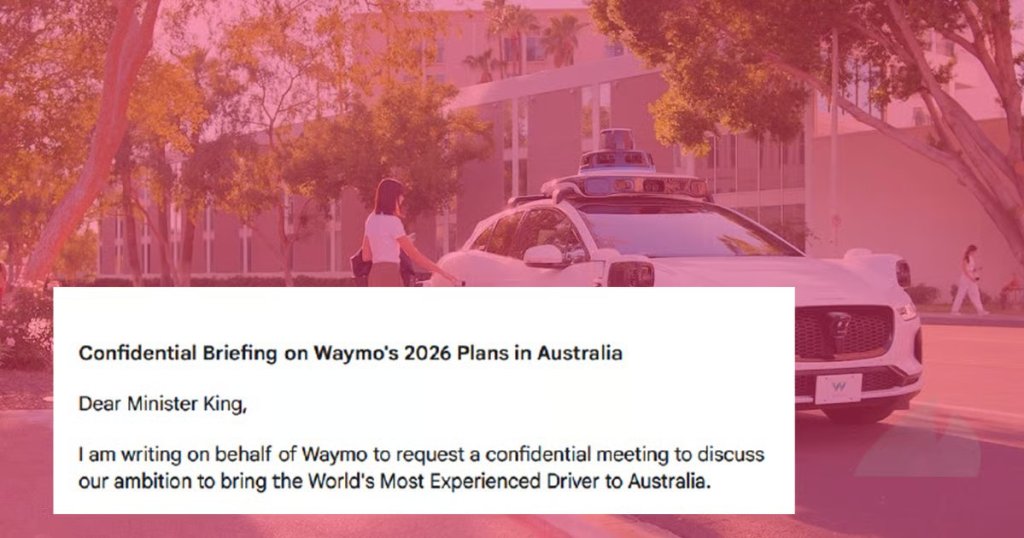
- Waymo is contemplating a move into Australia by 2026, according to a confidential email.
- Australia is in the process of creating a national Automated Vehicle Safety Law to support autonomous vehicles.
- Tesla’s FSD currently takes the lead in Australia’s autonomous vehicle market.
- Waymo has not yet released an official timeline for its launch in Australia.
Waymo’s Possible Arrival in Australia
Australia has been keenly anticipating the introduction of autonomous vehicles, and recent news indicates that Waymo, a frontrunner in self-driving technology, may be planning to expand to Australia by 2026. A restricted email sent to the Minister for Infrastructure, Transport, Regional Development and Local Government, Catherine King MP, reveals Waymo’s desire to explore its plans for Australia.
Waymo’s Official Position
Amidst the excitement, Waymo has clarified that there are no concrete plans or timelines for an Australian launch. According to Ethan Teicher, a representative for Waymo, while they are enthusiastic about the prospect of expansion, they have not confirmed any specifics regarding their potential footprint in Australia.
The Regulatory Framework
The regulatory environment for autonomous vehicles in Australia is still being shaped. In February 2022, a decision was made to enact the Automated Vehicle Safety Law through Commonwealth legislation, facilitating a coordinated approach to the approval of autonomous vehicles. This thorough framework is crucial for the incorporation of driverless technology into the Australian transport network.
Steps Towards Realization
- Automated Vehicle Safety Law (AVSL): This proposed legislation aims to guarantee the safety of Automated Driving Systems (ADS) in operation and necessitates both federal laws and state-level updates.
- Automated Driving System Entity (ADSE) Registration: Companies are required to be certified under AVSL to ensure accountability for the safety of an ADS over its entire lifecycle.
- Certification Process: ADSEs must apply for certification of their ADS, which includes demonstrating that the system can competently manage dynamic driving tasks.
- Approval Timeline: The schedule for approval remains unclear as regulatory frameworks are still being established.
Conclusion
While anticipation grows regarding the prospective launch of Waymo’s autonomous vehicles in Australia, regulatory challenges present a notable obstacle. With Tesla’s FSD at the forefront locally, Australia awaits the finalization of its national safety regulations to facilitate the integration of autonomous technology. Waymo’s interest is apparent, but official timelines have yet to be established.
Q&A Section
Q: What is Waymo’s current position on expanding into Australia?
A: Waymo has expressed a desire to expand to Australia by 2026, though no official timelines have been disclosed.
Q: What are the essential regulatory demands for autonomous vehicles in Australia?
A: Australia mandates a national Automated Vehicle Safety Law, ADSE registration, and a certification process for Automated Driving Systems.
Q: How does Tesla’s FSD fit into the landscape of autonomous vehicles in Australia?
A: Tesla’s FSD currently leads in autonomous technology within Australia, but it requires regulatory approval for operation without supervision.
Q: What obstacles does Australia encounter in adopting autonomous vehicles?
A: The primary obstacles involve finalizing national safety regulations and integrating autonomous technology into the current transport infrastructure.
