
Interpreting Elon Musk’s Bold New Concept: The TERAFAB

We independently review everything we recommend. When you buy through our links, we may earn a commission which is paid directly to our Australia-based writers, editors, and support staff. Thank you for your support!
Quick Read
- Elon Musk announces the revolutionary TERAFAB initiative for humanoid robots.
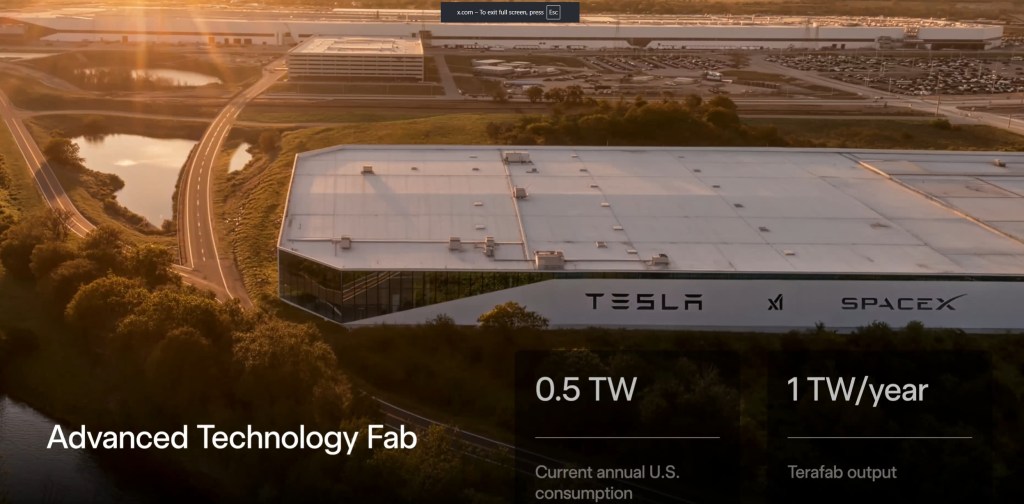
- The initiative is set to create chips capable of generating 1 Terawatt each year.
- TERAFAB will leverage AI to enhance chip development and production processes.
- Future AI inference may rely on data centres situated in space.
- Starlink will provide rapid communication between Earth and outer space.
- Optimus robot generations will exchange knowledge throughout the fleet.
- The initiative aspires to transform global economies with self-sufficient labour.
The Bold Vision Behind TERAFAB
Elon Musk has once again drawn global attention with the reveal of TERAFAB, an innovative project focused on creating millions of humanoid robots. This ambitious plan is supported by the creation of advanced chips designed to energize these robots, utilizing a total of 1 Terawatt of energy every year. Musk’s idea, while daring, is grounded in Tesla’s skills in self-driving technology and artificial intelligence.
Developing the Intelligent Robot Mind
The foundation of Musk’s humanoid robots is a sophisticated AI framework that requires large volumes of data for both training and operational use. Similar to Tesla’s Full Self Driving technology, the robots will be outfitted with cameras, computing units, and batteries similar to those found in Tesla cars. This method demands a considerable amount of training data and operational capacity, calling for chips developed specifically by Tesla, xAI, and SpaceX.
Total Vertical Integration: A Self-Reinforcing Cycle
A key aspect of TERAFAB is its cohesive production system. By creating chips that enhance the efficiency of subsequent chip iterations, TERAFAB establishes a feedback mechanism that could surpass the conventional constraints of Moore’s Law. This vertical integration fosters swift iteration and creativity, moving away from traditional dependencies on external fabricators like TSMC.
Space: The Ultimate Frontier for Computing
Musk suggests that the realm of AI processing may extend beyond the confines of Earth. With objectives for 80% of inference activities to be executed in space, solar energy along with passive cooling in orbit presents substantial benefits. Nonetheless, this transition also introduces difficulties, especially concerning latency. SpaceX’s Starlink will be vital in ensuring minimal latency links between Earth-residing robots and space-oriented data centres.
Propelling the Future of Autonomous Employment
The primary objective of the TERAFAB project is to transform the global economy through the establishment of a vast network of smart humanoid robots. As these robots acquire and disseminate knowledge across the fleet, they are expected to provide unmatched efficiency and productivity. However, the societal ramifications, encompassing potential wealth imbalances and job displacement, must be thoroughly evaluated and addressed.
Beyond Earth: A Vision for Interplanetary Robotics
Musk envisions the usage of these robots outside of Earth, with dreams of sending them to the Moon, Mars, and even Jupiter. While these ambitions are far-reaching and speculative, they underscore Musk’s wider goal to expand the frontiers of human capacity and technological progress.
Summary
The TERAFAB project signifies a significant advancement in both AI and robotics, driven by Musk’s vision of a future led by intelligent machines. Although the technical and financial hurdles are substantial, the prospective benefits could reshape industries and economies on a global scale.
Q&A
Q: What is the TERAFAB project?
A: TERAFAB is an ambitious effort by Elon Musk focused on creating millions of AI-driven humanoid robots powered by custom-built chips.
Q: Why is space-based computing being explored?
A: Space provides benefits such as effective solar energy and passive cooling, making it a prime location for expansive AI processing.
Q: How will robots acquire knowledge and adjust?
A: Robots will utilize extensive training and operational data, enabling them to learn tasks and propagate knowledge within the fleet.
Q: What part will Starlink play in this initiative?
A: Starlink will enable low-latency communication between Earth robots and space data centres, guaranteeing real-time processing.
Q: What economic consequences might arise from TERAFAB?
A: TERAFAB could alter economies by fostering an abundance of autonomous work, but it also raises concerns regarding wealth disparity and joblessness.
Q: How does TERAFAB seek to exceed Moore’s Law?
A: By employing AI to improve chip design and manufacturing, TERAFAB aims to establish a feedback mechanism that bolsters each chip generation’s efficiency and capability.
Q: What future plans exist for these robots beyond Earth?
A: Musk imagines deploying robots on celestial surfaces like the Moon and Mars to potentially create habitats for future human settlement.
