
Pentagon Calls on AI Companies to Improve Functionality on Classified Networks

We independently review everything we recommend. When you buy through our links, we may earn a commission which is paid directly to our Australia-based writers, editors, and support staff. Thank you for your support!

Pentagon Promotes AI Adoption on Sensitive Networks
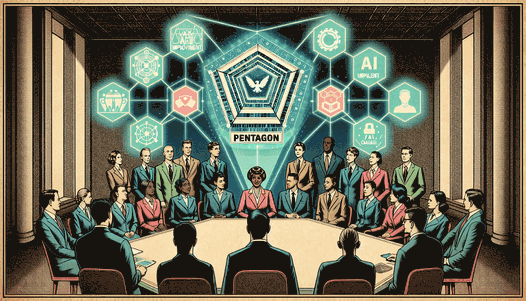
Brief Overview
- The Pentagon is inspiring AI innovators like OpenAI and Anthropic to provide tools on classified networks.
- Discussions are centered on implementing AI without conventional limitations, sparking ethical discussions.
- OpenAI has consented to certain limitations for AI deployment on unclassified networks.
- Anthropic raises alarms regarding autonomous weapon targeting and domestic monitoring.
- AI deployment on classified networks is still under consideration, with significant implications for security and decision-making.
Increasing AI Accessibility in Defence
At a recent event held at the White House, Pentagon Chief Technology Officer Emil Michael underscored the military’s goal to blend AI technologies within both unclassified and classified sectors. This initiative seeks to utilize AI’s capabilities in operational contexts, potentially revolutionizing decision-making on future tech-dominated battlegrounds.
AI in Combat Scenarios
The Pentagon’s plan encompasses the introduction of cutting-edge AI technologies across all classification tiers, igniting discussions on the ethical ramifications of military AI applications. Presently, numerous AI enterprises offer tools for unclassified military networks, mainly aimed at administrative tasks.
Issues and Protective Measures
The prospect of AI mistakes in sensitive situations raises alarms regarding its application in classified realms. Errors could lead to dire consequences, leading AI providers to establish protective measures and protocols. Nonetheless, Pentagon representatives advocate for reduced limitations, contingent on adherence to legal standards.
Collaborations and Deals
OpenAI recently finalized a deal with the Pentagon to supply its services, including ChatGPT, on unclassified networks, benefiting over 3 million employees within the US Defense Department. Although OpenAI has agreed to ease certain user restrictions, talks with Anthropic have been more contentious, primarily due to ethical issues.
Anthropic’s Position
Anthropic, recognized for its chatbot Claude, has expressed hesitation in allowing its technology for autonomous weapon targeting or domestic surveillance. Despite these worries, Anthropic is dedicated to aiding national security endeavors by offering sophisticated AI capabilities.
Conclusion
The Pentagon’s drive for extensive AI integration on classified networks signifies the shifting role of technology within defence. As AI companies address ethical dilemmas and regulatory standards, the potential for AI to transform military operations is progressively becoming evident.