
China Asks Technology Firms to Halt Orders for Nvidia’s H200 Chips

We independently review everything we recommend. When you buy through our links, we may earn a commission which is paid directly to our Australia-based writers, editors, and support staff. Thank you for your support!
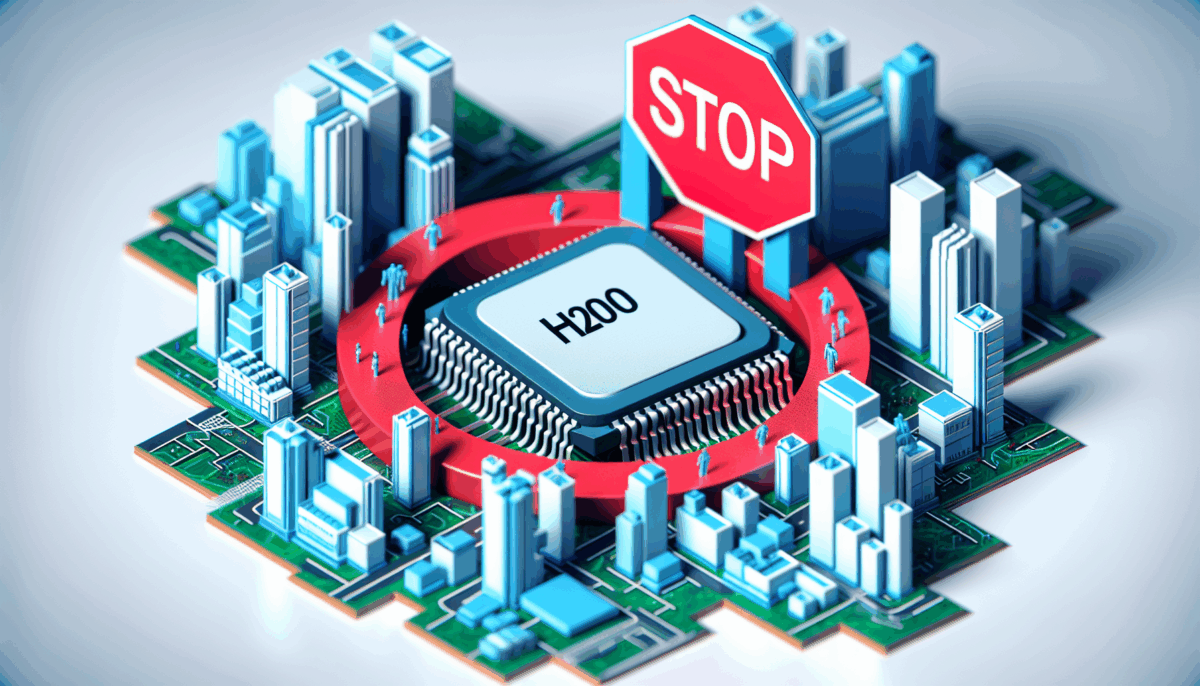
Brief Overview
- China has instructed technology companies to stop placing orders for Nvidia’s H200 chips.
- This action is part of China’s extensive plan to enhance its local chip manufacturing capabilities.
- Frictions between the US and China concerning semiconductor trade are escalating.
- Nvidia’s H200 chip remains highly coveted in China amid regulatory ambiguities.
- The H200 is an earlier model compared to Nvidia’s leading “Blackwell” chips.
- Pending US export licenses for these chips lack a definitive approval timeline.
China’s Tactical Halt on Nvidia H200 Chip Orders

In a noteworthy action, China has reportedly requested its tech companies to cease orders for Nvidia’s H200 chips. This request aligns with a larger goal to enhance domestic production of artificial intelligence (AI) chips and diminish dependence on US technologies. As the US enforces stricter export regulations on advanced semiconductors, the semiconductor sector finds itself central to the escalating trade tensions between the US and China.
Tensions in the US-China Semiconductor Landscape
The semiconductor sector has emerged as a critical front in the ongoing trade disputes between the US and China. Both nations are competing for technological leadership, with semiconductors being a pivotal component in AI and other cutting-edge technologies. China’s directive to halt orders is meant to avoid a rush in stockpiling US chips, signaling the strategic significance Beijing attributes to advancing its own technological capabilities.
Nvidia’s Role and Market Conditions
Nvidia, caught amid these geopolitical frictions, remains hopeful about the desire for its H200 chips in China. Nvidia CEO Jensen Huang perceives the robust purchase requests as a favorable indicator, despite the absence of official declarations from Beijing. The H200 chip, which precedes Nvidia’s “Blackwell” series, continues to be a desirable item in the Chinese market.
US Export Regulations and Licensing
The US government’s consent for Nvidia to export H200 chips to China, conditional upon a 25% revenue-sharing tax, indicated a notable shift in policy. However, the timeline for processing export licenses remains undefined, intensifying the uncertainty faced by tech companies that depend on these advanced semiconductors.
Conclusion
China’s appeal for technology firms to halt orders of Nvidia’s H200 chips highlights the strategic significance of semiconductors in the ongoing trade conflict with the US. While Nvidia stays optimistic about its market outlook in China, the overarching ramifications of these tensions continue to influence global supply chains and technological progress.
Q: Why has China requested tech firms to stop orders for Nvidia’s H200 chips?
A:
China’s request is part of an approach to strengthen its domestic semiconductor industry and lessen dependence on US-made chips.
Q: What is the importance of the H200 chip?
A:
The H200 chip is a high-end semiconductor utilized in AI applications and serves as a precursor to Nvidia’s advanced “Blackwell” chips.
Q: How do US export controls impact Nvidia’s chip sales?
A:
US export restrictions create challenges on the sale of advanced semiconductors, necessitating Nvidia to navigate intricate licensing procedures.
Q: What are the wider implications of US-China semiconductor tensions?
A:
These tensions underscore the strategic relevance of semiconductors and affect global supply chains and technological advancements.