Australia Tech News - Page 27 of 231 - Techbest - Top Tech Reviews In Australia

Purpose-Designed IaaS Opens New Revenue Avenues for Service Providers


We independently review everything we recommend. When you buy through our links, we may earn a commission which is paid directly to our Australia-based writers, editors, and support staff. Thank you for your support!

Custom IaaS Unleashes New Revenue Channels for Service Providers

Brief Overview

  • MSPs can utilize a cohesive IaaS solution to lower costs and simplify processes.
  • Acronis Cyber Frame provides both cloud and local variations for customized IaaS implementation.
  • Incorporated security and backup solutions boost data security and operational effectiveness.
  • Minimizes reliance on highly skilled IT personnel, addressing the worldwide skills shortage.
  • Paves the way for new income sources by transitioning workloads from outdated systems to state-of-the-art infrastructures.
Custom IaaS offers new income possibilities for service providers

Overview of Acronis Cyber Frame

Acronis Cyber Frame, a specialized IaaS and hyperconverged infrastructure offering, is designed to assist Managed Service Providers (MSPs) and Cloud Service Providers (CSPs) in addressing ongoing challenges and tapping into new revenue sources. Acronis, a Swiss expert in cybersecurity and infrastructure, delivers this solution to empower MSPs in providing virtual machines, storage, networking services, and comprehensive security solutions.

Streamlining Tool Overload and Complexity

The Acronis Cyber Frame unifies infrastructure, protection, and management into one platform, significantly lowering the complexity and expenses linked to using numerous disconnected tools. This strategy not only simplifies the operational environment for service providers but also strengthens their capacity to deliver secure, dependable services to their customers.

Discovering Revenue Possibilities

By migrating client workloads from outdated virtualization systems to Acronis Cyber Frame, MSPs can create partner-branded cloud solutions and initiate IaaS without major hardware expenditures. This shift not only generates new revenue channels but also fosters more stable infrastructure settings.

Integrated Security and Lowered Costs

Fully incorporated into the Acronis Cyber Platform, Cyber Frame presents a complete set of tools, including backup and AI-driven anti-malware services, promoting strong data safeguarding. This integration minimizes the necessity for MSPs to maintain a large, highly skilled support staff, thereby reducing costs and alleviating the effect of the global skills deficit.

Conclusion

Acronis Cyber Frame delivers a revolutionary solution for MSPs, tackling persistent issues related to tool overload, operational complexity, and unpredictable infrastructure. Through this platform, service providers can enhance their service capabilities, optimize their operations, and unlock new revenue potentials, while ensuring high standards of security and efficiency.

Q&A Segment

Q: What is Acronis Cyber Frame?

A: It is a specialized IaaS and hyperconverged infrastructure solution aimed at assisting MSPs and CSPs in delivering integrated virtual machines, storage, networking, and security services.

Q: How does Acronis Cyber Frame aid MSPs?

A: It simplifies complexities and reduces costs by consolidating infrastructure management and security functions into one platform, allowing MSPs to introduce new income sources and enhance operational efficiency.

Q: What are the deployment choices for Acronis Cyber Frame?

A: The solution is provided in two forms: Acronis Cyber Frame Cloud, which operates from Acronis regional data centers, and Acronis Cyber Frame Local, which converts an MSP’s servers into a multitenant IaaS solution.

Q: How does Acronis Cyber Frame tackle security issues?

A: It possesses integrated functionalities like backup, AI-driven anti-malware, and endpoint protection management, lowering the risk of data breaches and ensuring business continuity.

Q: Can Acronis Cyber Frame assist with the global skills deficit?

A: Certainly, by minimizing the demand for highly skilled technical staff, it cuts down recruitment expenses and empowers existing personnel to manage reduced operational complexity, lowering the risk of burnout.

Q: What new revenue streams does Acronis Cyber Frame create?

A: It enables MSPs to transfer workloads from legacy systems to modern infrastructures, build partner-branded cloud solutions, and provide regional or sovereign IaaS offerings.

Westpac Incorporates Five AWS AI Agents into Fundamental Lending Functions


We independently review everything we recommend. When you buy through our links, we may earn a commission which is paid directly to our Australia-based writers, editors, and support staff. Thank you for your support!

Brief Overview

  • Westpac incorporates five AI agents from AWS into its primary lending functions.
  • AI agents handle over 32,000 payslips and 1.5 million transactions every week.
  • AI accelerates the processes for loan and credit card applications.
  • Agents save upwards of 150,000 work hours, improving customer service.
  • Reduced deployment time for AI agents to 4-6 weeks.

Adopting AI for Improved Financial Services

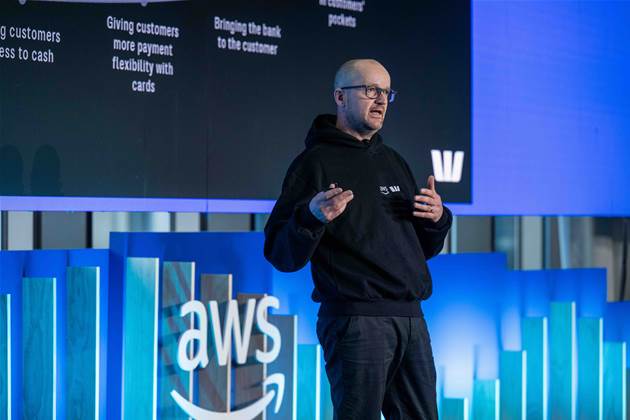
Westpac has made a major advancement by incorporating a group of AI agents built on Amazon Bedrock AgentCore into its essential lending functions. This effort aims to optimize the handling of payslips and financial transactions, ultimately improving the efficiency of home loan and credit card application processes.

Optimizing the Application Workflow

Andrew McMullan, Westpac’s Chief Data, Digital and AI Officer, underscored the pivotal role AI plays in adding value for customers. The AI agents, now a vital aspect of Westpac’s operations, collaborate with human bankers to clarify the intricacies of processing payslips and verifying them against regulations. This development has allowed bankers to concentrate more on customer engagement, lessening the time spent on document oversight.

Instantaneous Error Correction

The AI agents excel in real-time data processing, enabling instant feedback when customers upload erroneous or outdated documents. This functionality greatly mitigates delays, ensuring a more fluid and efficient application process for clients.

More Than Just Trials

McMullan emphasized that these AI agents are functioning within Westpac’s live systems, not simply experimental trials. The agents proficiently manage data extraction, policy implementation, and outcome verification, facilitating smooth cooperation with human bankers. This collaboration seeks to eliminate unnecessary hurdles and complications from the lending process, expediting the approval timeline for patrons.

Efficiency Gains and Time Management

The incorporation of AI agents has led to significant time savings—over 150,000 hours—that can now be redirected towards enhancing customer service. Westpac has also cut down the time needed to launch new AI agents from six months to about four to six weeks, thanks to its partnership with AWS.

Conclusion

Westpac’s assimilation of five AI agents from AWS into its main lending operations signifies a considerable progress in the bank’s digital transformation endeavors. By streamlining the management of payslips and financial transactions, the bank has not only boosted operational efficiency but also enhanced customer satisfaction through quicker service delivery. This initiative highlights Westpac’s dedication to utilizing technology to better serve its clients and retain a competitive advantage in the financial services sector.

Q: What function do AI agents perform in Westpac’s operations?

A: AI agents handle payslips and transactions, simplify verification tasks, and minimize paperwork, enabling bankers to focus more on customer support.

Q: In what ways do AI agents enhance the application process for clients?

A: They offer real-time feedback on document uploads, cutting down delays and ensuring more efficient processing of applications.

Q: Are the AI agents fully functioning within Westpac’s systems?

A: Yes, the AI agents are actively utilized in Westpac’s operational systems for lending and credit requests, improving both accuracy and speed.

Q: How much time has been saved through the use of AI agents?

A: More than 150,000 hours have been saved, enabling teams to reinvest time into better customer service.

Q: How soon can new AI agents be deployed at Westpac?

A: Deployment time has been shortened to four to six weeks, due to Westpac’s collaboration with AWS.

The Reasons Traditional Cyber Risk Assessment in Cybersecurity is Not Succeeding


We independently review everything we recommend. When you buy through our links, we may earn a commission which is paid directly to our Australia-based writers, editors, and support staff. Thank you for your support!

Brief Overview

  • Conventional 5×5 risk matrices can give boards a misleading impression of clarity.
  • Cyber threats function in a manner distinct from other risks, such as fire or flooding, rendering traditional frameworks inadequate.
  • Cyber risks are fluid, necessitating prioritization models that can adapt to swift changes.
  • Prioritization is essential given resource constraints and the requirements for strategic financial planning.
  • Conventional models frequently oversimplify complex information, resulting in the loss of critical insights.

Recognizing the Constraints of Standard Cyber Risk Evaluation

Many cyber risk heatmaps appear orderly. They provide a clear visual summary—simple for boards to comprehend. Nevertheless, this seemingly straightforward nature contributes to the issue. Traditional 5×5 risk matrices can create a deceptive sense of clarity, often neglecting the vital question: where should the subsequent dollar of the cyber budget be allocated?

Limitations of traditional cyber risk assessment

Luke Irwin, Aegis Cybersecurity

The Ever-Changing Landscape of Cyber Threats

In contrast to conventional risks such as fire or water damage, cybersecurity threats are intentional, strategic, and adaptable. Attackers may act in a targeted, opportunistic, automated, or persistent manner. Traditional risk models, designed for static threats, find it challenging to cope with this fluidity.

The Limitations of the 5×5 Framework

Corporate risk matrices generally employ long-term planning perspectives, which are poorly matched for the brisk environment of cybersecurity. Decisions must often be made in hours instead of years. The 5×5 framework can overly trivialize the intricacies of cyber threats, condensing them into a colored square that provides minimal practical direction.

Prioritisation and Resource Management

The primary obstacle is prioritisation. When numerous risks are evaluated as equally critical, organizations struggle with determining which to tackle first. This absence of prioritisation can result in poor budget distribution, lost chances for risk mitigation, and insufficient responses to dangers.

The Influence of Controls in Risk Oversight

Various controls impact risk in different manners. Multi-factor authentication may lessen the likelihood of breaches but does not mitigate the consequences of incidents. Encryption can reduce the severity of damage, yet it does not avert attacks. Monitoring and detection can alleviate damage but cannot prevent initial intrusions. A thorough cyber risk evaluation must address these subtleties.

Final Thoughts

The 5×5 framework presents the promise of structured risk oversight; however, it frequently falls short in delivering actionable insights. Cybersecurity necessitates frameworks that mirror its distinct, rapidly changing environment. Organizations require instruments that facilitate informed prioritisation and resource distribution to effectively safeguard their digital resources.

Synopsis

The conventional 5×5 risk evaluation framework is inadequate for cybersecurity, as it fails to address the dynamic, adversarial characteristics of cyber threats. Organizations require models that are more flexible and nuanced for efficiently prioritising risks and managing resources.

Q: Why are conventional risk matrices inadequate for cybersecurity?

A: Traditional matrices are tailored for static threats and do not consider the dynamic, adaptive properties of cyber threats.

Q: What distinguishes cyber threats from other risks like fire or flooding?

A: Cyber threats are intentional, targeted, and able to evolve in response to countermeasures, in contrast to static risks.

Q: How do conventional models fall short in prioritisation?

A: They often assess multiple risks as equally severe, complicating effective resource allocation.

Q: What should organizations take into account in cyber risk evaluation?

A: They should evaluate the unique impacts of different controls and the evolving nature of threats.

Q: How can organizations enhance their cyber risk management?

A: By implementing frameworks that adapt to rapid changes and offer clear prioritisation for resource allocation.

Russia-associated “Midnight Blizzard” Group Breaches Hotel Wi-Fi via CaptiveCrunch


We independently review everything we recommend. When you buy through our links, we may earn a commission which is paid directly to our Australia-based writers, editors, and support staff. Thank you for your support!

Midnight Blizzard’s CaptiveCrunch Threatens International Hotel Wi-Fi Security

Brief Overview

  • Midnight Blizzard, a Russia-affiliated group, aims at hotel Wi-Fi worldwide with CaptiveCrunch.
  • Attackers seek to acquire user credentials and introduce malware through breached networks.
  • Essential tools employed consist of the CornFlake RAT and ChocoShell infostealer.
  • Recommended actions involve multi-factor authentication and utilizing secure travel routers.
Cyber threat CaptiveCrunch by Midnight Blizzard targets hotel Wi-Fi

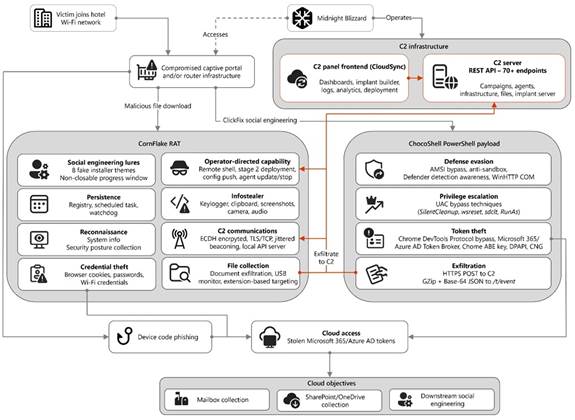
CaptiveCrunch attack flow. Source: Microsoft

Exploring CaptiveCrunch

Since May 2026, CaptiveCrunch has infiltrated captive portal systems at hotels and various locations providing guest Wi-Fi. This effort is attributed to Storm-2945, part of the Russian state-associated group known as Midnight Blizzard.

Technical Insight

As noted by Microsoft, the attack reroutes travelers to phishing frameworks and deploys malware masked as updates. Midnight Blizzard is connected to Russia’s SVR intelligence agency. While the precise number of impacted sites remains unclear, cases have been documented in nations including the United States, India, and Saudi Arabia.

Instruments and Strategies

The perpetrators utilize tools like CornFlake, a remote access trojan capable of keylogging and additional functions, along with ChocoShell, an infostealer aimed at browser cookies and user credentials. Android devices could also face threats from malicious APK prompts. The phishing framework frequently exploits Microsoft’s device code authentication process.

Proposed Security Strategies

Microsoft recommends that organizations prevent Entra ID device code authentication where not essential and enforce multi-factor authentication or passkeys. Viewing public Wi-Fi as unreliable and employing secure travel routers or VPNs is strongly advisable.

Conclusion

CaptiveCrunch represents a serious risk to hotel Wi-Fi systems worldwide, with Midnight Blizzard utilizing advanced techniques to breach traveler data. Implementing strong security measures can help alleviate these threats.

Common Questions

Q: What is CaptiveCrunch?

A:

CaptiveCrunch is a cyber-attack initiative targeting hotel Wi-Fi networks, associated with the Russian group Midnight Blizzard, with the intent of stealing credentials and spreading malware.

Q: How does CaptiveCrunch operate?

A:

It compromises captive portal systems, redirecting travelers to phishing URLs and delivering malware disguised as genuine updates.

Q: What tools are utilized in CaptiveCrunch?

A:

Main tools comprise the CornFlake remote access trojan and the ChocoShell infostealer, focusing on browser cookies, passwords, and Wi-Fi credentials.

Q: How can individuals safeguard themselves from this threat?

A:

Implement multi-factor authentication, regard public Wi-Fi as unsafe, and use secure travel routers or VPNs to protect personal data.

Q: What are the ramifications for businesses?

A:

Companies should secure their workforce’s data by adhering to recommended protocols and educating employees regarding the dangers of public Wi-Fi.

Journey Beyond Uncovers More Secure AI Route for Clients Using Autonomous Agents


We independently review everything we recommend. When you buy through our links, we may earn a commission which is paid directly to our Australia-based writers, editors, and support staff. Thank you for your support!

Brief Overview

  • Journey Beyond utilizes agentic AI to reduce risks associated with customer-facing AI.
  • Agentic AI guarantees predictable behavior and dependable information.
  • Agents are built to escalate unresolved questions rather than offering incorrect replies.
  • The Agentforce platform by Salesforce is employed to uphold defined tasks and approved sources of information.
  • AI agents have successfully handled over 15,000 customer interactions with high levels of satisfaction.
  • Future advancements aim at improving human handovers and ongoing enhancements.

Agentic AI: A Safer Route for Customer Engagement

Journey Beyond finds a safer AI route with autonomous agents

To improve its customer service while retaining governance, Journey Beyond, a tourism operator based in Adelaide, has adopted agentic AI. This decision comes after struggling with conversational AI chatbots that often deviated from their intended goals. Journey Beyond employs nearly 2,000 individuals and operates 24 tourism brands, including The Ghan and the Monarto Safari Resort.

Utilizing Agentic AI for Trustworthy Customer Engagement

Madhumita Mazumdar, Executive General Manager for Technology, disclosed that Journey Beyond currently has four AI agents operational, with plans to roll out six additional agents this year. These agents extract information from Journey Beyond’s content pages, including booking systems, to offer accurate responses to customer inquiries.

The choice to implement agentic technology stemmed from the desire for reliability and predictability, steering clear of AI systems “making things up.” Unlike conventional chatbots, these agents escalate inquiries they cannot resolve, ensuring that customers receive correct information or follow-up support from human staff.

Utilization in Complex Rail Services

The toughest challenge for the AI agents has been their implementation in Journey Beyond’s rail services, known for their complexity and high-value offerings. The agents assist customers by providing booking links and addressing inquiries concerning accessibility, dietary needs, and more, utilizing approved content and booking information.

Guaranteeing Security and Precision

To safeguard customer data, Journey Beyond has established multifactor authentication prior to revealing any personal details. As a customer of Salesforce CRM, the company leverages Salesforce’s Agentforce platform. This decision helps limit AI agents to designated tasks and information sources, avoiding the shortcomings of past chatbot trials.

Ongoing Development and Future Aspirations

Since their launch, the AI agents have managed over 15,000 customer interactions with an exceptional satisfaction rate. The forthcoming stage of development will improve the agents’ skill in identifying when human involvement is necessary, further enhancing the customer experience.

Future developments will focus on ongoing enhancements, logic improvements, and content refreshes, making certain that the AI remains a trustworthy asset in Journey Beyond’s customer service toolkit.

Conclusion

Journey Beyond’s use of agentic AI signifies a major advancement in improving customer interactions while ensuring data governance. By utilizing Salesforce’s Agentforce platform, the company is establishing a benchmark for reliable AI use in the tourism sector.

Q: What is agentic AI, and how is it distinct from traditional chatbots?

A: Agentic AI operates within specified tasks and recognized data sources, directing unresolved inquiries rather than attempting to address every question. This is in contrast to traditional chatbots, which may provide erroneous information without proper boundaries.

Q: Why did Journey Beyond opt for Salesforce’s Agentforce platform?

A: Salesforce’s Agentforce platform enables Journey Beyond to impose clear limitations on their AI agents, ensuring they access only approved information sources and execute specific tasks reliably.

Q: How does Journey Beyond protect customer information with AI agents?

A: The company applies multifactor authentication to verify customer identities before disclosing personal information, thus guaranteeing data security.

Q: What are the future objectives for the AI agents at Journey Beyond?

A: Future initiatives will concentrate on enhancing the agents’ capability to determine when to transition a customer to a human representative and refining the logic and content of the AI system for ongoing improvement.

Electric Van’s Cost Reduced by $8,500 in Australia


We independently review everything we recommend. When you buy through our links, we may earn a commission which is paid directly to our Australia-based writers, editors, and support staff. Thank you for your support!

Quick Read

  • Farizon reduces electric van prices by as much as A$8,500 in Australia
  • Introducing the new SV Super Long Wheelbase high roof variant
  • The entry price for SV vans now begins at A$62,990
  • The SV SLWB high roof provides 13 cubic metres of cargo space
  • 106kWh battery allows for a range of up to 398km
  • Offers a 5-year or 200,000km vehicle warranty

Strong Entrance into Australian Commercial EV Sector

The Australian commercial electric vehicle landscape is undergoing a notable transformation thanks to Farizon’s debut, enabled by local distributor Jameel Motors Australia. This bold strategy to gain market presence involves price cuts of up to A$8,500 across the SV electric van series, aimed at making commercial electrification more economically viable for Australian enterprises.

New Addition: SV Super Long Wheelbase High Roof

The SV Super Long Wheelbase (SLWB) high roof variant emerges as a new centerpiece in Farizon’s offerings, delivering a high-capacity solution for businesses needing to transport large freight. With a price tag of A$77,490, it boasts 13 cubic metres of cargo space, adeptly handling sizable loads.

Electric Van's Price Cuts of $8,500 in Australia

Improved Range and Charging Capabilities

Fitted with a powerful 106kWh battery, the SLWB high roof version guarantees a driving distance of up to 398km per charge. Cutting-edge DC fast charging technology allows the battery to go from 30% to 80% in about 36 minutes, reducing downtime for businesses.

Specialized Electric Platform

In contrast to adapted internal combustion vehicles, Farizon SV vans are designed from the ground up as true EVs. This approach optimizes both interior space and functionality, incorporating contemporary features like a digital cockpit, climate controls, and heated seating, ensuring a pleasant workspace for drivers.

Revised Pricing for the Farizon SV Series

The updated pricing scheme presents various options customized for different business demands:

  • Farizon SV SWB Low Roof: A$62,990
  • Farizon SV LWB Low Roof: A$64,990
  • Farizon SV LWB High Roof: A$69,490
  • Farizon SV SLWB High Roof (New Variant): A$77,490

These figures do not include statutory fees, dealer delivery, or on-road expenses.

Broadened Choices for Australian Fleets

In addition to the SV lineup, the Farizon V7E urban delivery van expands the options available to Australian fleet managers. This multifaceted lineup meets diverse operational requirements, ranging from urban deliveries to extensive logistics, supporting sustainability objectives and adapting to evolving environmental standards.

Conclusion

Farizon’s tactical price reductions and the launch of a new high-capacity model signify a crucial development for Australia’s commercial EV arena. With its expanded range, efficient charging capabilities, and a dedicated electric platform, Farizon is establishing a new benchmark for commercial electrification in the nation.

Q: What is the launch price for the Farizon SV range?

A: The launch price for the Farizon SV range is A$62,990 for the SV Short Wheelbase Low Roof variant.

Q: What is the cargo capacity of the SV SLWB high roof?

A: The SV SLWB high roof variant provides a cargo capacity of 13 cubic metres.

Q: What is the driving distance of the SV SLWB high roof on a single charge?

A: The SV SLWB high roof can achieve a driving distance of up to 398km on a single charge.

Q: How fast can the SV SLWB high roof recharge its battery?

A: The battery can recharge from 30% to 80% in about 36 minutes using rapid DC fast charging.

Q: What warranties does Farizon provide for its SV models?

A: Farizon provides a 5-year or 200,000km vehicle warranty, an 8-year or 200,000km high-voltage battery warranty, and 5-year complimentary roadside assistance.

Q: What advantages does the SV platform offer as a dedicated EV?

A: Being a dedicated EV, the SV platform maximizes interior space and efficiency and comes equipped with features such as onboard payload monitoring and a 360-degree camera system.

Brookfield Maze Energizes: Fresh EV Charging Station for Travelers


We independently review everything we recommend. When you buy through our links, we may earn a commission which is paid directly to our Australia-based writers, editors, and support staff. Thank you for your support!

Quick Read

  • A new Delta AC Max EV charger has been installed at Brookfield Maze.
  • This charger facilitates up to 22 kW of AC charging via a Type 2 connector.
  • Charging is priced at A$0.40 per kWh, providing convenience for visitors.
  • The charger is featured on PlugShare, broadening EV charging options in the region.
  • Destination charging promotes regional tourism and enhances road trip adventures.

EV Charging Grows at Brookfield Maze

Weekend road trips are a classic Aussie pastime. Recently, Brookfield Maze has emerged as a prominent stop for EV drivers, thanks to its newly installed Delta AC Max charger, which provides a handy charging solution for those exploring the picturesque landscapes of Victoria.

Finding the Charger at the Maze

Situated next to the maze, the Delta AC Max is an elegant, wall-mounted model that integrates well with its surroundings. It supports both single-phase and three-phase power systems, delivering up to 22 kW of AC charging, depending on the electrical configuration of the site. The charger comes with a 5-metre Type 2 connector cable, making it a user-friendly choice for road trippers who wish to avoid carrying their own charging cords.

The Charging Session and Payment Dilemma

While their EVs charge, visitors can take in the attractions at Brookfield Maze. At A$0.40 per kWh, the price is slightly higher than the average for a Level 2 charger but justified by its convenience. However, determining the total charging cost was challenging due to insufficient information from the vehicle’s display and the charger’s interface.

Addressing the Calculation on Site

Without a simple method to assess the kWh consumed, an agreement was reached for a fee of A$10 for the charging session. Subsequent evaluations revealed the actual amount should have been A$8.04, underscoring the necessity for improved billing systems in future setups.

The Importance of Regional Destination Charging

The installation of the charger at Brookfield Maze enhances the regional EV charging landscape, providing an essential service for travelers venturing beyond city limits. As more tourism providers adopt this kind of infrastructure, EV drivers will gain the confidence to explore further, assured of dependable charging solutions during their travels.

Conclusion

The introduction of EV charging services at Brookfield Maze exemplifies the increasing trend of regional spots improving visitor experiences through sustainable infrastructure. Although some operational hurdles persist, the overall influence on regional tourism and the feasibility of EV road trips is considerable.

Q&A Section

Q: What type of charger is available at Brookfield Maze?

A: The charger installed is the Delta AC Max, providing up to 22 kW of AC charging.

Q: What is the cost of charging an EV at Brookfield Maze?

A: The charging fee is A$0.40 per kWh.

Q: Is the charger easy to locate and operate?

A: Yes, it is conveniently positioned near the maze and includes a 5-metre tethered Type 2 cable.

Q: How does this addition support regional tourism?

A: It incentivizes EV drivers to discover regional attractions while enhancing local tourism through critical charging infrastructure.

Q: Are there any issues associated with the current setup?

A: Yes, there can be complications in determining total kWh utilized and billing processes due to insufficient data, though improvements are anticipated with future updates.

Government Defends Social Media Ban Even Though Study Shows Most Teens Stay Online


We independently review everything we recommend. When you buy through our links, we may earn a commission which is paid directly to our Australia-based writers, editors, and support staff. Thank you for your support!

Australia’s Social Media Prohibition for Youth: Difficulties and Consequences

Australia’s Social Media Prohibition for Youth: Difficulties and Consequences

By TechBest

Quick Overview

  • Australia restricts social media access for individuals under 16 due to mental health issues.
  • More than 80% of adolescents persist in using social media despite the restriction.
  • The government supports the restriction, noting its effect on national dialogue.
  • The eSafety report shows unchanged social media behaviors among adolescents.
  • Strategies for stricter enforcement and heightened penalties for violations are in place.
Australia's social media prohibition for minors under 16

The Rationale Behind the Ban and Global Attention

In December, Australia implemented a groundbreaking prohibition against social media use for those under 16, citing considerable concerns over the mental and physical health effects on youth. This initiative has garnered international attention and criticism, particularly from technology firms based in the US.

Government’s Justification for the Policy

Assistant Minister Andrew Leigh has defended the policy, emphasizing its role in stimulating vital conversations among parents about their children’s online behavior. Despite low adherence rates, the government views the prohibition as a means to alter societal norms, similar to age restrictions on alcohol consumption.

Insights from the eSafety Research

A recent study by the eSafety Commissioner found that over 80% of adolescents are still active on social media, even after the ban was enforced. The research also revealed a decline in parental knowledge regarding their children’s online activities, challenging the effectiveness of the policy.

Plans for Enforcement and Penalties

In light of these challenges, the government has suggested tougher enforcement strategies, which may include increasing penalties for technology firms that do not comply. This action highlights the government’s dedication to ensuring the policy’s success despite initial difficulties.

Conclusion

The Australian government remains steadfast in its commitment to the social media prohibition for minors under 16, despite challenges related to non-compliance and criticism. The policy has ignited significant dialogue and led to plans for stricter enforcement. As developments occur, global observers remain eager to assess the long-term effects of this innovative initiative.

Q: What is the primary motive for the social media prohibition for those under 16?

A: The prohibition was enacted due to worries about the mental and physical health impacts of social media on young individuals.

Q: How effective has the prohibition been to date?

A: Despite the prohibition, more than 80% of adolescents continue using social media. The government acknowledges the difficulties but considers the policy a driver for change.

Q: What are the government’s future intentions regarding the prohibition?

A: The government intends to bolster enforcement by increasing penalties for tech companies that do not adhere to the prohibition.

Q: How have social media corporations responded to the prohibition?

A: Numerous social media corporations, especially those headquartered in the US, have criticized the prohibition, questioning its feasibility and effects.

Q: What influence has the prohibition had on parental awareness?

A: The eSafety report indicates a decrease in parental awareness concerning their children’s online behaviors since the implementation of the prohibition.

Q: How is the prohibition monitored and enforced?

A: The eSafety Commissioner is tasked with monitoring compliance, and the government is contemplating stricter penalties to enhance enforcement.

Arch Linux Halts Package Adoptions Due to Increase in Malware Hijacking


We independently review everything we recommend. When you buy through our links, we may earn a commission which is paid directly to our Australia-based writers, editors, and support staff. Thank you for your support!

Arch Linux Suspends Package Adoption Due to Security Risks

Quick Overview

  • Arch Linux has halted package adoptions on AUR due to security issues.
  • More than 1500 packages were affected in a recent security event dubbed “Atomic Arch.”
  • The Australian Cyber Security Centre alerts to rising threats against code repositories.
  • Arch Linux is extensively utilized and serves as the groundwork for other platforms like Valve’s SteamOS.

Arch Linux Pauses Package Adoptions Due to Security Issues

Arch Linux has momentarily stopped package adoptions on the Arch User Repository (AUR) after a spike in harmful code injections. This decision came as a response to attackers leveraging the feature to insert malicious code via later commits.

Arch Linux halts AUR package adoptions in light of malware threats

Robin Candau, part of the Arch Linux DevOps team, has urged the community to stay alert and report any suspicious activities. This marks the third security incident impacting the AUR since June.

Recent Security Issues

The “Atomic Arch” initiative conducted by Sonatype researchers led to the compromise of over 1500 packages. Attackers took advantage of abandoned listings to insert a credential-stealing payload through a malicious npm dependency. Moreover, in mid-June, over 70 packages were modified to include Russian-language spam and inappropriate content in users’ shell configuration files.

Exploitation of Package Adoption Mechanism

In Arch Linux’s package framework, any registered AUR user can take over a package once its original maintainer has left it. This system was misused by attackers, impacting at least 27 packages. The affected packages included names such as “archutil,” “boringssl-git,” and “icloudpd,” hiding malicious ELF binaries under common names.

Alerts from the Australian Cyber Security Centre

The Australian Cyber Security Centre (ACSC) has issued alerts regarding the escalating threat to online code repositories. ACSC highlighted the significant and ongoing risks that the compromise of trusted software packages poses to institutions.

Arch Linux: A Favored Choice

Arch Linux is celebrated for its minimalist and open-source characteristics, serving as the backbone for systems such as Valve’s SteamOS. Its popularity positions it as a prime target for supply-chain attacks, highlighting the necessity for improved security measures.

Conclusion

The choice of Arch Linux to pause package adoptions on AUR underscores the persistent security challenges that open-source platforms face. With recent incidents impacting thousands of packages, the urgency for vigilance and robust security protocols has never been more significant. The alerts from the Australian Cyber Security Centre further emphasize the need to protect code repositories against ever-evolving threats.

Q&A Section

Q: What caused the halt of package adoptions on AUR?

A: The halt was prompted by a notable rise in harmful code injections through the package adoption feature, affecting AUR’s security.

Q: How did the “Atomic Arch” initiative compromise packages?

A: Attackers took over orphaned packages to insert a credential-stealing payload through a malicious npm dependency, compromising over 1500 packages.

Q: What precautions should developers take to ensure security on AUR?

A: Developers should maintain vigilance, report any suspicious activities, and adhere to best practices for securing code repositories to reduce risks.

Q: Why is Arch Linux susceptible to supply-chain attacks?

A: The popularity and open-source nature of Arch Linux render it a lucrative target for attackers intending to exploit its package adoption feature.

Q: How does the ACSC’s warning affect organizations utilizing Arch Linux?

A: The ACSC’s warning underscores the necessity for organizations to implement strict security measures to defend against the growing threat of supply-chain attacks.

IAG Adopts OpenAI Involvement to Accelerate Disaster Claims Handling


We independently review everything we recommend. When you buy through our links, we may earn a commission which is paid directly to our Australia-based writers, editors, and support staff. Thank you for your support!

IAG Collaborates with OpenAI to Accelerate Disaster Claims Processing

Quick Read

  • IAG collaborates with OpenAI to improve disaster claims handling.
  • Investigating AI agents for straightforward, non-event-related claims.
  • Emphasis on high-volume claims due to natural disasters.
  • Presence platform aids in decreasing call wait times.
  • OpenAI’s Presence isn’t a new model; it’s an enhanced toolkit.
  • 75% of issues resolved without human help in testing phases.
  • IAG anticipates implementation by early 2027.
  • Among three global launch partners, along with BBVA and SoftBank.

Strategic Initiative by Insurance Australia Group

Insurance Australia Group (IAG), a significant entity in the insurance sector, has declared its collaboration with OpenAI to assess the capabilities of customer-facing voice agent technology. This strategic initiative seeks to bolster the company’s responsiveness to claims associated with weather and disasters by utilising OpenAI’s Presence platform.

IAG employs OpenAI for enhanced disaster claims processing

Leveraging AI’s Capabilities

IAG intends to employ AI agents to handle uncomplicated, non-event-related claims via telephone, allowing human claims specialists to concentrate on intricate cases. Julie Batch, IAG’s retail CEO, highlighted the necessity of delivering prompt and dependable support during critical periods such as intense weather conditions and natural calamities.

Overview of OpenAI’s Presence Platform

Presence is not a novel AI model; it is a sophisticated toolkit that merges policies, guardrails, simulations, and an evaluation mechanism to guarantee AI agents operate within pre-defined company limits. Each deployment is customised for designated tasks, such as addressing billing inquiries or facilitating insurance claims. The platform is built to transfer cases to human operators when they exceed the agent’s capabilities.

Demonstrated Efficiency

Preliminary trials conducted by OpenAI on the Presence platform have yielded encouraging outcomes, with 75% of incoming issues resolved without the need for human input. The introduction of a Codex-enabled improvement cycle lowered human transfers by 15 percentage points in just 10 days.

Timeline for Rollout

IAG is scheduled to roll out the Presence platform in the first half of its 2027 financial year, from July to December 2026. The implementation will be supervised by OpenAI’s forward-deployed engineers or designated systems integrators. Currently, IAG’s partnership with OpenAI revolves around solution design rather than actual deployment.

Participation in Global Launch

IAG is among the initial three global launch customers for OpenAI’s Presence. The other two include Banco Bilbao Vizcaya Argentaria (BBVA), which is looking into AI-enhanced voice support for banking operations in Mexico, and Japan’s SoftBank, which is assessing natural-sounding customer interactions.

Conclusion

The partnership between IAG and OpenAI signifies a pivotal advancement in modernising its claims processing functions. Through the application of AI technology, IAG aspires to enhance effectiveness and customer satisfaction during peak demand situations. With planned implementation slated for 2027, IAG joins an elite category of global entities leading the way in AI innovation within customer service.

Q: What is the principal objective of IAG’s partnership with OpenAI?

A: The primary objective is to enhance the responsiveness and efficiency of managing weather and disaster-related claims through AI technology.

Q: How does OpenAI’s Presence platform function?

A: Presence is a sophisticated toolkit that employs policies, simulations, and evaluation systems to govern AI agents within company-established parameters for specific tasks.

Q: When does IAG plan to deploy the Presence platform?

A: IAG aims to deploy the Presence platform in the first half of its 2027 financial year, from July to December 2026.

Q: What results have been observed from OpenAI’s internal trials of Presence?

A: OpenAI’s trials of Presence revealed that 75% of inbound issues were resolved without human involvement, with a 15 percentage point decrease in human transfers within ten days.

Q: Who else is involved in the global launch of OpenAI’s Presence?

A: In addition to IAG, Banco Bilbao Vizcaya Argentaria (BBVA) and Japan’s SoftBank are also part of the global launch.

Q: Is the Presence platform available as a self-service option?

A: No, Presence is currently part of a limited general availability program and is not available as a self-service product from OpenAI.