Australia Tech News - Page 10 of 231 - Techbest - Top Tech Reviews In Australia

Historic Newspaper Factory Revamped into State-of-the-Art Sharon AI Data Center Close to Albury, NSW


We independently review everything we recommend. When you buy through our links, we may earn a commission which is paid directly to our Australia-based writers, editors, and support staff. Thank you for your support!

Brief Overview

  • Sharon AI intends to convert an outdated paper mill in Ettamogah into a cutting-edge data centre.
  • The location possesses current infrastructure suitable for a high-performance computing facility.
  • NSW regulations stipulate that data centres must utilize renewable energy sources, with a minimum of 40% derived from wind.
  • The establishment will make use of existing water treatment systems, minimizing effects on local water resources.
  • Situated close to major fibre optic lines, guaranteeing strong internet connectivity.
  • Community engagement and environmental safeguards are essential to the project’s success.

A New Chapter for a Historic Location

The redevelopment of the previously operational newspaper mill on RW Henry Drive at Ettamogah signifies a new era for the site. Once home to a large newsprint production machine operated by Norske Skog, the facility ceased operations in late 2019, leading to job losses and leaving the industrial site abandoned. In 2026, Sharon AI, a publicly traded tech firm, purchased the property with the intention of transforming it into a high-performance computing centre.

Ettamogah paper mill transformed into AI data centre

Optimal Use of Existing Infrastructure

Why an Old Paper Mill is Perfect for Technology

The Ettamogah mill presents a viable solution for Sharon AI’s data centre requirements. Unlike new developments, which necessitate extensive zoning approvals and environmental assessments, this brownfield site is already designated for heavy industry and linked to a high-capacity power grid, making it an excellent choice for the energy-demanding operations of a data centre.

Brownfield site transformed into data centre

Meeting Energy Demands

NSW regulations require data centres to secure additional renewable energy, with at least 40% sourced from wind. This ensures the facility does not overburden local power supplies, though the renewable energy generation does not need to be directly adjacent to the Ettamogah site.

Water Resource Benefits

The location is already fitted with water treatment capabilities, a remnant of its paper production history. Contemporary data centres utilize closed-loop cooling mechanisms, diminishing the need for fresh water and safeguarding local agricultural water availability.

Strong Internet Connectivity

Located near significant fibre optic infrastructure along the Hume Highway, the site is distanced from residential neighborhoods, thereby lessening noise and traffic issues. NSW’s Data Centre Guidelines emphasize the advantages of selecting brownfield sites with established energy and water resources.

The Effect on Regional Technology Advancement

Albury is familiar with data centres, featuring existing operations such as those from Leading Edge Data Centres. However, Sharon AI’s initiative signifies a considerable increase in scale, essential for training AI models that necessitate extensive computational resources. Community engagement and commitment to environmental protections will be vital for the project’s success.

Conclusion

The adaptation of the historical paper mill into a data centre by Sharon AI is a strategic decision capitalizing on current infrastructure to accommodate the rising demand for AI capabilities. With an emphasis on renewable energy and minimal ecological impact, the project offers a promising opportunity for regional growth.


Q: Why is the old paper mill an appropriate site for a data centre?

A: The mill provides existing power and water infrastructure and is designated for heavy industry, simplifying development processes.

Q: What will be the data centre’s effect on local resources?

A: NSW regulations mandate the use of renewable energy, and the facility will utilize current water systems to conserve local resources.

Q: What advantages does a brownfield site offer?

A: Brownfield sites like this one simplify development processes by utilizing existing infrastructure while reducing community impact.

Q: How will the project influence Albury’s technology sector?

A: It will boost Albury’s tech sector, providing advanced infrastructure and enhancing regional AI development.

Optus Disruption Attributed to Equipment Malfunction at Exchange


We independently review everything we recommend. When you buy through our links, we may earn a commission which is paid directly to our Australia-based writers, editors, and support staff. Thank you for your support!

Brief Overview

  • Optus faced a voice disruption due to a malfunction at a Victorian exchange.
  • The disruption endured for roughly one hour and 16 minutes, impacting several states.
  • Connections to triple zero services were affected, leading to welfare checks in Victoria, South Australia, and Tasmania.
  • Approximately 190,000 customers encountered difficulties with call connections, yet no negative incidents were reported.
  • The malfunctioning hardware has now been substituted by Optus.
Optus disruption linked to hardware malfunction at exchange

Optus Exchange Hardware Malfunction: An Overview

A malfunction at a key Optus exchange in Victoria resulted in a notable voice disruption that affected thousands of clients across various states. The disruption, which lasted approximately one hour and 16 minutes, interfered with communication lines, including essential triple zero emergency services.

Widespread Implications Across Regions

The disruption was not limited to just Victoria; it also impacted South Australia, Tasmania, and the Northern Territory. Consequently, law enforcement in these areas performed welfare checks to confirm the well-being of individuals who may have been unable to contact emergency services.

Disruption to Emergency Services

Though Optus has replaced the faulty hardware, lingering concerns exist regarding the efficiency of backup systems. The triple zero camp-on feature, designed to reroute emergency calls through alternate networks, was reportedly underutilized during this disruption.

Recent Disruptions Highlighted

This event is the latest in a series of disruptions affecting major Australian telecommunications providers, underscoring persistent vulnerabilities in telecommunications infrastructure. Previous incidents have prompted inquiries and assessments aimed at strengthening the robustness of emergency services.

Synopsis

The recent Optus disruption emphasizes the necessity for dependable telecommunications infrastructure, particularly for emergency services. Although the immediate impacts were mitigated through timely welfare checks, the occurrence has rekindled conversations regarding network resilience and backup solutions.

Q&A Segment

Q: What led to the Optus disruption?

A: The disruption resulted from a malfunction at an Optus exchange in Victoria.

Q: What was the duration of the disruption?

A: The disruption lasted about an hour and 16 minutes.

Q: Which regions were affected by the disruption?

A: The disruption impacted clients in Victoria, South Australia, Tasmania, and the Northern Territory.

Q: Were emergency services affected?

A: Yes, the disruption interfered with triple zero connections, resulting in welfare checks in multiple states.

Q: How many clients were impacted?

A: Approximately 190,000 clients faced call connection problems during the disruption.

Q: Has the faulty hardware been changed?

A: Yes, Optus has confirmed the replacement of the malfunctioning hardware.

Q: Are there ongoing inquiries concerning the incident?

A: While immediate evaluations were completed, broader discussions about network resilience remain ongoing, especially concerning emergency services.

Q: Has this type of disruption happened previously?

A: Similar disruptions have occurred, prompting inquiries and assessments to enhance telecommunications infrastructure reliability.

“Getting Ready for 2023: Project Motor Racing Reveals Aussie Gen3 Supercars Update”


We independently review everything we recommend. When you buy through our links, we may earn a commission which is paid directly to our Australia-based writers, editors, and support staff. Thank you for your support!

Quick Overview

  • Project Motor Racing debuts Aussie Gen3 Supercars in its newest update.
  • The V8 Power Pack expansion brings the 2023 Chevrolet Camaro AU and Ford Mustang AU.
  • Gen3 Supercars provide an unfiltered driving experience lacking aids such as traction control or ABS.
  • This DLC features nine racing vehicles across three classifications, including iconic US muscle cars.
  • Michelin Raceway Road Atlanta is introduced as a fresh track.
  • The update is currently accessible, with the V8 Power Pack DLC scheduled for release on 15 September.

Aussie Gen3 Supercars Thunder into Project Motor Racing

If you’re passionate about sim racing, you’ll be excited as Project Motor Racing unveils its latest update, version 2.2.1.0, paving the way for the highly-anticipated V8 Power Pack expansion. This update, set to be released on 15 September, brings Australian Gen3 Supercars, marking a major event for local racing fans.

Gen3 Muscle Vehicles Arrive With No Driver Aids

The 2023 Supercars championship signified a pivotal transformation for Australia’s touring car landscape with the introduction of the Gen3 regulations. This revamp aimed to decrease aerodynamic downforce, reduce operational expenses, and enhance driver control. In the realm of simulation, these modifications result in a driving experience free from traction control and anti-lock braking systems, compelling players to manage the impressive power of the V8 engines independently.

Project Motor Racing debuts Aussie Gen3 Supercars

Exploring the V8 Power Pack Lineup

The V8 Power Pack DLC is a detailed collection showcasing nine rear-wheel-drive race vehicles spanning three categories. The selection highlights the progression of American and Australian road-racing muscle, providing options for every racing aficionado:

AUS V8 Evo

  • 2023 Chevrolet Camaro AU
  • 2023 Ford Mustang AU

USV8

  • 2022 Chevrolet Camaro
  • 2022 Dodge Challenger
  • 2022 Ford Mustang

Historic USV8

  • 1971 AMC Javelin
  • 1969 Chevrolet Camaro Z/28
  • 1970 Ford Mustang Boss 302
  • 1970 Plymouth Barracuda

The Importance of Local V8 Touring Cars in Sim Racing

While numerous sim racing games emphasize international competitions, the introduction of Aussie Gen3 cars in Project Motor Racing presents a refreshing shift. Renowned for their raw power and absence of electronic aids, these automobiles deliver a genuine and demanding experience. The melding of contemporary Gen3 Camaro and Mustang vehicles with classic US muscle cars provides Australian sim racers a nostalgic yet thrilling experience.

Version 2.2.1.0 Update Insights and Release Schedule

The 2.2.1.0 update is now active, laying the foundation for the impending V8 Power Pack. Although the complete vehicle lineup isn’t instantly accessible, the update incorporates essential backend enhancements and physics modifications. Players can anticipate further performance improvements and simulation fine-tuning later in September.

For additional details, visit Project Motor Racing.

Recap

Project Motor Racing’s latest update presents an exhilarating expansion featuring the 2023 Aussie Gen3 Supercars, providing an unrefined and genuine driving experience. With a range of vehicles that includes both contemporary and historic muscle cars, sim racers have much to anticipate with the V8 Power Pack DLC arriving on 15 September.

Q: What are the key features of the V8 Power Pack DLC?

A: The V8 Power Pack includes Australian Gen3 Supercars, USV8 vehicles, classic US muscle cars, and a new circuit, Michelin Raceway Road Atlanta.

Q: When will the V8 Power Pack be available?

A: The V8 Power Pack is set to officially launch on 15 September.

Q: What distinguishes Gen3 Supercars in sim racing?

A: Gen3 Supercars provide a raw driving experience absent electronic aids like traction control and ABS, presenting a challenging and authentic experience.

Q: Are there plans for additional updates following the 2.2.1.0 update?

A: Yes, more updates are expected, focusing on performance enhancements and simulation tweaks toward the end of September.

Q: Why are local V8 touring cars essential for Australian sim racers?

A: They deliver a nostalgic and exciting experience, reminiscent of the classic Ford versus Holden rivalries, with modern Gen3 vehicles adding diversity to the gameplay.

NSW Police Obtains Extra $15 Million for Enhanced Digital Forensics Technology


We independently review everything we recommend. When you buy through our links, we may earn a commission which is paid directly to our Australia-based writers, editors, and support staff. Thank you for your support!

Essential Highlights

  • NSW Police is to receive an additional $15 million to enhance their access to encrypted devices and digital platforms in a bid to combat organised crime.
  • This funding complements $108.8 million allocated in the latest state budget for advancements in technology and upgrades to digital infrastructure.
  • The government plans to revise state laws to introduce new offences aimed at those who manage or promote digital platforms that facilitate organised criminal activities.
NSW Police receives additional $15m for "digital forensics" technology

Advancing Digital Forensics in NSW

The NSW Police Force is poised to gain from a new $15 million funding boost aimed at improving access to encrypted devices and digital platforms. This initiative is part of a broader strategy to tackle organised crime throughout the state.

Enhancing Technological Capabilities

Recently announced, this additional funding is directed towards upgrading the technological capabilities of NSW Police. It encompasses the ability to access, download, and analyse data from encrypted devices and platforms, which are increasingly being used by criminal organizations to evade law enforcement.

Building on Previous Financial Investments

This new funding builds upon a considerable $108.8 million allocated in the latest state budget. These resources are earmarked for new technology and enhancements to the police’s digital infrastructure, improving their effectiveness in combating crime.

Legal Reforms to Address Online Offenses

The government is also preparing to amend state laws to implement new offences that will target those who administer or promote digital platforms for the purpose of organizing or facilitating serious criminal activities. This legislative action aims to restrict crime facilitation through digital avenues.

Overview

The NSW Police Force is set to receive an extra $15 million to improve its digital forensic capabilities, with a focus on accessing critical encrypted devices essential for tackling organised crime. This investment builds upon a previous $108.8 million for technology upgrades, along with new legal measures aimed at addressing online criminal activities.

Q: What is the purpose of the additional $15 million funding?

A: The funding aims to boost NSW Police’s ability to access and scrutinize encrypted devices and digital platforms to fight organised crime.

Q: How does this funding connect to prior budget allocations?

A: The $15 million adds to a previously allocated $108.8 million designated for technological enhancements and improvements in police digital infrastructure.

Q: What new legal measures are being proposed?

A: The government intends to introduce new offences targeting individuals who utilize or promote digital platforms for organising or facilitating serious criminal activities.

Q: How will these changes affect NSW Police’s operations?

A: These enhancements will facilitate wider use of technology across police stations, allowing quicker access to vital digital evidence and improving overall crime-fighting efficacy.

Q: Why are encrypted devices crucial in organised crime?

A: Encrypted devices are often employed by criminal networks for secure communication and operation coordination, complicating law enforcement’s ability to intercept and collect evidence.

Q: What is the overarching aim of this investment?

A: The overarching aim is to enhance law enforcement’s capability to counter organised crime, ensuring public safety and security through advanced technological tools.

SA Power Leverages AI to Reduce Field Job Rejections


We independently review everything we recommend. When you buy through our links, we may earn a commission which is paid directly to our Australia-based writers, editors, and support staff. Thank you for your support!

Quick Overview

  • SA Power Networks is utilizing AI to identify field work challenges, minimizing the need for project restructures.
  • The organization employs agentic AI and ‘Ask AI’ to handle stakeholder inquiries and condense information.
  • Testing of SAP’s AI solutions, including Joule, is currently in progress across multiple platforms, with a pilot group scheduled.
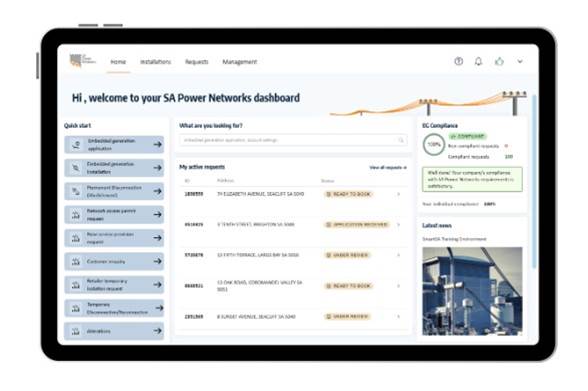
SA Power utilizes AI to minimize project restructuring

Anticipating Field Work Hurdles with AI

SA Power Networks is investigating the prospects of artificial intelligence to predict and lessen challenges that could obstruct field work activities. As noted by Travis Smith, Principal SAP Architect, this function is designed to reduce the incidence of projects needing to be reassessed, thereby improving operational productivity and customer experience.

AI-Enabled Operational Streamlining

Smith pointed out the problem of field personnel facing unexpected issues, resulting in project delays and extra administrative work. By evaluating historical records and job data, AI is capable of forecasting these hurdles, enabling enhanced planning and resource distribution. This advancement not only elevates customer interactions but also optimizes internal workflow.

Integration of Agentic AI

SA Power Networks has already adopted agentic AI technologies to manage requests from stakeholders like retailers and electricians. The in-house system, referred to as ‘Ask AI’, aids in processing and condensing large volumes of unstructured information, such as technical documentation, to improve service provision to external clients.

Prospective Adoption of SAP’s AI

In anticipation of the future, SA Power is set to incorporate SAP’s essential AI tools, including Joule, a generative AI product. At present, it is being tested across SAP Concur, SuccessFactors, and S/4HANA, with plans to initiate business trials with a pilot group shortly. The aim is to refine change management approaches and ultimately broaden the implementation throughout the organization.

Conclusion

SA Power Networks is leading the way in embracing AI to boost field work efficacy and customer satisfaction. By foreseeing possible challenges and employing sophisticated AI tools, the company seeks to enhance operations and service provision.

Q: What is the main aim of SA Power Networks employing AI?

A: The primary goal is to forecast and alleviate barriers in field work, lessening the need for project restructuring and improving operational effectiveness.

Q: How does ‘Ask AI’ assist SA Power Networks?

A: ‘Ask AI’ processes and condenses unstructured data, helping manage stakeholder requests and enhancing external service provision.

Q: Which AI tools is SA Power Networks presently evaluating?

A: They are assessing SAP’s AI tools, including Joule, across platforms such as SAP Concur, SuccessFactors, and S/4HANA.

Q: What are the anticipated advantages of utilizing AI for SA Power Networks?

A: Anticipated advantages include improved customer experience, enhanced operational efficiencies, and better resource management.

DFAT Unveils Significant Enduring Investment in Technological Operations


We independently review everything we recommend. When you buy through our links, we may earn a commission which is paid directly to our Australia-based writers, editors, and support staff. Thank you for your support!

Brief Overview

  • DFAT is set to embark on a considerable multi-year commitment to technology operations.
  • Consultants will undertake a strategic review to create a business justification.
  • No significant funding for technology advancements was assigned in the latest federal budget.
  • MYEFO in December presents the next opportunity for federal financial support.

DFAT Launches Extensive Long-Term Technology Investment

DFAT is set to invest heavily in technology operations

The Department of Foreign Affairs and Trade (DFAT) is preparing for a multi-year commitment to enhancing its technology operations. In preparation, DFAT will hire consultants to perform a thorough review of existing and anticipated technology capabilities, with the goal of formulating a solid business case for the planned investment.

Consultants Assigned for Strategic Review

The consultants are responsible for providing a strategic review within a tight schedule, originally set for six months, with the option for an additional six-month extension. This review will outline both current and future technical and operational needs while offering financial analysis and projecting the advantages of upgraded technology solutions.

Drive for Modernisation

A spokesperson for DFAT has indicated that this initiative is part of a larger strategy aimed at modernising technology systems and business processes, ensuring that the department is prepared to handle changing business, security, and service delivery demands. Although there are indications suggesting a pending investment proposal, DFAT asserts that the review is still in an exploratory phase.

Funding Ambiguities

DFAT did not secure a major budget allocation for technology enhancements in the latest federal budget. The upcoming mid-year economic and fiscal outlook (MYEFO), anticipated in December, will present the next opportunity for obtaining federal funding. This timeline introduces uncertainty regarding the funding potential for DFAT’s ambitious technology initiatives.

Conclusion

DFAT is planning a significant, multi-year commitment to enhancing its technology operations, with consultants brought in to review and formulate a business case. Although this effort aligns with a modernisation strategy, the absence of a recent budget allocation leaves federal funding uncertain until MYEFO in December.

Q: What is the primary goal of DFAT’s technology investment?

A: The primary goal is to modernise DFAT’s technological systems and business processes to address future business, security, and service delivery requirements.

Q: Who will perform the review for DFAT’s technology investment?

A: Consultants will be engaged to carry out a strategic review of current and future technology capability needs.

Q: What is the duration of the initial review for the technology investment?

A: The initial review duration is set for six months, with a potential six-month extension.

Q: Was there any budget allocation for this technology investment in the latest federal budget?

A: No, DFAT did not obtain a significant allocation in the latest federal budget.

Q: When is the next chance for DFAT to acquire federal funding for this investment?

A: The next chance is during the mid-year economic and fiscal outlook (MYEFO) in December.

Q: What will the consultant’s review encompass?

A: The review will consist of an assessment of technical and operational needs, financial analysis, and the estimation of benefits from updated technology solutions.

UNSW Introduces Cutting-Edge Approaches to Tackle AI Cheating


We independently review everything we recommend. When you buy through our links, we may earn a commission which is paid directly to our Australia-based writers, editors, and support staff. Thank you for your support!

Quick Read

  • UNSW broadens ChatGPT Edu to 80,000 students and staff after a successful trial involving 10,000 staff members.
  • The new “assessment transformation” presents AI modes: “can”, “can’t”, and “must”.
  • AI watermarking and detection instruments act as additional support to educators’ judgement in identifying misconduct.
  • Partnership with OpenAI aims to improve AI learning while maintaining academic integrity.
  • Australia’s digital duty of care laws may influence the use of AI chatbots in education.
  • UNSW utilizes a token-based revenue model in collaboration with OpenAI.
UNSW unveils new strategies to enhance AI education

UNSW Broadens ChatGPT Edu Implementation

UNSW Sydney is greatly broadening its ChatGPT Edu initiative to cover 80,000 students and staff, following a successful pilot involving 10,000 staff members last year. This strategic partnership with OpenAI will integrate AI tools like Codex into academic resources, aiding both instruction and learning.

New Measures for Academic Integrity

As part of the implementation, UNSW is rolling out new academic guidelines intended to uphold integrity. Assessments will be organized into AI modes: “can”, “can’t”, and “must”, providing students with explicit instructions regarding AI usage. This strategy aims to balance trust in qualifications with the cultivation of AI competencies.

Effectiveness of AI Detection Technologies

Despite progress in AI watermarking and detection technologies, UNSW recognizes that these solutions are not yet sufficiently reliable on their own for identifying academic dishonesty. Rather, they will serve as assistance to educators in finding potential problems.

Effect of Australian Legislation

The implementation coincides with Australia’s proposed digital duty of care legislation, which could influence the use of AI chatbots and assistants in education. This legislation aims to shield minors from harmful materials, compelling developers to establish comprehensive safety protocols. UNSW and OpenAI are monitoring these changes closely.

Revenue Approach and Collaboration Objectives

UNSW has chosen a token-based revenue model with OpenAI, emphasizing a fair-use policy. The collaboration is framed as a nationwide effort to elevate AI skills among Australian graduates, delivering advantages beyond the academic realm into various industries.

Summary

UNSW Sydney is poised to extend its ChatGPT Edu initiative to 80,000 individuals, supported by new academic policies aimed at preserving integrity. The project aligns with Australia’s digital duty of care legislation, highlighting safe AI practices in education. Through their collaboration with OpenAI, UNSW seeks to enhance AI skills nationally.

Q: What is the intent behind UNSW’s new AI modes?

A: The new AI modes (“can”, “can’t”, and “must”) are intended to direct students on the conditions under which AI tools may be used for assessments, ensuring academic integrity while promoting AI skills.

Q: Are AI detection tools adequate for spotting misconduct?

A: No, UNSW considers AI detection tools to be insufficient on their own and recommends that they support, rather than substitute, educators’ judgement.

Q: How could the digital duty of care legislation influence AI in education?

A: The legislation may establish requirements for AI developers to protect minors from harmful content, affecting the deployment of AI chatbots and assistants in educational contexts.

Q: What is UNSW’s revenue model for its partnership with OpenAI?

A: UNSW employs a token-based revenue model with OpenAI, facilitating usage within a fair-use scope rather than conventional licensing costs.

Q: What wider impact does UNSW strive to accomplish with this AI program?

A: UNSW aims to develop national AI competencies, empowering Australian graduates to excel globally and promoting innovation across diverse sectors.

NSW Exceeds 150,000 EV Registrations as Transition Occurs from Rebates to Charging Infrastructure


We independently review everything we recommend. When you buy through our links, we may earn a commission which is paid directly to our Australia-based writers, editors, and support staff. Thank you for your support!

Brief Overview

  • NSW exceeds 150,000 electric vehicle registrations, reaching a national milestone.
  • Attention is redirected from rebates to the enhancement of charging infrastructure throughout the state.
  • New approaches feature ultra-fast chargers and street-side charging options.
  • EVs receive perks like transit lane access and discounts on registration.
  • Plans for a distance-based road user charge are set for 2027 in NSW.

NSW’s EV Milestone and Strategic Shift

New South Wales (NSW) has achieved a noteworthy milestone with the registration of over 150,000 electric vehicles (EVs), as indicated by the Department of Climate Change, Energy, the Environment and Water. This milestone was revealed on World EV Day, symbolizing a crucial point in Australia’s renewable energy advancement, with the total number of registered EVs across the country exceeding 500,000.

NSW achieves 150,000 EV registrations with new focus on infrastructure

No Cash Incentive, More Charging Opportunities

Effective from 1 January 2024, NSW has discontinued the $3,000 rebate and stamp duty waivers for new EV acquisitions. The emphasis has now shifted towards filling the gaps in charging infrastructure, especially in urban and apartment environments. The state’s Electric Vehicle Strategy, introduced in April 2026, allocates over $330 million for this initiative, including co-funding for more than 3,250 charging points.

Incentives like a $100 registration discount and access to T2 and T3 transit lanes remain available until 2027, alongside federal advantages such as the FBT exemption for qualifying battery EVs.

Allocation of Funds

The Electric Vehicle Strategy of NSW seeks to position the state as the most convenient location to own an EV in Australia. The strategy emphasizes various key areas:

  • Ultra-fast charging setup: Creating fast charging stations every 100 kilometres along primary highways and every five kilometres in metropolitan zones.
  • Kerbside installations: Providing chargers for residents lacking driveways.
  • Commuter EV support: Assisting electric truck operations through grants and incentives.
  • Tourist EV charging routes: Educating regional mechanics and promoting EV-friendly travel routes.
  • EV Fleet Support: Enhancing charger accessibility at visitor locations and facilitating fleet transitions.

NSW invests in EV charging infrastructure

The Next Step in 2027

NSW is set to launch a distance-based road user charge beginning on 1 July 2027, or sooner if EVs account for 30% of new vehicle sales. This fee is established at 3.095 cents per kilometre for battery EVs. However, the Electric Vehicle Council has expressed concerns, echoing issues encountered in Victoria.

Home charging continues to be an economical option, yet those depending on public charging should verify available infrastructure.

Conclusion

The shift towards electric vehicles in NSW is characterized by significant registration milestones and a strategic change from purchase incentives to a comprehensive charging infrastructure. This aligns with wider national objectives aimed at improving sustainability and decreasing dependence on fossil fuels.

Q: What is the current focus of NSW’s EV strategy?

A:

The emphasis has transitioned from purchase incentives to enhancing charging infrastructure, especially in urban and apartment environments.

Q: Are there any ongoing incentives for EV owners in NSW?

A:

Indeed, EVs take advantage of registration discounts and access to transit lanes, with federal FBT exemptions also applicable.

Q: What are the key priorities of the NSW Electric Vehicle Strategy?

A:

The strategy focuses on ultra-fast charging infrastructure, kerbside charging, commuter EV support, tourism charging routes, and incentives for EV fleets.

Q: When is the distance-based road user charge expected to be implemented?

A:

The charge is anticipated to commence on 1 July 2027, or sooner if EVs represent 30% of new sales.

Q: What challenges are associated with the new road user charge?

A:

Similar to the situation in Victoria, there are concerns regarding the timing and framework of the charge, as noted by the Electric Vehicle Council.

Autonomous Cybercab Sets Off on Asia-Pacific Journey


We independently review everything we recommend. When you buy through our links, we may earn a commission which is paid directly to our Australia-based writers, editors, and support staff. Thank you for your support!

Quick Read

  • Tesla introduces the Cybercab in Austin, Texas, signaling a major shift in vehicle design.
  • The Cybercab discards conventional driving features, establishing itself as a genuine autonomous vehicle.
  • Tesla’s Asia-Pacific tour kicks off in Japan, a market that supports right-hand drive (RHD) like Australia.
  • Australia is grappling with regulatory hurdles that are delaying the deployment of autonomous vehicles.
  • Australian rules for autonomous cars are anticipated to be set by 2027.

Overview of the Cybercab

Tesla has revealed the Cybercab, a self-navigating vehicle that removes conventional driving controls, now driving through Austin, Texas. The stylish design showcases a gold finish with lambo-style doors, but what truly distinguishes it is the lack of a steering wheel, pedals, and mirrors, emphasizing Tesla’s dedication to autonomous driving advancements.

Design Breakthrough

The Cybercab marks a striking divergence from typical automobile design. By removing the steering wheel, steering column, and pedals, Tesla has forged a vehicle that is a perfect mirror image for global markets, simplifying manufacturing while reducing the necessity for distinct left-hand and right-hand drive models. This innovative design is further enhanced by the elimination of standard mirrors, as the vehicle operates independently of human drivers.

Interior Advancements

The interior design of the Cybercab is equally revolutionary, featuring an impressive 22-inch touchscreen that acts as the central interface for passengers. This display integrates all vehicle functions, such as speed, volume, and air conditioning, into a single, intuitive platform. The shift towards software-centric design began with the Model 3, where Tesla first adopted touchscreen management, setting the stage for the Cybercab’s completely autonomous capabilities.

Asia-Pacific Tour Launches

After its launch in the US, the Cybercab has initiated an international tour, starting in Japan. This move exemplifies Tesla’s interest in the Asia-Pacific market, especially RHD areas like Australia. The tour includes visits to Tokyo, Osaka, and Nagoya, with events planned until September 28th. Fans speculate that Australia might be the next stop, as rumors of a Cybercab sighting in Sydney have surfaced on social media.

Regulatory Environment in Australia

Despite Tesla’s innovations and desire to broaden the Cybercab’s outreach, Australia is not yet ready in terms of regulations for autonomous vehicles. Present laws do not allow the operation of driverless taxis, with changes not expected until at least 2027. This regulatory setback could limit Australia’s ability to compete in the adoption of advanced transport technologies.

Tesla Cybercab on Asia-Pacific Tour

Conclusion

Tesla’s Cybercab is poised to revolutionize the autonomous vehicle landscape. Its introduction in Austin and the subsequent Asia-Pacific tour underscore Tesla’s drive to dominate the autonomous vehicle industry. However, the regulatory landscape in Australia poses a daunting obstacle, threatening the nation’s momentum in technology adoption. As Tesla moves forward with its international journey, the onus is on Australian regulators to accelerate legislative changes.

Q&A Section

Q: In what ways is the Cybercab different from traditional vehicles?

A: The Cybercab does away with conventional driving mechanisms like the steering wheel and pedals, designed specifically for autonomous function.

Q: What is the importance of the Cybercab’s Asia-Pacific tour?

A: The tour highlights Tesla’s strategy to expand its presence in the Asia-Pacific region, particularly in RHD markets such as Australia.

Q: What regulatory issues does Australia face regarding autonomous vehicles?

A: Current laws in Australia do not permit autonomous vehicle operations, with anticipated updates likely around 2027, hindering the rollout of self-driving innovations.

Q: How has Tesla addressed the needs of international markets with the Cybercab?

A: Tesla has optimized production by designing a vehicle that removes the need for different left-hand and right-hand drive options.

Q: What advancements does the Cybercab’s interface bring?

A: The Cybercab includes a 22-inch touchscreen that merges all vehicle functionalities, significantly enhancing the user experience through a software-based interface.

Q: Are there any signs that the Cybercab will arrive in Australia soon?

A: While there are rumors and speculation regarding the Cybercab’s debut in Australia, current regulatory limitations hinder its official launch.

In Photos: Tecala and Microsoft Talk About Managing Hybrid Cloud Solutions at Roundtable


We independently review everything we recommend. When you buy through our links, we may earn a commission which is paid directly to our Australia-based writers, editors, and support staff. Thank you for your support!

Investigating Governance in Hybrid Cloud Frameworks

Brief Overview

  • Essential tactics for governing hybrid cloud ecosystems analyzed.
  • Emphasis on identifying blind spots and weaknesses.
  • Crucial to find a balance between innovation and risk management.
  • Perspectives on enhancing cloud operational models.

Governance in Hybrid Cloud Frameworks

Tecala and Microsoft Discuss Hybrid Cloud Governance at a Roundtable

Comprehending the Obstacles

During a recent roundtable, organized by Tecala and Microsoft, key industry figures convened to delve into the complexities of governing hybrid cloud ecosystems. The dialogue focused on tackling the hurdles that organizations encounter in achieving visibility and control over their hybrid cloud functions.

Identifying Blind Spots

Participants stressed the significance of pinpointing and resolving blind spots within hybrid cloud configurations. With several environments involved, weaknesses may frequently be overlooked, increasing the risk of security issues.

Balancing Innovation with Risk Management

A major topic of the roundtable involved striking a balance between harnessing cloud innovation and managing the risks that accompany it. Leaders must ensure that their cloud strategies prioritize security while simultaneously encouraging technological progress.

Enhancing Cloud Operational Models

The conversation also highlighted the imperative of establishing a solid cloud operating model. By emphasizing measures that reduce risks and improve visibility, organizations can foster a more secure and effective cloud setting.

Conclusion

The roundtable conducted by Tecala and Microsoft offered significant insights regarding the governance of hybrid cloud ecosystems. Key points include the necessity of addressing blind spots, balancing innovation with risk management, and reinforcing overall cloud models to reduce vulnerabilities.

Questions & Answers

Q: What are the primary obstacles in governing hybrid cloud ecosystems?

A: The main obstacles involve managing various cloud environments, detecting blind spots, and ensuring that comprehensive security protocols are established.

Q: How can organizations achieve a balance between cloud innovation and risk management?

A: Organizations can reach this balance by instituting solid security measures that do not hinder innovation and by continuously assessing and adapting to emerging cloud technologies.

Q: What tactics can fortify cloud operational models?

A: Tactics include enhancing visibility across all cloud ecosystems, focusing on risk mitigation efforts, and ensuring that security is woven into the cloud strategy from the beginning.

Q: Why is it vital to identify blind spots in hybrid cloud ecosystems?

A: Identifying blind spots is crucial for preventing potential security breaches and ensuring that all facets of the cloud environment are sufficiently safeguarded.