
“5 Key Questions to Reflect On Prior to Installing a Home Battery in Australia”

We independently review everything we recommend. When you buy through our links, we may earn a commission which is paid directly to our Australia-based writers, editors, and support staff. Thank you for your support!
Quick Overview
- Federal Government’s initiative slashes home battery expenses by 30%.
- Crucial to guarantee backup power support during outages.
- Continuous solar power is essential for extended grid failures.
- Interoperability with smart retailers can enhance financial advantages.
- Correct setup is vital to unlock battery’s full capabilities.
Government Programs and Their Effects
The Australian Government’s ‘More Affordable Home Batteries Program’, initiated in July 2026, has drastically lowered the initial costs associated with home batteries by expanding the Small-scale Renewable Energy Scheme (SRES) to include storage. This effort has led to a rise in installations, with applications projected to hit 175,000 by year-end.
Key Considerations for Home Battery Setup
Remote Management and Surveillance
Homeowners require advanced software to track energy flow and retain control over energy consumption. Options such as defining a minimum charge percentage are essential for preparing for severe weather conditions.
Thorough Backup Support
The battery must automatically supply power to your home during outages. It’s crucial to identify which circuits will remain operational, especially in residences with three-phase power.
Solar Functionality During Outages
Confirm that your solar system will keep functioning and recharging the battery even during grid outages. Proper setup prevents system failures and optimises solar energy collection.
Export Limiting Features
Given negative feed-in tariffs, having a system capable of ceasing power export to the grid is vital to safeguard your energy credits.
Interoperability with Smart Retailers
Batteries that work with dynamic retailers such as Amber Electric can leverage wholesale pricing, hastening financial returns.
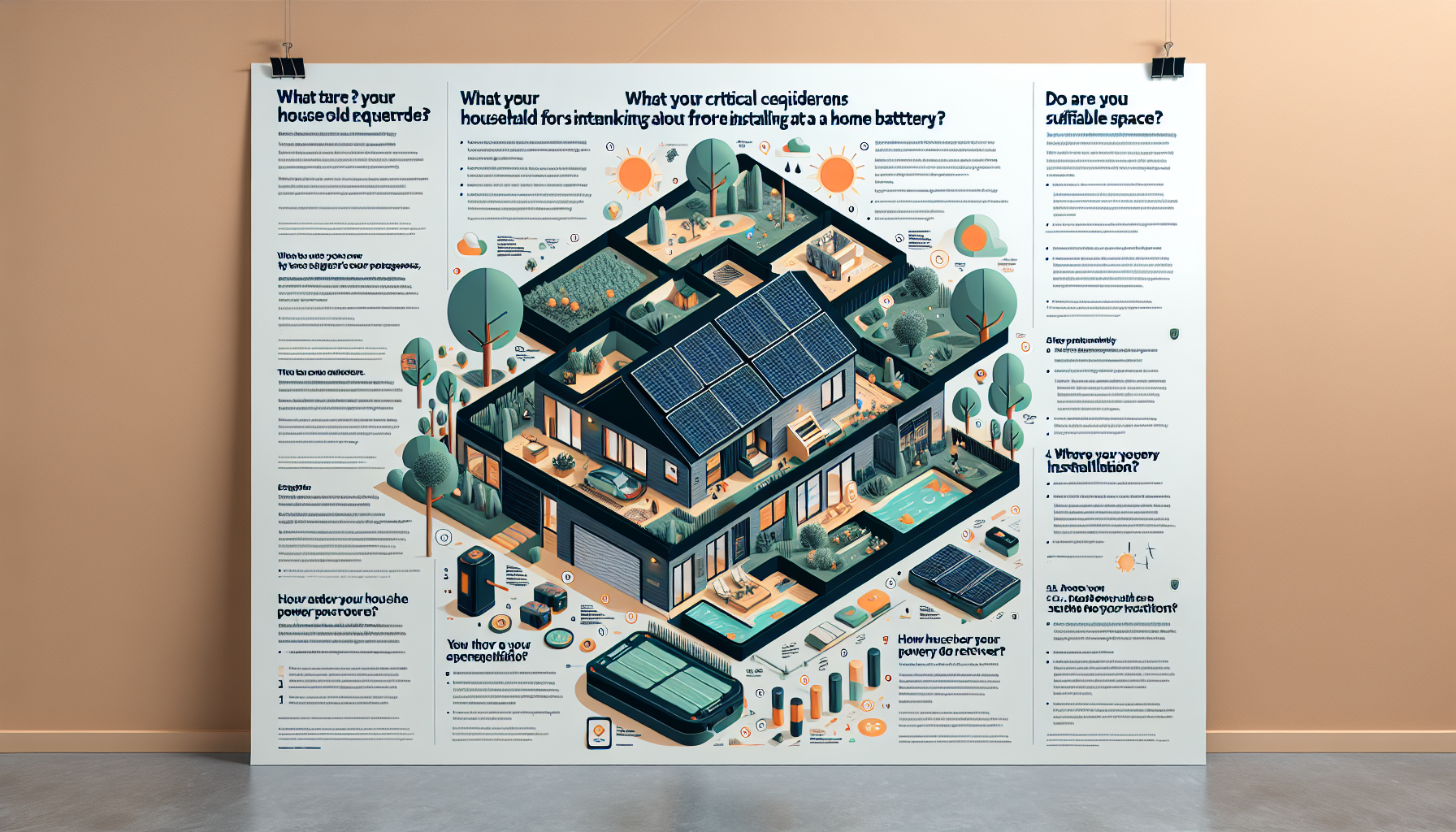
Insights from Actual Installations
Experiences from real installations highlight the necessity of thorough backup and solar functionality. Misconfigurations can severely restrict battery performance during outages.
Enhancing Your Configuration
Ensure all circuits are linked to backup and evaluate your system in outage scenarios. Well-configured systems can transform homes into energy hubs during emergencies, showcasing the value of electric vehicles as valuable assets.
Conclusion
Installing a home battery in Australia can greatly increase energy independence and resilience, particularly during grid failures. Nonetheless, meticulous planning and configuration are crucial to fully take advantage of these benefits. Confirm your system is designed for complete backup, solar functionality, and smart retailer compatibility to maximise returns.